This post was originally published on this site.
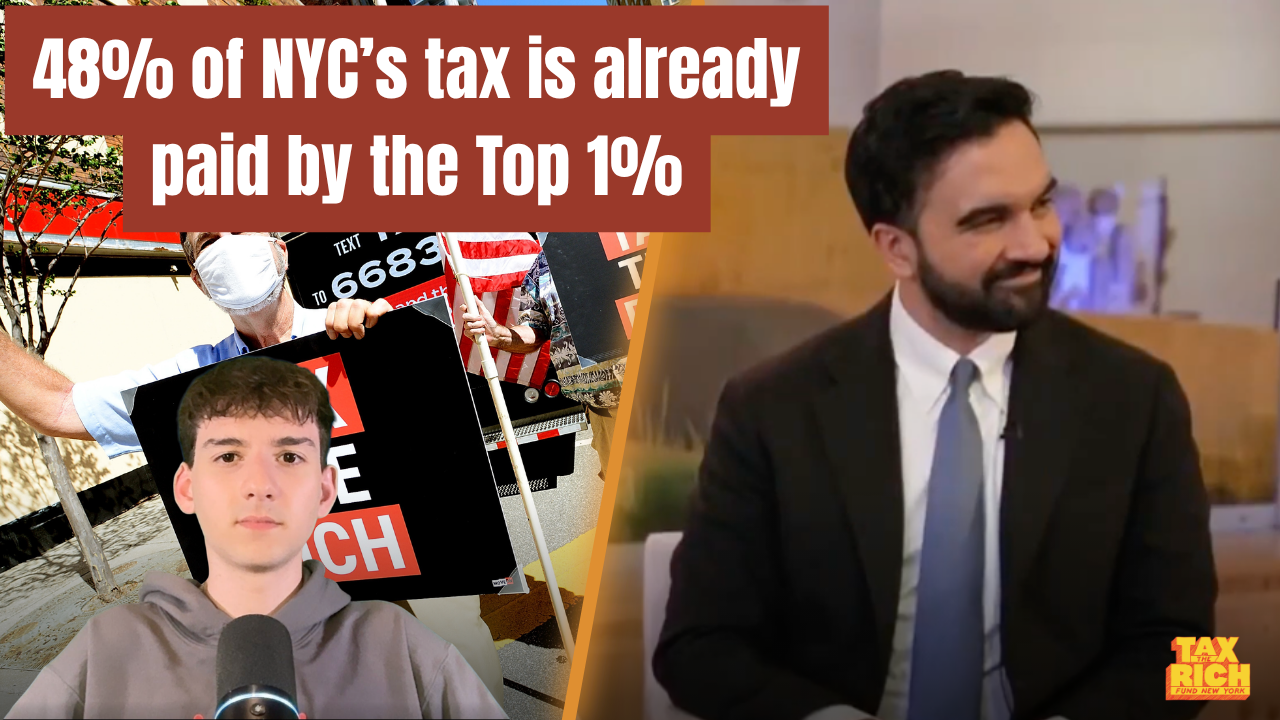
Why Mamdani’s Second-Home Tax Plan May Be His Dumbest Idea So Far
This post was originally published on this site.

Communist New York City Mayor Zohran Mamdani is moving to implement one of the most controversial promises of his campaign: raising taxes on wealthy residents.
In a recent appearance on MSNOW, Mamdani outlined a plan targeting second homes owned by high-income individuals—a proposal framed as a way to make the “rich pay their fair share.”
The pitch is politically effective. It is also economically reckless.
During the interview, Mamdani leaned into a familiar progressive narrative: wealth concentration is the root of urban inequality, and taxation is the tool to fix it. The proposal specifically focuses on taxing second homes in New York City, a move designed to signal that the burden will fall on those who can “afford it.”
On the surface, that framing is appealing. In practice, it ignores how cities like New York actually function.
Over the past several years, data has consistently shown an outflow of wealthy individuals from high-tax states like New York to lower-tax states such as Florida and Texas. That trend accelerated during and after the pandemic, when remote work made relocation even easier.
Policies that further increase the cost of living for top earners do not simply redistribute wealth—they risk accelerating that outmigration.
Mamdani’s proposal also misunderstands how real estate markets respond to targeted taxation.
Even if a second home is not occupied year-round or serves as a non-primary residence, once a new tax is implemented, it can make the property no longer worth keeping. Homes function as assets. If the cost of holding that asset—through taxes—outweighs its value, it becomes a financial drain rather than an investment. In that case, many owners will choose not to keep it.
Because Mamdani’s proposal targets a relatively small group of taxpayers, the total revenue generated would likely be limited.
Even by Mamdani’s own estimates—which are relatively optimistic and do not fully account for behavioral or economic changes—the plan would raise at most around $500 million annually.
While that may appear substantial, it is modest in the context of New York City’s fiscal challenges. With a budget deficit of roughly $4 billion, this proposal would address only a small fraction of the gap and would not come close to resolving the broader imbalance.
At the same time, the potential downside is significant. A targeted tax on high-income individuals risks altering incentives in ways that reduce economic activity. If those affected perceive New York as increasingly punitive, they may choose to relocate, limit investment, or scale back business operations within the city.
That response would not only reduce the expected revenue from the tax itself but could also weaken the broader tax base. In that sense, the policy carries a high degree of risk relative to its limited fiscal upside.
In each scenario, the policy creates distortions rather than stable revenue. What begins as a tax on the wealthy often translates into broader market pressure affecting middle-income residents.
There is also a structural issue with relying on a narrow tax base. Cities that disproportionately depend on high earners for revenue become vulnerable when those individuals leave.
New York already collects a significant portion of its tax revenue from a small percentage of top-income households. Increasing that dependency creates fiscal instability, not sustainability. When policymakers treat high earners as an unlimited revenue source, they ignore the behavioral response that follows.
The broader issue is not whether wealthy individuals should pay taxes—they already do, and in New York’s case, at some of the highest rates in the country. The question is whether continually increasing those burdens produces long-term economic stability.
Evidence suggests the opposite. Cities that maintain competitive tax environments tend to retain both residents and investment, while those that escalate targeted taxes often see their tax bases decline over time.
Stanton’s comments may resonate within certain media circles, but they do not align with the electorate’s direction. The youth vote is no longer predictable, and pretending otherwise does not change the numbers.
The Patriot Perspective has recently switched its main platform from YouTube, and we would greatly appreciate it if you subscribed to us there. [HERE]
The post Why Mamdani’s Second-Home Tax Plan May Be His Dumbest Idea So Far appeared first on The Gateway Pundit.
editor's pick
latest video

news via inbox
Nulla turp dis cursus. Integer liberos euismod pretium faucibua
Leave A Comment
You must be logged in to post a comment.