This post was originally published on this site.
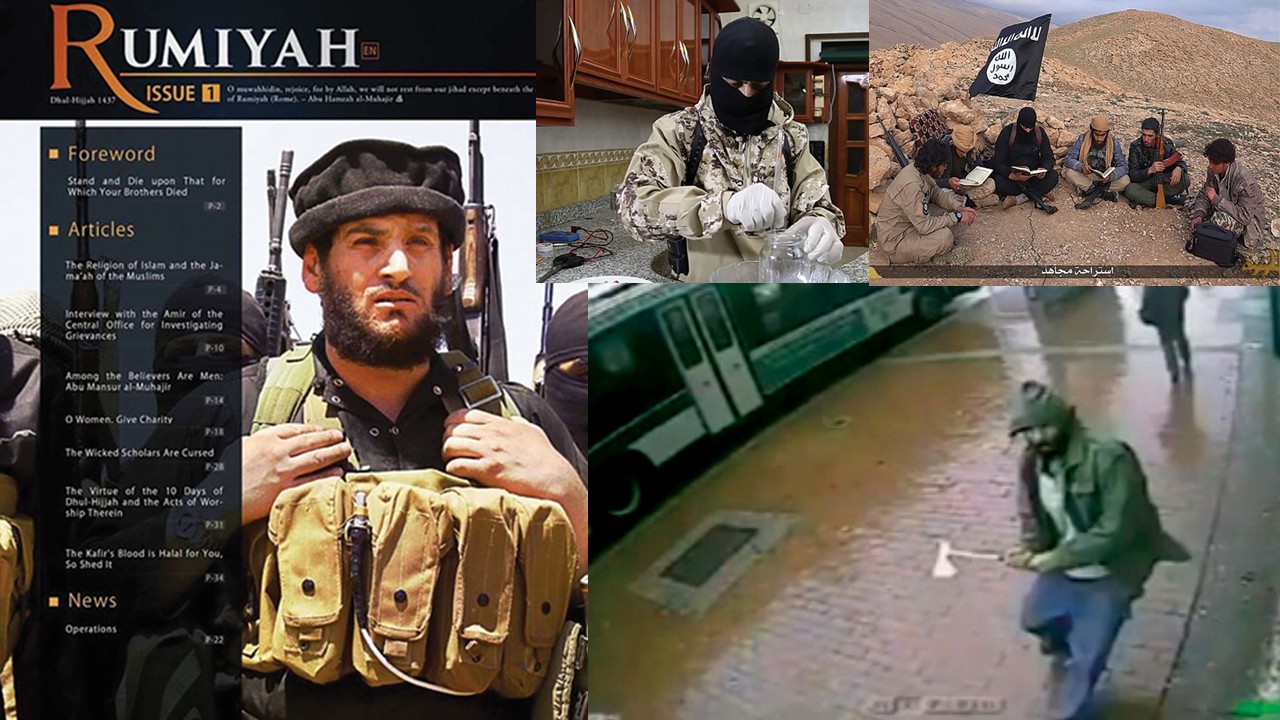
Western Leaders Downplay Islamic Terrorism, Pin Threat on White Supremacists
This post was originally published on this site.

President Donald Trump is actively working to protect Christians in Nigeria who are being killed and abducted by radical Islamists, while Democrats in Congress are not only denying the religious nature of the violence but framing counterterrorism resources directed at Islamic extremism as Islamophobia. This pattern dates at least to the Biden administration and continues to the present, where political correctness is overriding national security.
When Ilhan Omar was asked directly about jihadist terrorism on Al Jazeera, she stated that Americans “should be more fearful of white men across our country” and called for profiling and monitoring white men, explicitly redirecting a question about Islamic terrorism. In March 2026, following ISIS-inspired attacks inside the United States, House Minority Leader Hakeem Jeffries declared that “Islamophobia is a cancer that must be eradicated from both Congress and the country” in response to Republicans who were calling out Islamic extremism.
Regarding the ongoing attacks on Christians in Nigeria, ranking House Foreign Affairs Committee member Gregory Meeks and Africa Subcommittee ranking member Sara Jacobs issued a joint statement declaring that “clashes between farmers, many but not all of whom are Christian, and herders are driven by resource scarcity and land competition, not religion alone,” attributing a campaign of violence carried out by groups that explicitly state religious motivations to climate and economics.
Secretary of State Antony Blinken went further, testifying under oath before the House Appropriations Committee on May 22, 2024, that the killings of Christian farmers in Nigeria “have nothing to do with religion,” a statement Congress itself recorded in resolution text as inconsistent with available evidence.
The same pattern runs across multiple Western democracies simultaneously. In the United States, Biden repeatedly declared white supremacy the greatest terrorist threat to the homeland, explicitly naming it above ISIS and al-Qaeda. In Australia, after the ISIS-inspired massacre of Jewish civilians at Bondi Beach, the government said it was going to crack down on both right-wing extremism and Islamist terrorism.
In the United Kingdom, Prevent, the government’s counterterrorism program, systematically redirected resources away from Islamist cases toward right-wing extremism, despite the fact that documentation shows that Islamist terrorism accounts for 67 to 80 percent of all terrorism investigations, arrests, and foiled plots. The program directed referrals and resources toward right-wing cases at rates that bore no relationship to that reality. Officials also suppressed information about grooming gangs, largely Pakistani, for fear of being labeled Islamophobic.
In the United States, the leading sources of information on terrorism are START at the University of Maryland, a Department of Homeland Security Emeritus Center of Excellence; the Combating Terrorism Center at West Point; and the U.S. Intelligence Community’s own Annual Threat Assessment. These sources conduct research and publish reports that inform the U.S. government’s response to terrorism.
All three have ranked Islamic extremist terrorism as one of the top national-security threats for at least a decade. White supremacy is mentioned only once in all four threat assessments compiled under Biden, as an example of homegrown terrorism.
And yet Biden stated publicly, multiple times, that white extremism was the biggest threat, despite the fact that his own intelligence community and terrorism experts were telling him that Islamic extremism was the main threat. Under the Trump administration, the term “white supremacy” does not exist, whereas the 2025 threat assessment contains a section on Islamic terrorism, and the 2026 assessment mentions the term “Islamic terrorism” on the first page.
According to the Global Terrorism Index (GTI) 2026 report, the deadliest groups by deaths in 2025 were Islamic State (IS) and its affiliates, responsible for 17 percent of all attacks globally and active in 15 countries; JNIM, which carried out the single deadliest attack of 2025, killing 120 people in one strike; and Tehrik-e-Taliban Pakistan (TTP), responsible for 637 deaths and the only group among the top four to increase.
Also included were Al-Shabaab, which declined for the third consecutive year but launched the Shabelle Offensive; the Balochistan Liberation Army (BLA), ranked fifth in the GTI 2026; ISWAP, responsible for 92 attacks and 384 deaths in Nigeria, a 360 percent increase; and Boko Haram (JAS faction), responsible for 43 attacks and 213 deaths in Nigeria.
The list also includes the Allied Democratic Forces, also known as ISIS-Central Africa, which drove a 28 percent increase in deaths in the Democratic Republic of the Congo; and FARC dissidents and the ELN, which contributed to a 70 percent increase in deaths in Colombia and carried out 77 drone attacks.
All of these groups are Islamist except for the FARC dissidents and the ELN, which are Marxist-Leninist narco-insurgencies. While Colombian groups pose no direct terrorist threat to the U.S. homeland, the Office of the Director of National Intelligence (ODNI) 2026 Annual Threat Assessment identifies them as the dominant producers and traffickers of cocaine entering the United States, making them a significant threat through narcotics rather than political violence.
Beyond the GTI 2026’s death-ranked groups, the NCTC and the ODNI 2026 Annual Threat Assessment designate additional organizations as active threats to U.S. interests and global security. These include al-Qaeda and its Arabian Peninsula affiliate, AQAP; Hamas; Hizballah; the Houthis; ISIS-Khorasan; and the Haqqani Network. These groups do not appear in the GTI’s top-ranked tier by 2025 confirmed death toll for methodological reasons. ISIS-K’s deaths are counted within the broader Islamic State total.
The Haqqani Network’s violence is included in the Afghanistan-Pakistan theater dominated by TTP. Hamas’s 2025 activity occurred within the Gaza war, which the GTI categorizes separately from terrorism. Hizballah and the Houthis operated largely through proxy and state-directed violence in the context of the Iran conflict. They remain, however, formally designated foreign terrorist organizations actively tracked by U.S. intelligence as persistent threats to American citizens and allies abroad.
The intelligence community and terrorism experts agree that Islamic extremism is the dominant threat. The Biden-era claim, and similar claims made today, that white supremacy represents a greater danger to the U.S. or the world, derives from a set of methodological distortions that collapse under scrutiny.
The ODNI 2026 Annual Threat Assessment records that in 2025, there were at least three Islamist terrorist attacks inside the United States and that law enforcement disrupted at least 15 U.S.-based Islamist terrorist plotters. Zero white supremacist organizations directed, claimed, or framed a domestic attack in the same period.
The most rigorous domestic comparison comes from a U.S. Government Accountability Office report using the Extremist Crime Database maintained by START at the University of Maryland. From September 12, 2001, through December 31, 2016, Islamist attacks killed 119 people in 23 incidents, while right-wing attacks killed 106 people in 62 incidents, meaning Islamist attacks were significantly more lethal per incident. The GAO report explicitly states that 9/11 caused the largest number of violent extremism deaths in U.S. history, then begins its dataset the day after, deliberately excluding it.
If 9/11, which resulted in 2,996 dead and was carried out by al-Qaeda, is included, then Islamic extremist terrorism has killed roughly 20 times more people in the United States than right-wing terrorism by any measure.
The datasets that show right-wing terrorism leading suffer from several compounding distortions: they count incident frequency rather than casualties; they apply expanded definitions that include acts never charged as terrorism; and they attribute lone-actor, ideologically motivated murders to white supremacy as a movement despite no organizational direction, claim of responsibility, or stated political demand from any named group. Without correcting for these distortions, Islamic terrorism is the greatest threat outside of the United States. However, after these distortions have been eliminated, Islamic terrorism also becomes the primary threat on the U.S. homeland.
The post Western Leaders Downplay Islamic Terrorism, Pin Threat on White Supremacists appeared first on The Gateway Pundit.
editor's pick
latest video

news via inbox
Nulla turp dis cursus. Integer liberos euismod pretium faucibua
Leave A Comment
You must be logged in to post a comment.