YFQ-44 Fury Fighter Drone Wraps Contested Operations Test That Could Accelerate Its Fielding
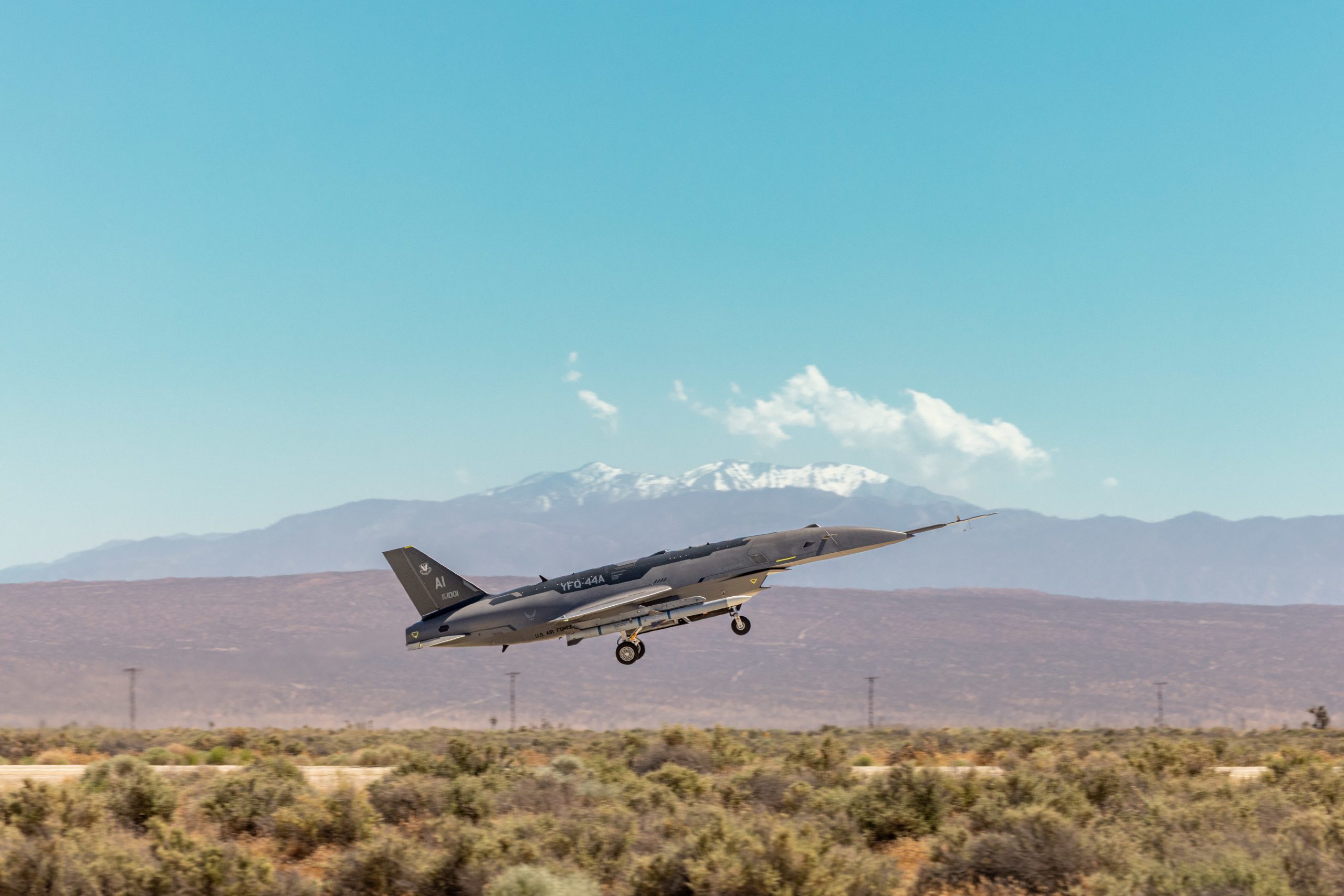
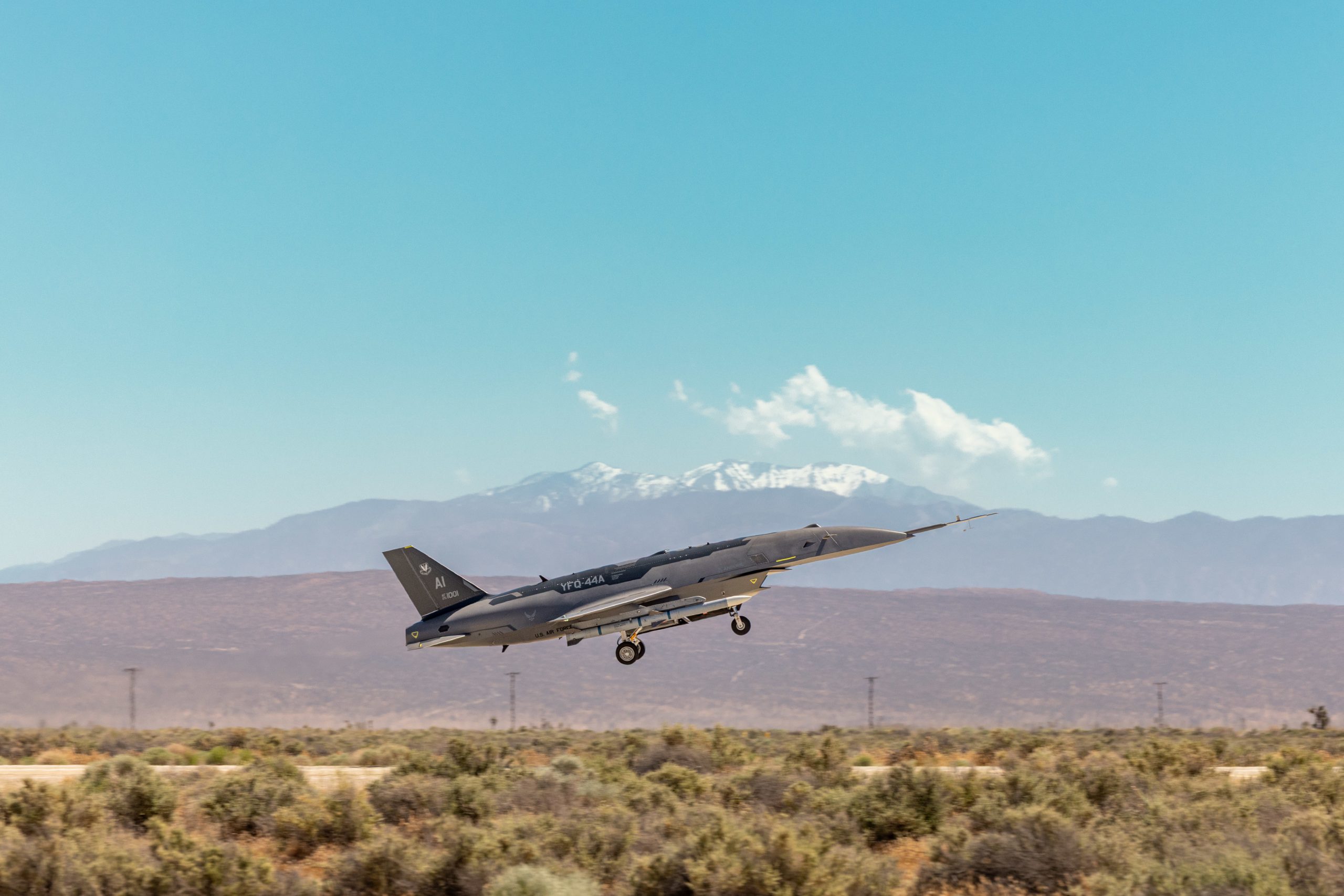
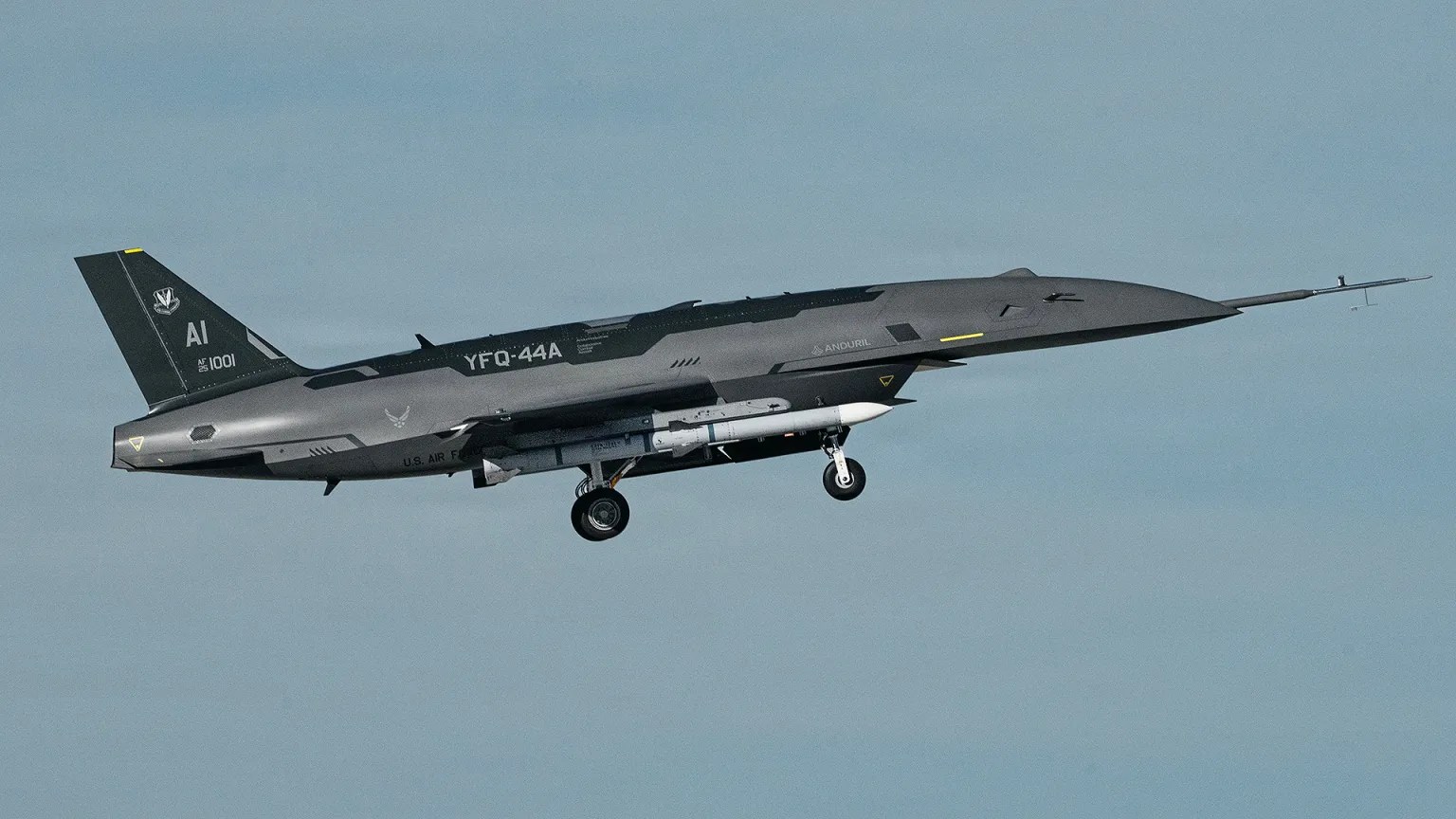
The U.S. Air Force has concluded what it describes as a “critical exercise” with Anduril’s YFQ-44 Fury ‘fighter drone’ prototype, flown out of the base that is the heart of flight testing, the legendary Edwards Air Force Base, California. The drills involved the Air Force’s Experimental Operations Unit and were intended to demonstrate how CCAs can be deployed and sustained in a contested environment. For the exercise, the YFQ-44A flew from Edwards back to Anduril’s Southern California test site.
As well as the Experimental Operations Unit (EOU), which falls under Air Combat Command (ACC), the exercise involved personnel from Air Force Materiel Command’s (AFMC) 412th Test Wing. This wing is headquartered at Edwards Air Force Base, and the squadrons attached to it are responsible for flight testing of virtually all the aircraft in the Air Force’s inventory.
Ariana Ortega
Multiple sorties were flown — we have asked Air Combat Command for more details on exactly how many, and their scope. The exercise took place last week, according to Anduril’s vice president of autonomous airpower, Mark Shushnar.
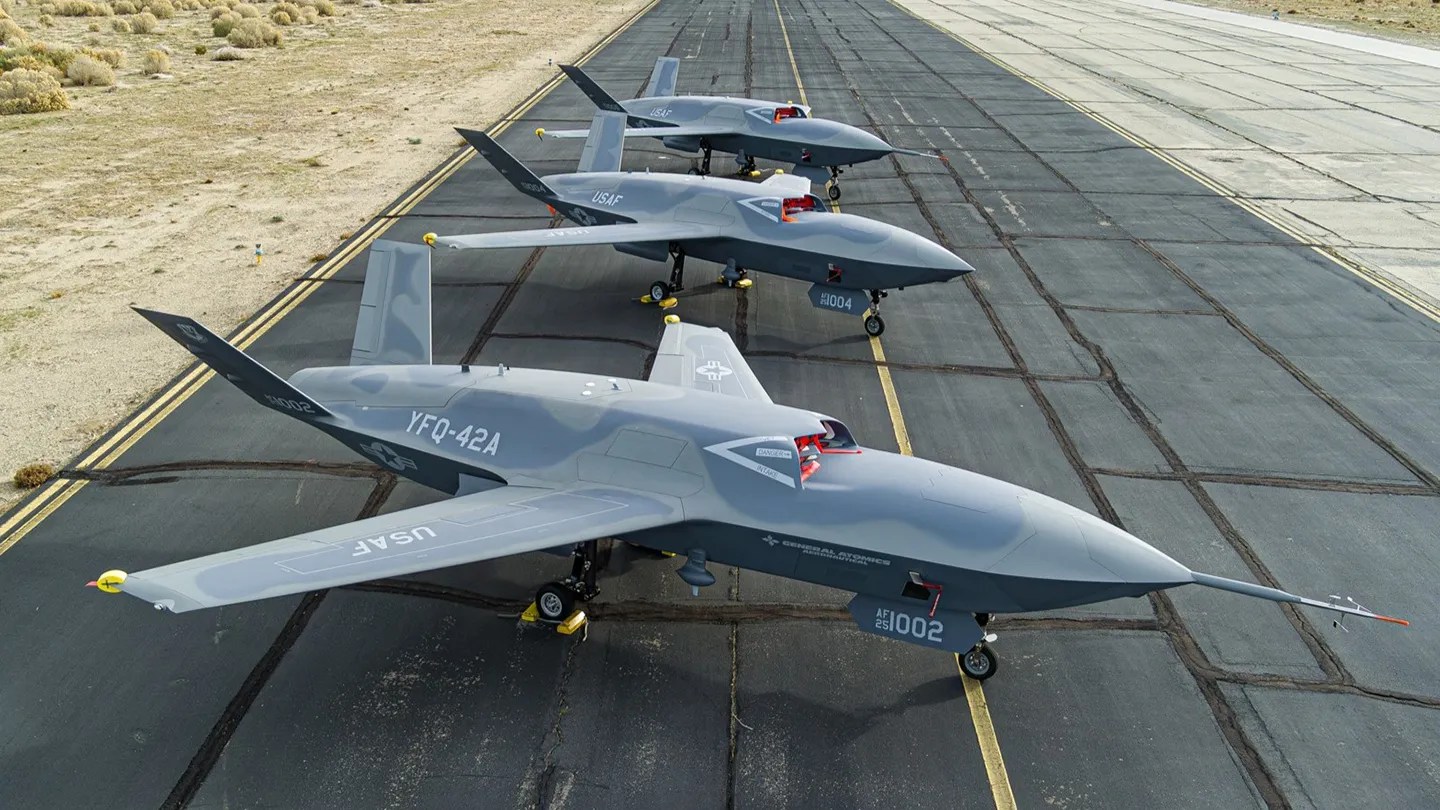
The YFQ-44 is one of two designs now being developed as part of the first phase, or Increment 1, of the Air Force’s CCA program. The other is General Atomics’ YFQ-42A Dark Merlin. We have reached out to Edwards to see whether the YFQ-42 was originally expected to take part in the exercise before its recent takeoff accident.
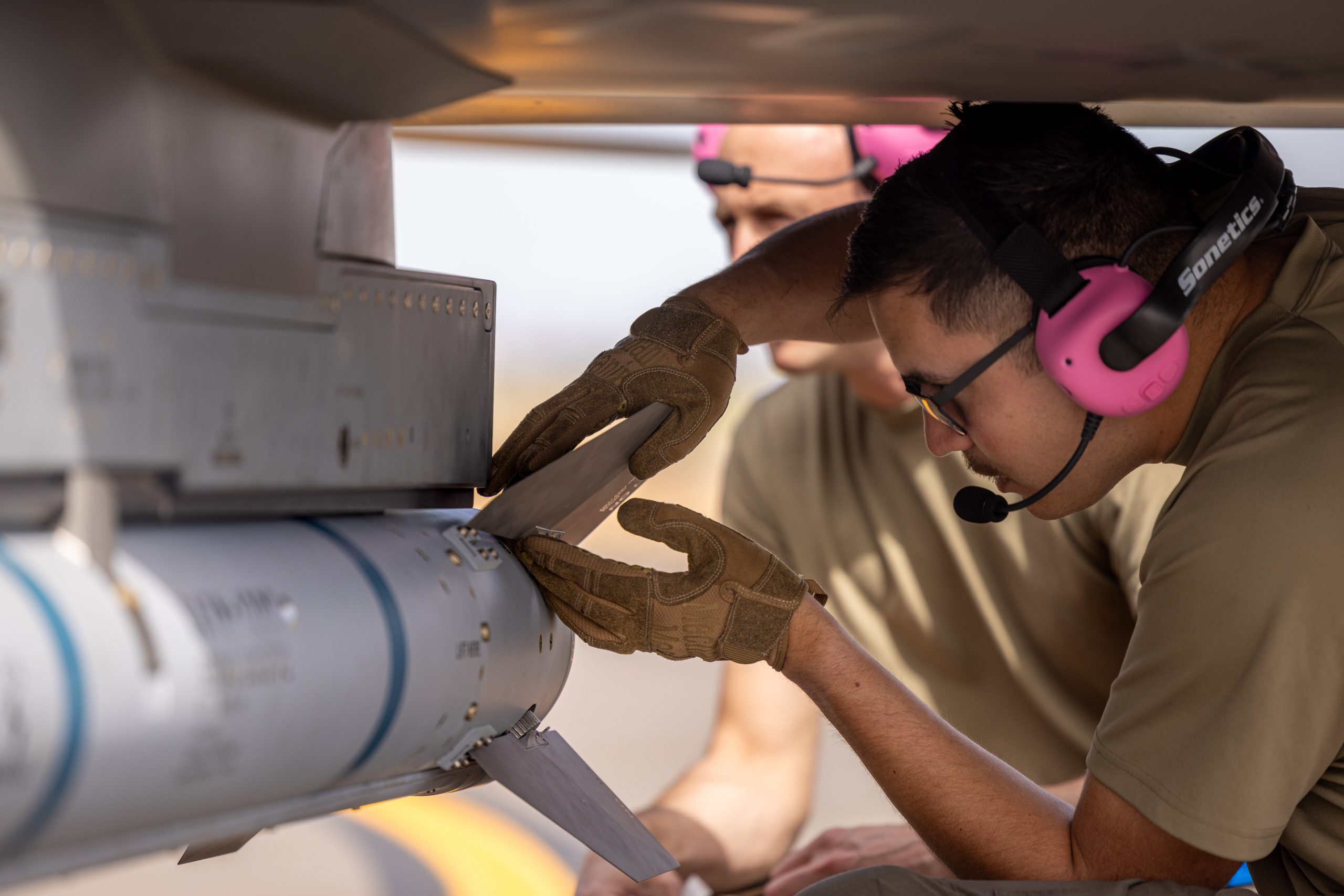
Imagery published by the Air Force shows a YFQ-44A carrying inert AIM-120 Advanced Medium Range Air-to-Air Missiles (AMRAAM) on pylons under the wings, something that we first saw earlier this year, during captive-carry evaluations, as you can read about here. It should be noted that the Fury, at least as it exists now, does not have an internal munitions bay.
Ariana Ortega
The primary function of the exercise was to explore the practicalities of what the Air Force calls the Warfighting Acquisition System. This framework is intended to speed the delivery of CCAs to operational units by enabling operators to get their hands on the drones earlier in the program. In this way, they can refine tactics and procedures before deliveries to the front line.
ACC has stressed in the past how it wants CCAs to operate seamlessly within the existing command structures and legal frameworks that govern all Air Force weapons systems.
“This experimental operations event was executed by EOU members from start to finish. Every sortie generated and flown was done with a warfighter, not an engineer or test pilot, kicking the tires and controlling the prototypes,” explained Lt. Col. Matthew Jensen, EOU commander. “We are learning by doing, at a speed and risk tolerance accepted by the USAF’s most senior leaders, to ensure CCA is ready to operate and win in the most demanding combat environments.”
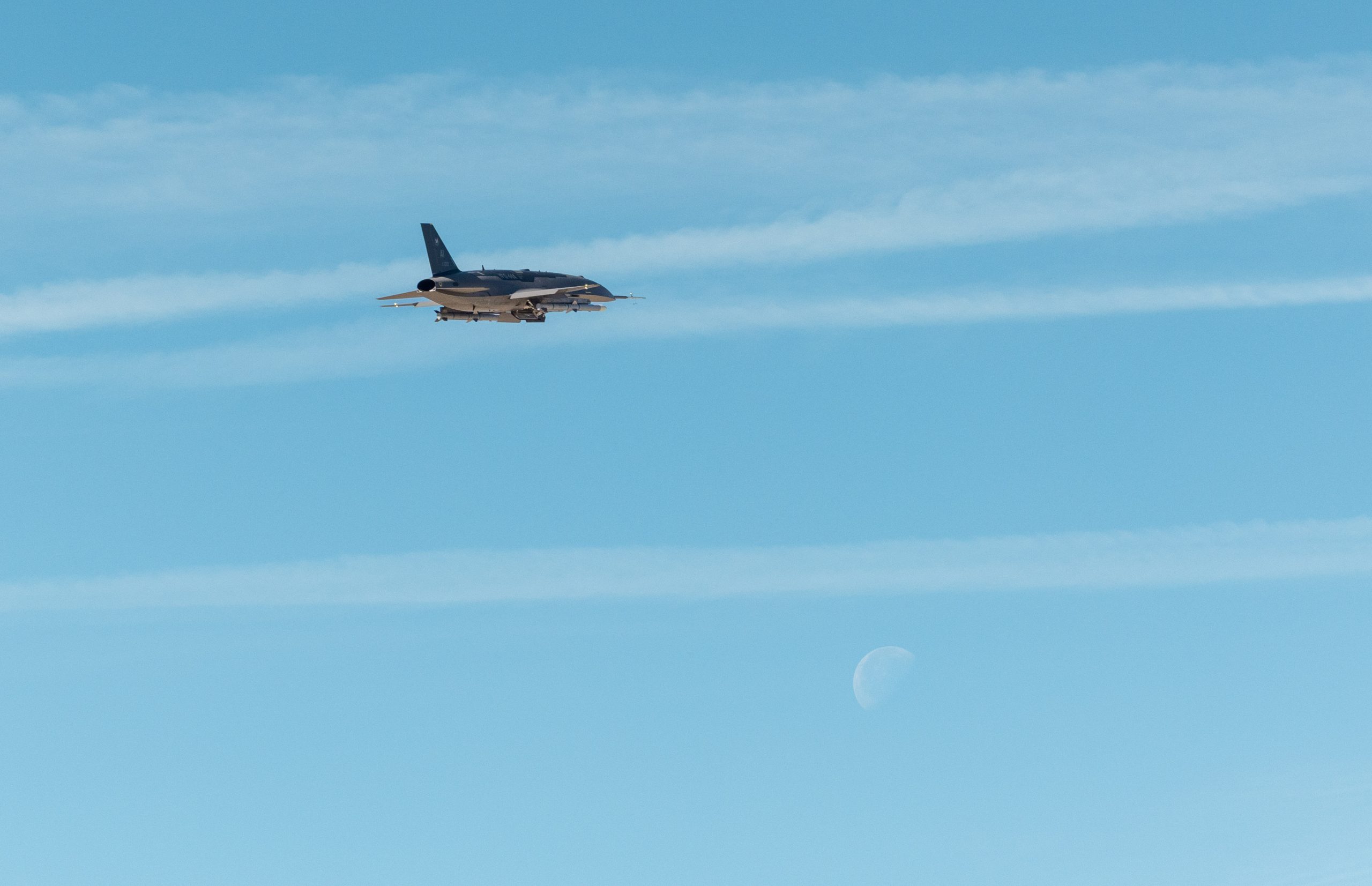
Above all, the sorties stressed operational and logistical procedures for using CCAs in a contested environment. The issue of logistics is a critical one, including how CCAs will get to the area of operations and how they will be maintained in the field.
According to Shushnar, Anduril’s Menace-T command, control, communications, and compute (C4) solution was used as the main ground element for YFQ-44A flight operations during the exercise. “EOU operators used Menace-T’s ruggedized laptop to upload mission plans, initiate autonomous taxi and takeoff, task the aircraft while in flight, and manage post-flight data ingestion and checks,” he explained. “That enabled the EOU to conduct operations out of a simulated forward operating base, successfully launching, recovering, and turning YFQ-44A without the infrastructure of a large, established base.”
This is entirely in line with the Air Force’s drive toward short-notice and otherwise irregular deployments, often to remote, austere, or otherwise non-traditional locales. Agile Combat Employment (ACE) is the term the service currently uses to describe a set of concepts for distributed and disaggregated operations.
While the warfighters of the EOU were at Edwards to carry out the practical aspects of CCA employment, exploring tactics, techniques, and procedures, the 412th Test Wing, meanwhile, was on hand to gather data from the test events.
“By uniting the distinct test authorities of AFMC and the operational authorities of ACC, officials were able to fast-track the event, enabling groundbreaking, hands-on experimentation by operators at a uniquely early stage of development,” the Air Force explained in a media release.
“The collaboration we saw in this exercise is the cornerstone of our acquisition transformation. By embedding the operators from the EOU with our acquisition professionals, we create a tight feedback loop that lets us trade operational risk with acquisition risk in real-time,” said Col. Timothy Helfrich, portfolio acquisition executive for fighters and advanced aircraft. “This isn’t just a test; it’s a demonstration of how we are adopting a more agile process. An 85 percent solution in the hands of a warfighter today is infinitely better than a 100 percent solution that never arrives.”
The CCA program is viewed as a pathfinder for the Warfighting Acquisition System, and success with this could lead to the same approach being employed to get other systems into operational service much more quickly than in the past.
The Air Force has not yet determined whether it will procure one or both Increment 1 CCA designs at scale. Whichever option it selects is expected to become its first operational “fighter drones,” built to carry live munitions into combat alongside crewed aircraft.
CCAs will also extend the sensor coverage of the crewed fighters they accompany. More broadly, the Air Force views them as a way to add vital combat mass and unlock new tactical options, particularly in high-end conflicts against adversaries like China. Back in late 2024, Brig. Gen. Douglas “Beaker” Wickert, commander of the 412th Test Wing, told TWZ that, “[the-then Secretary of the Air Force Frank Kendall] “has been very clear that we are out of time, that our Air Force has never been older or smaller than it is right now, and that the People’s Liberation Army has been specifically designed to defeat us.”
“The investments we’re making right now in modernization and testing for the USAF are designed for success and aimed at changing Chairman Xi’s calculus about pushing back aggressively against the international rules-based order. What we are doing here and across USAF flight-testing is extremely consequential.”
Since then, Wickert has moved on to become Director, Air, Space and Cyberspace Operations at AFMC, but the test wing’s remit remains the same. Meanwhile, the People’s Liberation Army Air Force has doubled down on its rapid expansion, including many of its own CCA programs.
If all goes to plan, the completion of this recent exercise at Edwards could well be a key milestone in fielding a combat-ready force of CCAs and go some way toward realizing the Air Force’s ambition for a new capability that should extend the reach and the survivability of its crewed aircraft.
Contact the author: thomas@thewarzone.com
editor's pick
latest video

news via inbox
Nulla turp dis cursus. Integer liberos euismod pretium faucibua