U.S. Air Force Special Operations Aircraft Accused Of Austrian Airspace Incursion
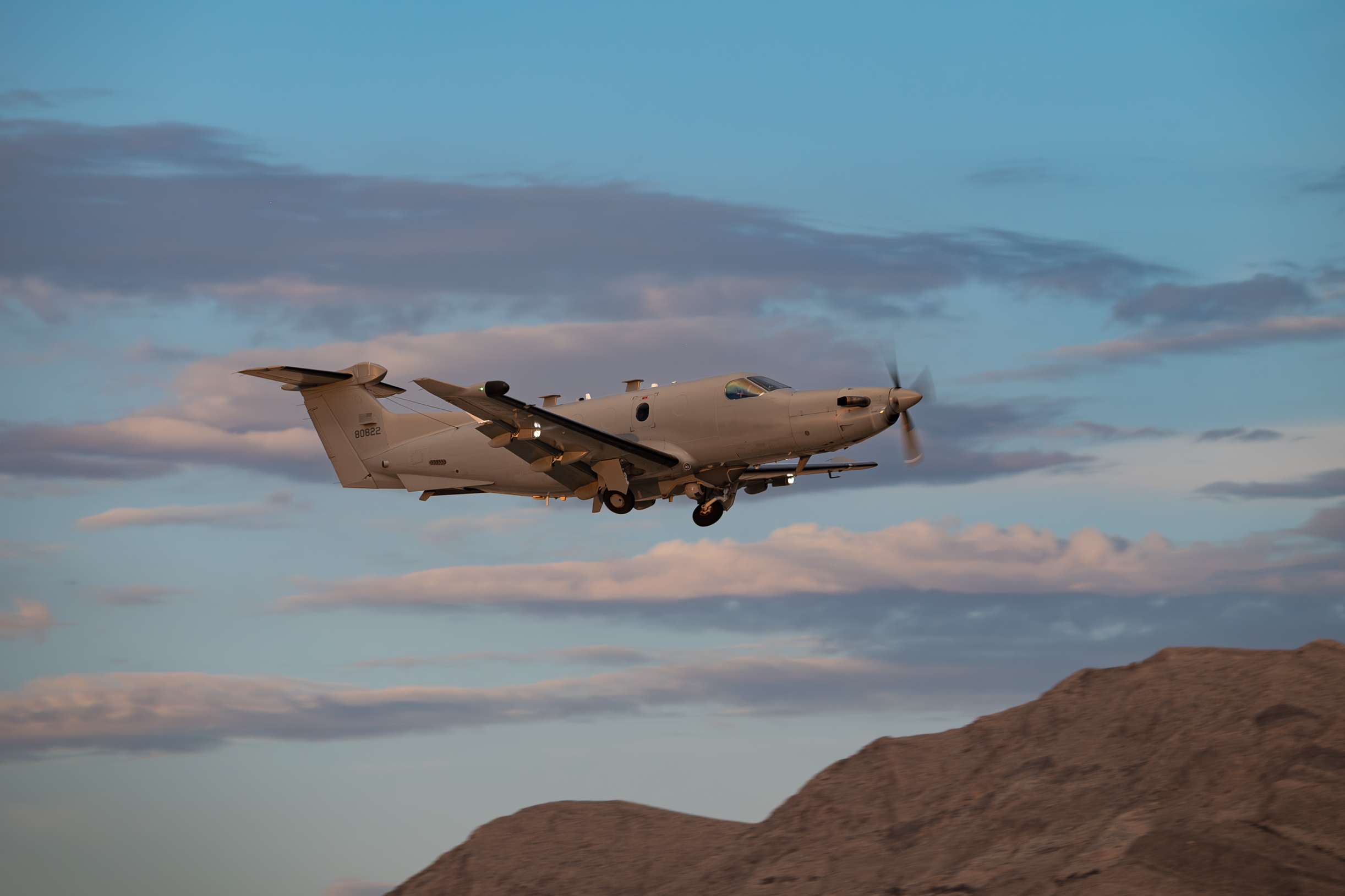
Austria says that, for two days in a row, its fighters were sent to intercept U.S. military aircraft, at least two of which entered its airspace without authorization. According to the Austrian Ministry of Defense, the aircraft were U.S. Air Force PC-12 turboprops, almost certainly a reference to the U-28A Draco, which the Air Force Special Operations Command uses primarily for intelligence, surveillance, and reconnaissance (ISR).
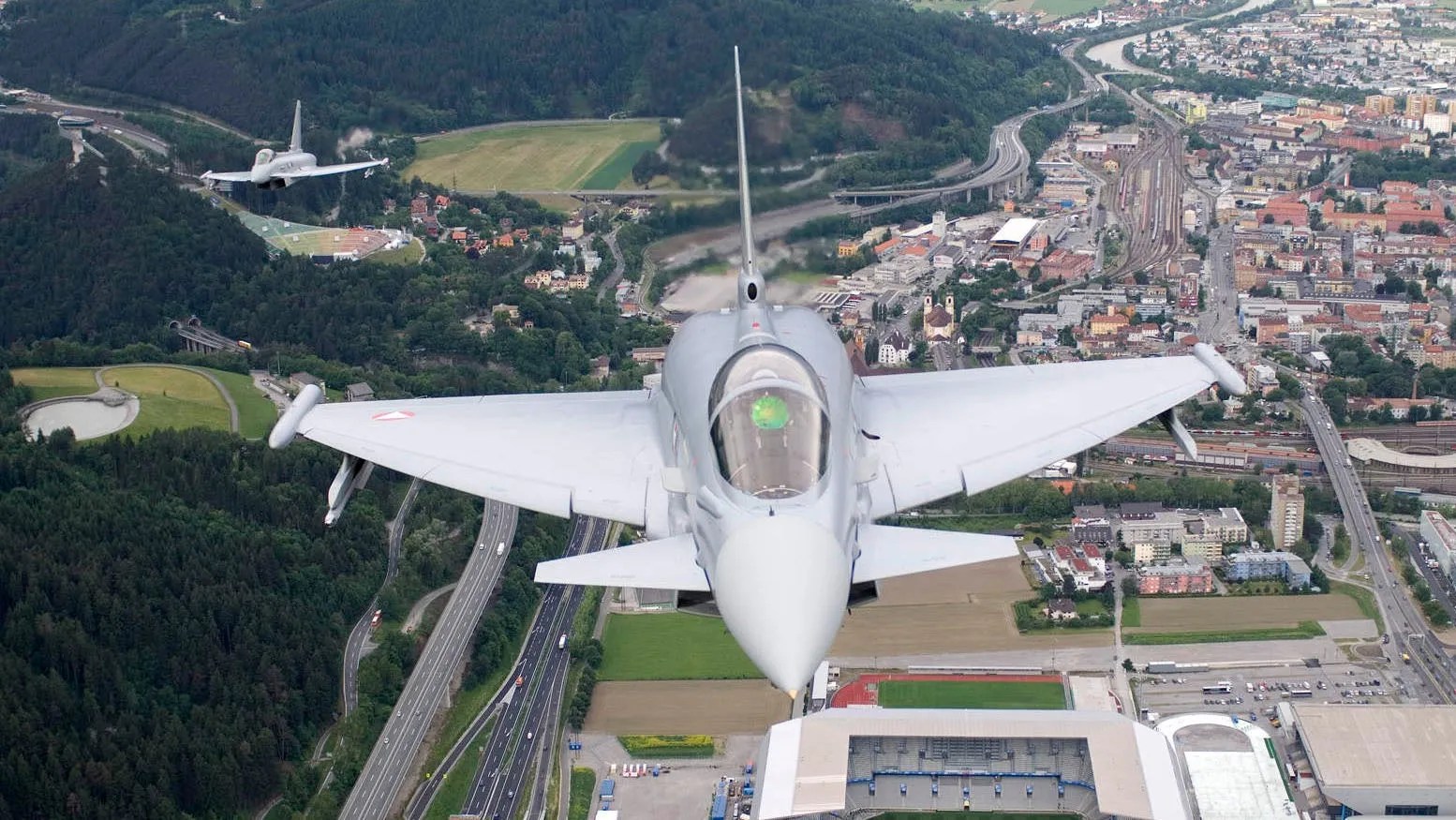
On Sunday and Monday this week, the Austrian Air Force scrambled Eurofighter Typhoons in response to the alleged flights in the neutral country’s airspace. This was confirmed by Austrian Ministry of Defense spokesperson Michael Bauer on X.
According to Bauer, the incident on May 10 saw the Austrian Air Force scramble two Eurofighters after a pair of “PC-12s” were detected flying without authorization in the Totes Gebirge region of Upper Austria. Once Austrian Eurofighters intercepted the aircraft, they are said to have turned back and returned to Munich, Germany.
The following day, at 12:31 p.m., two more Eurofighters scrambled in response to an overflight by two “PC-12s.” This was a so-called Priority A intercept, meaning the highest-priority response for the Quick Reaction Alert (QRA) force. On this occasion, however, Bauer said it was unclear whether the U.S. Air Force aircraft had the necessary clearances — in contrast to Sunday’s incident.
An official Austrian Ministry of Defense video shows a QRA scramble involving the Eurofighter:
Alarm für die Luftstreitkräfte
Austria retains clear guidance for the procedures of transiting its airspace, as detailed on this web page.
“The matter is to be resolved through diplomatic channels,” Bauer added.
In general, there appears to have been something of a spike in U.S. military aircraft activity over the Alpine region in recent days.
According to reports in the Swiss media, a total of nine overflights by the U.S. Air Force have taken place over Switzerland over the past three days. All of these flights were authorized.
The U-28A is a militarized version of the Pilatus PC-12M single-engine turboprop and carries a variety of sensors, including electro-optical and signals intelligence (SIGINT) equipment. It can also perform light utility duties in a pinch, among other missions.

Not all of the Draco aircraft share the same configuration, with different iterations appearing over the years. It is known that most of these aircraft have a sensor turret with electro-optical and infrared cameras, as well as SIGINT systems to geo-locate and monitor hostile communications and other emitters. There are also reports that some of the aircraft may have a synthetic aperture radar imaging capability.
AFSOC has also upgraded the U-28A to a configuration known publicly only as EQ+. This update includes a new sensor turret with a high-definition, multi-spectral imaging full-motion video camera, which also offers better standoff range, according to Pentagon budget documents. This allows the aircraft to fly at higher altitudes and operate further away from its target, reducing risks to the crew and allowing for more discreet surveillance.
The Draco also features an extensive communications and data-sharing suite. This allows them to transmit the information it gathers back to command centers for further exploitation or straight to personnel on the ground, all in near real-time. These capabilities give the Draco a robust overwatch capability for special operations forces on the ground.
The exact size of the current U-28A fleet is not entirely clear. In a report published in December 2023, the Government Accountability Office (GAO) said that close to 40 U-28As remained in service.
In September 2024, the GAO confirmed to TWZ that it was conducting a classified review of SOCOM’s decision to divest the U-28As, as well as its King Air-based ISR aircraft, the latter of which are often referred to collectively as MC-12s.
Meanwhile, the Draco continues in service. Since its first combat deployment in June 2006, these unassuming aircraft have established themselves as an important component of U.S. counter-terrorism operations around the world.
For Austria, airspace policing is one of the core functions of its air force. Indeed, the country’s controversial Eurofighter fleet is dedicated to this mission, with no air-to-ground capability at all.
Sitting outside of NATO puts Austria in a somewhat unusual position as regards U.S. overflights, although it should be noted that permissions were also denied by alliance members during Operation Epic Fury, the campaign against Iran.
While the Pentagon hasn’t officially disclosed the use of the U-28A in Epic Fury, it would not be surprising, especially considering its ability to operate from small airports and forward operating bases with limited infrastructure.

U.S. Air Force U-28A FARP Training
Meanwhile, there is also a precedent for unauthorized U.S. military overflights in Austrian airspace.
As we recounted in the past, in 2002, when the U.S. military was building up its forces in the Middle East ahead of a possible offensive against Saddam Hussein’s Iraq, the Air Force attempted to sneak two F-117A Nighthawks through Austrian airspace.
On that occasion, the U.S. Air Force filed a flight plan for a KC-10A Extender tanker to fly through Austrian airspace, something that was easier to gain clearance for, since it was unarmed. In fact, two F-117s were neatly tucked under the wings of the big tanker in close formation during the flight.
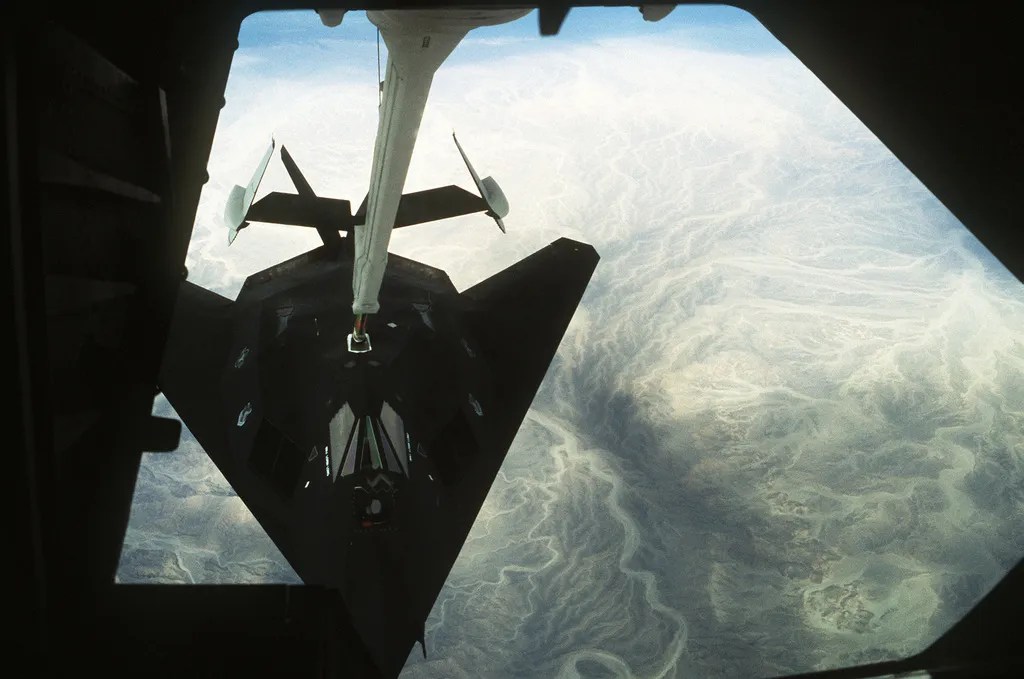
Due to irregularities in the flight plan, two Austrian Air Force Saab Drakens were scrambled and soon identified the two F-117s.
Imagery of the intercept was presented by the Austrian Minister of Defense during a meeting of the National Security Council and was presented as part of a diplomatic protest lodged at the U.S. Embassy in Vienna.

A glance at the map reveals why the U.S. military regularly overflies Austria and Switzerland when routing from Germany to Italy or to the Middle East, to avoid long transits over France. Due to Austria’s geography, incursions typically only occur for a few minutes, especially where the flight time between German and Italian airspace is very short.
We have reached out to the U.S. Air Force for clarification on the incidents.
At the very least, the apparent incursions demonstrate that the U-28A remains very much in operational use and active around Europe, while underscoring the sometimes fraught nature of overflight agreements.
Contact the author: thomas@thwarzone.com
editor's pick
latest video

news via inbox
Nulla turp dis cursus. Integer liberos euismod pretium faucibua