This post was originally published on this site.
Islamic Extremism After Sahel Collapse Exposes NATO Ineffectiveness
This post was originally published on this site.
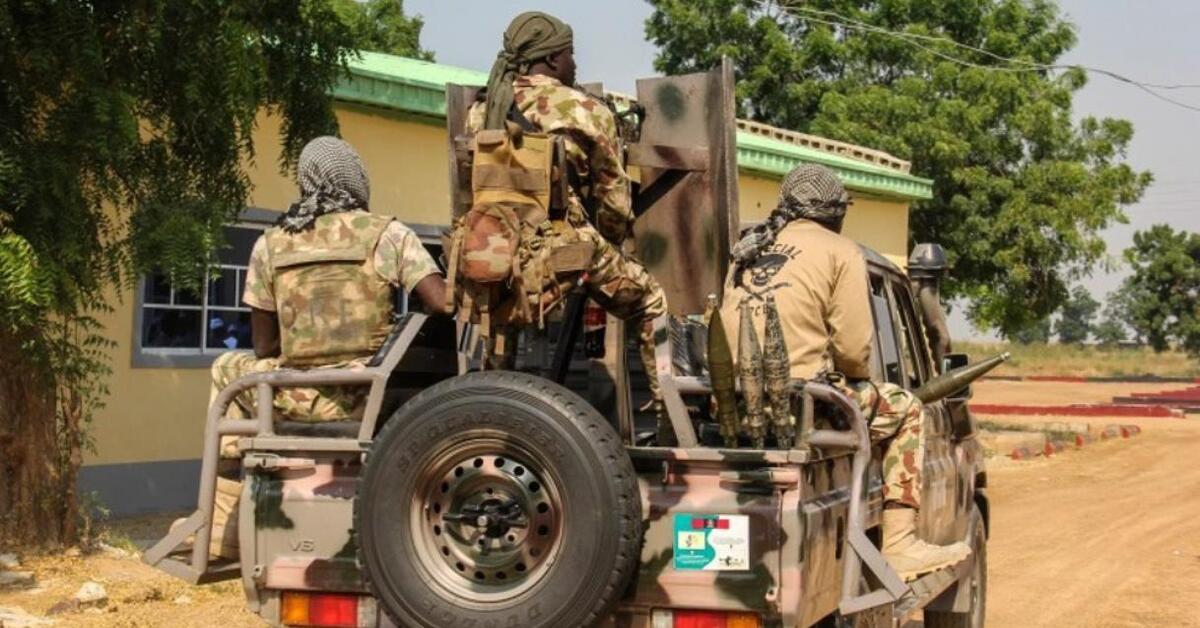
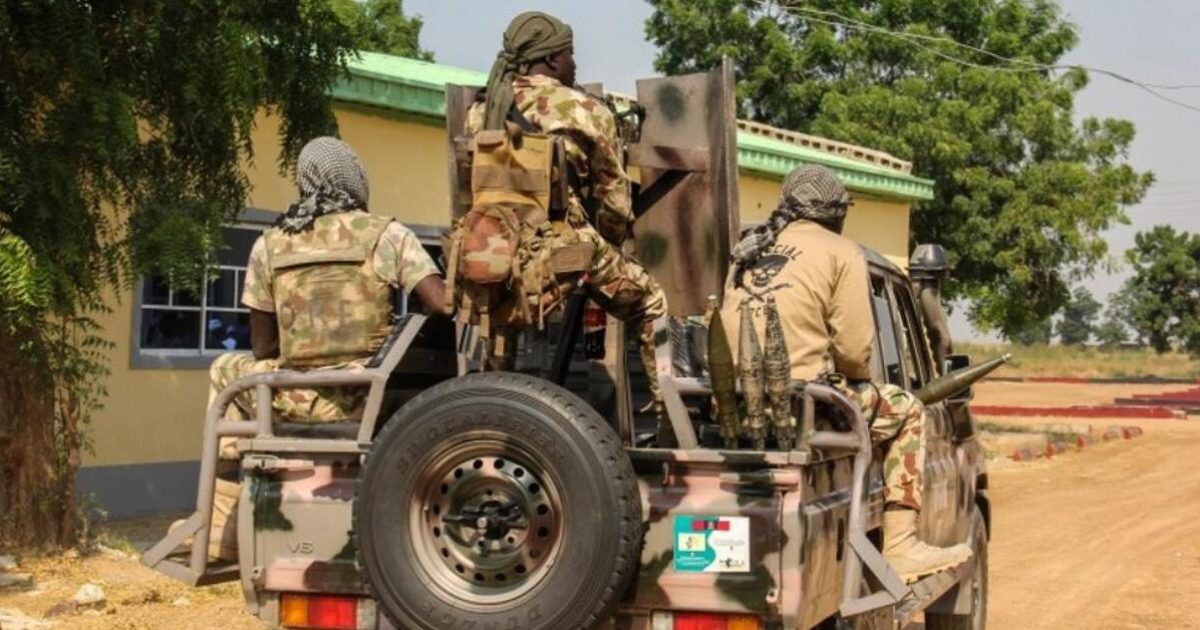
Mali is collapsing, and the consequences are Islamic extremism and economic fallout that threaten Europe. Since September 2025, the al-Qaeda affiliate Jama’at Nusrat al-Islam wal-Muslimin (JNIM) has waged economic warfare against the Malian government, blockading Bamako’s fuel supply and strangling the state’s capacity to function. Russia’s Africa Corps, which replaced Wagner as Mali’s security guarantor in mid-2025, has proven unable to break the siege.
Meanwhile, the United States, under President Biden, surrendered its primary intelligence platform in the region when Niger’s post-coup junta expelled American forces from Air Base 201 in 2024. The combination has left Europe’s southern flank exposed in ways NATO has formally acknowledged but is incapable of addressing.
JNIM announced the blockade on September 3, 2025, initially framing it as pressure to lift junta taxes on fuel imports, but later expanding it into a demand for Sharia law. Senegal and Ivory Coast together supplied approximately 95 percent of Mali’s fuel. JNIM severed those routes by attacking and burning trucks, kidnapping drivers, and destroying more than 300 tankers en route from Senegal, Ivory Coast, and Guinea.
Satellite imagery from May and October showed Bamako with visibly reduced lighting. Schools closed, blackouts spread, and the United States, United Kingdom, Australia, Italy, and Germany all advised their citizens to leave immediately, while Washington and London also pulled non-essential diplomatic staff.
The blockade was a deliberate encirclement strategy, replicating tactics previously used in Burkina Faso. JNIM’s Maçina Liberation Front had already launched seven simultaneous attacks across western Mali on July 1, 2025, spanning hundreds of kilometers near the Senegalese and Mauritanian borders. The offensive marked a major geographic expansion, with nearly 20 percent of JNIM’s violence in Mali shifting west and south, while fatalities doubled to more than 450 deaths in territory where the group had previously been largely absent.
Fuel rationing reduced patrol tempo and quick-reaction capability, creating openings for JNIM operations near the capital.
On April 25, 2026, the terrorists launched a major offensive. Joint coordinated attacks by the Azawad Liberation Front and JNIM struck Bourem, Bamako, Kati, Sévaré, Senou, and Mopti simultaneously, marking the largest attacks in the Mali War since the 2012 rebellion. Malian Defense Minister Sadio Camara was killed in a suicide vehicle bombing near Bamako, and Africa Corps subsequently abandoned Kidal, along with Aguelhok, Tessalit, Tessit, and Ber.
Russia’s security model, according to ACLED analyst Héni Nsaibia, provides rapid military support but does little to address the underlying drivers of militancy: weak governance, corruption, socio-economic marginalization, and ethnic tensions. Mali’s withdrawal from ECOWAS in January 2025 and its severing of intelligence-sharing arrangements with coastal West African countries have created a blind spot for neighboring states, even as JNIM expands toward their borders.
Biden giving up U.S. Air Base 201 in Niger removed what had been the West’s primary surveillance platform for the entire region. The base cost $110 million to build and was, at the time, the largest U.S. Air Force-led construction project in history, with drone operations targeting Islamic State and al-Qaeda beginning in 2019. Niger’s post-coup junta declared the U.S. military presence illegal in March 2024 and ordered American forces out days after a tense visit by U.S. officials.
The U.S. and Niger fundamentally disagreed over the junta’s desire to supply Iran with uranium and deepen ties with Russia. A senior U.S. defense official acknowledged the cost directly, stating that “even if we were to lift the exact thing that we had in Niger and put it somewhere else, we’re not able to monitor the threat in the same way,” adding that the loss of overflight permissions had degraded monitoring capability. AFRICOM confirmed the withdrawal was complete on September 16, 2024.
The Sahel’s share of global terrorist-related deaths had already risen from 1 percent in 2007 to 43 percent in 2022, according to the Global Terrorism Index, and a senior U.S. defense official described Niger as “really an anchor for our counterterrorism efforts over a decade.” Immediately, Russia seized the opportunity, with Africa Corps deploying to Niamey in April 2024 and moving into Air Base 101 by May, the same base the U.S. was vacating.
The consequences for Europe are now direct and measurable. The IOM recorded approximately 65,000 arrivals via the central Mediterranean route in 2025 alone. NATO Parliamentary Assembly delegates visiting Spain heard that criminal networks behind human trafficking also facilitate drug smuggling, and that Melilla, one of only two land borders between Europe and Africa, faces compounding pressure from Sahel instability.
A 2025 academic analysis published in the Polish journal Terroryzm assessed a realistic likelihood that a terrorist group could seize a major city in Mali or Burkina Faso by 2026, arguing that al-Qaeda has been preparing the groundwork for lasting governance.
The scenario differs from the Taliban or HTS models because of its broader regional reach. NATO’s 2024 Washington Summit Declaration incorporated new counterterrorism language on the Sahel and created a special representative for the southern neighborhood, but the alliance’s eastern flank remains the primary focus for member states, leaving the south structurally under-resourced.
EU member states compounded the problem by declining to extend the fifth mandate of the European Union Training Mission in Mali, dismantling Europe’s remaining institutional presence and leaving a security vacancy that Russia moved to fill. CSIS assesses that a meaningful NATO southern strategy cannot stop at the Mediterranean and instead requires deeper cooperation with partners such as Senegal and Nigeria to project stability farther south.
The U.S. Treasury’s Wagner designation, issued in January 2023, is now outdated given the Africa Corps rebranding, requiring updated sanctions targeting key individuals not already on the specially designated nationals list. Without those updates, and without a coherent NATO southern strategy, the Sahel’s disintegration will continue exporting its consequences directly into Europe.
The post Islamic Extremism After Sahel Collapse Exposes NATO Ineffectiveness appeared first on The Gateway Pundit.
editor's pick
latest video

news via inbox
Nulla turp dis cursus. Integer liberos euismod pretium faucibua
Leave A Comment
You must be logged in to post a comment.