This post was originally published on this site.
Trump Increasing U.S. Rare Earth Independence While Cutting China’s Access
This post was originally published on this site.

China has established itself as a rare-earth leader with a near monopoly. President Trump has taken numerous steps to break China’s grip, including a rare-earth deal with Kazakhstan and increased investment in Canada to strengthen U.S. independence. Now, U.S. interventions under Trump in Latin America are also reducing China’s access to rare earths, extending the competition into the Western Hemisphere.
China controls approximately 70% of rare-earth mining and 90% of refining. Tim Johnson, a technical advisor to REalloys (NASDAQ: $ALOY) and a ten-year veteran in the field of rare earth minerals, told The Gateway Pundit, “100% of all production today relies on some Chinese nexus, whether or not that’s technology, procurement of equipment, supplies, or reagents.”
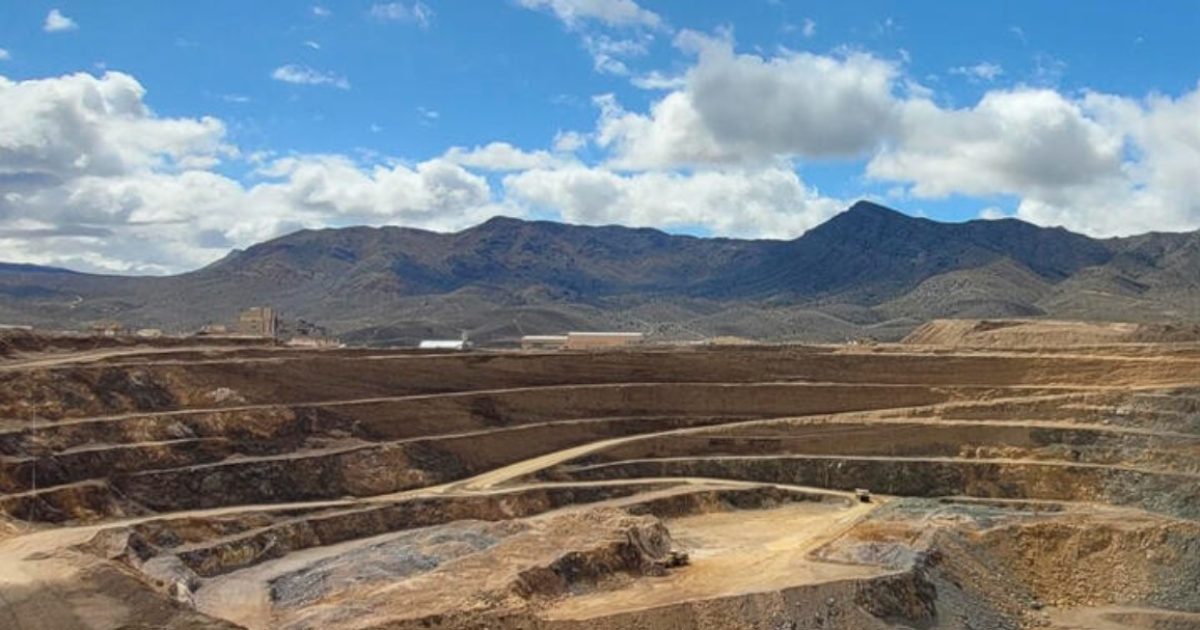
China did not always hold this position. After U.S. prospectors discovered rare earths at Mountain Pass, California, in 1949, China sent delegations to study the technology in the 1980s and 1990s, replicated and improved it using cheap electricity, and built a domestic industry that was both lucrative and environmentally destructive. Chinese state media compared the industry at its worst to drug trafficking.
Beijing imposed export quotas in the 1990s and launched what it internally called a “secret war” of consolidation starting in 2011, reducing hundreds of firms to six state-backed giants. After losing a WTO challenge in 2014, China shifted from controlling output volume to controlling which firms could operate, creating a more durable form of dominance. Today, Chinese state-backed monopolies control roughly 89% of global refining and nearly every stage of the high-performance magnet supply chain.
China escalated further in April 2025 when the Ministry of Commerce imposed national-security-based export licenses on seven elements, including dysprosium and terbium. Export volumes fell sharply, forcing U.S. and European manufacturers to cut production. Prices in Europe rose to as much as six times those inside China.
On October 9, 2025, Beijing expanded controls across the entire supply chain, applying extraterritorial rules to transactions between third countries and restricting exports to companies linked to foreign militaries. Beginning December 1, 2025, military-related applications were effectively cut off.
The defense implications are significant. Heavy rare earths such as dysprosium and terbium are essential for precision-guided munitions, hypersonic weapons, and advanced aircraft systems. Gadolinium and terbium are used in stealth coatings on platforms including the F-35 and B-21 Raider. These materials also play a critical role in submarine sonar systems and nuclear propulsion.
The Trump administration has moved on multiple fronts to break that grip by securing supply agreements with Kazakhstan and Canada, investing in domestic production, and locking in Latin American supply chains. The most significant recent step is the nearly $3 billion acquisition by Trump administration-backed USA Rare Earth of Brazil’s Serra Verde Group, owner of the Pela Ema mine and processing plant.
Serra Verde is the only large-scale producer of the four key magnetic rare earths, neodymium, praseodymium, dysprosium, and terbium, outside of Asia, and its output is expected to represent more than half of all non-China heavy rare earth supply by 2027. The deal is backed by $565 million in U.S. International Development Finance Corporation financing and includes a 15-year output agreement, positioning the combined entity to generate between $550 million and $650 million in EBITDA by the end of 2027.
Serra Verde has reduced China’s access by renegotiating its offtake agreements so they expire at the end of 2026, with future contracts expected to shift to processors in the United States, Australia, Estonia, France, and Malaysia.
The Serra Verde deal is part of a broader Latin American strategy. At the February 2026 Critical Minerals Ministerial, hosted by Secretary Rubio with participation from 54 countries, the United States signed eleven new bilateral frameworks with countries including Argentina, Ecuador, Paraguay, and Peru. The Inter-American Development Bank provided a $100 million loan toward a $2.5 billion lithium project in Argentina, and its president, Ilan Goldfajn, stated that regional governments are now focused on building their own processing capacity rather than exporting raw materials to Asia.
This shift aligns with the Trump administration’s 2025 National Security Strategy, which explicitly calls for U.S. control over critical mineral access in the Western Hemisphere and prioritizes strengthening regional supply chains to reduce outside influence.
REalloys is among the companies building a fully independent North American supply chain, describing a system designed without any Chinese components. Processing is conducted in Saskatchewan, Canada, using infrastructure capable of handling radioactive materials, while final metallization and magnet production take place in the United States.
The company sources materials from Kazakhstan and recycled inputs and has signed agreements with firms operating in Greenland and Japan. Its focus is on heavy rare earths, which are essential for advanced military and high-temperature industrial applications. Johnson stated that REalloys expects to become the largest producer of heavy rare earths in the Western Hemisphere by early 2027, targeting approximately 7% of global demand by 2030.
“To be 1% reliant on China is to be 100% reliant on China,” Johnson said, emphasizing that even indirect dependencies can create strategic vulnerabilities.
He credited the Trump administration with forcing change across the industry by ending tolerance for Chinese sourcing and accelerating domestic and allied production capacity.
The expansion into Latin America, combined with investments in Canada, Greenland, and domestic production, signals a long-term effort to build a fully independent supply chain. By securing Brazil’s Serra Verde and establishing regional agreements across the hemisphere, the United States is not only reducing its dependence on China but also actively limiting Beijing’s access to critical mineral resources.
The post Trump Increasing U.S. Rare Earth Independence While Cutting China’s Access appeared first on The Gateway Pundit.
editor's pick
latest video

news via inbox
Nulla turp dis cursus. Integer liberos euismod pretium faucibua
Leave A Comment
You must be logged in to post a comment.