U.S. Seizes First Iranian-Linked Ship Outside The Middle East Region Since Epic Fury Began
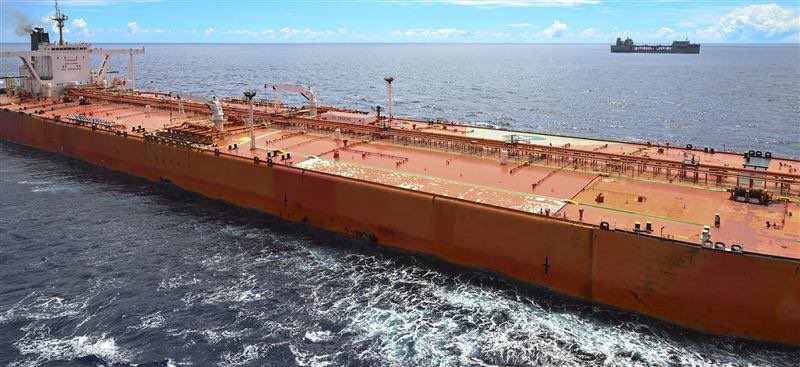
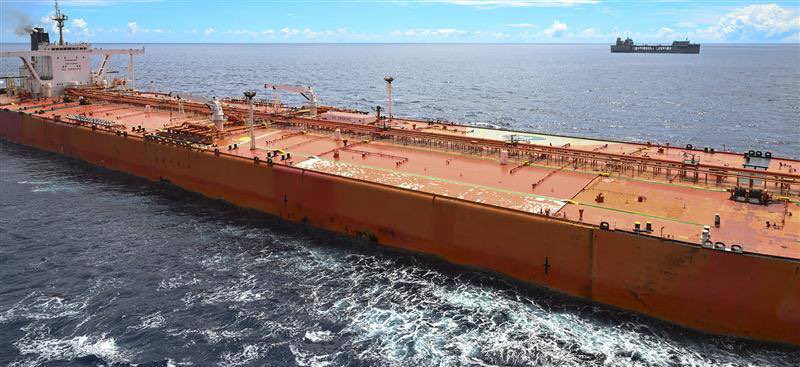
For the first time since at least the launch of Operation Epic Fury on Feb. 28, an Iranian-linked vessel was interdicted in the Indo-Pacific Command (INDOPACOM) region, the Pentagon confirmed to The War Zone. The boarding of the Botswana-flagged oil tanker M/T Tifani came just days after Joint Chiefs Chairman Gen. Dan Caine told reporters, including from The War Zone, that the U.S. would “actively pursue any Iranian-flagged vessel or any vessel attempting to provide material support to Iran” anywhere in the world. The move also follows the U.S. firing on and seizing the Iranian cargo ship Touska on Sunday in the Arabian Sea.
Meanwhile, as the clock ticks down toward the end of a fragile ceasefire between the U.S and Iran, the future of peace negotiations remains very much uncertain, which we will discuss later in this story.
“Overnight, U.S. forces conducted a right-of-visit, maritime interdiction and boarding of the stateless sanctioned M/T Tifani without incident in the INDOPACOM area of responsibility,” the Pentagon stated Tuesday morning on X. “As we have made clear, we will pursue global maritime enforcement efforts to disrupt illicit networks and interdict sanctioned vessels providing material support to Iran—anywhere they operate. International waters are not a refuge for sanctioned vessels. The Department of War will continue to deny illicit actors and their vessels freedom of maneuver in the maritime domain.”
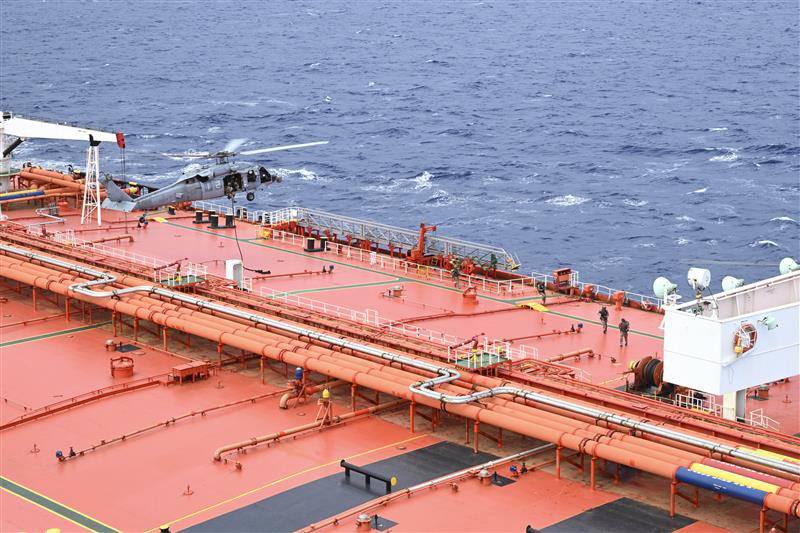
Video released by the Pentagon shows about two dozen armed troops boarding two MH-60S Seahawk helicopters on a U.S. Navy Expeditionary Sea Base (ESB) ship. The video then cuts to the troops repelling onto the deck of the Tifani and searching that vessel.
The Pentagon did not say where the incident took place, however, according to MarineTraffic.com, the Tifani was last located yesterday in the Indian Ocean, about halfway between Sri Lanka and Indonesia and some 2,000 miles southeast of Iran.
The Pentagon told us that “multiple agencies” played a role in seizing the ship. We have reached out for additional details.
Gregory Brew, Senior Analyst, Iran and Oil for Eurasia Group, stated on X that the Tifani departed from Iran’s Kharg Island on April 5 and that the ship appears to have continued sailing on after the boarding. We asked the Pentagon for more details about the ship’s disposition and they referred us to the White House, which sent us back to the Pentagon.
The ship was sanctioned under a 2018 executive order issued by President Donald Trump during his first term designed to counter Iranian malign activities and prevent it from obtaining a nuclear weapon.
UPDATES
The status of peace talks in Pakistan remains murky. While Vice President JD Vance and other top officials are expected to leave for the negotiations today, Iranian officials have yet to officially commit. The main sticking points remain the future of Iran’s highly enriched uranium, the Strait of Hormuz, the status of its ballistic missile inventory and support for proxies like Hezbollah in Lebanon and the Houthis of Yemen.
“A diplomatic source in Pakistan says no diplomatic delegation from Iran has been dispatched to Islamabad ‘so far,’” the official Iranian IRNA news agency stated on Tuesday. “In response to speculations about possible negotiations in Pakistan, a diplomatic source told IRNA on Tuesday that no delegation from Iran has arrived in the Pakistani capital.”
The source clarified that “neither official nor unofficial information has been received regarding any Iranian involvement in the negotiations in Islamabad.”
In a brief phone call, Trump told CNBC host Joe Kernan he thinks the U.S. is “going to end up with a great deal” with Iran to end the war, even as he said he does not expect to extend a ceasefire due to expire on Wednesday.
“I think they have no choice,” Trump said during an interview on CNBC’s “Squawk Box,” when asked what he expected to come out of a second round of peace negotiations with Iran. “We’ve taken out their navy, we’ve taken out their air force, we’ve taken out their leaders.”
The president added that he is ready to resume the conflict if a deal with Iran does not appear in the offing.
“Well, I expect to be bombing because I think that’s a better attitude to go in with – but we’re ready to go,” Trump answered when asked if he needs at least the prospect for a signed deal either today or tomorrow.
Trump also said “I don’t want to do that,” when asked if he would extend the ceasefire beyond tomorrow if talks with Iran appear promising.
Iran is banking on “market meltdowns” and domestic economic pressures to get Trump to back down on his demands, Fox News reporter Trey Yingst suggested Tuesday morning.
“Iran sees this as a game of endurance. They believe that time is on their side and that ultimately the domestic pressure, when it comes to energy markets and the stock market, will force President Trump to make a deal that’s in their favor,” he explained. “That is not the truth. That is not the reality…The president and his counterparts in Israel have the ability to continue this operation for months if they need to.”
Trump is “misleading” the world about “conditions on the ground,” Iran’s top military operational commander claimed.
“Holding the upper hand, the Armed Forces do not allow the lying and delusional president of the United States to exploit the situation or fabricate false narratives about conditions on the ground, particularly regarding the management and control of the Strait of Hormuz, during periods of silence in military confrontation,” proffered Major General Ali Abdollahi, commander of Khatam al-Anbiya Central Headquarters, which is responsible for coordinating operations between the country’s Army and the Islamic Revolution Guards Corps (IRGC).
Abollahi added that the Armed Forces “will duly respond to any breach of commitments” by the “adversaries,” a reference to the U.S. firing on and seizing the Iranian cargo ship Touska on Sunday.
Though the status of the peace talks is unclear, Pakistan has emerged as a winner on the world stage. However, it is an unlikely mediator, The Washington Post notes.
“Pakistan does not formally recognize Israel, one of the key countries involved,” the Post posited. “It became a nuclear power in secret, as the U.S. and Israel have accused Iran of seeking to do. And it did not start off on the right foot with President Donald Trump, who in his first term said Pakistan had given Washington ‘nothing but lies and deceit.”
But over the past year, “a focused campaign to win Trump’s favor appears to have paid off,” the newspaper added. “For months, Pakistan’s leaders wooed the Trump administration with flashy deals and public praise.”
“We read him right,” said Mushahid Hussain Syed, the former chairman of the Pakistani Senate’s Defense Committee. He said Pakistan recognized Trump’s transactional approach to diplomacy early.
“We delivered, and we delivered big time,” Syed said. “We gave him the three C’s: crypto, critical minerals and counterterrorism.”
Recent events in and around the Strait of Hormuz – including the IRGC opening then closing the narrow body of water, its attack on several foreign vessels and the U.S. seizure of an Iranian cargo ship – are creating further instability in the world energy markets, according to global market intelligence firm Kpler.
Shipping giant Maersk is urging ships to avoid the region.
“Volatility persists in the situation,” the company stated. “In coordination with our security partners, we have assessed that as of now, transit through the Strait should be avoided. We will continue monitoring developments and provide updates as clarity improves.”
The International Maritime Organization is “working on an evacuation plan for hundreds of ships that have been stuck in the Persian Gulf since US and Israeli strikes on Iran began more than seven weeks ago,” Bloomberg News reports, citing Secretary General Arsenio Dominguez.
The plan can only be put into action when there are clear signs of de-escalation, Dominguez said on the sidelines of Singapore Maritime Week on Tuesday. The United Nations agency would also need to ascertain if mines had been laid in the strait before sending ships through, he said.
Around 800 ships remain stuck in the Persian Gulf after traffic through the Strait of Hormuz slowed to a trickle following the outbreak of the war. Tehran’s threats and attacks on vessels had made most shipowners too nervous to attempt a transit, although the Islamic Republic had been allowing some vessels that followed approved routes to exit, and demanding payment in some cases.
The U.S. blockade of Iranian ports on April 13 — aimed at depriving Iran of revenue for the war — has made the situation even more perilous.
Even if the war ended today and the Strait was reopened, it will likely take several months – and maybe even into next year – for U.S. domestic gasoline prices to drop back down to pre-war levels, Axios noted.
There is disagreement on this even in Washington. Energy Secretary Chris Wright told CNN Sunday that gas might not drop all the way down to the pre-war level — just under $3 per gallon — until next year. President Trump, for his part, appeared to contradict Wright in comments to The Hill Monday, seeing a faster drop.
However, researchers and analysts Axios interviewed “see slower price drops — pretty close to Wright’s prediction,” the outlet posited.
“Even in the most optimistic of these scenarios, in which flows through Hormuz recover quickly with no restrictions, U.S. retail gasoline prices are likely to face an uphill battle to return to pre-war levels until 2027,” Rob Smith, S&P Global director of refining and marketing, told Axios.
China is lowering domestic retail gasoline and diesel price caps, Reuters reported. This marks its first cut this year as global oil prices retreated from their peaks of the Iran war.
The price drop “will save a private car owner about $3.23 to fill a 50-litre tank of 92-octane gasoline,” the outlet noted. “High gasoline and diesel prices have sharply curbed retail consumption, leading to a surge in inventories at independent refineries and prompting widespread wholesale price cuts to clear stocks, Chinese consultancy Oilchem said.”
Iraqi militias backed by Iran launched dozens of explosive drones at Saudi Arabia and other Gulf states during more than five weeks of fighting, in what is becoming a shadowy war within a war pushing some of the world’s largest oil producers toward open conflict, according to The Wall Street Journal.
According to at least one Saudi assessment described by a person familiar with it, up to half of the nearly 1,000 drone attacks on the kingdom came from inside Iraq, the publication pointed out.
Contact the author: howard@thewarzone.com
editor's pick
latest video

news via inbox
Nulla turp dis cursus. Integer liberos euismod pretium faucibua