This post was originally published on this site.
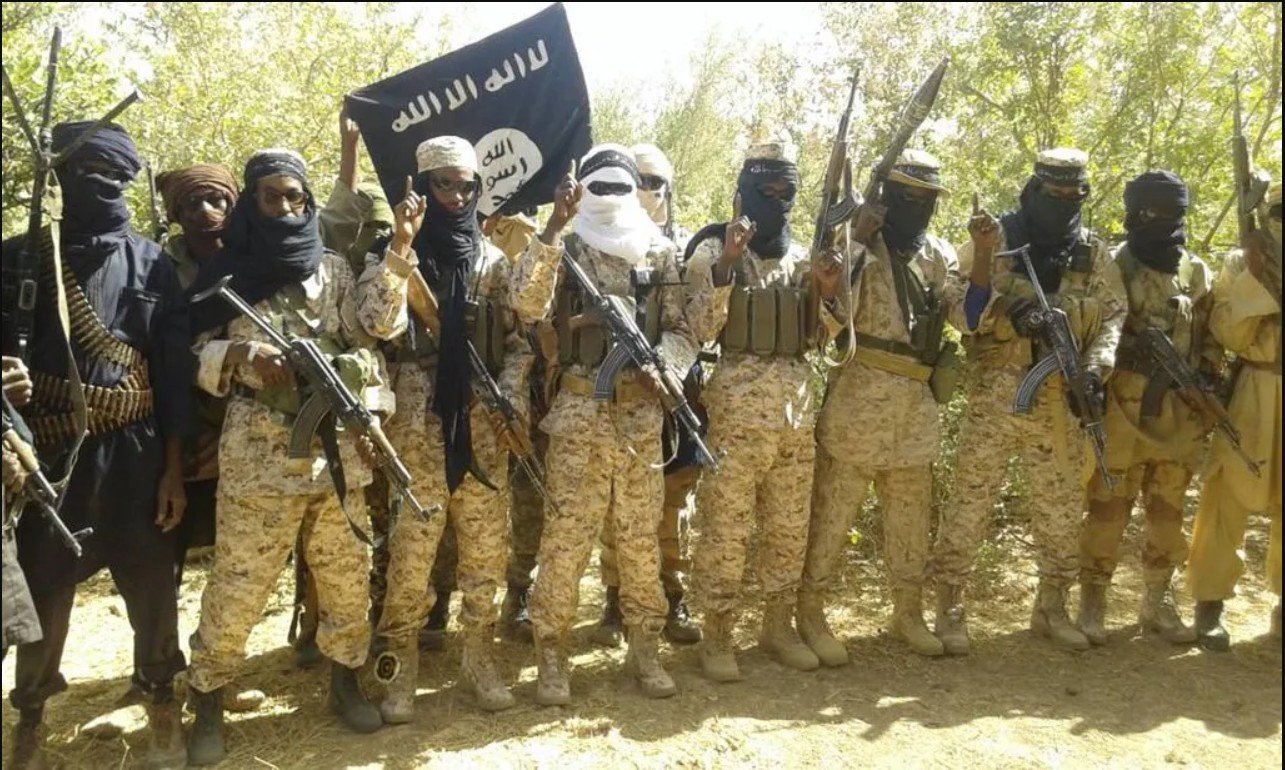
Jihadist Network Identified as U.S. Homeland Threat Expands Control in Mali
This post was originally published on this site.

A jihadist network the U.S. government has specifically identified as a homeland threat is seizing control of a West African nation the size of Texas and California combined. In his posture statement to Congress, AFRICOM commander General Michael Langley warned that if ISIS and al-Qaeda groups, including JNIM, the al-Qaeda affiliate that on April 25, 2026, launched the largest coordinated attack in Mali’s history, continue their expansion, they will pose a direct threat to the U.S. homeland.
In a State Department press briefing, Langley stated directly that JNIM and other violent extremist organizations in the Sahel “have aspirations of attacking the United States homeland.”
The 2026 Homeland Security Threat Forecast named JNIM specifically among groups capable of sustaining training infrastructures, facilitating cross-border fighter movement, and inspiring or directing strikes abroad from Sahel safe havens. The CFR’s Global Conflict Tracker assessed that the growing strength of violent extremist organizations in the Sahel poses significant security and financial risks to the U.S. and Europe.
The Soufan Center’s 2026 threat forecast concluded that JNIM, which has effectively conducted an insurgency while building shadow governance structures, will likely continue to expand with only minimal state resistance.
That expansion has been enabled, in part, by the junta’s own conduct. Mali is governed by Gen. Assimi Goïta, who seized power in a 2020 coup, staged a second coup in 2021, dissolved all political parties in May 2025, and in July 2025 granted himself a five-year presidential mandate, renewable indefinitely. According to ACLED data, Russian fighters and Malian soldiers killed at least 918 civilians in the previous year, compared with 232 killed by JNIM and the Islamic State Sahel Province (ISSP) combined.
The Africa Center reports that since 2023, civilian fatalities linked to Malian security forces and their Russian partners have far exceeded those attributed to militant Islamist groups, a pattern that has driven rural populations toward JNIM for protection and fueled the group’s recruitment. With political parties banned and elections indefinitely deferred, there are no domestic channels through which grievances can be addressed.
The U.S. spent more than two decades and hundreds of millions of dollars attempting to prevent exactly this outcome. U.S. counterterrorism investment in Mali dates to the immediate aftermath of 9/11. In 2002, the State Department launched the Pan Sahel Initiative to assist Mali, Niger, Chad, and Mauritania in detecting and responding to suspicious movement of people and goods. Funded at nearly $8 million over two years, it deployed the 10th Special Forces Group to train rapid-reaction companies of roughly 150 soldiers in each partner nation.
In 2005, Congress approved $500 million for the successor Trans-Saharan Counterterrorism Initiative over six years, with Mali as a primary recipient. Of the $230 million obligated between 2005 and 2007 alone, approximately 74 percent went to Sahel countries, including Mali, according to a GAO audit. The initiative was later absorbed into AFRICOM, which has sustained operations and training across the continent since 2008.
Mali’s political collapse unfolded in two stages. On August 18, 2020, senior military officers led by Goïta launched a coup from the Kati military base outside Bamako, citing the government’s ineffectiveness and corruption in handling the northern conflict. Goïta was initially installed as vice president of a transitional government, with a civilian figurehead as president and a promise to hold elections within 18 months.
A second coup followed in May 2021, when Goïta arrested the transitional president and prime minister and assumed the presidency himself after a dispute over whether to cooperate with France or Russia. By the end of 2021, hundreds of Wagner Group mercenaries had deployed across Mali, prompting France, Canada, and European partners announced a full troop withdrawal by mid-2022, citing Wagner’s presence. By December 2023, more than 15,000 French, EU, and UN troops had departed from Mali, Burkina Faso, and Niger.
Prior to the coups, the U.S. maintained training missions and cooperative security locations across Mali, Niger, and the broader Sahel. This included a $110 million drone base in Niger that served as a regional hub for counterterrorism operations. Niger’s July 2023 coup proved the most consequential, as Washington was ultimately forced to hand over its last military base there to local authorities in August 2024. The loss of Niger’s basing, combined with the earlier exclusion from Mali, has effectively ended persistent U.S. counterterrorism coverage across the central Sahel.
Mali’s collapse is the product of compounding failures. These include the expulsion of French forces and UN peacekeepers, the turn to Russian mercenaries who alienated the population through civilian killings, the destruction of political legitimacy under an indefinitely extended military junta, and the steady geographic expansion of jihadist networks. These groups have now demonstrated the capacity to strike simultaneously across 1,500 kilometers of territory.
The Soufan Center assessed after the April 25 attacks that having a country the size of Mali under the control of a terrorist group would set off alarm bells from Washington to Paris. Yet both the U.S. and France are not currently postured to respond. Counterterrorism budgets and personnel continue to be rolled back, and a general sense of terrorism fatigue has set in across the U.S. government, despite repeated warnings from its own intelligence and military leadership of a growing threat to the homeland.
The post Jihadist Network Identified as U.S. Homeland Threat Expands Control in Mali appeared first on The Gateway Pundit.
editor's pick
latest video

news via inbox
Nulla turp dis cursus. Integer liberos euismod pretium faucibua
Leave A Comment
You must be logged in to post a comment.