Iran’s Oil Crisis Is Fueling Inflation, Major Banks Say Gold Is Next
The following content is sponsored by Lear Capital.
The conflict with Iran is doing more than dominating headlines. It has already helped send oil prices sharply higher, and caused one of the most severe energy disruptions on record. The oil flowing through the Strait of Hormuz remains limited, physical crude markets are disrupted, and the truce is widely seen as fragile. That is why the risk has not disappeared. Goldman Sachs has warned that oil prices could spike again and Barclays said delays in restoring normal flows could create further volatility risk for oil.
That matters because when oil spikes, the damage does not stop at the gas pump. Higher energy costs can spread across the economy, raising the cost of shipping, food, airfare, utilities, and everyday household goods. When those costs rise, your dollars simply do not go as far. Savings lose buying power, and the pressure on family budgets gets even worse.
At the same time, inflation was already proving stubborn before the latest shock fully hit the economy.
The Organisation for Economic Co-operation and Development (OECD) warned U.S. inflation could reach 4.2% in 2026, versus the Fed’s 2.7% estimate.
Why This Moment Matters
In the short term, markets often react first to the immediate shock. Oil jumps. Inflation fears rise. The dollar can strengthen. Bond yields can move higher. That can temporarily depress gold prices, even when the bigger long-term setup points to future increases.
The More Important Question Is What Comes Next
If inflation continues to rise and energy markets remain disrupted, the economic damage will spread. Families keep paying more. Businesses face higher costs. Growth will slow. And recession fears will start to build.
In fact, Moody’s Analytics recently raised its forecast for U.S. recession over the next 12 months to 49% – just one point below the 50% threshold that has historically preceded a recession. Moody’s new forecast was largely driven by increasing economic pressures from the Iran conflict and rising oil prices
Times like this can also create opportunity.
With the warning signs getting louder and gold prices still down from recent highs, this can be the kind of setup Americans later wish they had acted on sooner. If inflation worsens, oil spikes again, or investors rush into safe-haven assets, today’s gold prices could look like a missed opportunity very quickly.
Claim Your Free Gold Investor Kit
Call 800-992-2255 or visit LearAlex.com to claim your free Gold Investor Kit.
This free kit explains why inflation shocks matter, how gold and silver have historically responded during periods of geopolitical stress, and why many Americans are taking a closer look at tangible assets.
If the rising cost of living, global instability, and market volatility have you questioning how secure your savings really are, now is the time to get informed.
Major Banks Say This Could Be a Buying Opportunity
Some of the biggest names on Wall Street are making it clear they believe gold’s next major run is coming.
And this is where the urgency comes in.
As of April 14, gold was trading around $4,800 per ounce, and several major institutions believe big moves are coming.
– J.P. Morgan outlined a year-end 2026 target of around $6,300 per ounce.
– Wells Fargo recently set a year-end 2026 target range of roughly $6,100 to $6,300.
– Bank of America projected gold could reach $6,000 per ounce.
These are not small calls. They imply the potential for substantial upside from current levels.
And these banks are not basing their outlook on one headline or one isolated event. Their projections reflect a broader set of forces that continue to build: ongoing inflation risks, aggressive central-bank buying, rising recession fears, increasing concern over the size of U.S. debt, growing global uncertainty, and the possibility that the Federal Reserve may eventually cut interest rates if economic weakness deepens.
In other words, this is not just about Iran. It is about a much bigger series of events that has been forming for a long time.
A Final Word
If inflation stays high and energy prices remain unstable, gold’s recent pause may not be a reason to wait. It may be the kind of opportunity to “buy the dip” people later wish they had taken more seriously.
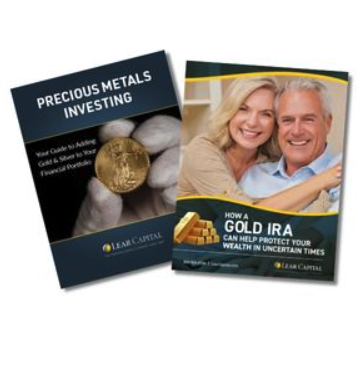
For those who want to better understand the role precious metals can play during periods of inflation, volatility, debt pressure, and geopolitical uncertainty, Lear Capital is offering two free guides:
Precious Metals Investing & How a Gold IRA Can Help Protect Your Wealth in Uncertain Times
Inside, readers can learn more about the role of hard assets during unstable market cycles and how a Gold IRA may help protect retirement wealth when uncertainty rises.
To claim your free guides, call 800-992-2255 or visit LearAlex.com.
There’s no obligation.
Qualified purchases may also be eligible to receive up to $20,000 in bonus gold or silver.
Do not wait for the next inflation wave or energy shock to decide your savings need protection. By the time the next move is obvious, the opportunity may look very different. Get the facts now while this window is still open.
As Breitbart Editor-in-Chief Alex Marlow recently noted: “With over 25 years of experience, thousands of 5-star reviews, and their 24-hour risk-free purchase guarantee, Lear is who I trust to help me when buying gold and silver.”
Lear has an A+ rating from the BBB and has conducted over $3 billion in transactions since 1997.
Call 800-992-2255 or visit LearAlex.com to request your free reports.
editor's pick
latest video

news via inbox
Nulla turp dis cursus. Integer liberos euismod pretium faucibua