This post was originally published on this site.
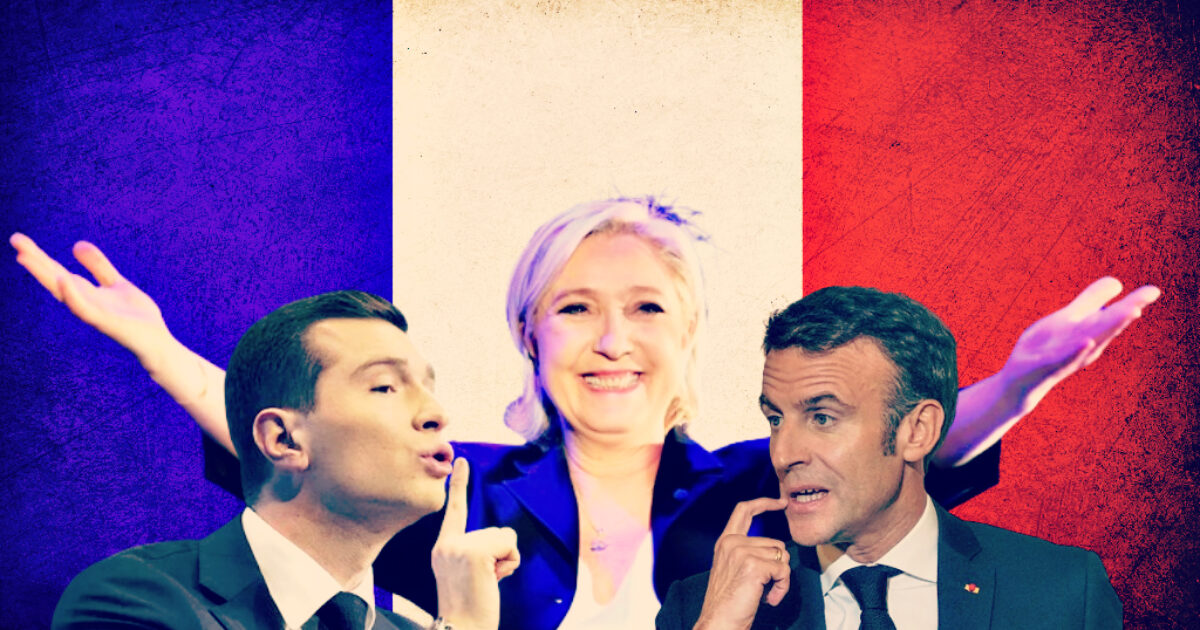
France: National Rally Leader Bardella Set to Win Presidency in 2027 as Macron’s Political Order Collapses
This post was originally published on this site.
France’s political landscape is undergoing a dramatic transformation as new polling shows nationalist, anti-globalist leader Jordan Bardella on track to win the presidency in 2027, signaling what many see as the collapse of the country’s traditional political order.
According to a new survey by Odoxa, Bardella would defeat establishment candidate Édouard Philippe in a second-round runoff by 52 percent to 48 percent.
The numbers mark a significant shift in French politics. Once dismissed as a protest figure, Bardella is now increasingly viewed as a credible governing alternative.
The French publication Valuers Actualles, citing the poll, noted that the result reflects growing dissatisfaction with the political center and the legacy of President Emmanuel Macron.
Macron’s approval ratings have plummeted. Only 23 percent of French voters now consider him a “good president,” while 76 percent disagree.
Even within his own political base, confidence is eroding. A growing share of his supporters express doubts about his leadership.
The decline of Macron’s centrist bloc is reshaping the electoral field. Analysts say the political center is shrinking rapidly.
Philippe, once seen as the establishment’s strongest contender, is losing ground. His support has dropped to 17 percent in first-round polling.
Intentions de vote au second tour de la présidentielle • @OdoxaSondages
— Clément Macchi (@clement_mci) November 25, 2025
 Intentions de vote au second tour de la présidentielle •
  J. Bardella : 53%
 E. Philippe : 47%
At the same time, the left is consolidating around a more radical figure. Jean-Luc Mélenchon is gaining momentum.
Mélenchon has climbed to 16 percent, nearly matching Philippe.
The surge has alarmed establishment figures. A second-round contest between Bardella and Mélenchon is increasingly seen as a real possibility.
For many in the political center, that scenario is deeply concerning. It would represent a complete breakdown of the traditional political order.
Yet polling suggests such a matchup would produce a decisive outcome. Bardella is projected to win overwhelmingly against Mélenchon.
Previous Odoxa data indicated a potential 74 percent to 26 percent landslide.
The implications are significant. France appears to be moving toward a polarized political system.
On one side stands a nationalist bloc led by Bardella. On the other, a radical left coalition centered around Mélenchon.
Between them, the centrist establishment is losing relevance. Its voter base is fragmenting and shrinking.
Bardella’s rise reflects more than just dissatisfaction. It signals a broader shift in public sentiment.
For many voters, issues such as national identity, security, and sovereignty are becoming central. These concerns have reshaped the political debate.
Within the National Rally, support for Bardella is exceptionally strong. Polling shows approval levels as high as 95 percent among party supporters.
This level of internal unity contrasts sharply with the fragmentation seen in other parties. It gives the nationalist camp a strategic advantage.
Traditional figures on both the right and left are struggling to regain footing. Their influence appears to be fading.
François Hollande, for example, has failed to reestablish himself despite increased visibility.
Similarly, other centrist and left-wing figures are losing ground. Their messages are failing to resonate with voters.
Even newer faces have not gained significant traction. Gabriel Attal maintains a relatively positive image but lacks strong electoral momentum.
The broader trend is clear. French politics is undergoing a profound realignment.
Analysts describe a system increasingly defined by two opposing poles. The space for compromise appears to be shrinking.
This shift reflects deeper societal tensions. Economic uncertainty, cultural debates, and questions of national direction all play a role.
At the same time, global trends are influencing domestic politics. Voters across Europe are reevaluating traditional parties.
France is no exception. The current trajectory suggests a break from the past.
Still, the election remains more than a year away. Much can change in that time.
Political alliances may shift. New issues could emerge.
History also offers cautionary lessons. In previous elections, broad coalitions formed to block nationalist candidates.
Whether that dynamic will repeat remains uncertain. The current level of polarization may make such alliances more difficult.
For now, the data points to a clear trend. The balance of power is shifting.
France appears to be entering a new political era. One in which the old structures no longer hold.
The 2027 election may ultimately confirm that transformation—or reshape it once again.
The post France: National Rally Leader Bardella Set to Win Presidency in 2027 as Macron’s Political Order Collapses appeared first on The Gateway Pundit.
editor's pick
latest video

news via inbox
Nulla turp dis cursus. Integer liberos euismod pretium faucibua