
Fincanteiri CEO Opens Up About The Constellation Class Frigate Debacle
The saga of the Constellation class frigate is emblematic of so many chronic issues with the Navy’s way of procuring warships. The vessel that was supposed to make the wrongs of the Littoral Combat Ship debacle right failed spectacularly and the timing couldn’t have been worse. Now Constellation is dead and Trump administration is building a different frigate from a different yard. While the Navy has said why it is moving on, we wanted the other side of the story. We recently had a conversation with George Moutafis, CEO of Ficantieri Marine Group, to get exactly that.
Before we get to the questions and answers, however, here is the backstory.
The U.S. Navy needed the Constellation class frigate, badly, and the program to construct it seemed built to deliver. Rather than a clean-sheet design, the service chose the proven Franco-Italian FREMM as its parent design, betting that adapting an existing platform would be far faster and cheaper, and overall less risky than starting from scratch.
It wasn’t. Among the issues plaguing the program, constant change orders pushed the design far from its origins. Two years into construction, the first ship was barely 10% complete while its design was still being finalized. Meanwhile, costs and schedules blew well past original projections.
As a result of these issues, the Navy late last year cancelled the program. That left Fincantieri’s Wisconsin yard sidelined while a contract to replace the Constellation class frigate went to rival Ingalls Shipbuilding in Pascagoula.
In the wake of the program’s implosion, the Navy created the Vessel Construction Manager (VCM) system. It uses a hired manager to hold the prime contract and run the show, overseeing shipyard performance, controlling subcontracts, and acting as a buffer between the service and the builder to keep costs and schedules on track.
In a wide-ranging, hour-long exclusive interview, Moutafis – appointed CEO on July 1, 2025 as the wheels were already falling off this project – gave us unique insights into Fincantieri’s version of how Constellation turned into a debacle and what needs to change as a result. He also touched on an array of other topics, which we will address in future installments.
Some of the questions and answers have been edited for clarity.

Q: Why was the Constellation class frigate canceled from your point of view? What happened that caused the program – which was seen as a must-succeed endeavor, and hugely promising – to get to the point where it was shuttered?
A: It’s for sure a tricky situation. On one hand, the way the Constellation class program was initially laid out and envisioned – potentially a lot of the things that were driving it may have been ahead of its time.
So, while you’re saying you want to attempt to do one thing, but at the same time you’re not evolving the way you execute can lead you to an undesired effect. And I say this because in my eyes, some of those lessons learned out of Constellation are being manifested in the things that the Navy has been rolling out the past few months – a new approach that empowers PAEs [Navy Portfolio Acquisition Executives] to make decisions, to minimize change, to embrace innovation and new technologies. All these elements that we see now being rolled out, I think to a certain degree, connect back to lessons that have been learned out of the Constellation class journey.

Q: What lessons, specifically?
A: Figure out what you want to prioritize, to what extent you want to prioritize schedule, and what’s the best way to say this? When you know when you need something delivered and at what pace, then enable the right level of decision-making. Because otherwise – I don’t want to sound this the wrong way – but perfection sometimes is the enemy of more than good enough.
Going beyond the Constellation class, now the needs are for vessels to be out there for the warfighter as soon as possible. For sure, we will see many cases where it will be considered that a vessel with these capabilities – even though potentially, in some areas, it may not have enough tons of steel on its sides, or whatever – it will be good enough to assist the warfighter as they head into harm’s way.
Those trade-offs are now being placed at the PAE level, allowing Navy leaders at that level to make the right decisions – figuring out whether to continue going down a design spiral versus just moving out with production and enabling us to have the right capabilities on time for the warfighter.
You can see former Navy Secretary John Phelan announce the cancellation of the Constellation class in the following video.
Q: Could the Constellation class have been salvaged? What would have needed to change to get it to a place where it was affordable, on time and efficient?
A: I think the initial and envisioned approach was a healthy one. Had we kept on track with what was, back then, the principles that led to the selection – but also how it was originally set up – we probably would have kept closer to the original design. And thus allowing [us] to be closer to the original schedule. And thus allowing [us] also to build the vessel that was desired, without delays or major changes.
On our end, from day one or day two – let me say that once the Navy decided their shift, we opted to consciously become a true partner and showcase that we are a true partner to the Navy and the nation. We said, ‘Okay, we will adjust, we will move forward.’ And it’s a clear reality that what we have in Wisconsin is an asset for the Navy, especially in a time like this that leaves all of us eager to serve the way you would need us to serve – whether it’s today through serial production of landing ships and/or icebreakers or others. And in the future, should the small surface combatant segment have additional needs, it’s obvious that the infrastructure [in Wisconsin] has been built to ideally serve that type of vessel, so we’re ready to answer the calling.
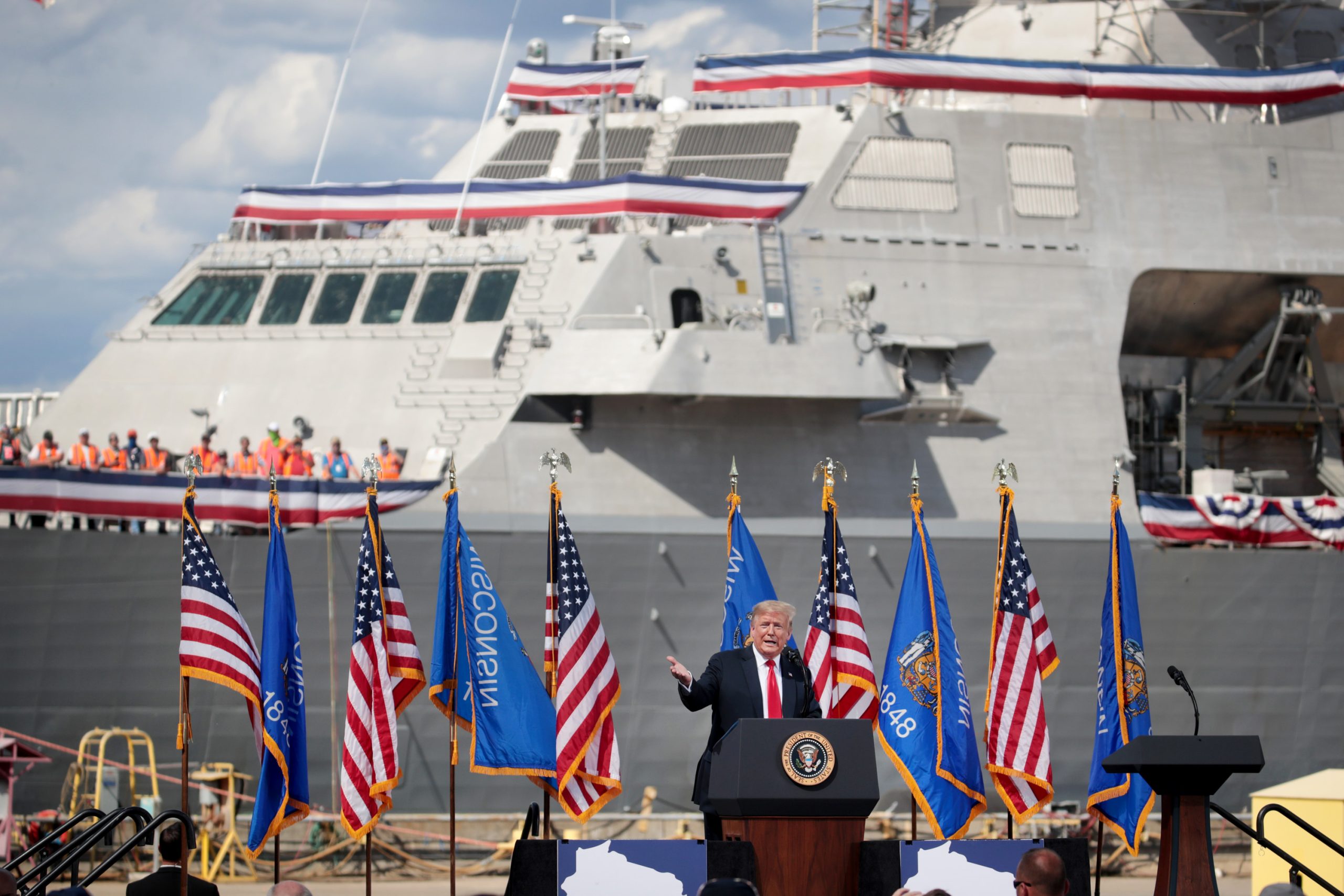
Q: Why didn’t the Navy just take the base class and do minimal modifications to it? It became what seemed like a totally new ship.
A: That’s a great question, Howard, but I would need to speculate to answer that one, and I wouldn’t want to do that, because you’re right. But at the same time – what’s the saying? Hindsight is 20/20. It’s probably one of those occasions at this point. But it’s a great question. I’d love to be with you when we pose it to the right folks.
Q: But what do you think is the answer to that question, from your point of view?
A: From our point of view – from the get-go, when the award was made, it was made because there was a review of the requirements, a review of the design, and a review of all the elements that led to recognition that the parent design possessed exactly the right features to represent the path forward. So collectively, we had marched on that path. We might find ourselves in a different situation right now, but like I said, it’s one thing asking somebody to change their M.O. and adopt a new approach without fully empowering them or doing something drastic to signal that type of transformation. And it’s another where we said ‘we will try this new approach.’ But there was a lot of follow-through that was needed.
Everybody has developed experiences in certain ways, and everybody – especially when you have folks that have been doing it for decades – has developed their own rules of thumb and approaches to dealing with certain situations. It’s not easy to pivot an entire structure to a new idea or a new approach. So like I said, probably it was the right idea, but a little bit ahead of its time.
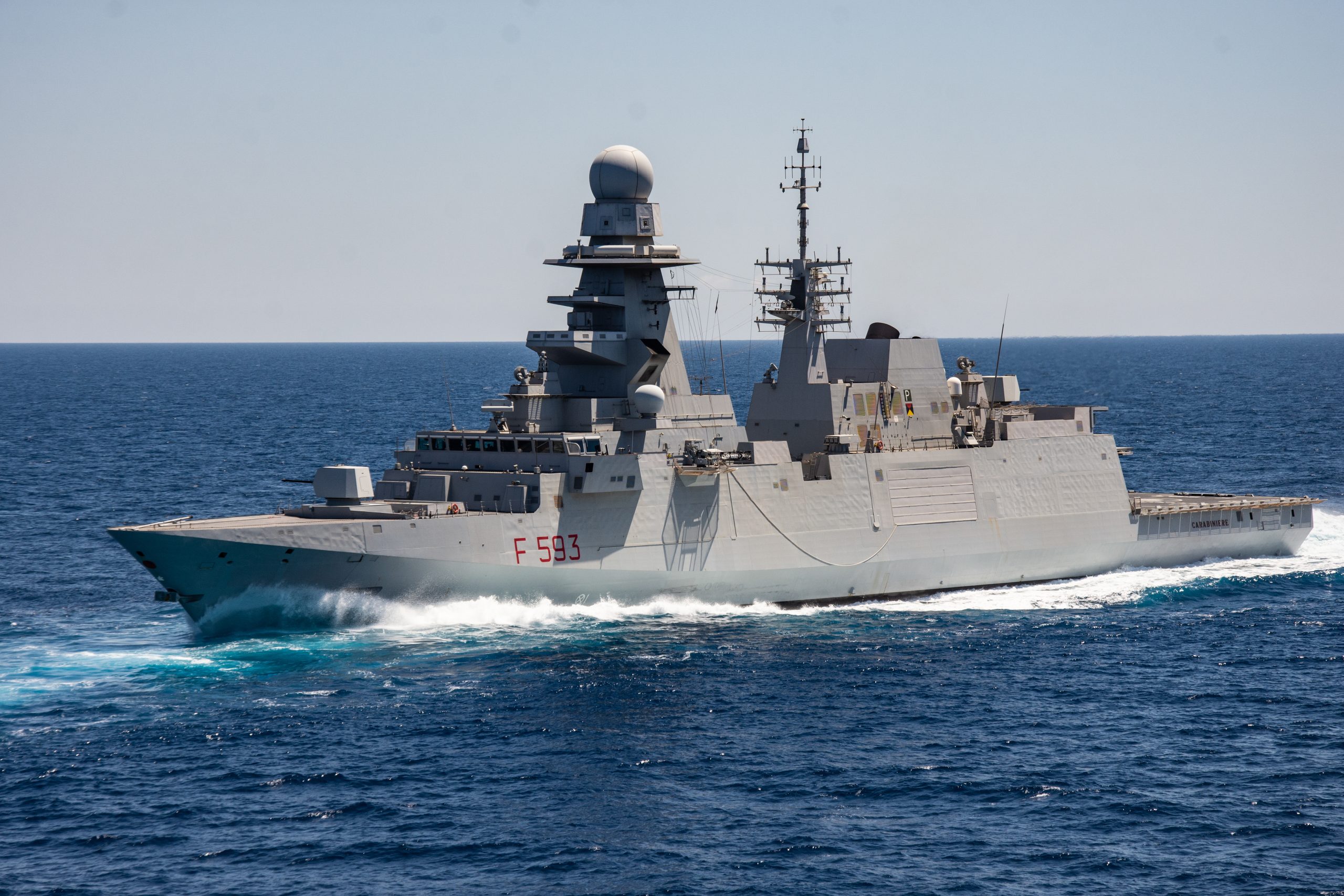
Q: What do you think of the lessons that should be learned from the Constellation class’s story?
A: I want to be a glass-half-full type of guy, so that’s why I connected back the things that I’ve been seeing being rolled out by our Navy the last few months as indeed adopting some of those lessons learned. So I’ll go back to the fact that they’ve decided to find new ways to apply the principle that schedule is king. And those new ways include changes that are not just at the leadership level, not just at the level following that, but indeed of restructuring and reorganizing the teams that are there to implement those guidelines – because that’s key in order to be able to change your ways and adopt lessons learned.
So I’m hopeful that this new approach of the PAE setup will be an enabler to adopt the lessons learned: of how to move fast, of how not to mess with a design especially when it’s meeting and exceeding requirements, of how to manage change – not in the rollout of a change, but in the decision-making of whether to adopt change or not. So a lot of those new ideas that they’ve been trying to apply are promising to that effect.

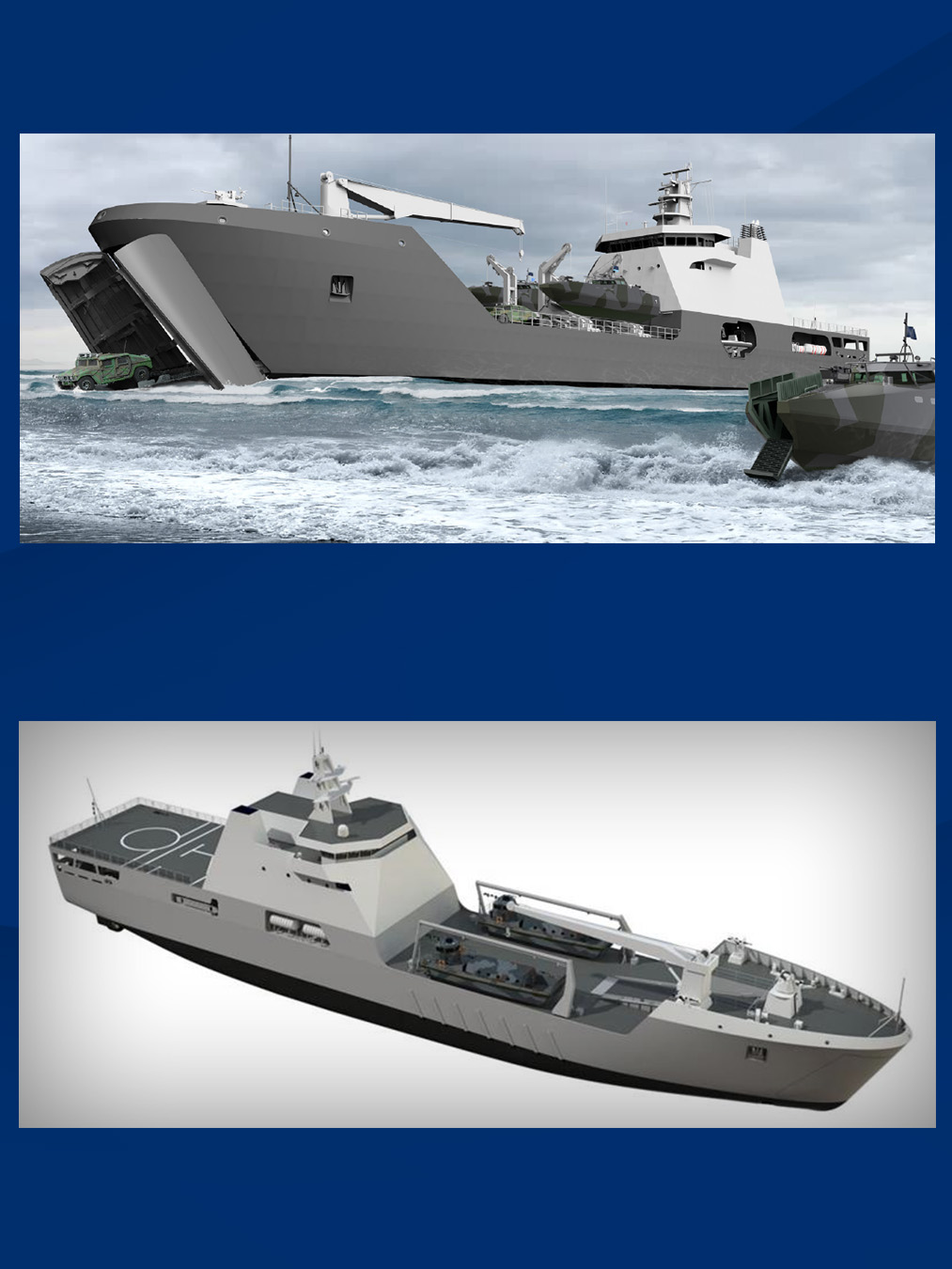
Q: The Navy adopted the new VCM program to oversee construction of the new Landing Ship Medium (LSM) vessels you are working on. This is a direct result of what happened with the Constellation class, right?
A: I would definitely think so, because it indicates the whole idea that the Navy is recognizing – instead of applying the typical layers of full team presence in the shipbuilder’s yard, additional layers of engineering design, etc. – we’re saying, ‘Okay, in a case where we want to go fast, let’s make our decisions ahead of time, select the design, check it quickly ahead of time, and assign it as a production-related design in the hands of that VCM, and allow an industry set of characters between the VCM and the shipbuilder to deliver.’
Q: What does Fincantieri have to give up in this VCM approach?
A: Thinking on this – Fincantieri, as a global group, likes to be end-to-end with the end customer. Our strategy is to develop the design according to the needs and requirements, move forward all through construction, and even post-construction to provide full support throughout almost the entire lifecycle of a vessel. That’s the Fincantieri model around the globe.
In this case, we’re looking to adjust to the approach that the Navy is looking to apply – and we can view it as a benefit. We can take it on as a build-to-print: be the shipbuilder that respects this design, doesn’t try to mess with it, just works out all the kinks to ensure producibility, and then moves swiftly into quick serial production.
From that perspective, we’re not really giving up something – we’re just placing at the disposal of the nation the assets that are already in place, and looking to produce as many vessels as quickly as possible.
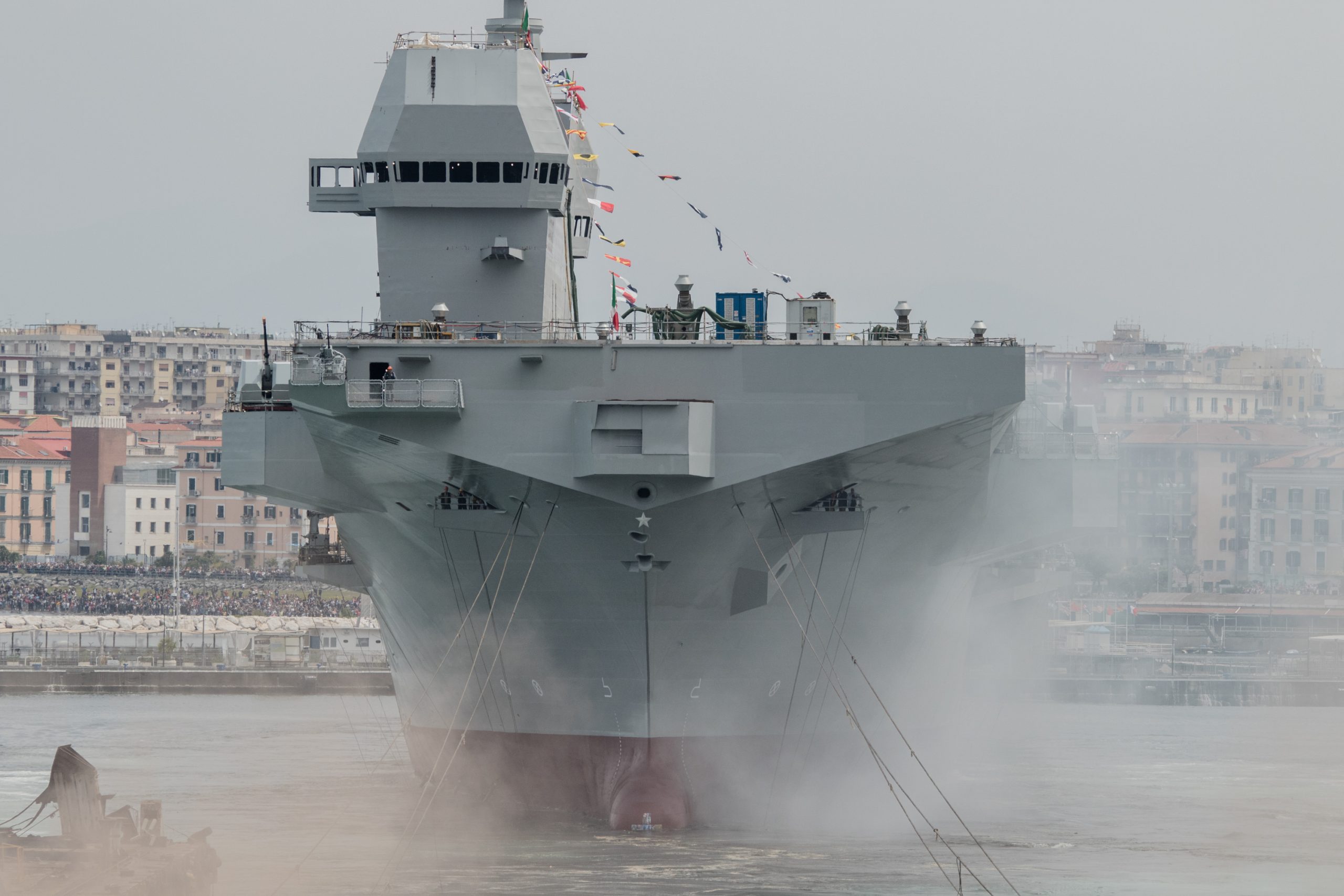
Q: How will this speed up U.S. shipbuilding?
A: How I interpret this strategy is the Navy saying: in programs that work, find an approach that allows them to almost get out of the picture. They recognize schedule is priority number one and a quality vessel is priority number two. In order to enable that ‘build more and build fast’ approach, they’re seeking to place somebody – the VCM – to take on the construction, provide them with a mature, production-ready design with no changes to it, and enable the kind of interaction you’ve seen in commercial shipbuilding. That allows those two parties – the VCM and the shipbuilder – to work fast through daily decision-making in a way that favors schedule without compromising quality.
They’re seeking to equip the VCM with a design that will not be touched – a build-to-print situation – and empower them to make these types of decisions daily, so that at the end of the day they simply deliver a vessel to the Navy, minimizing the Navy’s need or propensity to intervene.
It’s an innovative approach, and it definitely requires all parties to give up habits and practices that have taken hold in the past. As long as parties stick with this new approach, it has a great chance of success. On our end, we’re trying to be disciplined in respecting it and pushing forward.
Our next installment of this interview focuses on how Fincantieri is planning to help build Trump’s Golden Fleet and the challenges ahead.
Contact the author: howard@twz.com
editor's pick
latest video

news via inbox
Nulla turp dis cursus. Integer liberos euismod pretium faucibua