U.S. Naval Blockade On Iran Will Remain In Place Until At Least Friday
Though the U.S. and Iran have reached a preliminary agreement to end the war, the U.S. naval blockade of Iranian ports remains in place, a source familiar with operations told TWZ on Monday morning. The statement offers additional clarity to comments President Donald Trump and Iranian officials have made about the deal and its impact on shipping.
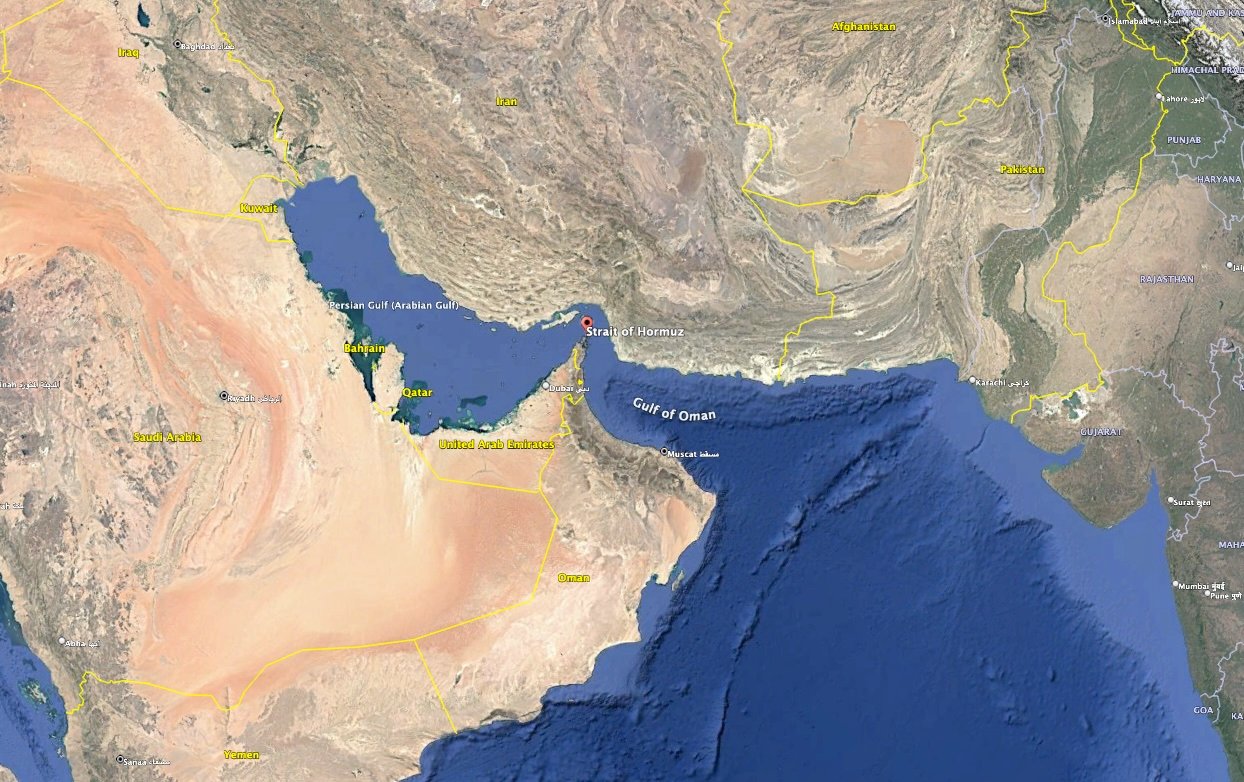
Meanwhile, shipping companies, the U.N. and a maritime security company tell us they are taking a wait-and-see attitude before changing current operations or offering advice to do so. As Trump noted over the weekend, the Strait needs to be fully de-mined while Iranian officials say they will still impose fees for transit.
“The blockade is ongoing and is expected to remain in place until the signing [of the memorandum of understanding] on Friday,” the source, speaking on condition of anonymity to discuss operational details, told us.
The official declined to tell us whether that means the U.S. will fire on vessels trying to run the blockade or turn ships back, as they have in the past.
As of June 12, U.S. Central Command (CENTCOM) said it disabled nine vessels trying to run the blockade and redirected 139 others. You can read more about how those ships were disabled here.
Iran’s reopening of the Strait of Hormuz, combined with the U.S. ending the blockade that went into effect on April 13, is a major component of the U.S.-Iran agreement. Iran closed the Strait to most shipping after it was attacked by the U.S. and Israel on Feb. 28. As we have frequently reported, that had a cascading effect on the global economy, sending oil prices higher.
During a press conference and in a message on Truth Social, Trump on Monday said the Strait of Hormuz was already “partially opened.”
“Ships are starting to move, many loaded up with Oil, out of the Strait of Hormuz,” the president said on his social media site. “They are going along the Southern ‘Highway,’ which is totally safe, secure, and pristine. There are other areas of travel, also!!!”
“Ships are starting to go out now,” Trump added later at a press conference in France. “By Friday it will completely opened.”
As we previously reported, ships had been transiting the Strait via a southern route close to the United Arab Emirates and Oman under the overwatch of the U.S. military. Last week, Trump revealed that the U.S. had enacted a secret plan to get hundreds of ships out of the Strait; however, that still pales in comparison to the number of ships transiting before the war broke out.
As for the blockade, Iranian officials on Monday said it was their understanding it would be lifted right away.
“Under the agreements reached, the war and military operations on all fronts, including Lebanon, will come to an immediate and permanent end beginning tonight,” the Secretariat of Iran’s Supreme National Security Council stated early Monday morning EDT, according to Iran’s official IRNA media outlet. “Furthermore, the naval blockade against Iran will be lifted immediately and completely.”
Also on Monday, Iran’s Foreign Ministry Spokesman, Esmail Baghaei, said the country will continue to charge vessels transiting the Strait for services rendered.
“According to the MoU, Iran and Oman will be responsible for managing passage through the Strait of Hormuz,” he stated. “Iran is not seeking to impose tolls. However, in return for navigation services, environmental protection, insurances and other maritime services, Iran will collect the necessary fees.”
A day earlier, Trump addressed the blockade in two statements on his Truth Social site.
“This Great Deal will bring Peace and Security to the whole Region. Many presidents have tried to make Peace with Iran, and all have failed before me,” the president said in the second of the two posts, issued at 6:27 P.M. EDT. “The Leaders of the Region have, for the first time, found a President who can help them achieve real Peace. With the opening of the Strait upon the signing of the Deal on Friday, for purposes of mine removal, oil will flow on both ends again for the Region, and the World!”
A little less than an hour earlier, Trump said he was authorizing “the immediate removal” of the blockade.
“The Deal with the Islamic Republic of Iran is now complete. Congratulations to all! I hereby fully authorize the toll free opening of the Strait of Hormuz, and, simultaneously herewith, authorize the immediate removal of the United States Naval blockade. Ships of the World, start your engines.”
We reached out to the White House for further clarification.
Though both Trump and Iranian officials have weighed in on this deal, much about it remains unknown, something Vice President JD Vance explained Monday morning.
Vance told CNBC’s “Squawk Box” program that though the U.S. and Iran struck a preliminary deal, there are “a lot” of details that remain to be ironed out, but he expressed confidence that America has “all the cards” in subsequent talks.
Vance told the network that Iran’s foreign minister Abbas Araghchi is expected to be involved in those upcoming discussions — as well as its parliamentary speaker, Mohammad Bagher Ghalibaf. He is a hard-liner, Squawk Box noted, whose participation could signal that the regime’s conservative faction is on board with the deal.
“The agreement reached Sunday would extend the U.S.-Iran ceasefire for 60 days and set up a framework for future negotiations about Tehran’s nuclear program and other key issues,” CNBC further explained. “The preliminary deal has yet to be signed and its text has not been released.”
The sides have given themselves “60 days to reach a technical agreement on how to down-blend Iran’s highly enriched uranium and both freeze and monitor its nuclear program going forward,” Axios reported. “That’s a tall order given how difficult it was to reach the much less detailed memorandum of understanding.”
The U.S. “insists Iran is incentivized to reach a final agreement because sanctions relief and access to frozen funds depend on progress on the nuclear front,” Axios added. “Some hawks in the U.S. and Israel worry there will never be a final deal and the war will end with the nuclear questions unresolved.”
Trump told the New York Times on Sunday afternoon that the agreement he had reached with Iran would ultimately assure that the Strait of Hormuz was “permanently toll-free,” a seeming sticking point with Iranian expectations as we discussed earlier in this story.
Trump also insisted that if Iran failed to reach a final nuclear accord with the United States, he would restart military attacks on Tehran or make the United States “the guardian of the Middle East” in return for 20 percent of the region’s revenues.
Given that the U.S. began building up forces in the region in January, many of the ships, aircraft and troops will have to retrograde out of the CENTCOM area of responsibility in the coming weeks. So exactly what the American footprint will be in the CENTCOM area of responsibility in two months is questionable.
There is also massive global and domestic political pressure to end the war, which, as we noted earlier, has created economic upheaval around the world. Moreover, the conflict has not been popular at home, and American voters go to the polls in November for the midterm Congressional elections with Trump’s Republican party struggling to maintain control. Starting the war again, especially knowing how it went this time around and failed to deliver a deal on top of it, would see these pressures magnify.
Regardless of the diplomatic breakthrough, shipping companies tell us that they are not changing course when it comes to transiting the region.
“The announced agreement is a welcome and positive development, but publicly available details are still limited, and it is too early to assess how it will impact logistics and maritime operations in the Middle East,” a spokesperson for Maersk told us. “At this stage, there are no changes to our operations in the region.”
A spokesperson for Hapag-Lloyd expressed similar sentiments.
“The latest developments give reason to hope that the security situation in the Strait of Hormuz will improve,” the spokesperson told us. “We are currently reviewing the information available and are in close contact with relevant authorities and our security partners. At this stage, our risk assessment remains unchanged and the Strait of Hormuz remains closed for Hapag-Lloyd transits until further notice. The safety of our crews and vessels, and the security of our customers’ cargo, remain our highest priority.”
The U.N.’s International Maritime Organization (IMO) told us that it too was waiting for further details to emerge before offering any concrete new advice to commercial vessels sailing in the region.
“Details of the agreement are due to be released, which will provide more clarity on how restoring full trade can return through the Strait of Hormuz,” IMO told us.
The organization “is working with relevant countries, particularly Oman, Iran and the rest of the coastal States, on the safe route to be used for the evacuation of seafarers on trapped vessels and for trade to resume,” IMO added. “We are assessing the feasibility for vessels to transit and conduct the trade safely and securely, avoiding possible hazards like mines as well as congestion which could lead to accidents.”
An official with the Ambrey maritime security company said there is still a long way to go before commercial vessels can navigate these waters securely.
“The proposed deal still requires meaningful implementation across multiple governments, which will take time,” Joshua Hutchinson, a former Royal Marine commando now serving as the company’s Managing Director of Risk and Intelligence, told us. “Furthermore, over 1,000 vessels remain in the Persian Gulf, and the threat of mines looms; clearing such a large number of vessels will take several months of coordination.”
In addition, “reports say that the agreement will allow the Iranian Maritime Authority to retain control of the Strait of Hormuz through a clearance system, and, for the time being, this will be one of the major concerns that ship operators and owners need to understand,” Hutchinson added.
Another factor in all this remains Israel. Officials in Jerusalem have stated that they will not withdraw from southern Lebanon and will continue to strike Hezbollah targets they deem necessary. The Israeli airstrike on a Hezbollah site in Beirut on Sunday reportedly almost derailed the announcement of the MOU, with an Iranian missile attack on Israel scrubbed at the last moment.
Though the preliminary agreement marks the biggest diplomatic breakthrough since hostilities began, there is still a long way to go until Friday in a region known for its volatility. As we have previously reported, several rounds of tit-for-tat attacks between the U.S. and Iran threatened to derail the shaky ceasefire in the past.
Even if Friday’s milestone signing should be reached, questions still remain about whether peace will ultimately be achieved. Given everything at stake, the world awaits warily to see what happens next.
Contact the author: howard@twz.com
editor's pick
latest video

news via inbox
Nulla turp dis cursus. Integer liberos euismod pretium faucibua