This post was originally published on this site.
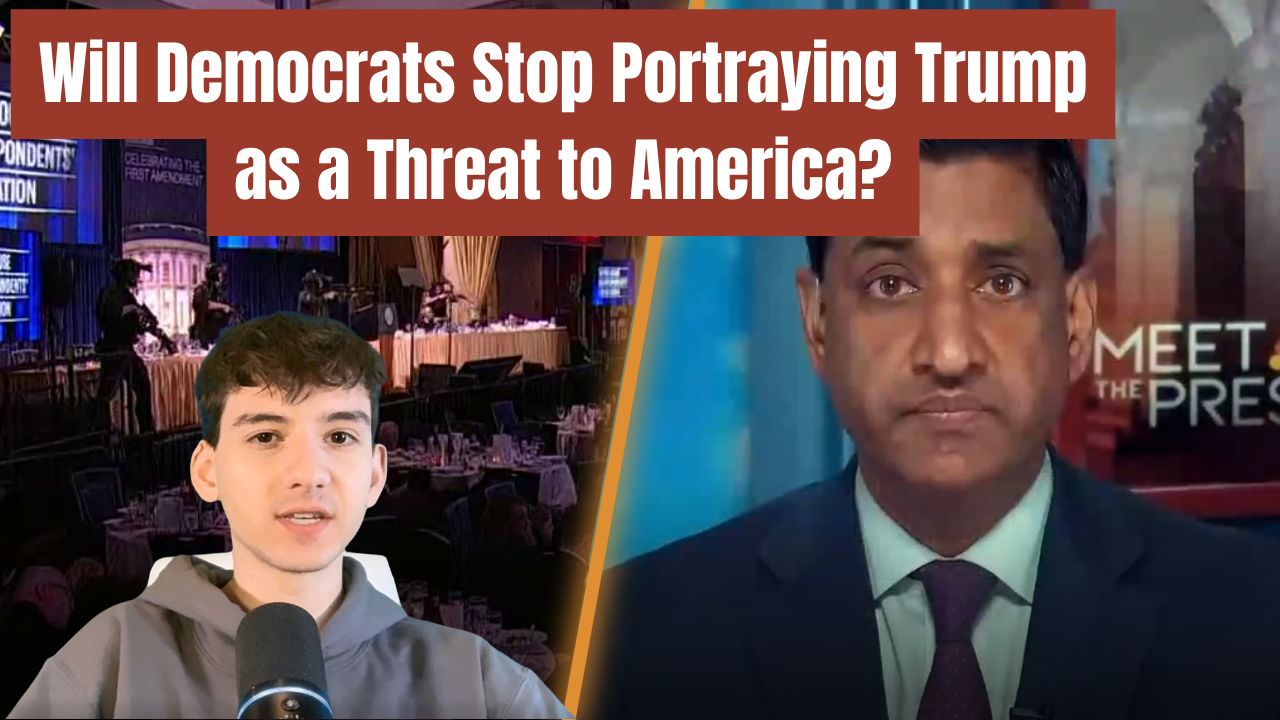
Democrats Propose “Political Violence Commission” After WHCD Attack — Maybe Stop Calling Trump a Nazi, Fascist, or Threat First?
This post was originally published on this site.

WATCH: Democrats Propose “Political Violence Commission” After WHCD Attack
Democrat Rep. Ro Khanna went on Meet the Press and did what Democrats increasingly do after major incidents of political violence: shift quickly from the facts of the case to a sweeping federal “solution” that expands bureaucracy without addressing root causes.
In this case, that solution was a so-called “bipartisan national commission on political violence.”
Khanna framed the idea as a necessary response to rising tensions, calling for a broad investigative body to study political violence across the country.
On paper, the proposal sounds reasonable. In practice, it follows a well-established pattern—create a commission, generate a report, and use the findings to justify predetermined policy outcomes.
Washington has seen this before.
Commissions do not stop violence. They do not enforce laws. They do not prosecute offenders. All commissions do is produce recommendations—often shaped by the political priorities of the people who design them. That is the central flaw in Khanna’s proposal.
It treats political violence as a research problem rather than a law enforcement issue.
The United States already has a system in place to handle violent threats: federal law enforcement agencies, prosecutors, and courts.
When individuals commit or attempt acts of political violence, the response is supposed to be immediate and direct—investigate, charge, and prosecute under existing statutes. That framework already exists. It does not require a new commission.
What Khanna is proposing is not a solution—it is a layer.
And that layer raises serious concerns.
First, any “national commission on political violence” would inevitably become politicized. The definition of “political violence” is not neutral in today’s environment. It is contested, often selectively applied, and frequently used as a political weapon.
A federally backed commission would be tasked with defining that term—and those definitions would shape policy, funding, and enforcement priorities.
Commissions also often serve as vehicles for narrative-building rather than objective analysis.
Depending on its structure, such a commission could emphasize certain forms of extremism while downplaying others.
That has been a consistent criticism of past federal efforts in this space. Khanna’s proposal does not address that risk—it assumes neutrality without providing any mechanism to ensure it.
Rather than focusing on the specifics of the White House Correspondents’ Dinner incident—that the suspect specifically attempted to target Trump administration officials—Khanna moved almost immediately to a national-level response. That shift matters. It moves the conversation away from accountability and toward abstraction.
A commission reframes the issue.
Instead of asking what went wrong in a specific case, it asks broad, often politically loaded questions about the state of the country. That approach may be useful for messaging, but it does not produce immediate or measurable results.
A national commission may produce headlines. It may generate a report. It may even hold hearings that dominate a news cycle. But it will not prevent the next attack.
The Patriot Perspective has recently switched its main platform from YouTube, and we would greatly appreciate it if you subscribed to us there. [HERE]
The post Democrats Propose “Political Violence Commission” After WHCD Attack — Maybe Stop Calling Trump a Nazi, Fascist, or Threat First? appeared first on The Gateway Pundit.
editor's pick
latest video

news via inbox
Nulla turp dis cursus. Integer liberos euismod pretium faucibua
Leave A Comment
You must be logged in to post a comment.