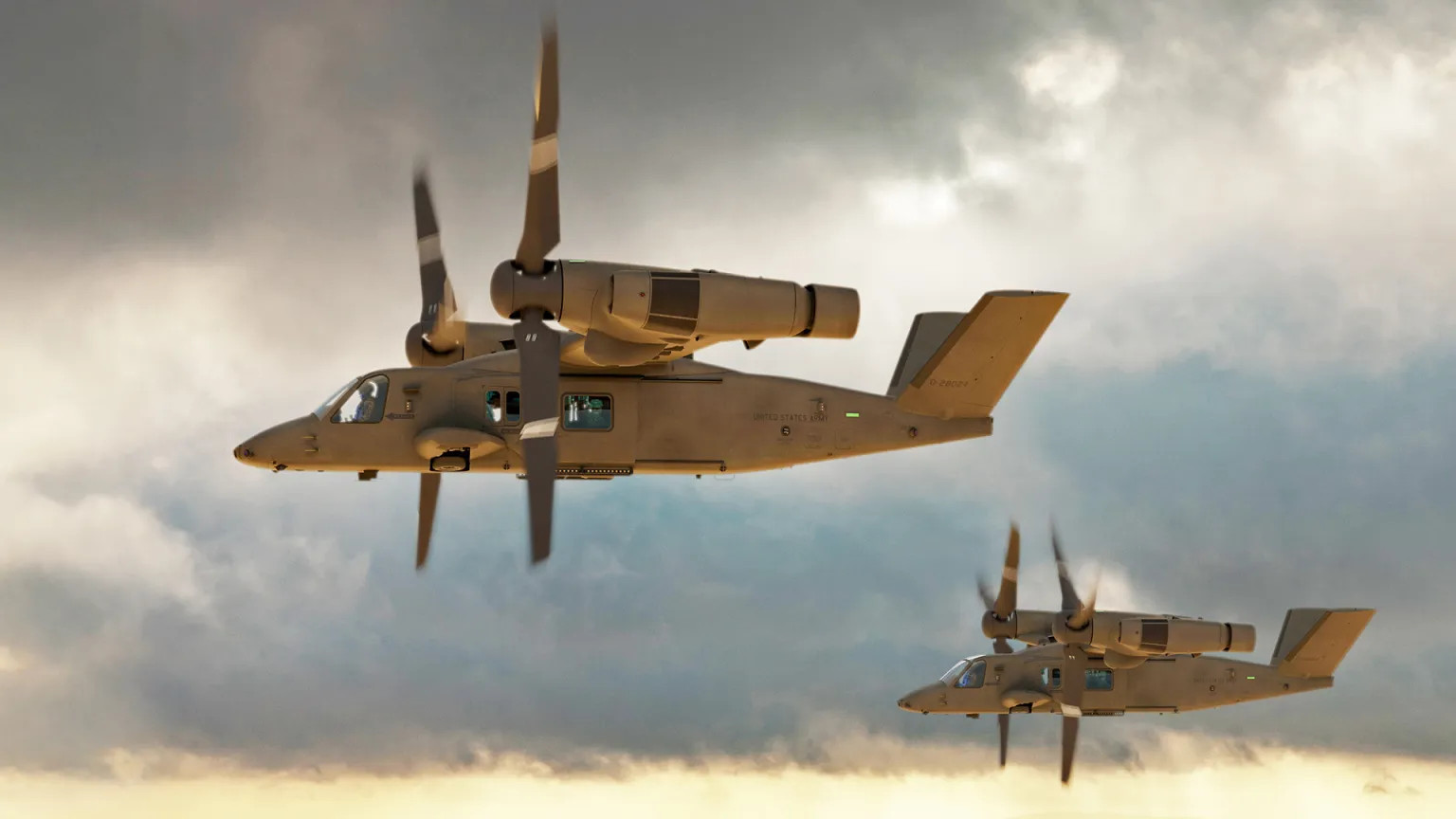
Army Names Its New MV-75 Tiltrotor Cheyenne II
The Cold War-era Lockheed AH-56 Cheyenne might have been plagued with issues, but there’s no doubt it was among the world’s most advanced helicopters of its day. The AH-56 was so fast, and its features so ahead of their time, that the U.S. Army has decided to port over its name for its highly anticipated MV-75 tiltrotor, now officially named the Cheyenne II. The name also continues the Army’s tradition of naming its helicopters after great Native American tribes, and will find its place among icons like the Apache, Chinook, and Lakota.
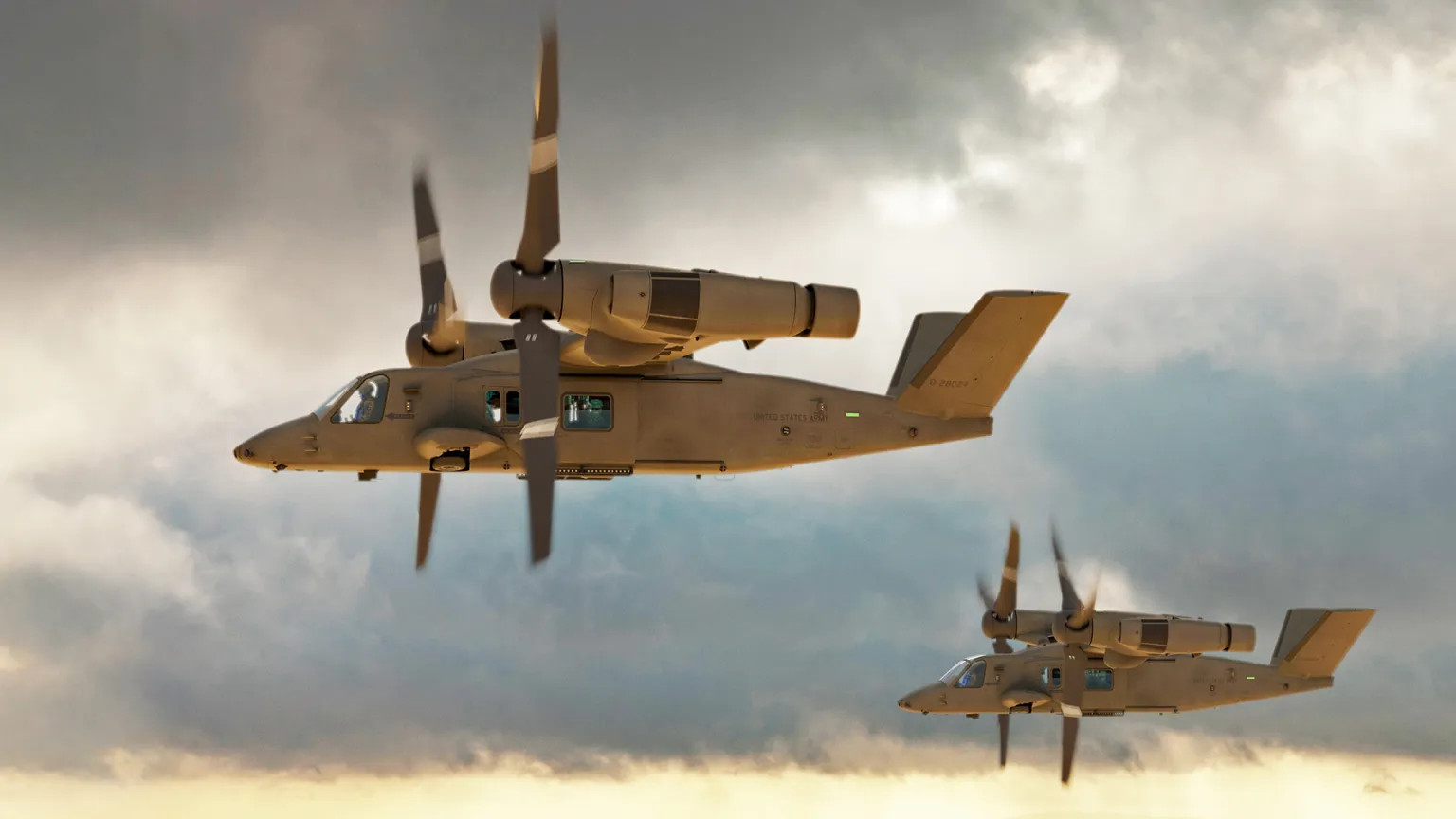
In 2022, the Army picked a design from Bell, based on that company’s V-280 Valor tiltrotor, as the winner of its Future Long-Range Assault Aircraft (FLRAA) competition. In January of this year, the Army confirmed to TWZ that it planned to accelerate its timeline for the MV-75 by multiple years, fielding the first examples in 2027 versus 2031.
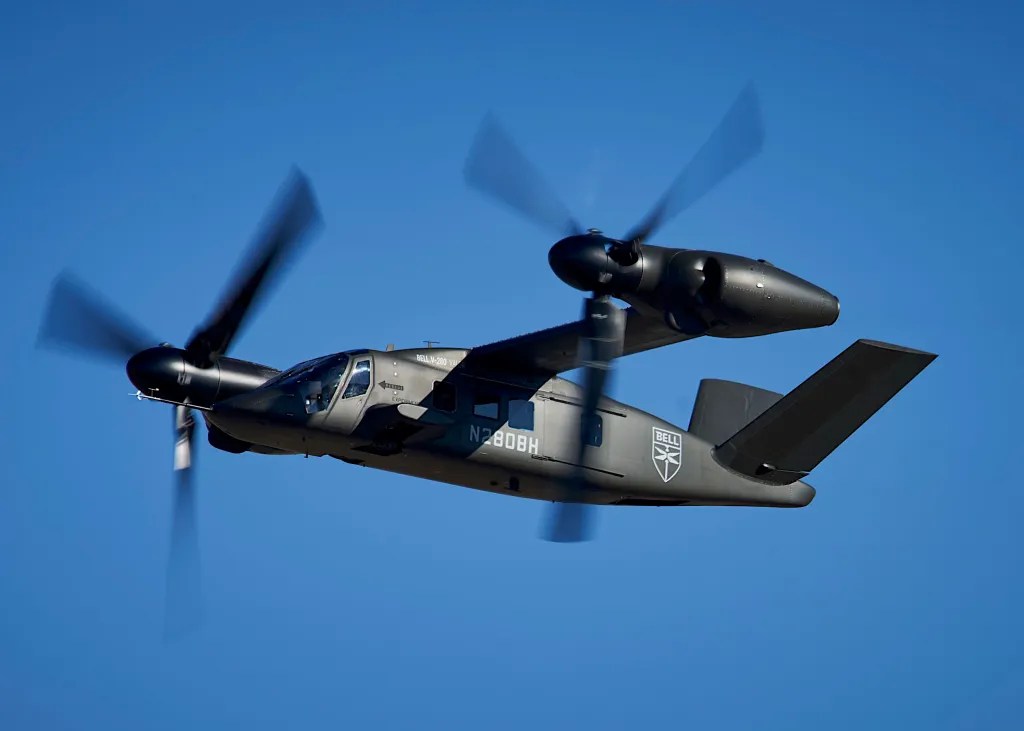
The rollout took place today at the Army Aviation Association of America’s Army Aviation Warfighting Summit in Nashville, Tennessee. Speaking to journalists, including TWZ, before that event, Maj. Gen. Clair A. Gill, the commanding general of the Army Aviation Center and Portfolio Acquisition Executive — Expanded Maneuver Air, announced the MV-75’s rollout as “a pivotal moment for Army Aviation, for our soldiers.”
In keeping with other Army rotorcraft, the MV-75’s name also honors a Native American tribe (more accurately, two tribes), the Cheyenne.
As Maj. Gen. Gill explained: This name reflects more than heritage. It reflects identity. The Cheyenne people inhabited the Great Plains for 400 years, adapting to a harsh and unforgiving environment as highly proficient hunters and gatherers. Their way of life required constant mobility, organized around nomadic buffalo hunting, enabling them to assemble, disassemble, and move quickly to meet the demands of their environment. In many aspects, that same ability to rapidly organize, reposition, and operate with precision is reflected in the MV-75 platform.”
“Life in that environment demanded resilience and strength,” Gill continued. “Tribes navigated rivalries, dirt, conflict, and adapted as Westward expansion reshaped the landscape around them. Today, the Cheyenne are represented by the Northern Cheyenne tribe in Montana, in the Cheyenne and Arapaho tribes in Oklahoma, whose legacy reflects the proud and enduring warrior tradition, ground and protection, provision and leadership. Those values demand capability, and in today’s fight, that capability comes in the form of speed, range, lethality, and adaptability. That spirit of mobility, resilience, and disciplined strength is what the name Cheyenne II represents.”
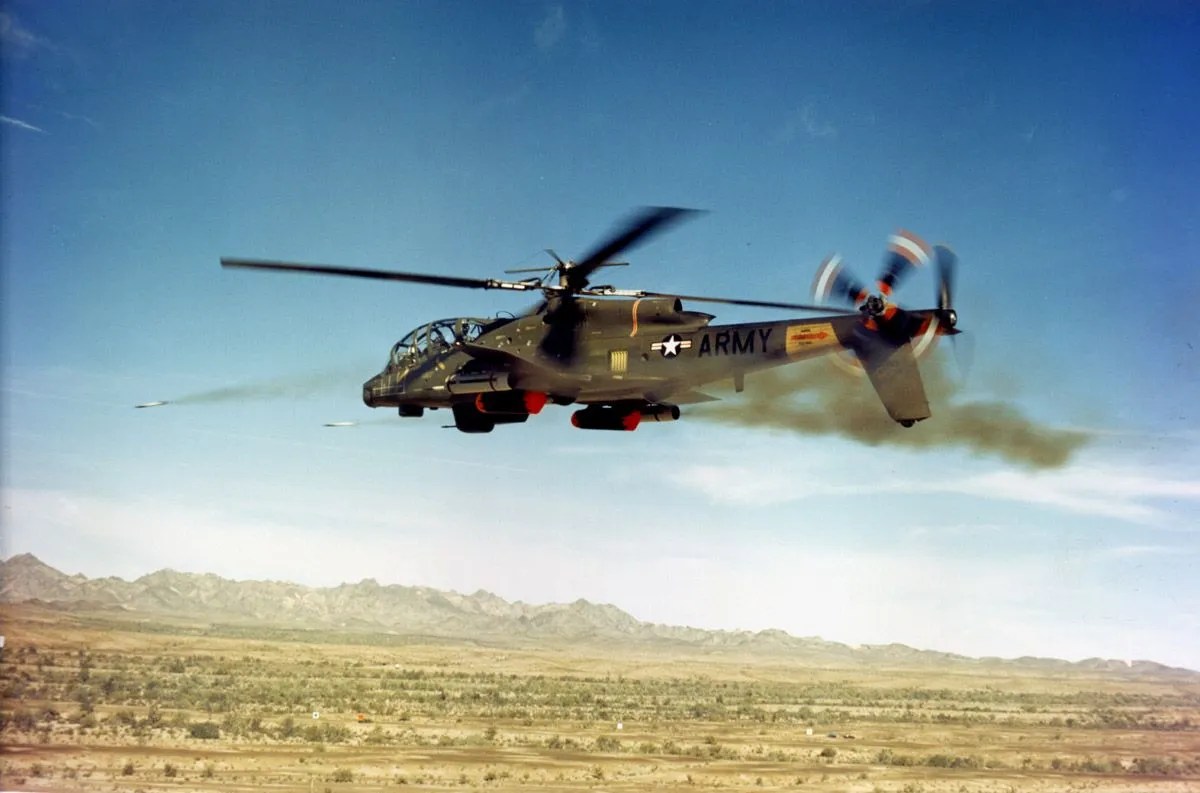
As for the other, historical Cheyenne, the AH-56, this was a first-generation attack helicopter drafted during the Vietnam War. Most impressively for the time, the helicopter could hit a 224-mile-per-hour cruise speed and dash at speeds up to 240 miles per hour, driven by a nearly 4,000-horsepower turbine engine and a pusher propeller on the tail boom.
F 03873 US Army Lockheed AH-56 Cheyenne multi weapon attack Helicopter
While it boasted incredible performance and was packed full of advanced features, the AH-56 was destined for failure. A combination of technical issues, program management shortfalls, changing procurement priorities, high cost, and a fatal crash in 1969 saw the program terminated. But despite never entering service, the Cheyenne left a profound impact on the concept of close air support and attack helicopter design and today holds a special place in military aviation history.
On the other hand, there are plenty of obvious differences between the AH-56 and the MV-75, not least their missions. They also had different prime contractors, and, the Army must hope, will have very different outcomes.
Maj. Gen. Gill continued: “What the [AH-56] Cheyenne was when it was initially conceived in the 1960s was a transformational leap ahead in technology. It was a rotorcraft when we were still learning how helicopters flew and how we could get the maximum utility, speed, and range out of them. And the Cheyenne, at the time that it was developed, was completely different. It had a pusher prop on it that allowed it to achieve speeds that we hadn’t seen before. You could draw a lot of parallels between going from the current fleet of rotorcraft that we fly, that is really 1960s, 1970s-era technology … to what we’re doing with the tiltrotor technology. Twice as far, twice as fast, vertical takeoff and landing, but flying at airplane speeds. You can certainly draw the metaphor there if you want, between the AH-56 back in the late 1960s and the MV-75 today.”
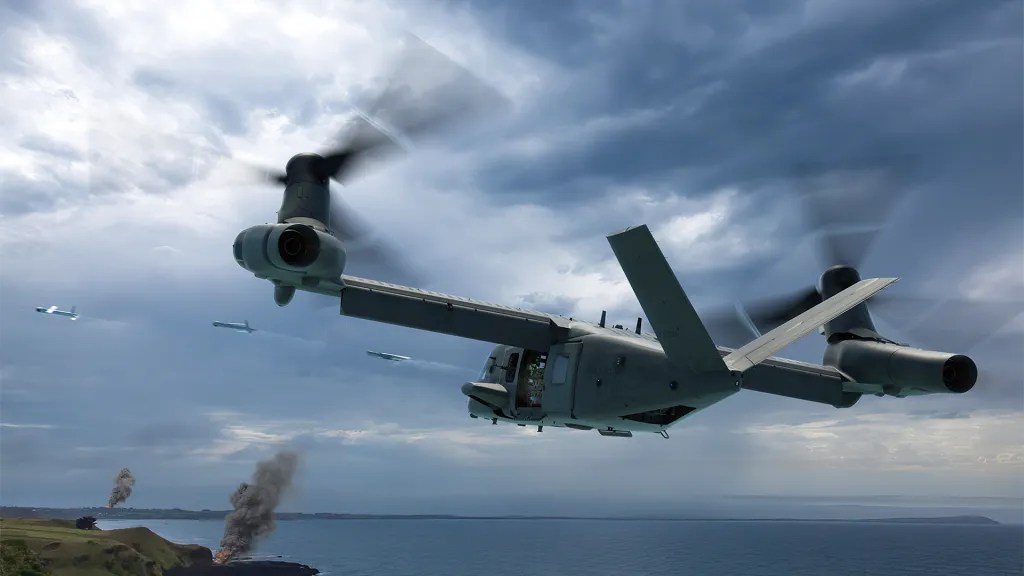
Continuing on the transformational theme, Brent G. Ingraham, the Assistant Secretary of the Army for Acquisition, Logistics, and Technology, provided his assessment of the MV-75, describing it as “a generational capability for the Army,” and one that “truly fundamentally changes how commanders think about distance, time, and maneuver on the battlefield.”
Ingraham continued: “It combines the vertical lift of a helicopter with the speed and range of an airplane, allowing us to project combat power from safer distances, penetrate deeper into contested environments, and deliver soldiers where they are needed most, faster than we ever have before.”
For the soldier, this means “restoring full-squad insertion at extended range, expanding medevac reach well beyond today’s Golden Hour, enabling large-scale, long-range air assault operations that can reshape the battlefield,” Ingraham added. Just as critically, the Cheyenne II will be able to self-deploy globally, reducing cost, complexity, and response time in a crisis. This is also especially relevant for future operations in the Indo-Pacific region, where operating locations and objectives are likely to be dispersed across large areas with limited options for making intermediate stops.
Ingraham also noted another key aspect of the program, namely the incredibly aggressive schedule to get it into service. Claiming the program as an “acquisition success story,” he described the team moving “with urgency while maintaining discipline.”
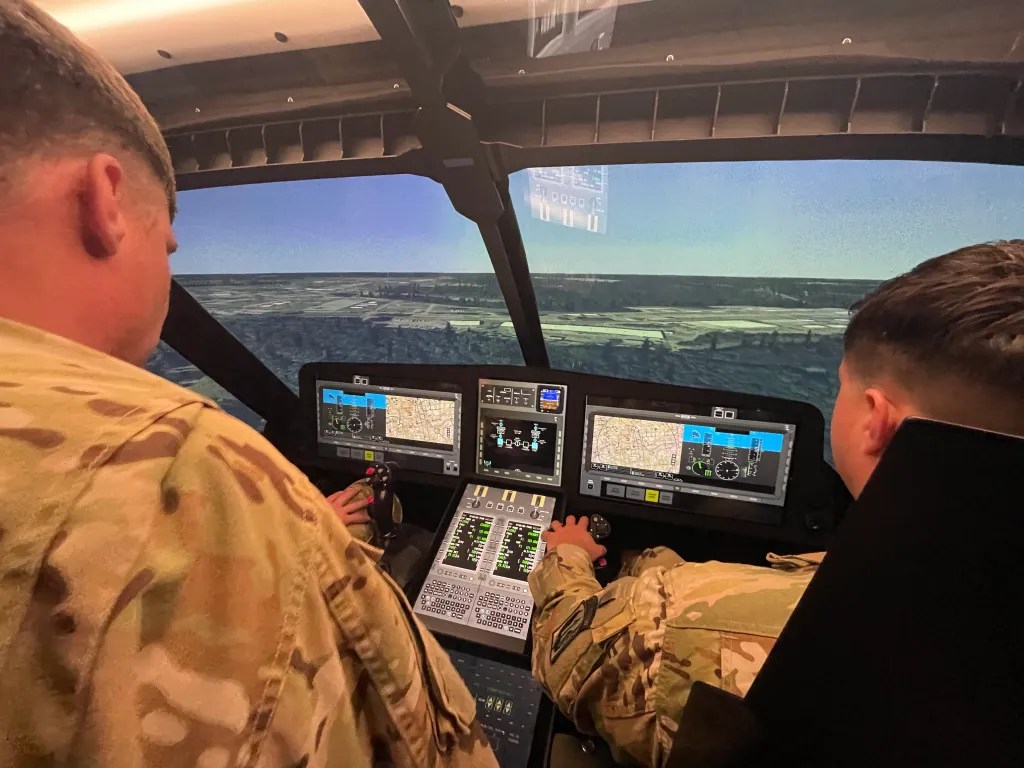
The MV-75 is designed around a modular, open-systems approach, with a digital backbone that should make it easier to adapt and upgrade as the program evolves.
“That means we can rapidly integrate new technologies, adapt to emerging threats, and avoid the costly redesigns of the past,” Ingraham said.
Ingraham confirmed that the fielding timeline is being accelerated, which means the first Cheyenne II unit should be equipped in Fiscal Year 2030. Exactly how realistic that ambition is is something that we will discuss in a follow-on story.
As Ingraham said, speed matters, not just in the air, but in acquisition as well.
“We did it through strong partnerships across industry, the requirements community, and our operational units like the 101st [The 101st Airborne Division, the Army’s premier air assault unit, and the first unit set to get MV-75s], ensuring this platform is not just technologically advanced, but operationally relevant from day one. Simply put, the MV-75 Cheyenne II is how we deliver capability at the speed of relevance.”
For a rotary-wing program that puts a lot of emphasis on speed, its new Cheyenne II name is especially appropriate. Let’s just hope its warp-speed development doesn’t end the same way as its partial namesake.
Contact the author: thomas@thewarzone.com
editor's pick
latest video

news via inbox
Nulla turp dis cursus. Integer liberos euismod pretium faucibua