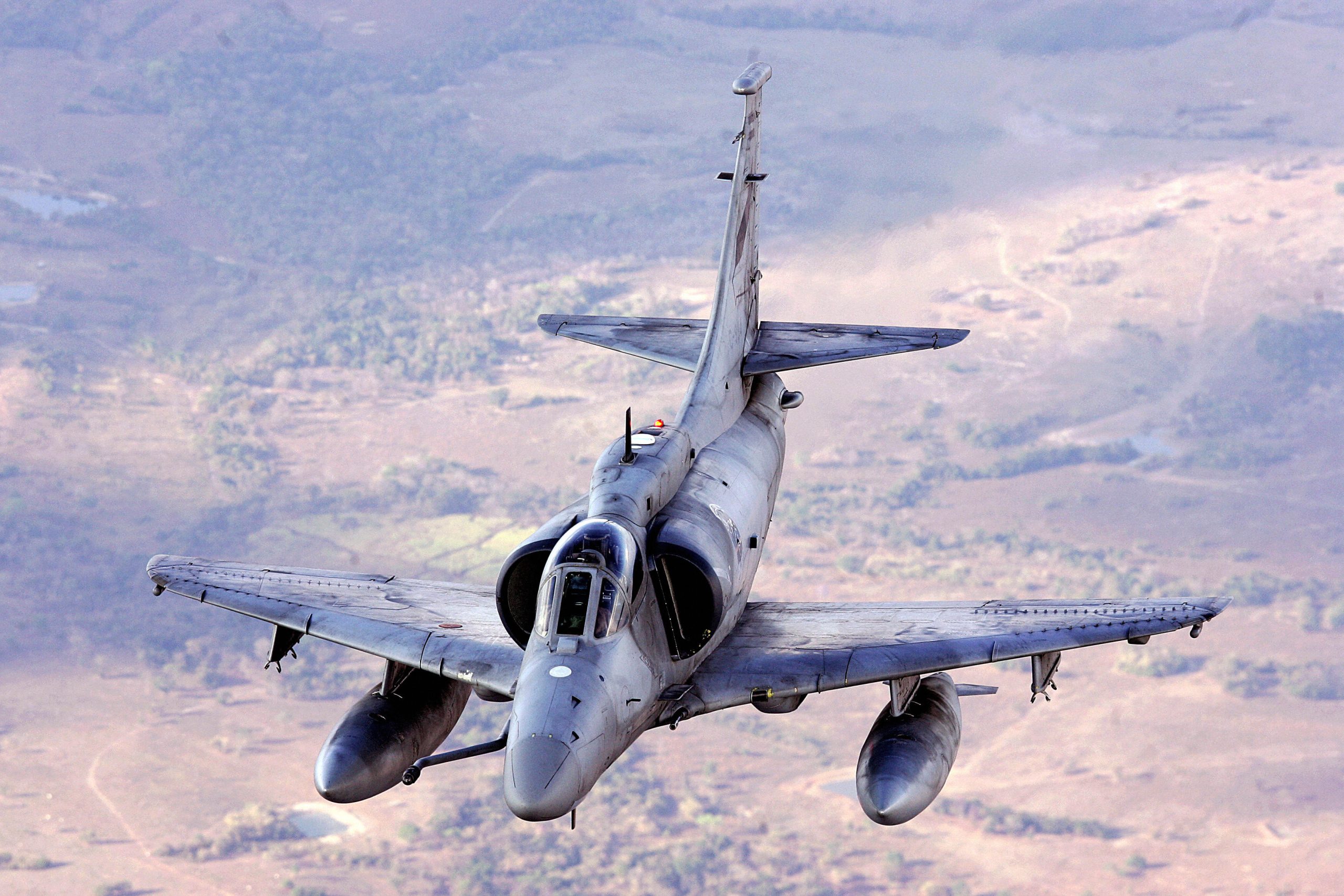
Argentina Retires Its A-4 Fightinghawks
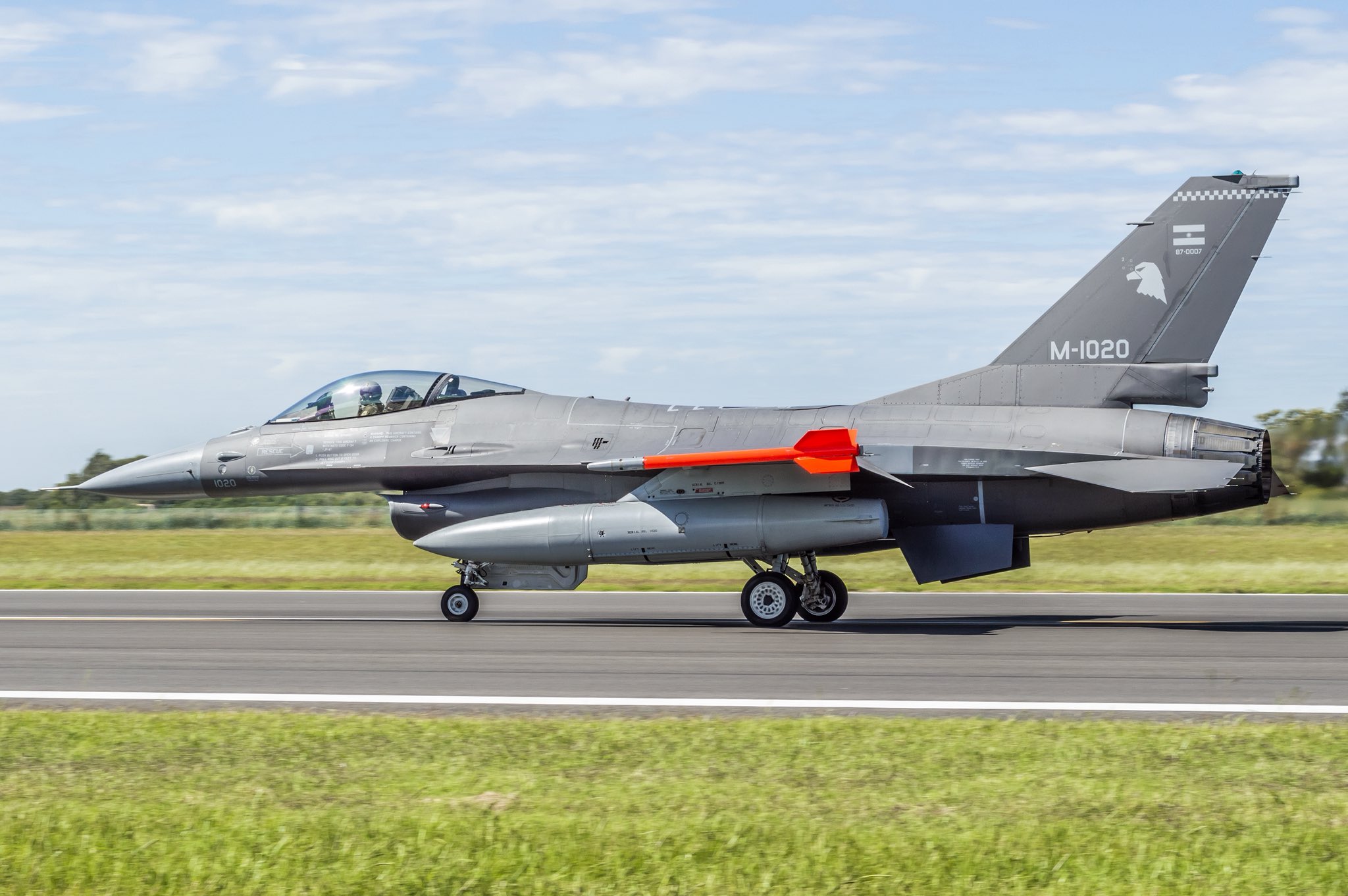
Argentina has withdrawn the last of its A-4AR/OA-4AR Fightinghawks, modernized versions of the classic A-4 Skyhawk, a type that saw six decades of service in the South American nation. The retirement of the A-4s comes as the Argentine Air Force (locally, the Fuerza Aérea Argentina, FAA) introduces the F-16 as its new fighter, signaling a major overhaul of capabilities.
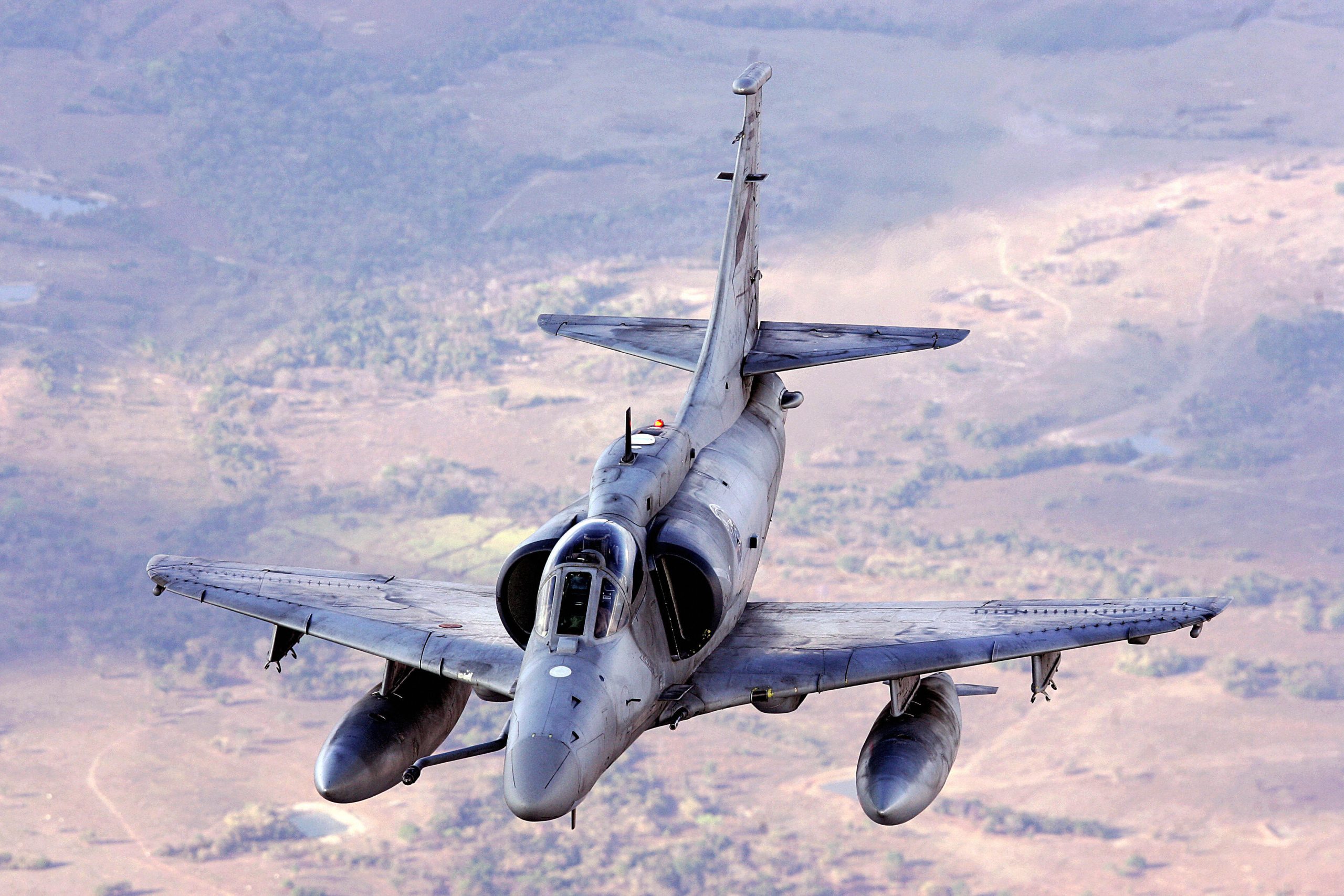
The FAA announced the “definitive decommissioning” of the Fightinghawk fleet at Villa Reynolds Air Base in San Luis province yesterday. The base was home to the final Argentine A-4 unit, the 5th Air Brigade (V Brigada Aérea).
As well as the FAA’s introduction of the F-16, the decision to stand down the A-4s was based on prioritizing “operational efficiency and economic sustainability,” the service said. In a statement, it also pointed to the costs of maintenance and sustainment of the aging jets; keeping these aircraft operational had become an increasingly difficult challenge in recent years.
A version that was unique to Argentina, the Fightinghawk emerged from a major modernization program carried out by Lockheed Martin on former U.S. Marine Corps A-4M and OA-4M Skyhawks, which were taken out of storage at the Aerospace Maintenance and Regeneration Center (AMARC). Work on the first batch of aircraft was conducted by Lockheed Martin in Ontario, California, with the remainder upgraded in Córdoba, Argentina.
Fightinghawk deliveries to Argentina comprised 32 A-4ARs and four OA-4ARs, beginning in the mid-1990s. Interestingly, these upgraded jets were equipped with the same AN/APG-66 radar used in early F-16 variants and were capable of carrying AIM-9M Sidewinder air-to-air missiles. In the cockpit, the Fightinghawk introduced hands-on-throttle-and-stick (HOTAS) controls, multifunction displays, and a new head-up display. Also installed were an onboard computerized mission-planning system and a new navigation/attack computer. Radar-warning receivers and onboard oxygen-generating equipment rounded out the upgrade package.
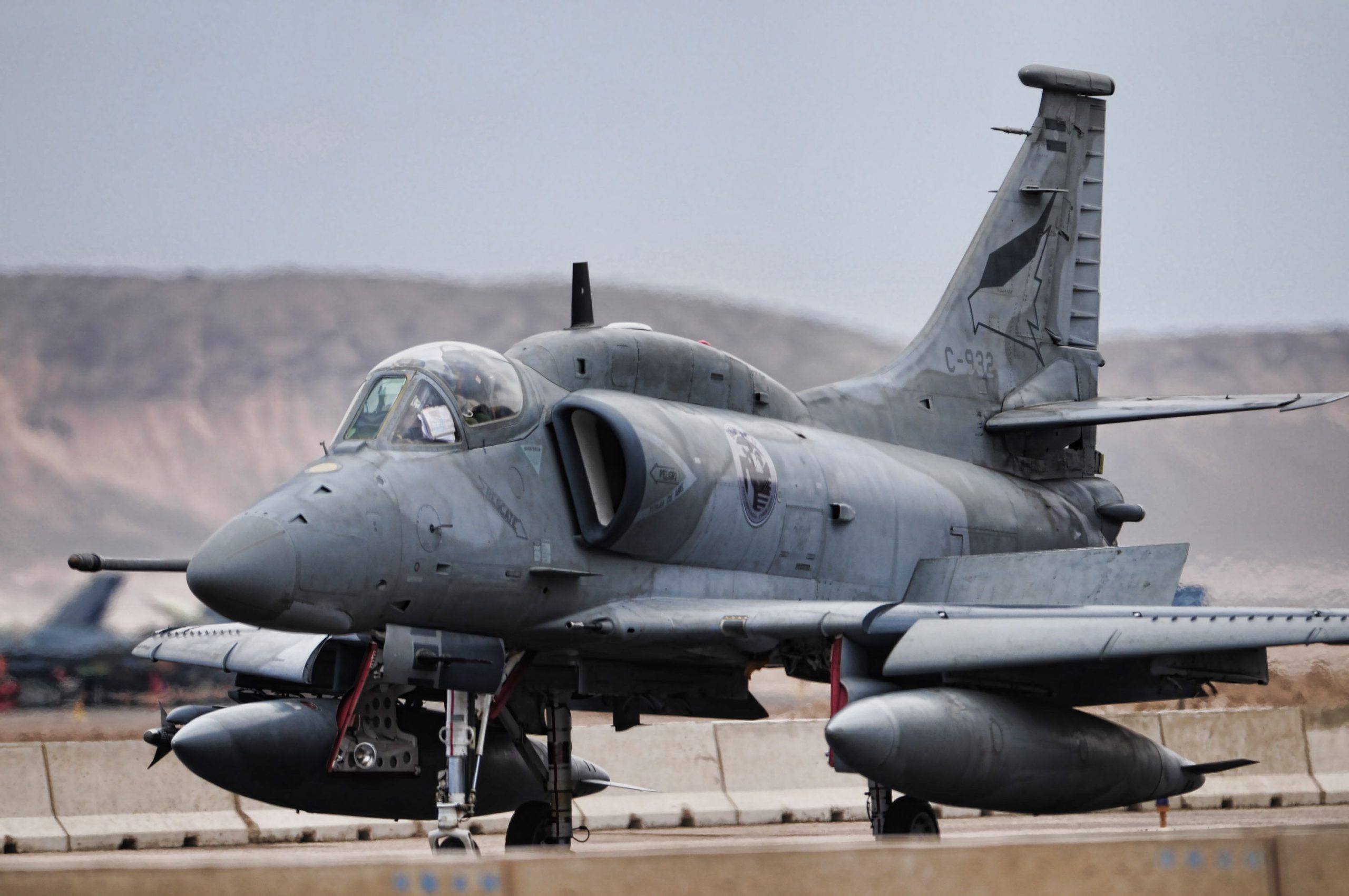
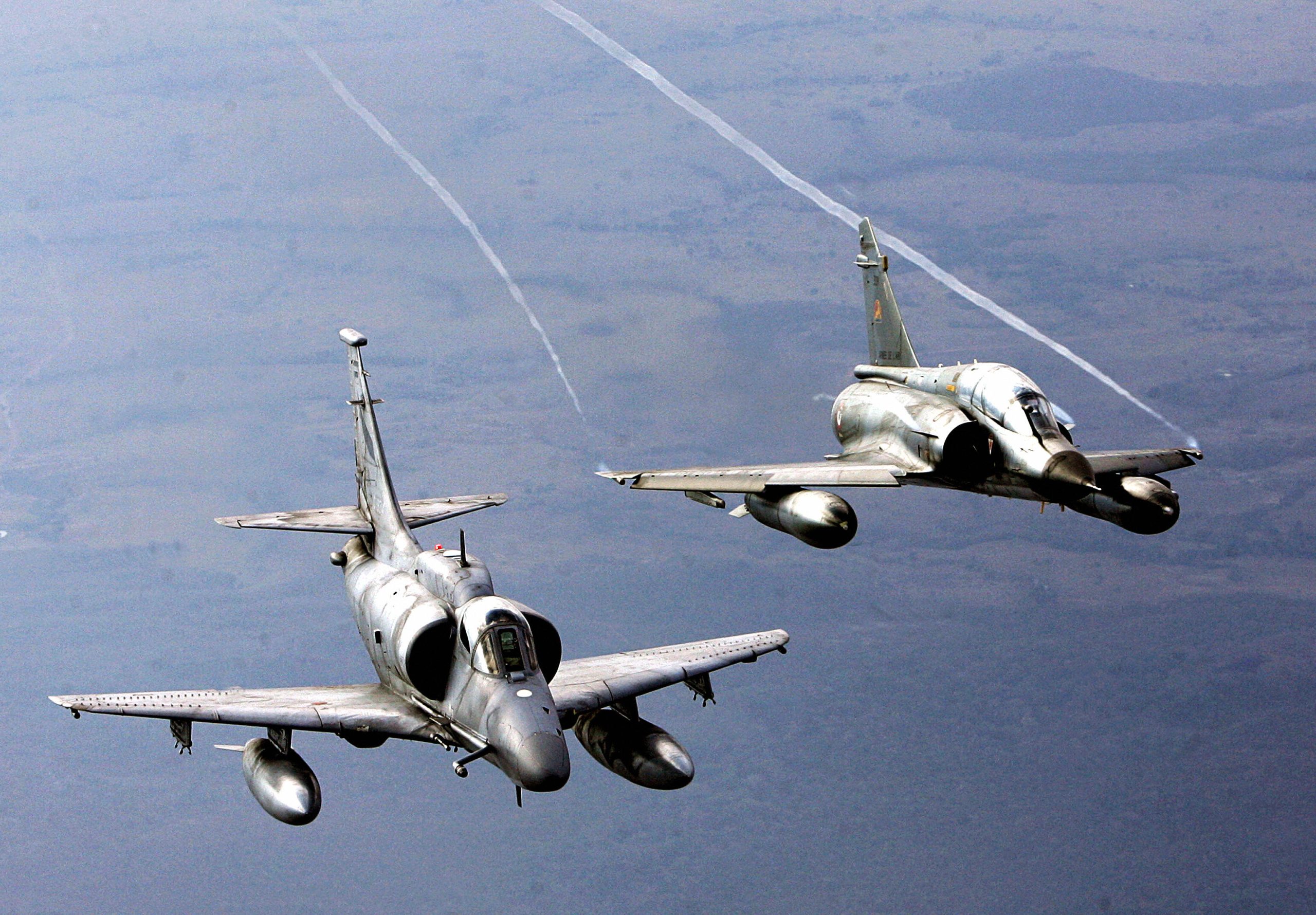
Although significantly more capable than the Vietnam-era Skyhawks they evolved from, the Fightinghawk was never designed as a dedicated air-defense fighter. Nevertheless, it was forced into that role after Argentina retired its last French-built Mirage fighters in 2015.
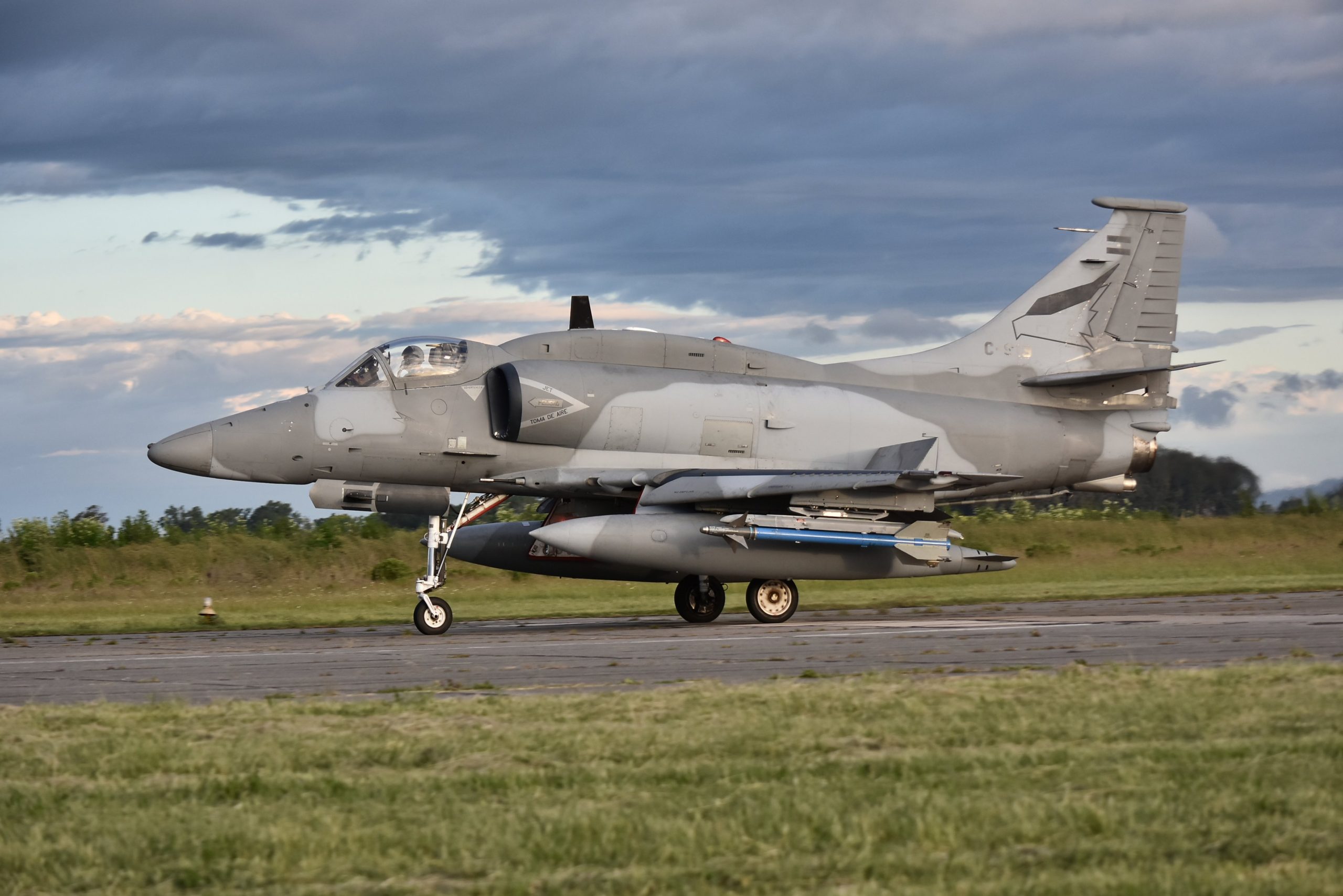
Against this backdrop, the FAA spent years trying to rebuild its ‘fighter’ capability but was repeatedly hampered by British efforts to block potential fighter buys. There was even speculation that Argentina might push to secure a deal with either China or Russia. Numerous aircraft options were evaluated before the U.S. government finally approved the transfer of F-16s from Denmark to Argentina in October 2023.
Early the following year, Argentina’s President Javier Milei confirmed that Buenos Aires would purchase the secondhand F-16s from Denmark. Welcoming the news, the U.S. Department of State described the jets in question as “low-cost high-performance multirole aircraft.”
The FAA is now in the process of introducing 24 F-16s, in the form of 16 single-seat F-16AMs and eight two-seat F-16BMs. It is also receiving several older Viper airframes for use as training aids and a spare parts source.
The retirement of the Fightinghawk also concludes the legacy of the wider A-4 series in Argentine service.
Argentina’s relationship with the A-4 began when the FAA took delivery of 26 former U.S. Navy A-4Bs in 1966, becoming the first export customer for the Skyhawk. A second batch of 26 A-4Bs arrived in 1970 and similarly joined the 5th Air Brigade at Villa Reynolds.
In 1976, another batch of 26 aircraft was delivered to the FAA, these being A-4Cs, again from U.S. Navy stocks. Their arrival allowed another unit to be equipped, this time the 4th Air Brigade at El Plumerillo.
For FAA service, these aircraft received the official designation A-4P from the U.S. government and the manufacturer, but were locally still often referred to as A-4B/Cs.
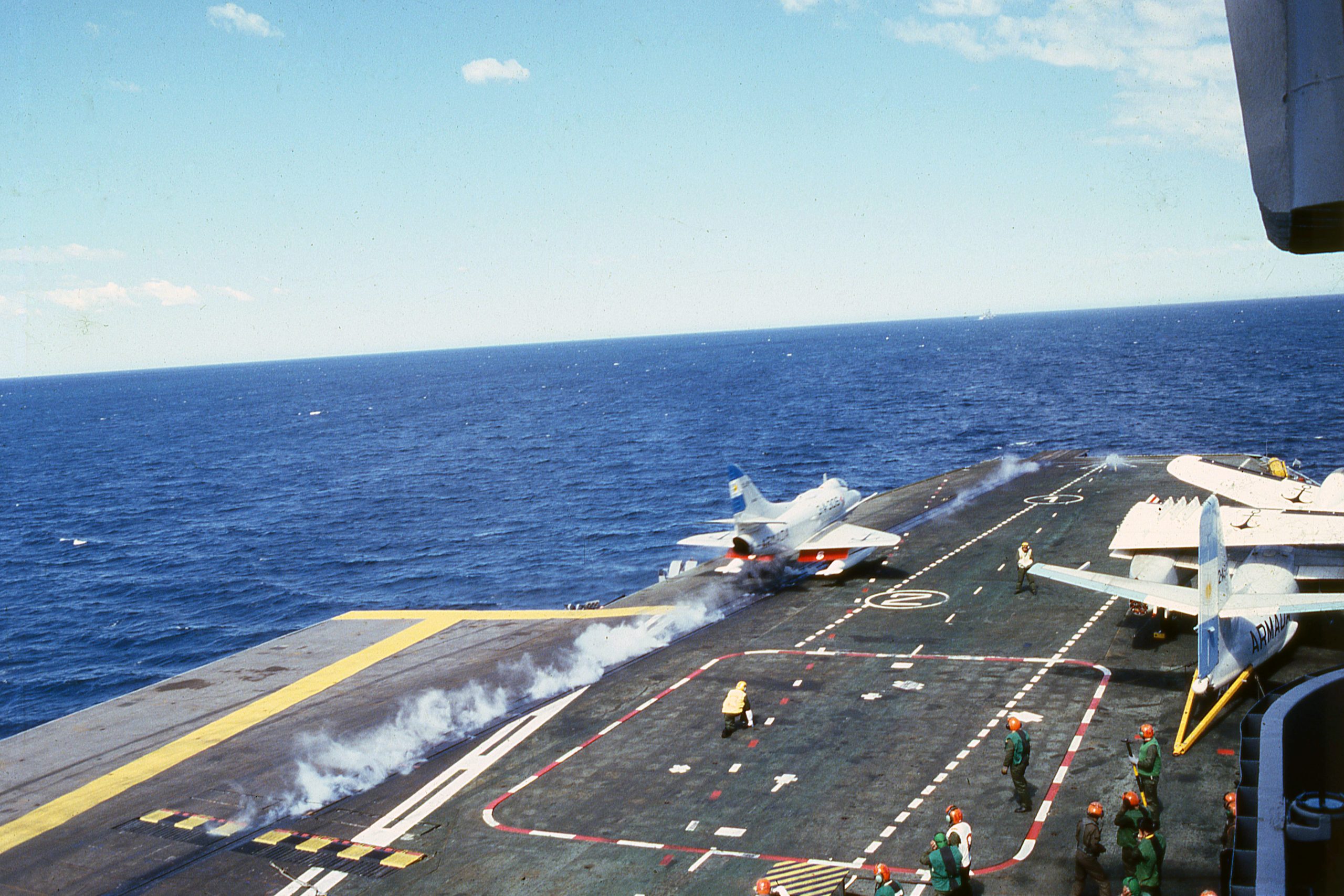
As well as equipping its air force, Argentina acquired A-4s for its naval air arm. In 1970, the Argentine Navy received a batch of 16 A-4Qs, a unique designation that applied to upgraded former U.S. Navy A-4Bs. These were primarily intended to serve aboard the aircraft carrier Veinticinco de Mayo, a Colossus class vessel that was transferred from the United Kingdom after service with the U.K. Royal Navy and the Royal Netherlands Navy. Unlike the first-generation FAA A-4s, the naval Skyhawks had, from the outset, provision for AIM-9 Sidewinder air-to-air missiles to provide air defense cover for the carrier group. They could also be fitted with a buddy refueling store.
By the time of the Falklands/Malvinas War in 1982, which began with Argentina’s surprise attack on the tiny British South Atlantic territory, nearly 8,000 miles from the United Kingdom, around 36 A-4s were in FAA service, with another eight more operational with the Argentine Navy.
At least one A-4 was tested from the airfield at Port Stanley in the Falklands, but the type was not judged suitable for sustained combat operations there. As for the Argentine Navy A-4s, these were initially embarked on the Veinticinco de Mayo, but the loss of the cruiser Belgrano forced the Argentine carrier back to port to avoid a similar fate.
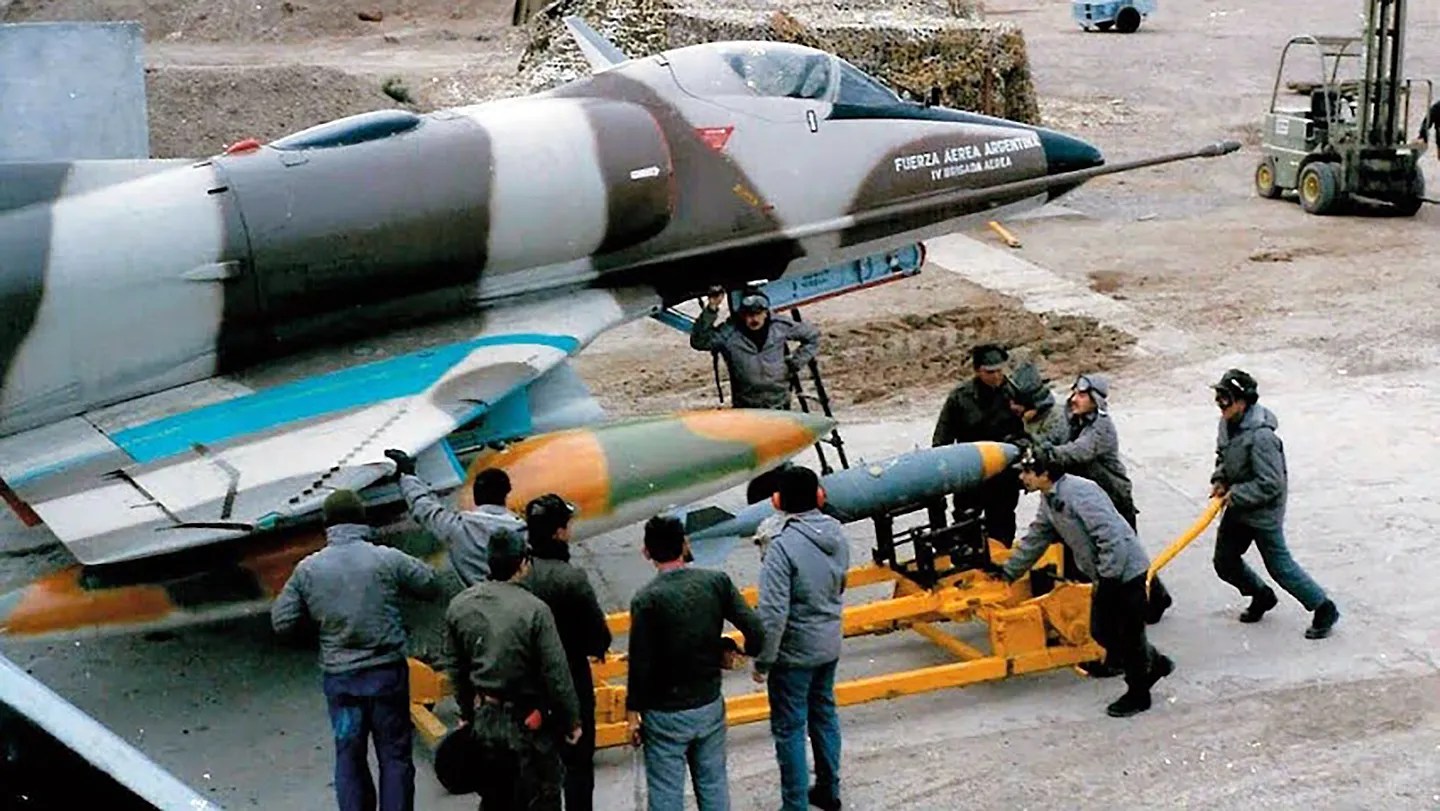
All this was fortunate for the British, since the FAA and Argentine Navy A-4s were forced to operate from bases on the mainland, at the very margins of their range.
For the A-4s, the war began with the support of the initial amphibious landings near Port Stanley, after which FAA Skyhawks clashed for the first time with the British task force on May 12, 1982. Although four A-4s were brought down by air defenses in this confrontation, they inflicted heavy damage on the destroyer HMS Glasgow.

Argentinian pilots attacking British warships in San Carlos Water during The Falklands War
Typically, the FAA A-4s would transit to the islands at high level, refuel from a KC-130 Hercules tanker, then drop down for a low-level attack run, dropping U.S.- or British-made free-fall bombs. Considering the challenges of these operations and the fact that the combination of low-level release and often-incorrect fusing meant many bombs failed to detonate, the jets had a major impact. In the course of more than 200 combat sorties, FAA A-4s sunk four warships and damaged several more. The service suffered eight losses at the hands of U.K. Royal Navy Sea Harriers out of a total of 19 A-4s lost, together with 17 pilots.
Meanwhile, the Argentine Navy A-4s claimed to have inflicted fatal damage on two warships (claims disputed by the British), for the loss of three Skyhawks and two pilots.
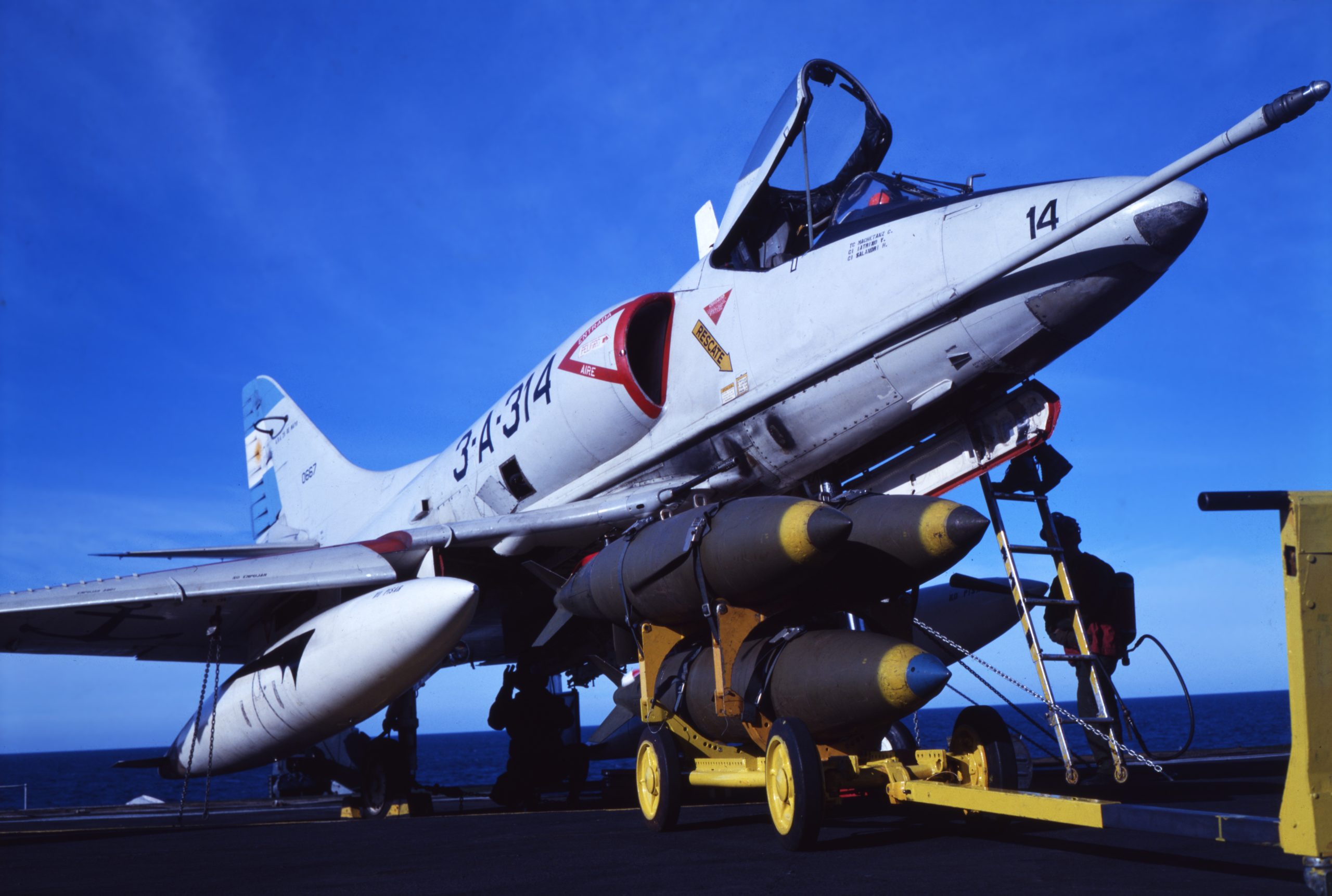
The bravery of the FAA pilots is noteworthy here, since the A-4s were flying with no air-to-air missile armament, no radar, no modern navigation system, delivering unguided munitions, and without radar-warning equipment. As you can read about here, as far as self-protection systems, the few examples that were introduced by the Argentines during the conflict were the result of desperate ingenuity.
The end of the conflict saw operations hampered by a U.S. arms embargo, but the Argentine Skyhawks soldiered on. The Argentine Navy stood down its last A-4Q in 1988, while the last of the first-generation FAA A-4s was retired in 1999.
With the retirement of the Fightinghawk, the A-4 remains in active military service only with neighboring Brazil.
The Brazilian Navy also acquired A-4s for carrier operations, but the retirement of its sole flattop, Sao Paulo, means that the value of its Skyhawks, locally designated AF-1, is increasingly questionable. However, work has been undertaken to upgrade these aircraft to ensure they remain viable, albeit now operating from a land base, at São Pedro da Aldeia. In all, five single-seaters and a pair of two-seaters were brought up to AF-1B and AF-1C standards, respectively. The seven upgraded Skyhawks received airframe and engine overhauls, a new Elta Systems EL/M-2032 multi-mode radar, a glass cockpit with HOTAS controls, and various other improvements.
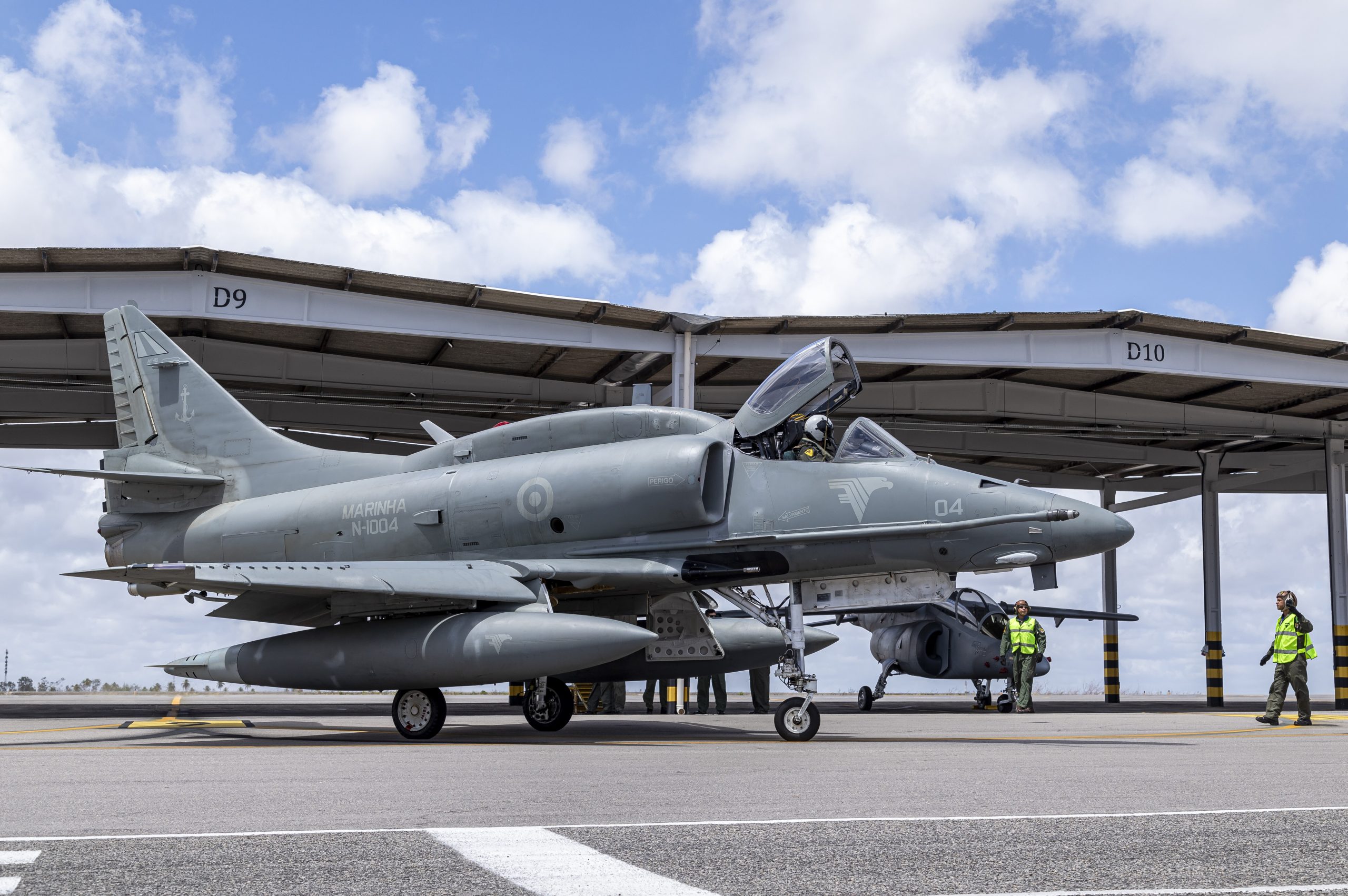
Now that Saab Gripen E/F fighters are joining the Brazilian Air Force, retaining the Skyhawk fleet is also less important, and their time in service will likely come to an end soon.
In the meantime, however, the A-4 continues to provide good service to private military contractors, who appreciate the jet for its versatility, agility, and relatively low operating costs, meaning that it excels as both an adversary and as a test and training platform. Chief among these operators is the Canadian Top Aces, flying ex-Israeli A-4s, and Florida-based Draken International, which operates a fleet of the jets that previously flew with the Royal New Zealand Air Force.
As we have discussed in the past, the capabilities of some of these contractor-operated A-4s would be beyond the imagination of many of the pilots who originally flew the jets in military service. The latest standard of A-4s operated by Top Aces, for example, includes an active electronically scanned array (AESA) radar and an infrared search and track (IRST) system to better replicate more modern threats.
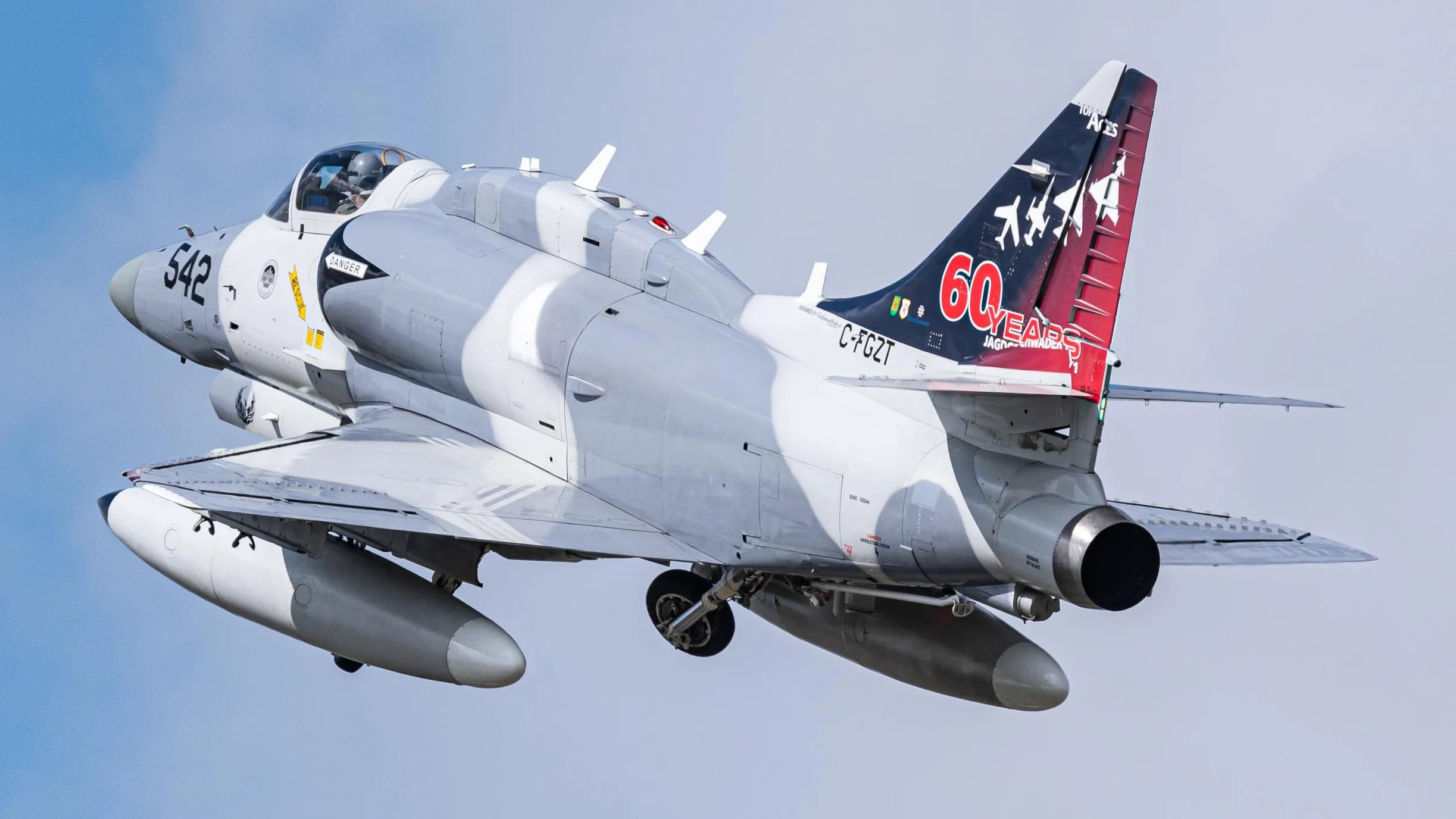
Therefore, while the A-4 may be fast disappearing from the inventories of air forces, its legacy is set to live on in the most tangible form, as it continues to serve in a variety of support roles around the world in the hands of commercial operators.
Contact the author: thomas@thewarzone.com
editor's pick
latest video

news via inbox
Nulla turp dis cursus. Integer liberos euismod pretium faucibua