Marine Amphibious Combat Vehicles To Get Missile-Swatting Active Protection Systems
The U.S. Marine Corps is working toward adding an active protection system (APS) capability to its fleet of 8×8 wheeled Amphibious Combat Vehicles (ACV). APSs on the market today are generally designed to defeat incoming anti-tank guided missiles and other infantry anti-armor weapons. However, many of them also have the inherent ability to down incoming drones or are being modified to address this ever-growing threat, something TWZ previously explored in a detailed feature. The Marines are already exploring additional options to improve the ACV’s defenses against uncrewed aerial attackers, as well as other upgrades to the vehicles.
Chris Melkonian, the Marine Corps’ current Program Manager for Advanced Amphibious Assault (PM AAA), talked today about APS for the ACV fleet and other plans for those vehicles at the annual Modern Day Marine exposition, at which TWZ is in attendance.
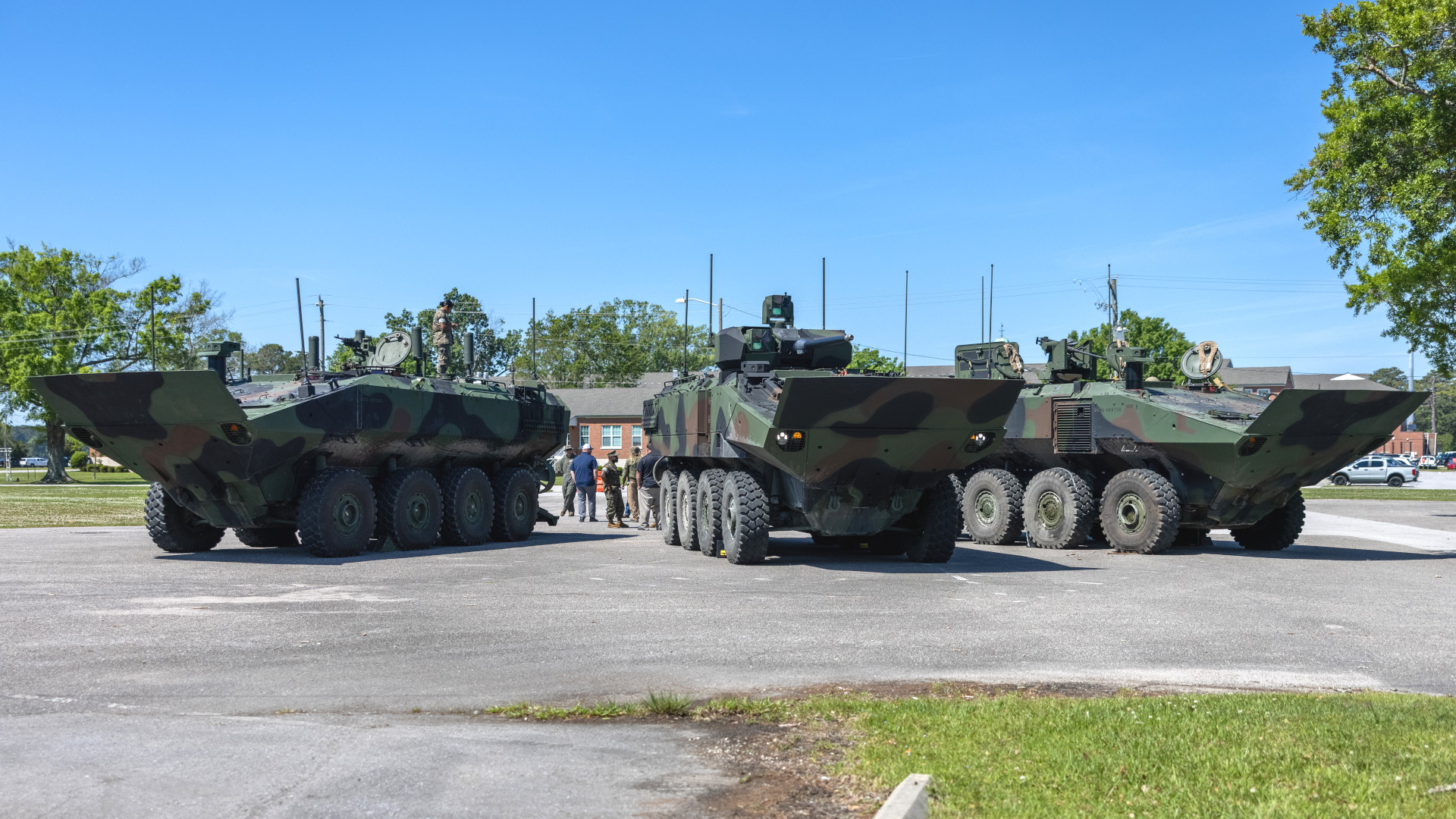
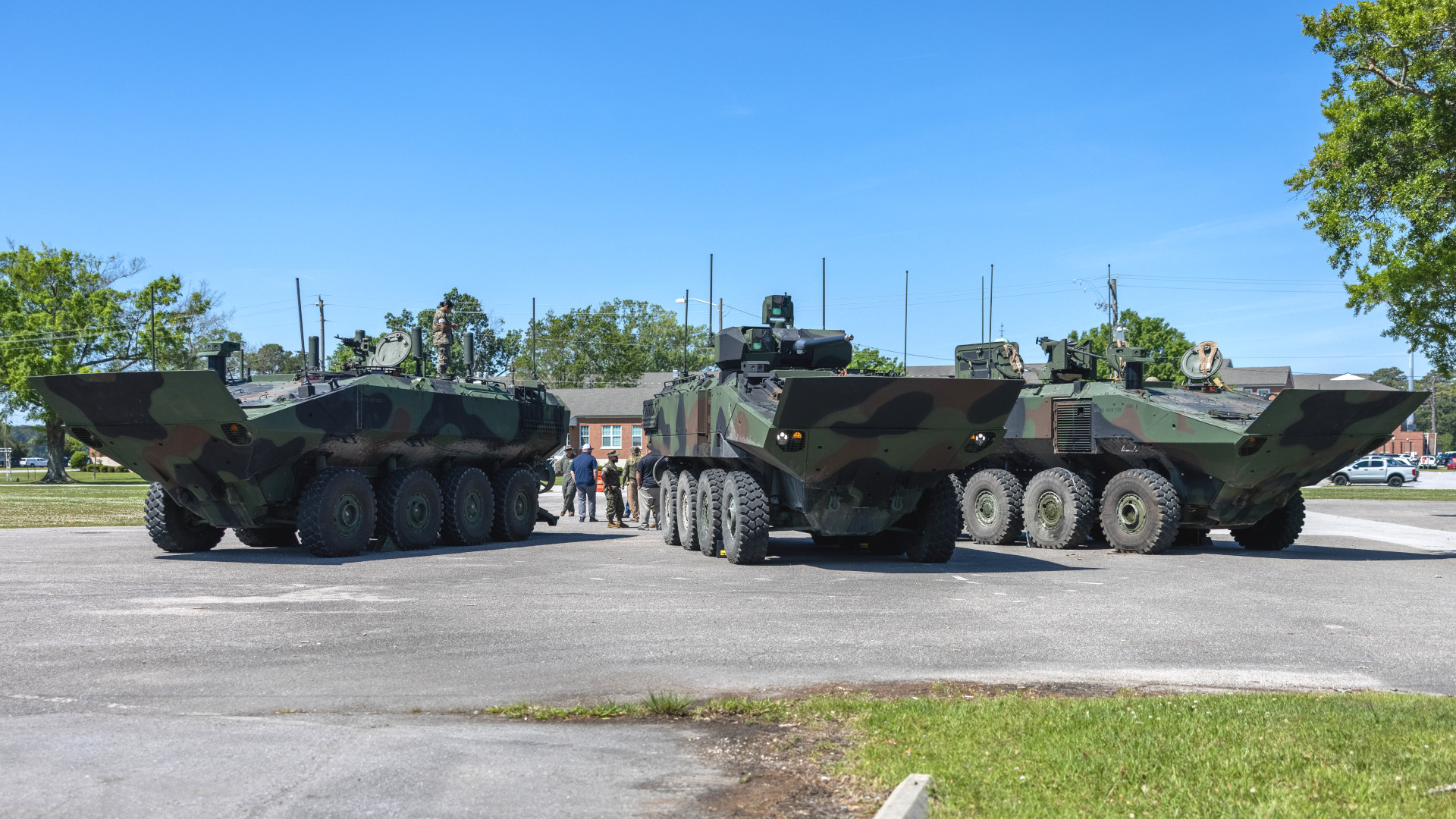
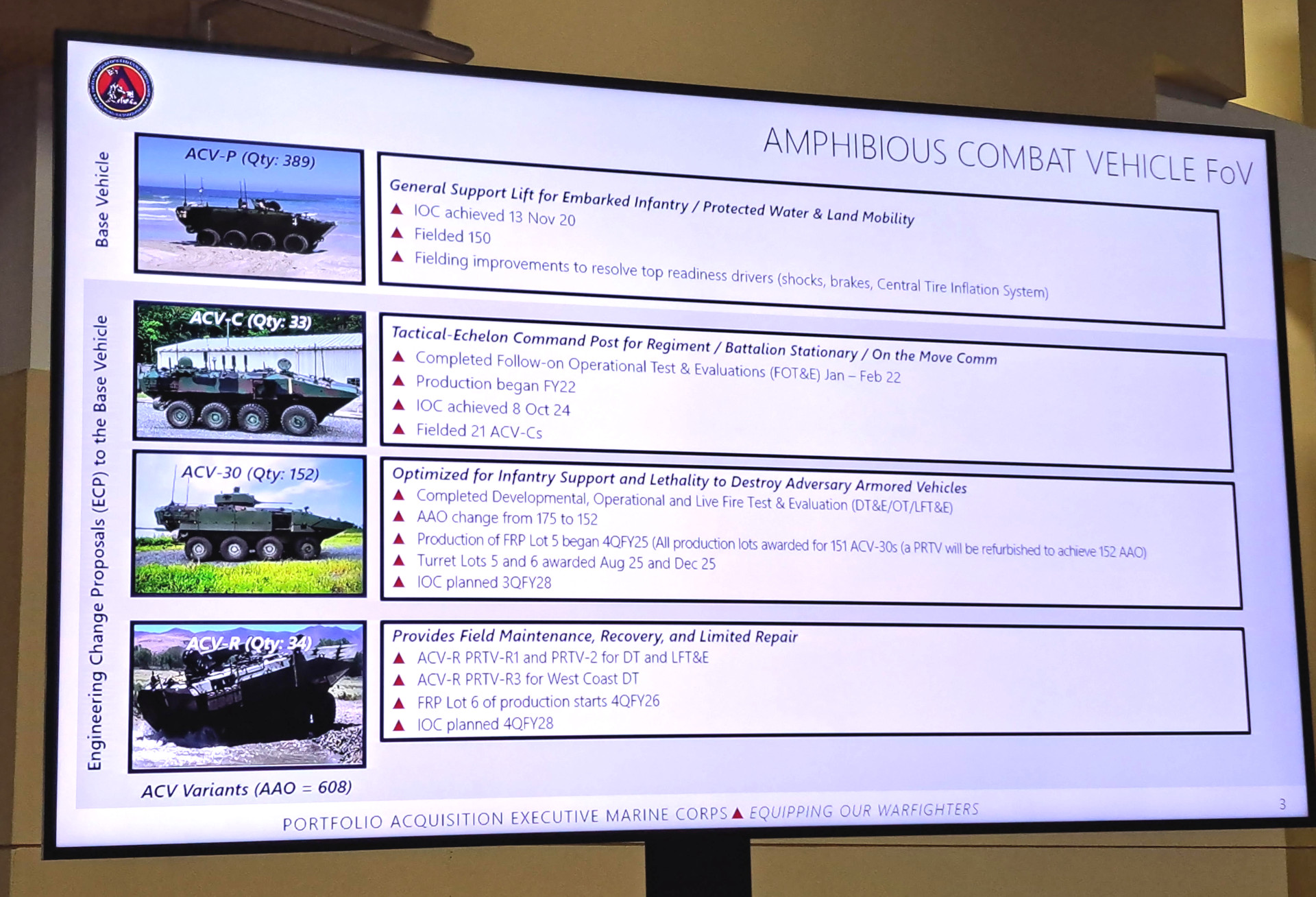
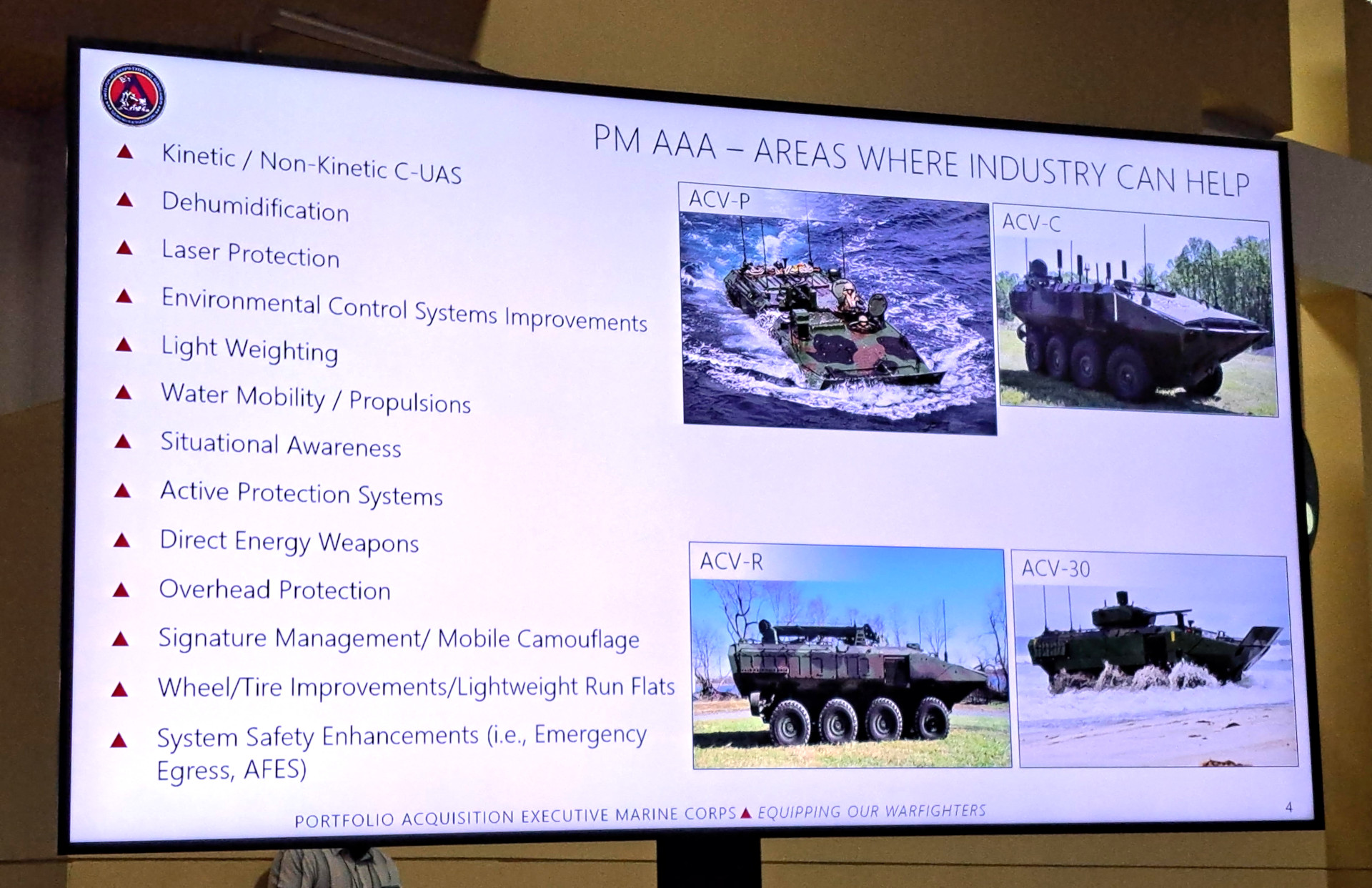
The Marines currently field two ACV variants, the baseline personnel carrier type (ACV-P) and a version optimized for command and control tasks (ACV-C). The service is in the process of acquiring two more variants, one armed with a turreted 30mm cannon (ACV-30) and a recovery vehicle version fitted with a crane and other specialized features (ACV-R). The Corps is presently targeting 2028 for reaching initial operational capability with the ACV-30 and the ACV-R.
The Marines view the entire ACV family as central to its ability to conduct amphibious operations, as well as for providing additional lethality and other support to forces once ashore. At present, the service is planning to acquire a total fleet of 608 ACVs, consisting of 389 ACV-Ps, 33 ACV-Cs, 152 ACV-30s, and 34 ACV-Rs. Prime contractor BAE Systems has also proposed additional variants, including ones configured for electronic warfare or dedicated to the counter-drone role.
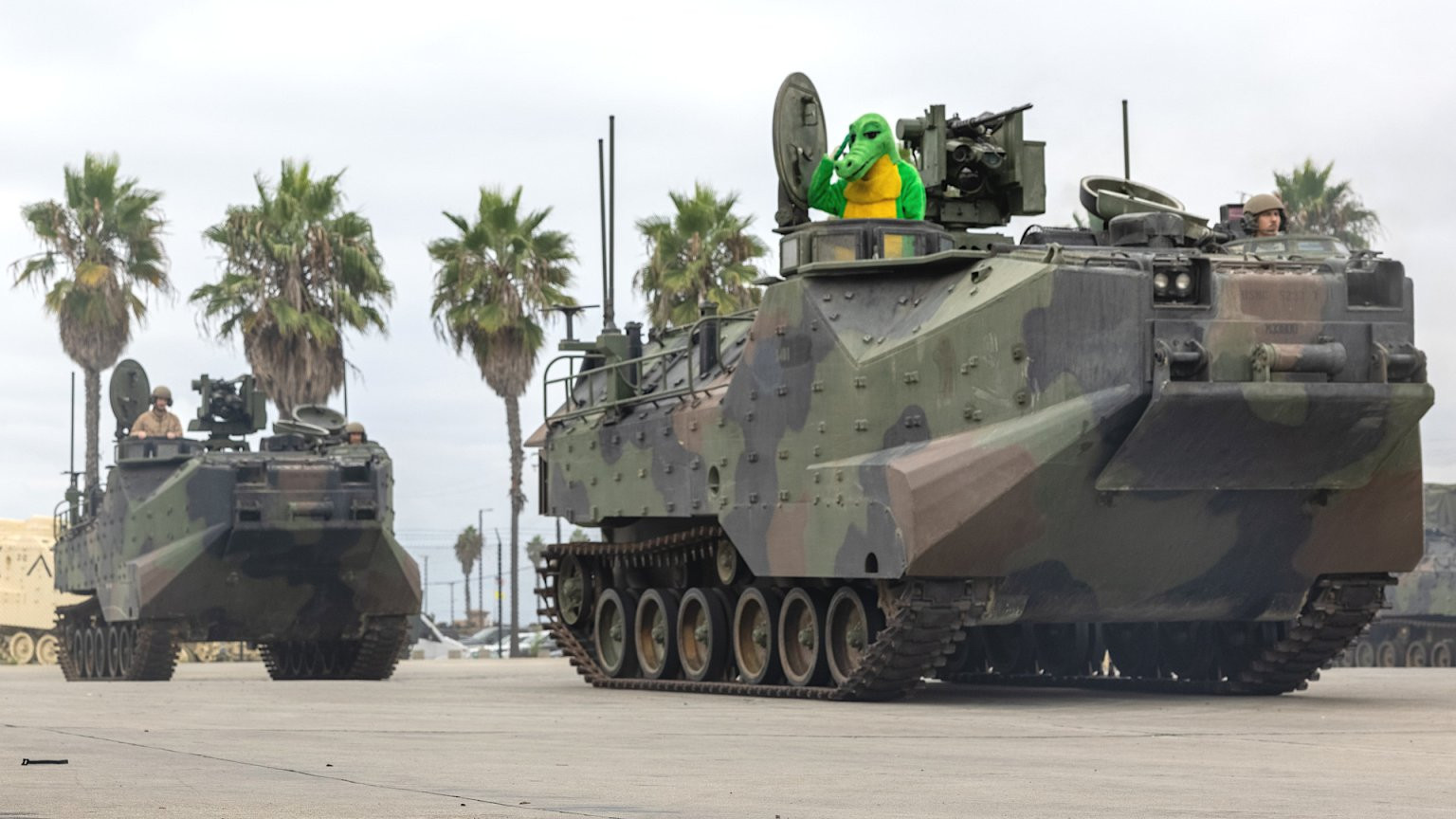
In 2018, the Corps announced it had selected the ACV as the replacement for its Cold War-era tracked Assault Amphibious Vehicle (AAV) family. The service announced the formal retirement of the AAV last fall.
There are already “things that we’re doing today to make the ACV family vehicles even more capable,” Melkonian said at Modern Day Marine. “The analogy I use is the ACV that Marines are using today is not the ACV that they’re going to use in the future.”
This includes an “active protection system,” he added. “We’re working with the vendor to mature that capability. We’re going to move that right into production.”
Recently released budget documents also say that the Marines are asking for $28.35 million in Fiscal Year 2027 for “Ancillary Equipment” for the ACV fleet, which “is primarily attributed to the procurement of Special Mission Kits for the Active Protective System (APS).” Those same documents further note that the “funding provides APS production kits, integration kits, installation labor, countermeasures, and spares for 21 ACV-P vehicles and will add a new defensive capability to existing vehicles.”
However, neither Melkonian nor the budget documents have said what specific type of APS the ACVs are now in line to get, or when. TWZ has reached out to the service for more information.
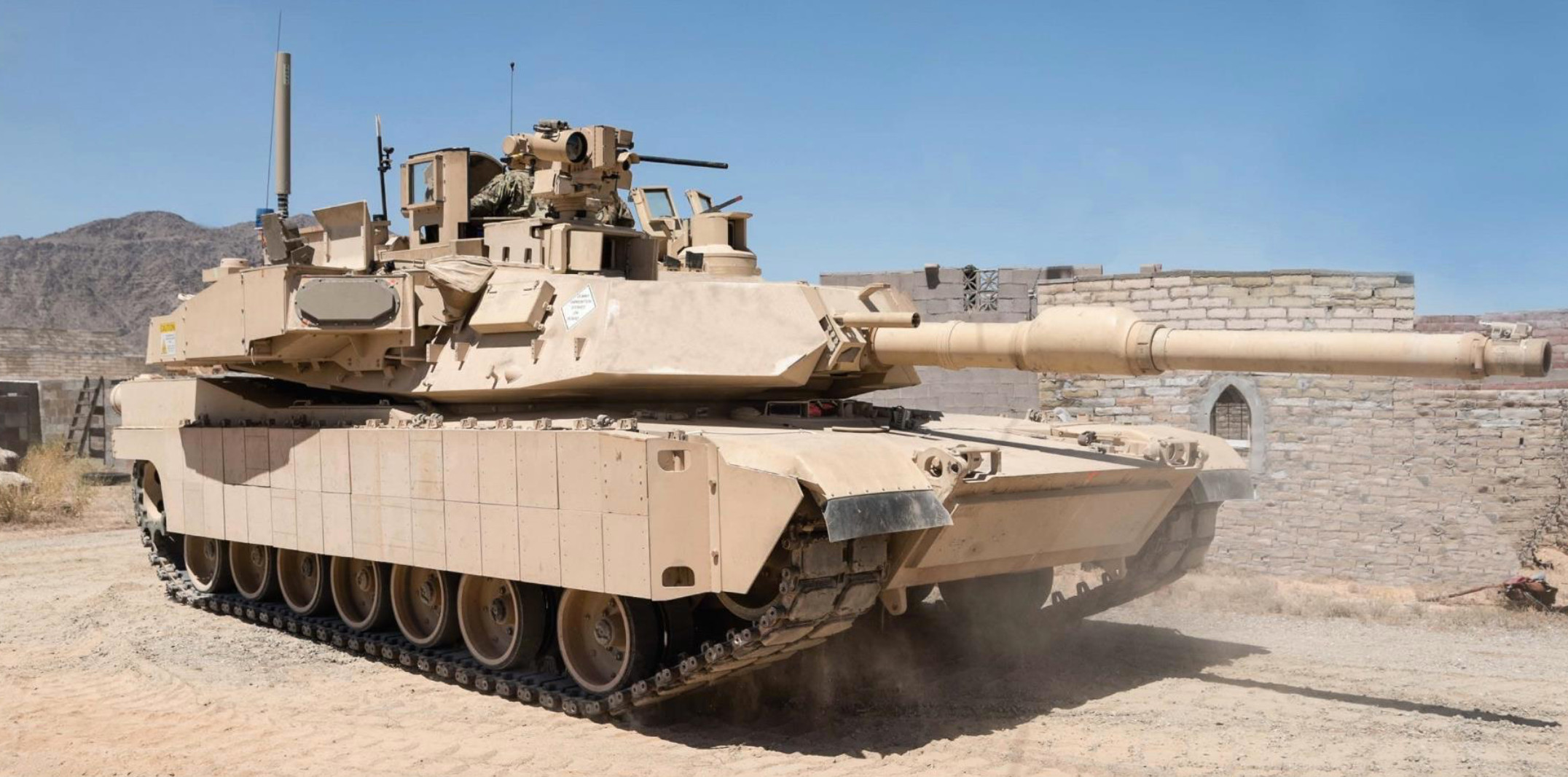
This is certainly not the U.S. military’s first foray into APSs for armored vehicles. The U.S. Army previously integrated the Israeli-designed and combat-proven Trophy APS onto a portion of its M1 Abrams tanks.

TROPHY is the world’s ONLY operational APS (Previous Version – Updated Video Available)
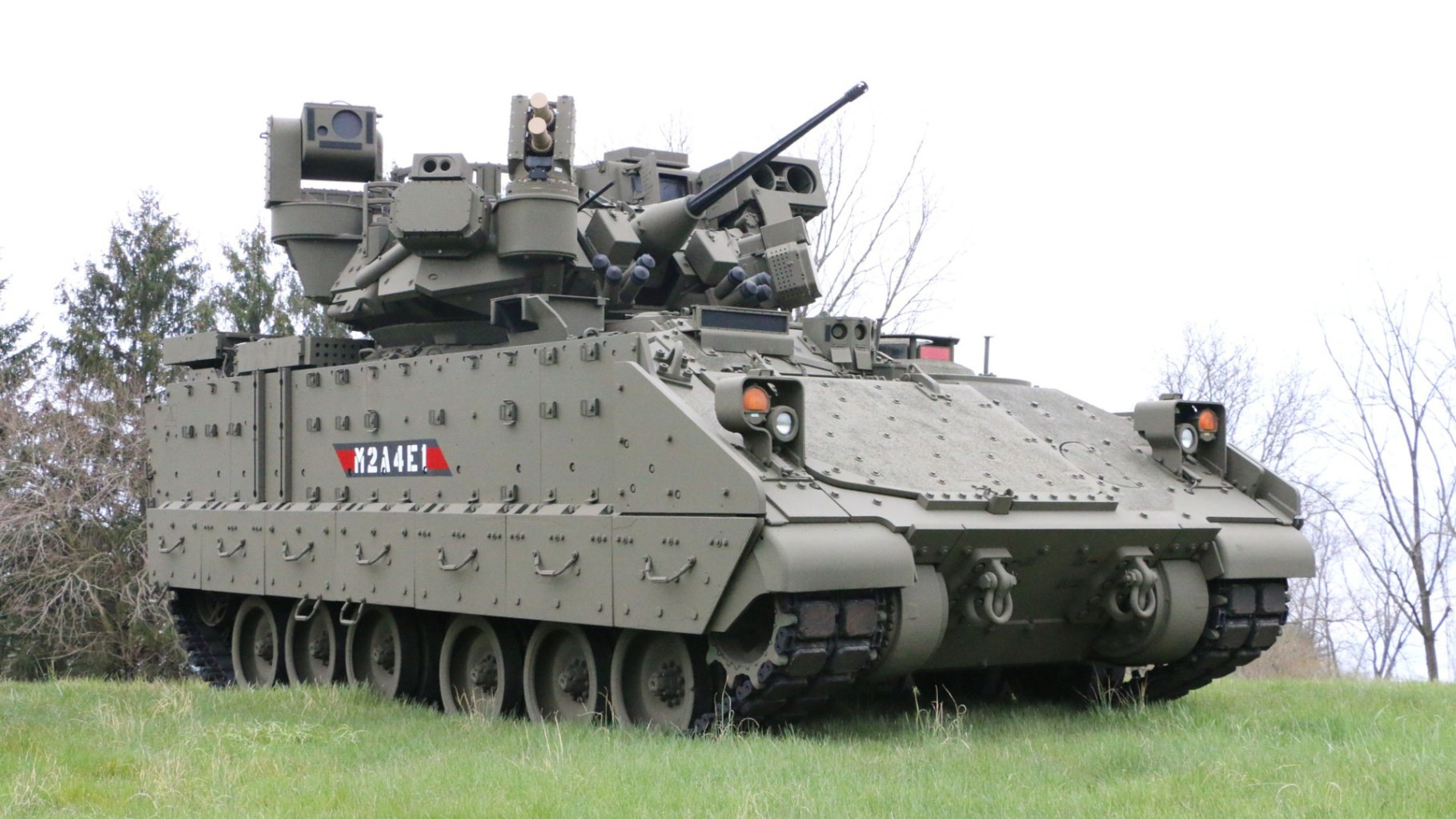
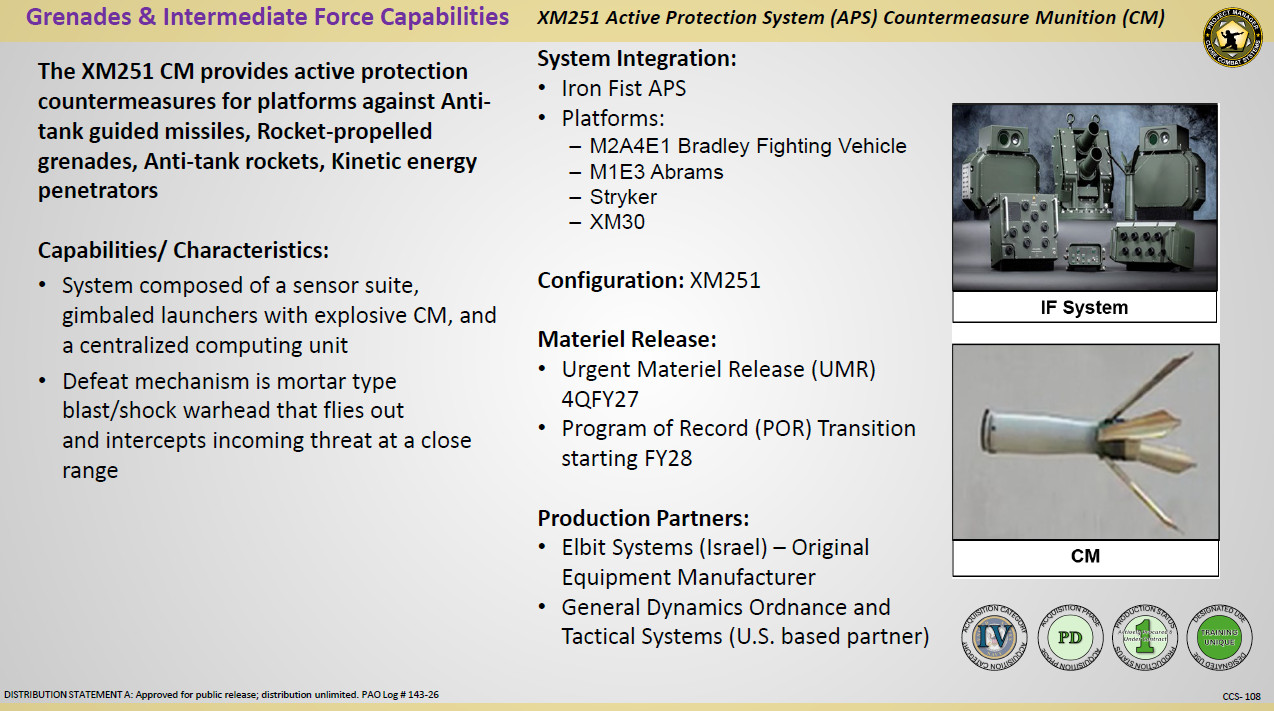
That service is also now in the process of adding another Israeli-developed APS, Iron Fist, onto at least some of its Bradley Fighting Vehicles. The Army’s version of Iron Fist, now designated as the XM251, is also set to be fitted to next-generation M1E3 tanks and a planned replacement for the Bradley family, tentatively designated the XM30.
There are other APS designs on the market today that the Marines could have chosen for integration onto the ACV, as well.
As noted, APSs available today are generally designed to neutralize anti-tank guided missiles and other infantry anti-armor weapons. They typically achieve this through the use of ‘hard-kill’ projectiles designed to destroy targets either using an explosive warhead or via the sheer force of impact. Hard-kill APSs use a mixture of sensors, which can include small-form-factor radars and electro-optical/infrared cameras, to cue those interceptors to engage incoming threats.
From when the Marines first announced the selection of BAE’s ACV back in 2018, TWZ has noted that an APS could provide the vehicles with a valuable extra layer of defense against anti-armor missiles and rockets. More capable infantry anti-armor weapons continue to be developed and proliferate globally. Those threats present additional challenges in beach landing scenarios for amphibious vehicles like the ACV, which move much more slowly in the water than they do on land.
The threat that drones pose, and to armored vehicles in particular, which TWZ has been sounding the alarm on for years, has also now been fully rammed into the public consciousness. This is thanks largely to the stark visuals of tanks and other vehicles being attacked by uncrewed aerial systems (UAS) that emerge on a daily basis now from the ongoing conflict in Ukraine.
Drones are an ever-more common and still evolving threat across a growing number of conflict zones worldwide. First-person view (FPV) type kamikaze drones controlled via fiber optic cable have become a particular point of concern, since they are impervious to radio frequency jamming. In turn, this has already prompted the development of a variety of active and passive countermeasures for armored and unarmored vehicles. We will come back to this in a moment.
TWZ has previously laid out a detailed case specifically for using hard-kill APSs to provide added counter-drone defense for armored vehicles. The Israeli firms behind Trophy and Iron Fist have both now notably demonstrated the ability of their respective systems to defeat uncrewed aerial threats in certain envelopes, as can be seen in the videos below. It should be noted that Trophy, Iron Fist, and other hard-kill APSs have a limited number of engagement opportunities and are not really intended to defeat large volumes of threats simultaneously, such as drones attacking in swarms.
Trophy® APS – The land maneuver enabler
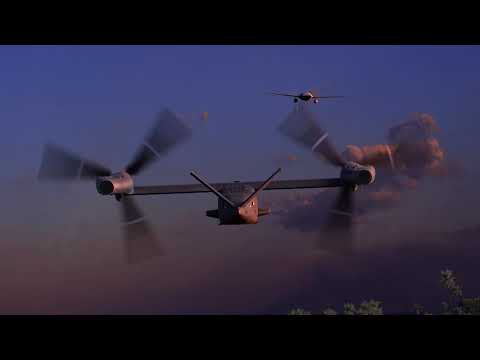
Iron Fist APS | Active Protection System for Armored Vehicles
When it comes to the APS capability now planned for Marine ACVs, “that is not going to be the end-all, be-all,” Melkonian, the Marine Corps’ Program Manager, said today. “We’re constantly looking at what the next generation of APS is and how we can get that onto the platform in a lightweight form factor.”
Melkonian also highlighted other potential counter-drone and more general survivability upgrades that could be on the horizon for ACV. This could include the integration of directed energy weapons and some form of added overhead protection. Top-down attacks on vehicles where the armor is typically thinnest can be very threatening, in general.
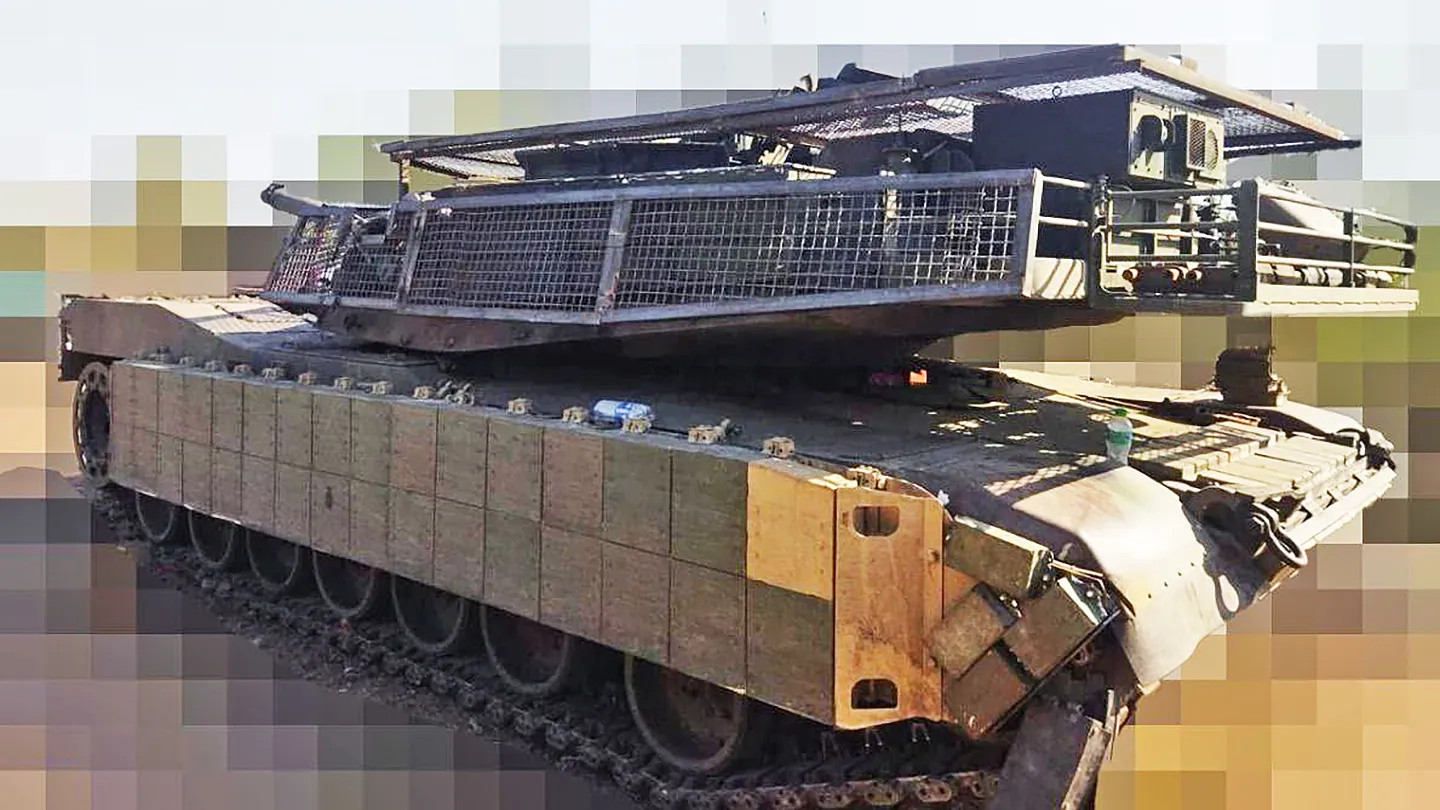
As an aside, the Army has already been working to acquire hundreds of Top Attack Protection (TAP) add-on armor systems for installation on its M1 Abrams tanks and other armored vehicles. This reflects an expanding global trend in the integration of so-called ‘cope cage’ type armor around the turrets and other areas of armored and unarmored vehicles, primarily to protect against drone attacks. The first cope cages appeared on Russian tanks in the lead-up to the all-out invasion of Ukraine in 2022. This kind of armor does present tradeoffs, including the potential to interfere with other capabilities, such as APSs.
Improved “situational awareness, that’s kind of a gateway to counter-UAS, in terms of the ability to sense your environment,” Melkonian also noted today while talking about other possible upgrades for the ACV. “Take all that video on board and then be able to feed that into [a] counter-UAS system.”
Melkonian highlighted several other areas of interest where the Marines are looking to improve the ACV’s capabilities. His list included things like reducing the vehicle’s signatures to make it harder for enemies to spot, improving its mobility while in the water, and upgrades to just help keep everything inside dry.
“Marines operate in very humid, very difficult environments,” he explained. “The ability to dehumidify the vehicles is a critical enabler, being able to improve the maintenance strategy and keeping [sic] those components running for as long as they need to.”
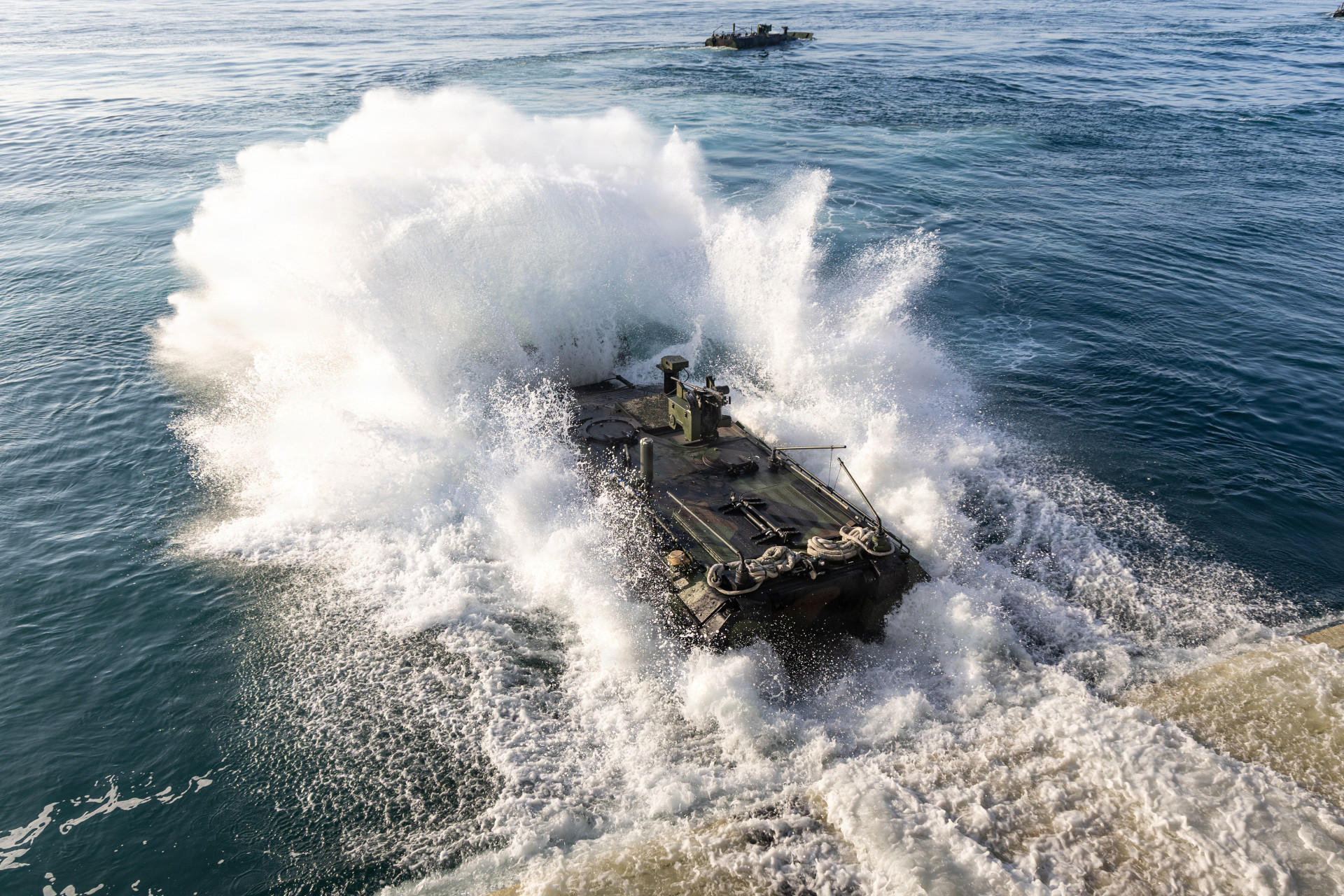
Broadly speaking, the Marines are interested in new “lightweight solutions, advanced technology, and anything that’s going to be marinized. It must be marinized,” he added. “I can’t tell you how many solutions have been picked, and that’s one of the first questions we ask, and sometimes the solutions are designed for a marinized environment, sometimes they’re not. Marines go where no one else goes, and we’ve got to be able to make sure that our capabilities can support their needs.”
The core marinization requirement will apply to the APS integration just like any other upgrades for Marine ACVs.
Altogether, the addition of active protection systems looks to be just one important upgrade for the Marine Corps’ ACV fleet now on the horizon.
Eric Tegler contributed to this story.
Contact the author: joe@twz.com
editor's pick
latest video

news via inbox
Nulla turp dis cursus. Integer liberos euismod pretium faucibua