Evidence Of Ukraine Using AIM-120C-8 Missiles Emerges
Recently uncovered wreckage of an Advanced Medium-Range Air-to-Air Missile (AMRAAM) reveals that Ukraine is employing the AIM-120C-8 version, a weapon that is close to the ‘top of the line’ for these missiles. Ukraine can employ AMRAAMs of all types from its F-16 fighters, as well as from the ground-based National Advanced Surface-to-Air Missile System (NASAMS) air defense system.
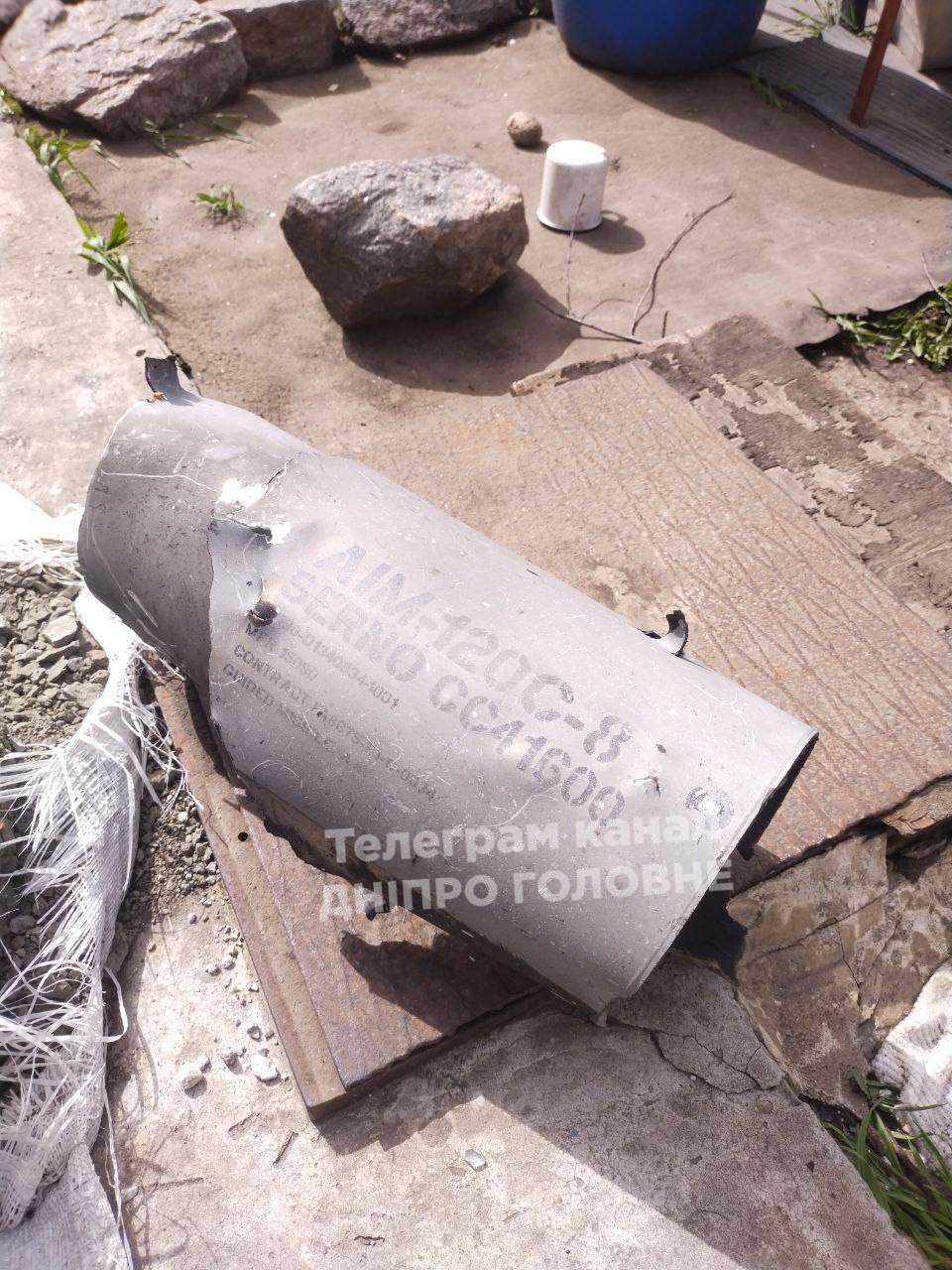
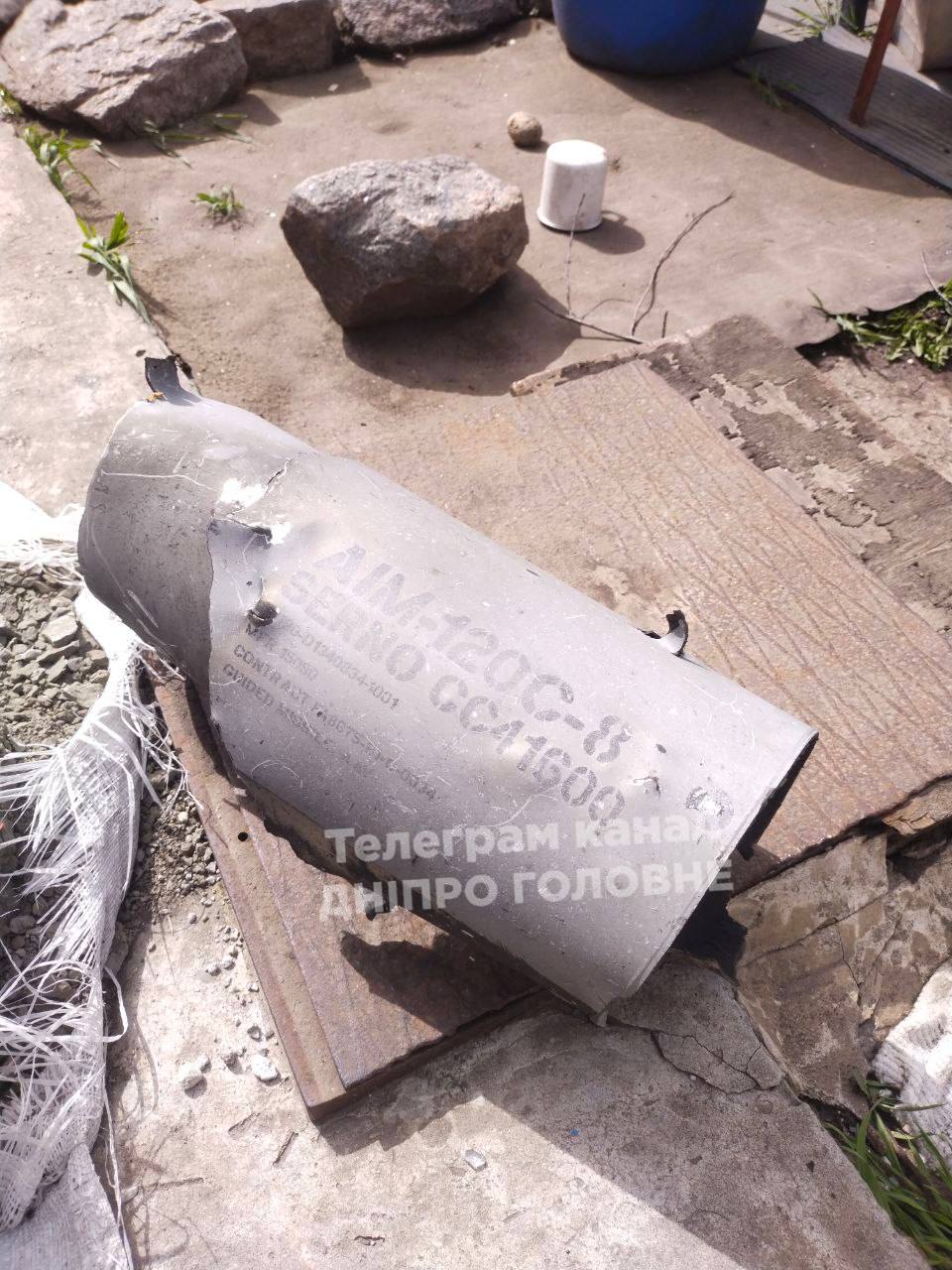
A photo showing part of an AMRAAM missile body clearly marked with the AIM-120C-8 designation began to circulate online recently. According to available accounts, the wreckage was found in the aftermath of a Russian air attack on Dnipro in central Ukraine, during which the Ukrainian Armed Forces were active in defense of the city.
Previous imagery of Ukrainian F-16s had confirmed they were using some version of the AIM-120C, which can be identified on account of its cropped fins for internal carriage in the F-22 and F-35. This appears to be the first confirmation that the AIM-120C-8, specifically, has been supplied to Kyiv, in addition to earlier AIM-120A/B versions.
As we’ve discussed in the past, the AIM-120C offers some significant advantages over the earlier AIM-120A/B models.
In general, the ‘Charlie’ version offers a range of advanced capabilities that reflect the continuous development of both this specific sub-variant and the AIM-120 series overall. Even in its earliest sub-generation versions, the C-model features notable upgrades in terms of range, guidance, resistance to countermeasures, and other key areas.
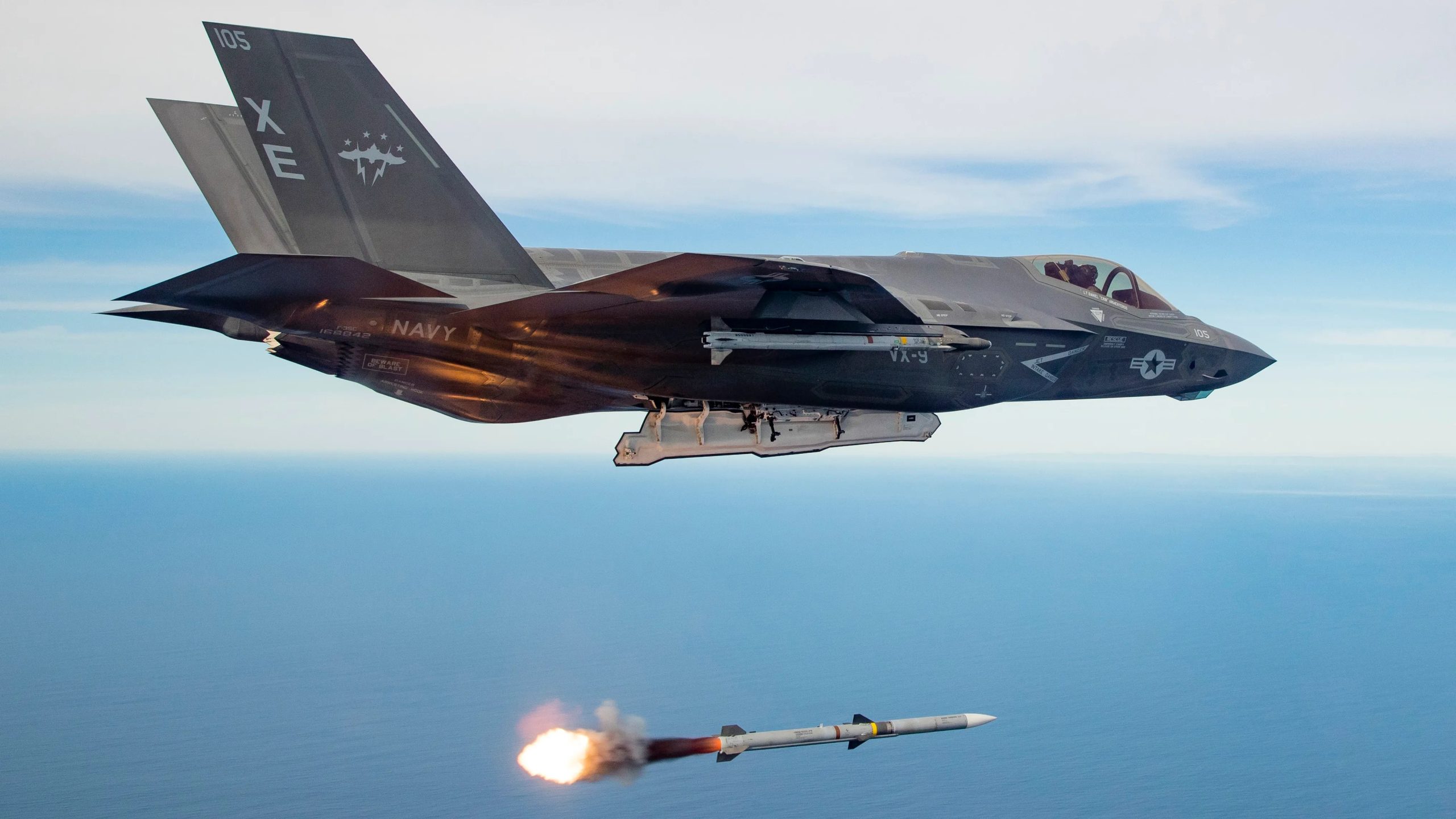
Successive improvements reportedly introduced on the AIM-120C family include a new WDU-41/B warhead (AIM-120C-4), a new WPU-16/B propulsion section with a larger motor and electronic counter-countermeasures (ECCM) upgrades (AIM-120C-5), and an updated proximity fuze (AIM-120C-6). Meanwhile, the AIM-120C-7 features further improved ECCM, an upgraded seeker, and a longer range.
The exact differences between the AIM-120C-8 and the AIM-120D are somewhat unclear, although the D-model, at least, is understood to feature two-way datalink with third-party targeting capabilities. The AIM-120D may also feature an active electronically scanned array (AESA) seeker, while the C -8 remains a mechanically scanned antenna. There have been previous suggestions that the AIM-120D is reserved for the U.S. military and its closest allies, while other international customers receive the AIM-120C-8.
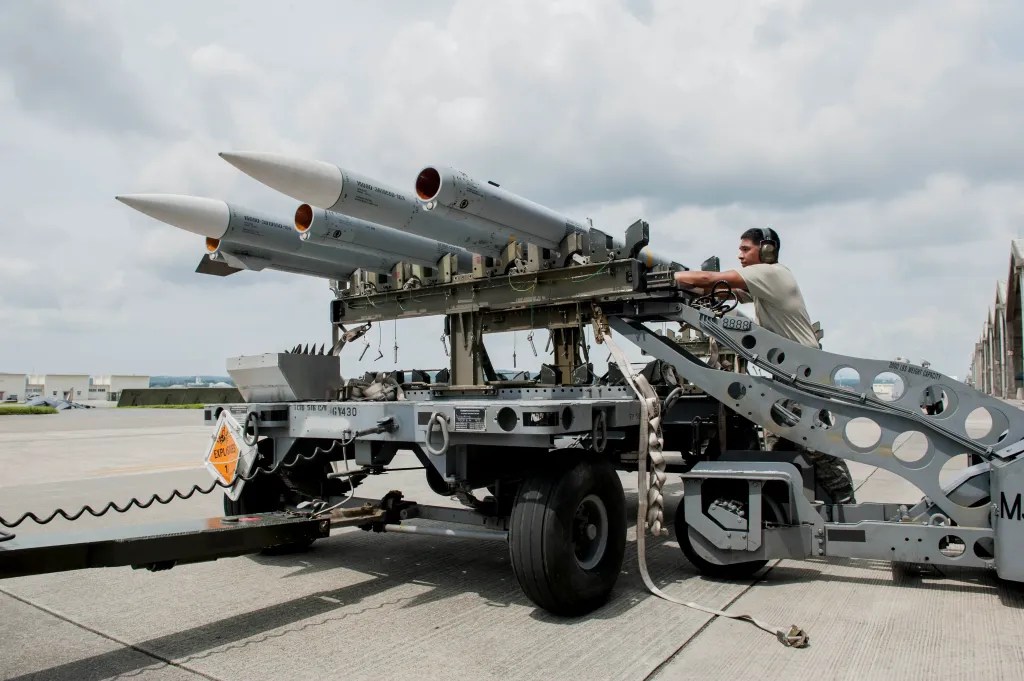
It was an AIM-120D that was used for what the U.S. Air Force described as the “longest known” air-to-air missile shot, during a series of tests in airspace near Eglin Air Force Base, Florida, in the fall of 2024. The launch platform on that occasion was an F-22. This would fit with reports that the D-model features significantly greater range than earlier versions, although, once again, the precise differences between AIM-120C-8 and AIM-120D are unclear.
Both the AIM-120C-8 and the AIM-120D have also been further enhanced under the F3R program, developed for the U.S. Air Force. F3R stands for form, fit, function refresh, and is primarily intended to eke out more performance from the missile, as you can read more about here. It’s not clear if Ukraine’s AIM-120C-8s also benefit from the F3R improvements.
A recent promotional video from Raytheon includes footage of a separation launch of the latest-generation AMRAAM F3R from a U.S. Navy F/A-18F Super Hornet:

Air Dominance With a Digital Edge
The plan was for the U.S. Air Force to begin to receive AMRAAMs incorporating F3R starting early 2023, as part of the Lot 33 production run. The U.S. AMRAAM program of record is expected to continue into around 2027 or 2028. As for the AIM-120C-8, these missiles are expected to remain in production for international partners long beyond 2030.
Regardless, the AIM-120C-8 offers Ukraine a notably long-range weapon.
While official performance figures are classified, it is generally assumed to be able to hit targets at a distance of between 75 and 100 miles. Of course, in practical applications, a whole range of factors impact a missile’s reach, above all, the energy and altitude state of the launching aircraft and the target.
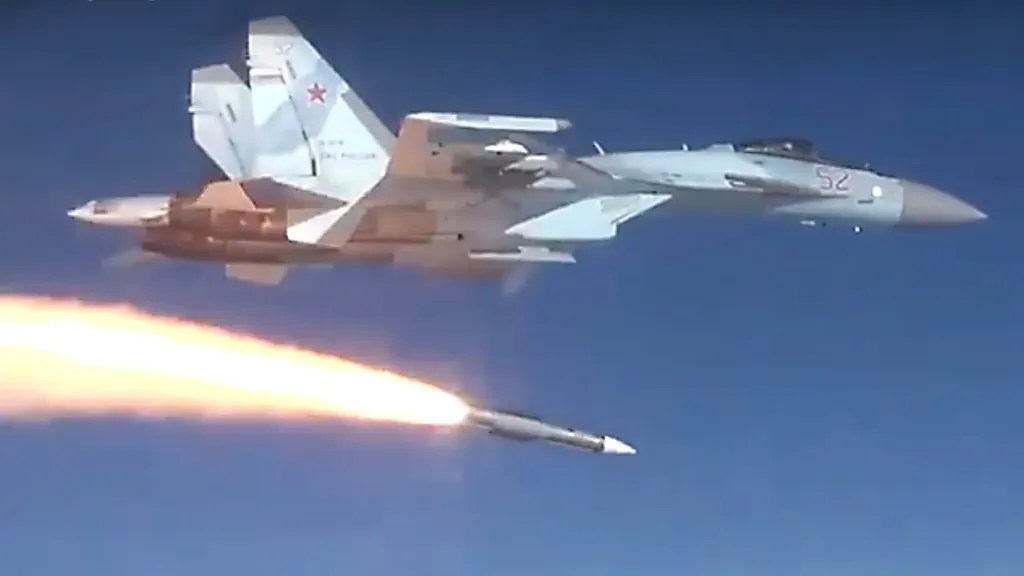
In an air-to-air context, the weapon goes some way toward closing the gap with Russia’s R-37M missile, known to NATO as the AA-13 Axehead. According to the manufacturer, at least in its export form, the R-37M can defeat “some types” of aerial targets at a range of up to 124 miles. This likely refers to only larger, less agile, aircraft targets and is very much a “sales brochure figure,” with all the caveats that entails.
At this stage, we don’t know for sure whether the wreckage in Dnipro came from an air-launched AMRAAM, i.e., fired by an F-16, or if it was an effector from a ground-based NASAMS.
In the case of the F-16, the importance of the AMRAAM cannot be overstated. This was the first active-radar-guided air-to-air missile to be fielded by Ukraine. This is a class of weapons that the Ukrainian Air Force long campaigned for. One of its fighter pilots, the late Andrii Pilshchykov, better known by his callsign “Juice,” told TWZ back in 2022: “The lack of fire and forget missiles is the greatest problem for us.”
More recently, Ukrainian F-16s have had to rely more heavily on AMRAAMs. Earlier this year, reports emerged indicating that Ukraine had been left late last year with only “a handful” of U.S.-made AIM-9 Sidewinder air-to-air missiles for its F-16s, after the supply of these short-range weapons dried up.
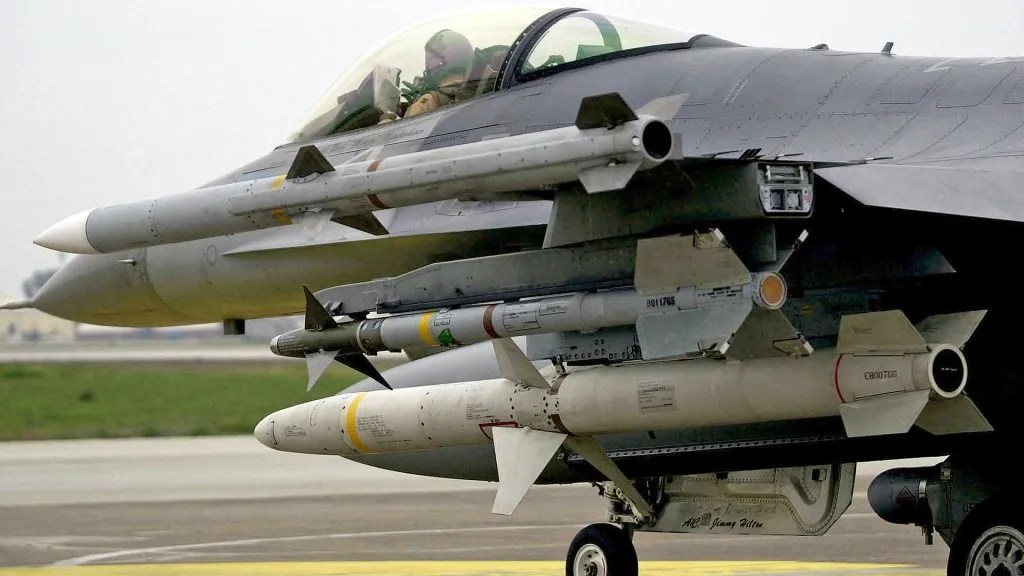
This left the F-16 pilots with AMRAAMs plus the jet’s internal 20mm M61 Vulcan cannon.
As we have discussed many times before, taking out slow-moving drones via another fixed-wing aircraft with guns can be very challenging and downright dangerous, especially for fast jets. AMRAAMs can be employed against drones and cruise missiles, too, but are more expensive weapons than the Sidewinders. Each AMRAAM costs around one million dollars.
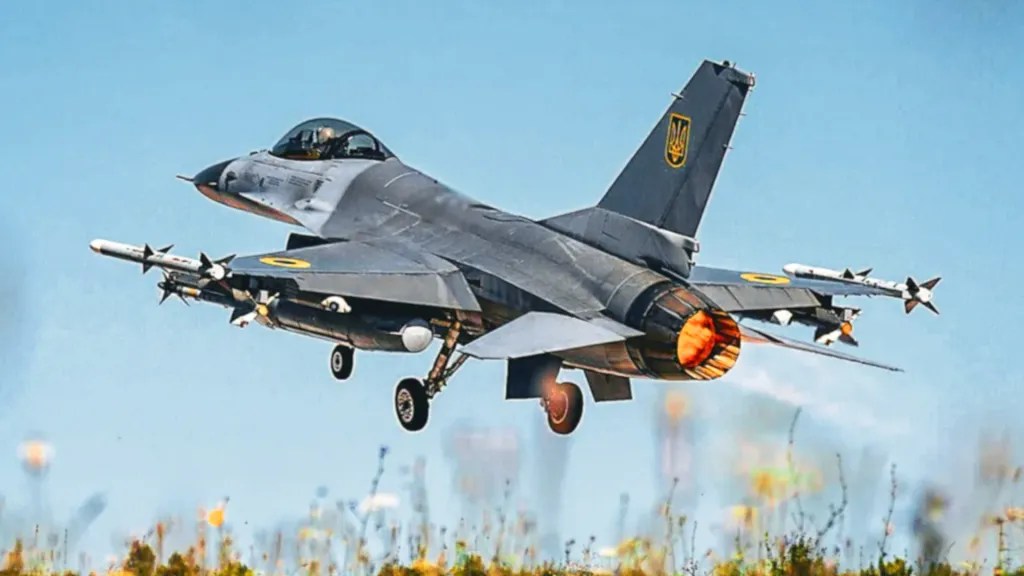
To help plug the gap, Ukrainian F-16s have begun using laser-guided 70mm Advanced Precision Kill Weapon System II (APKWS II) rockets. These rockets provide an extremely valuable, lower-cost option for engaging long-range kamikaze drones and subsonic cruise missiles. U.S. Air Force F-16s began using them in combat last year, as we were first to report.
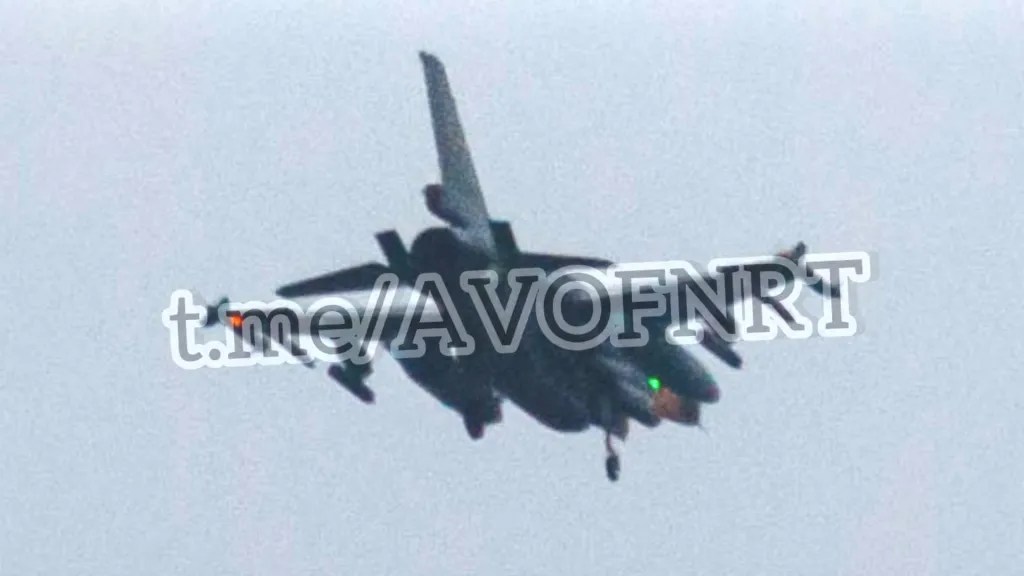
While somewhat less likely, there’s also a possibility that the Dnipro wreckage came from an AIM-120C-8 fired by a NASAMS.
Deliveries of the first two Ukrainian NASAMS batteries were expedited after Russia’s large-scale missile and drone assault on major population centers in Ukraine in late 2022.
A video showing the Ukrainian NASAMS in action:
Привітання до Дня Повітряних Сил ЗС України 2023
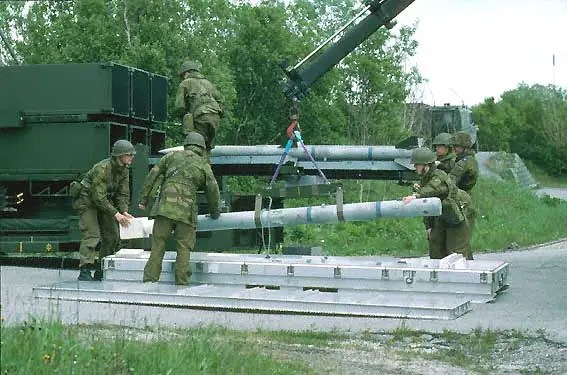
As we explored at the time, a critical advantage of NASAMS is the fact that it fires the exact same missiles used in air-to-air applications. It does not require a special AMRAAM variant or major modifications to existing missiles. In addition, it can fire other types of effectors, including the AMRAAM-ER, which is a hybrid of the AIM-120 and the RIM-162 Evolved Sea Sparrow Missile (ESSM), and the infrared-homing AIM-9X Sidewinder and IRIS-T missiles.
It might be expected that Ukrainian NASAMS is being fed with older AIM-120A/Bs, which, in the ground-launched application, are capable of engaging targets from relatively close ranges to up to roughly 20 miles away and from around 1,000 feet to 50,000 feet. These targets include everything from cruise missiles — which it is very good at engaging — to crewed aircraft and drones.
Another major factor behind the appearance of the AIM-120C-8 wreckage could be the indication that stocks of older (AIM-120A/B and earlier C-version) missiles have been depleted, leading to the inclusion of higher-end C variants. If so, this would increase the pressure on at least some of the foreign partners who are supporting Ukraine with weapons, particularly given the global imbalance between the supply and demand for munitions. The conflict in Iran is likely to intensify this strain, as the United States is reportedly delaying deliveries to customers to prioritize replenishing its own inventories.
As it stands, we now have confirmation that Ukraine is using what is almost certainly the most advanced and capable version of the AMRAAM that is available to all but the very closest U.S. military allies. As such, it should provide Ukraine with a particularly powerful tool in its ongoing battle against Russian air attacks.
Contact the author: thomas@thewarzone.com
editor's pick
latest video

news via inbox
Nulla turp dis cursus. Integer liberos euismod pretium faucibua