Rare Video Appears To Show A Soviet Su-7 Jet Dropping A Nuclear Bomb
Videos and other imagery bearing witness to the awesome destructive power of nuclear detonations remain some of the most enduring legacies of the Cold War. But of the more than 2,000 nuclear weapons tests that have been carried out since 1945, only very, very few have involved a live weapon dropped from a fighter-bomber.
A nuclear strike performed by the Su-7
At least one such test took place in the Soviet Union, however. On his X account, Sam Wise, an aviation analyst at Janes, brought our attention to footage that purportedly shows that test, or at least portions of it.
The test in question was especially notable in that it involved a free-fall tactical nuclear bomb that was delivered by a crewed fighter-bomber, specifically a Su-7 Fitter attack jet, in an end-to-end test.
Of those 2,000-plus nuclear tests, only a small fraction involved bombs dropped from aircraft of any kind — roughly 200 to 250 according to records compiled by the Comprehensive Nuclear-Test-Ban Treaty Organization. Those tests almost always involved bombers, aircraft with multiple engines, several crew members, and, often, dedicated to delivering nuclear weapons.
The vast majority of nuclear tests were conducted underground, at sea, or on land. In the latter case, the devices were typically detonated from an elevated position, either atop a tower or suspended from a balloon. This better replicated the conditions of a typical nuclear detonation, with the weapon engineered to explode in an air burst above the ground, for maximum effect.
One reason for the relative scarcity of air-dropped nuclear bomb tests was the Partial Test Ban Treaty of 1963, which pushed testing underground.
At the same time, dropping a live nuclear weapon from a crewed aircraft brings additional risks for relatively little benefit.
At the beginning of the nuclear age, air-dropped tests were useful to prove that bombs could be delivered, but they were inefficient in terms of scientific measurement and riskier to conduct from a safety point of view. Dropping a nuclear device from an aircraft adds variables (altitude, speed, trajectory) that complicate measurements. If something goes wrong, you risk losing a plane, or worse, an accidental detonation or contamination spread.
Based on the available information, it appears that the U.S. military never tested a live tactical nuclear bomb dropped by a tactical combat jet, despite the very many platforms, both Air Force and Navy, that were cleared to carry them operationally.
It should be noted that the U.S. Air Force did detonate one tactical nuclear weapon after launch from a fighter. However, this involved an air-to-air rocket, the nuclear-tipped Genie, which was fired on this occasion from an F-89 interceptor, in 1957’s Operation Plumbbob John.
Project Genie : Air-to-air rocket nuclear testing
France does appear to have conducted a live test of an air-dropped tactical nuclear bomb, with an AN52 dropped from a Jaguar attack jet in August 1972, to help prove that weapon for service.
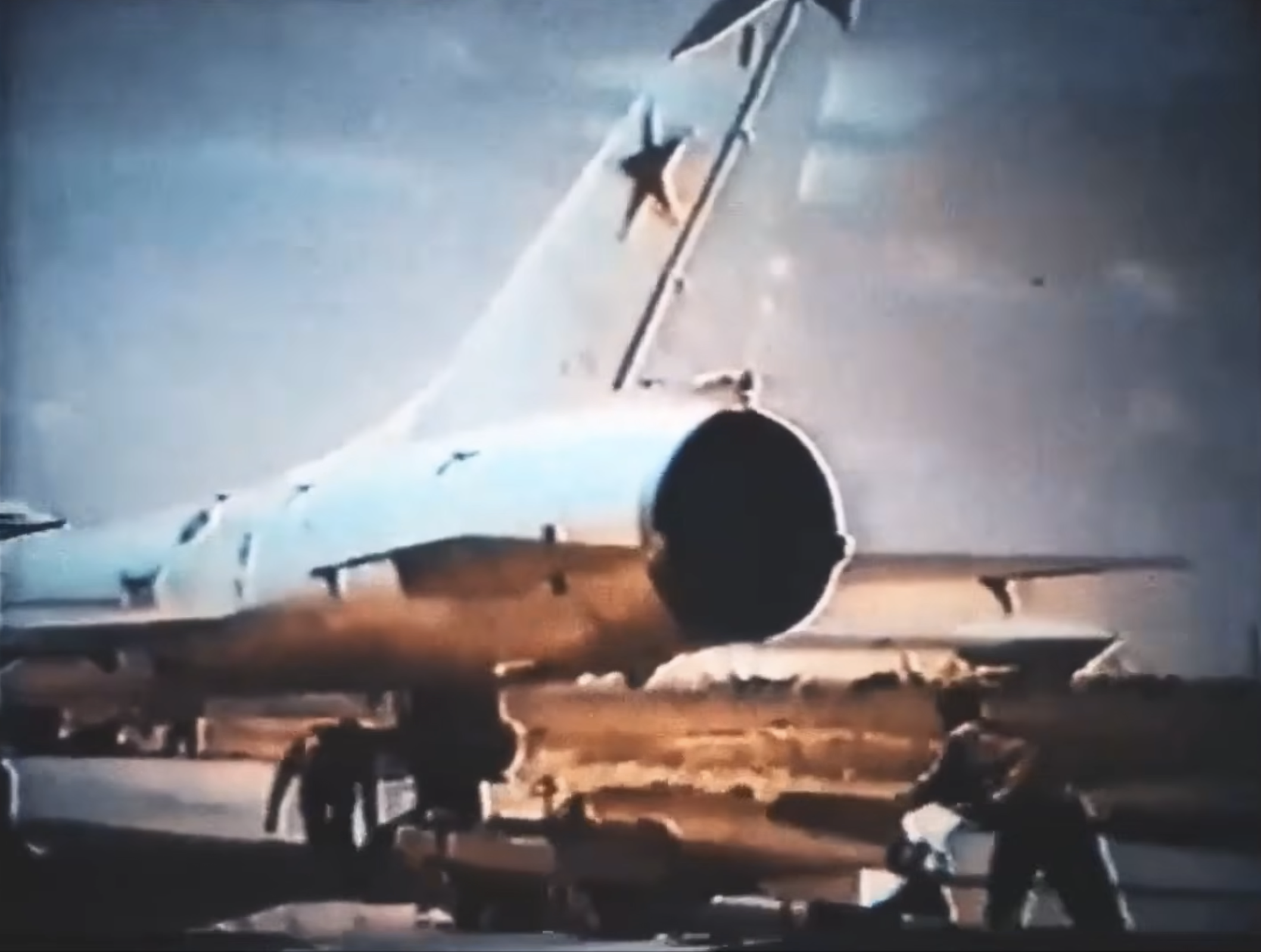
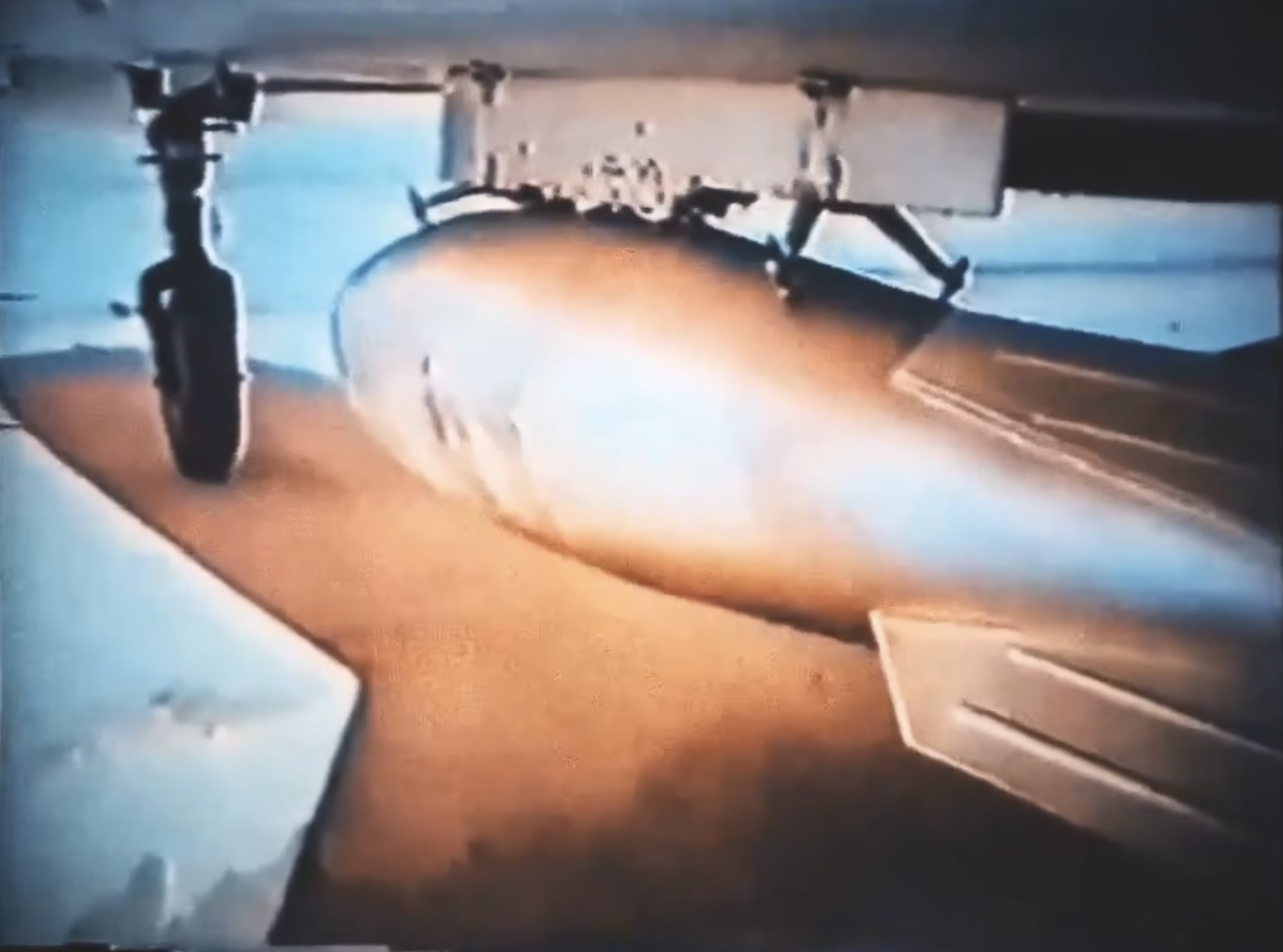
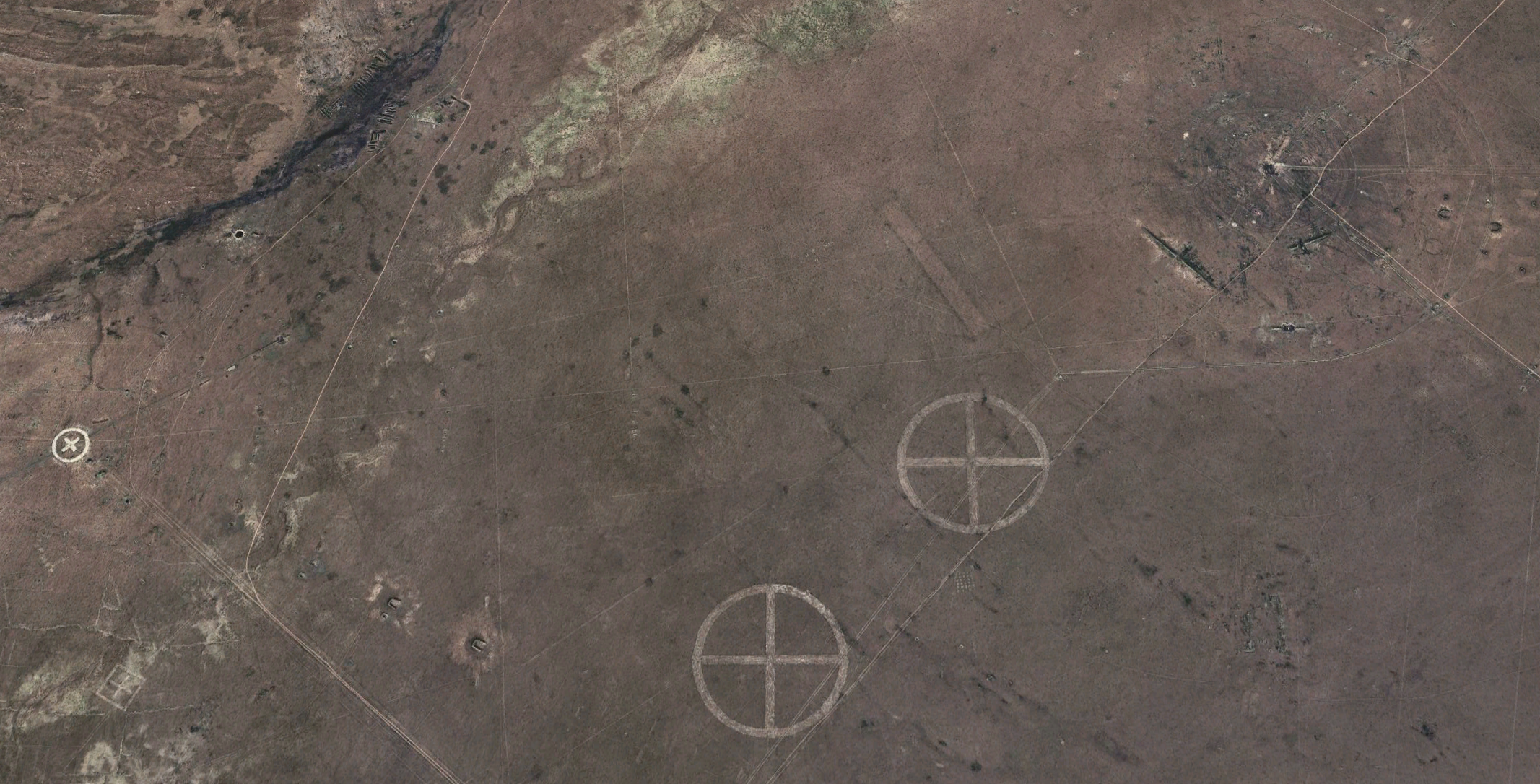
Returning to the Soviet Union, on August 27, 1962, pilot Lt. Col. A. I. Shein took off in a single-seat Su-7B, with a live 244N nuclear bomb carried on the centerline station below the fuselage. He then headed for the Semipalatinsk test site on the Soviet steppe. Also known as “The Polygon,” the Semipalatinsk range was the main test site for Soviet nuclear weapons. It is in the Abai region, in what is now Kazakhstan.
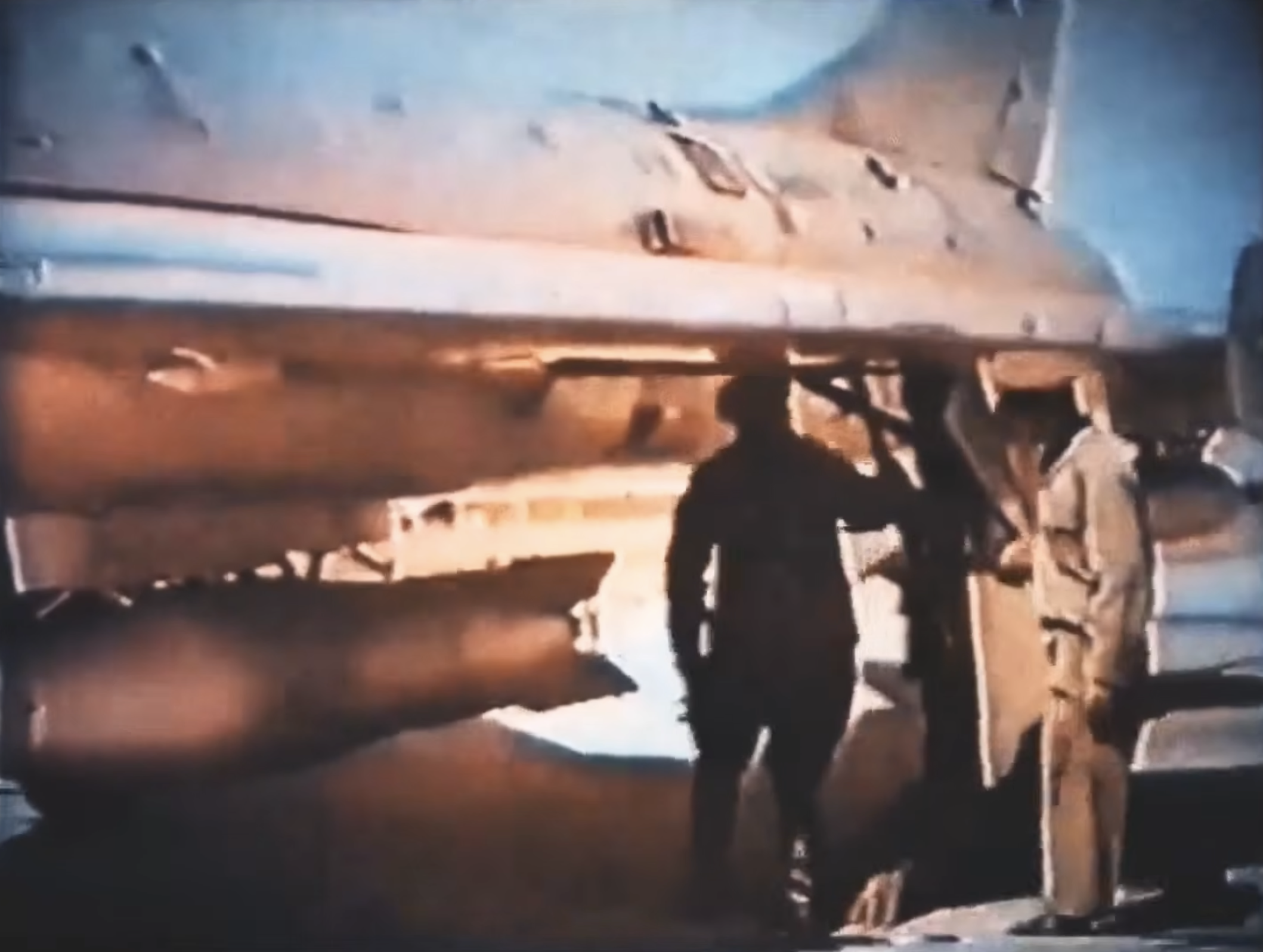
Shein put the jet into a climb at an angle of around 45 degrees. This was an ‘over-the-shoulder’ toss maneuver, typical for fighter-bombers of this era. This involved the attacking aircraft pulling upward before releasing its bomb to compensate for the weapon’s gravity drop in flight. The result would put the weapon on the target, without the aircraft having to pass over it. Instead, the jet would complete a half roll and (hopefully) avoid the blast effects so it could escape. The launch maneuver sequence, as shown in the video, is apparently simulated, or at the least, heavily edited.
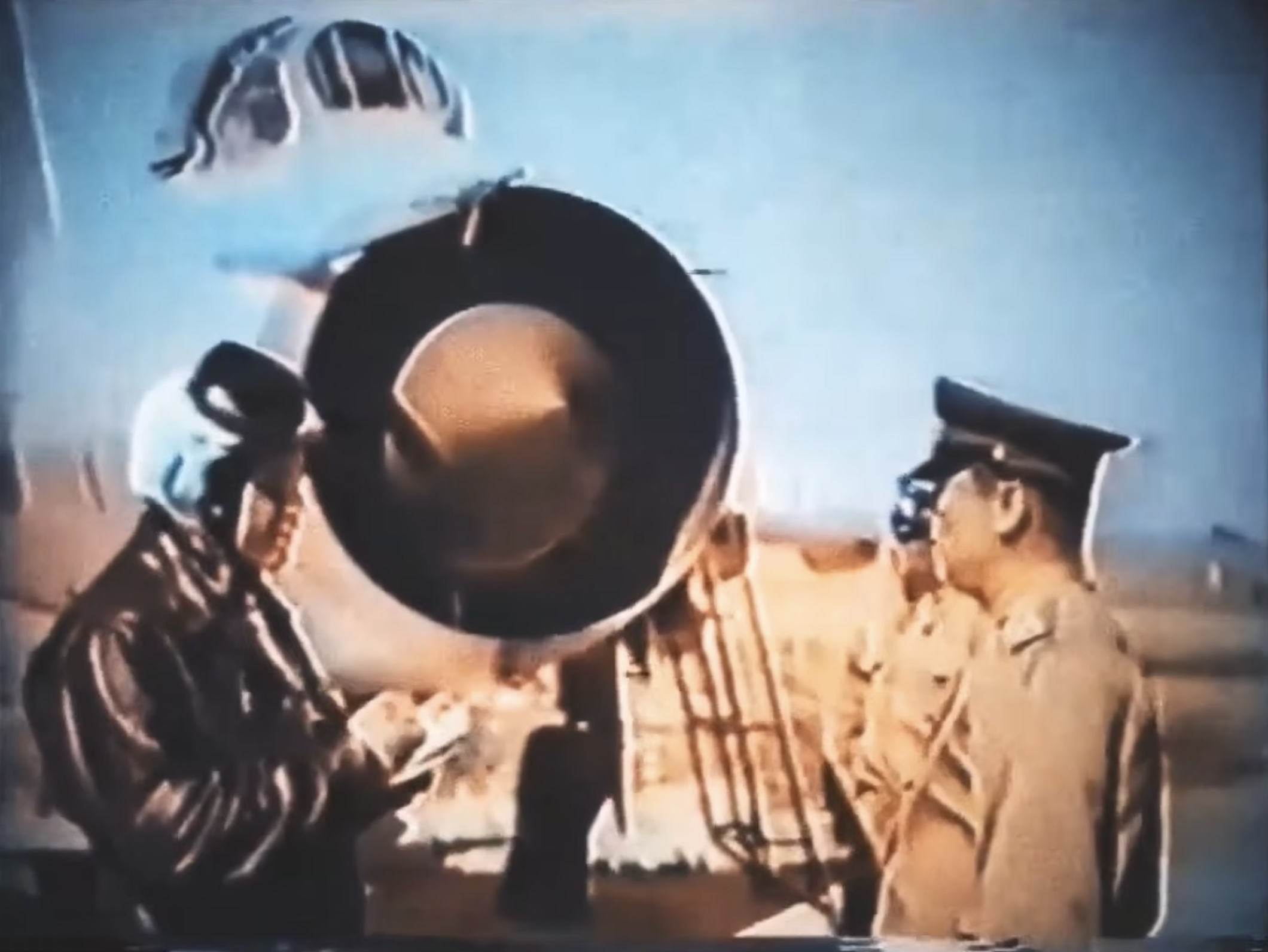
Shein later recalled:
“I take off, the excitement subsides, I enter the combat course, and make an approach. Everything is normal, I make an approach for a combat release, bring the aircraft into a nose-up attitude, and monitor the G-forces. After four seconds, I hear a signal, then a second, a short third, and I press the ‘release’ trigger. The green light goes out, indicating the release has been completed. The bomb’s release is felt by the shaking of the aircraft. I continue the nose-up attitude. For control, I note the release angle; it is almost constant and equal to 44–50 degrees. After passing the top point, I then descend at a 50-60 degree angle, perform a half-roll, increase engine speed and, consequently, aircraft speed, descend to the lowest possible altitude, and try to get as far and as quickly as possible from the target.”
This method required a bomb computer to calculate the release point. For the U.S. Air Force, this was the Low Altitude Bombing System, or LABS, while the Su-7 was fitted with the equivalent PBK-1 device, a separate box that was added to the left side of the instrument panel. In this context, PBK denoted Pritsel dliya Bombometaniya s Kabrirovaniya, or toss-bombing sight.
A video shows a U.S. Air Force B-47 bomber flying the LABS maneuver:
Boeing B-47 Stratojet (Low Altitude Bombing System) LABS Maneuver
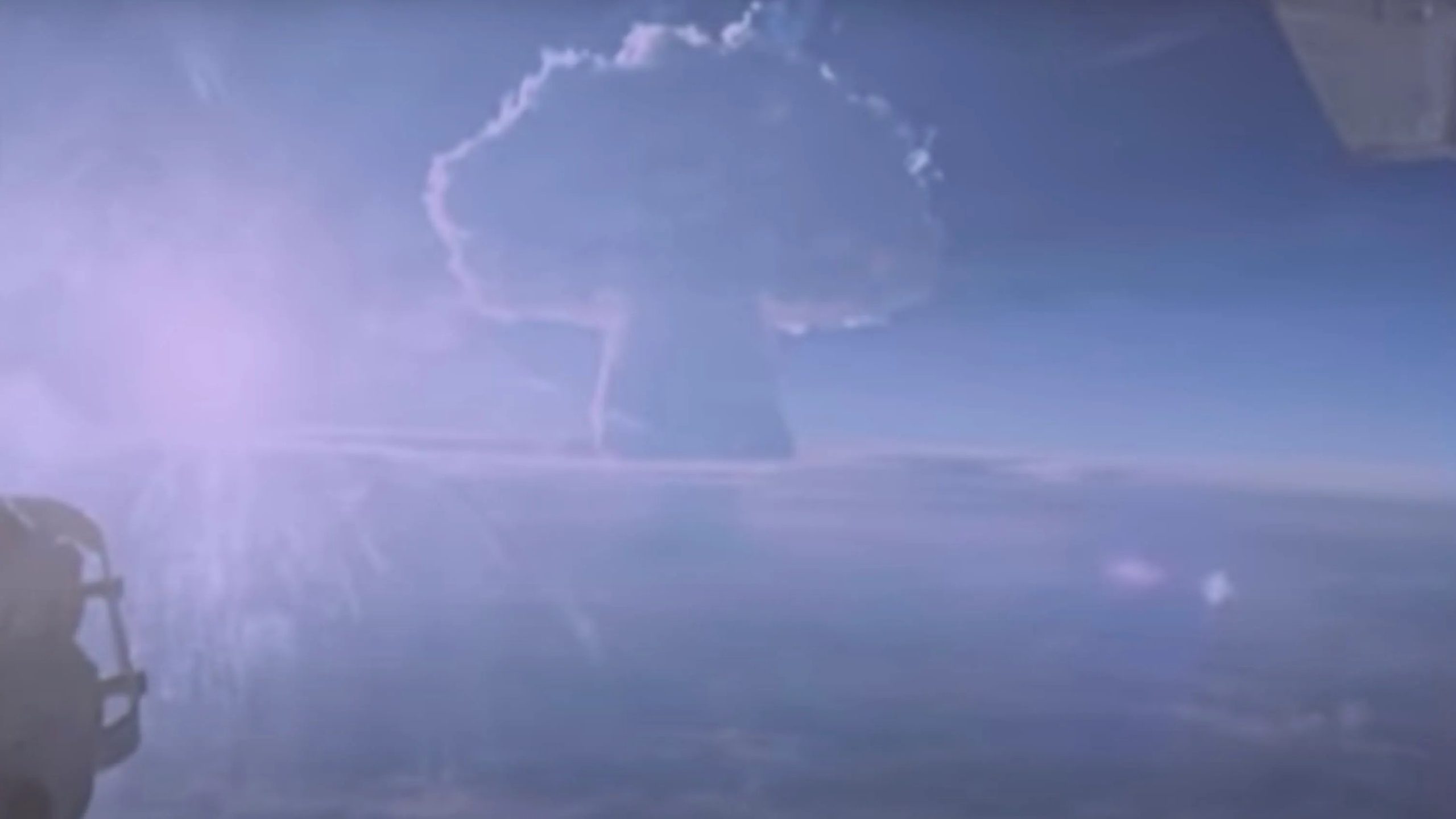
After release from the Su-7, the bomb exploded at an altitude of around 800 feet, at the coordinates of 50.4°N and 77.8°E. The detonation had a yield of 11 kilotons.

As for the Su-7, this was the Soviet Union’s first-generation supersonic attack jet. It was rapidly equipping fighter-bomber regiments, and nuclear strike would become one of its most important duties.
The streamlined 244N was the first mass-produced Soviet tactical nuclear bomb specifically intended for carriage by supersonic jets.
A photo showing the earlier, non-streamlined RDS-4 tactical free-fall bomb:
At this point, it should be noted that there is a possibility that the video shows not the 244N, but an IAB-500, a so-called ‘imitation bomb’ that replicated the shape, dimensions, weight and flight characteristics of the nuclear device. Filled with a mixture of liquid petroleum and white phosphorus, it also produced a large fireball that subsequently turned into a mushroom cloud.
With that in mind, the video could at least show portions of an IAB-500 test, although the location and the original voiceover point squarely to the 1962 Semipalatinsk test. The apparent installation of a camera pod below the Su-7’s wing, to record the detonation, also suggests a nuclear test rather than training.
Regardless, the 244N was successfully tested and was put into operational service in several variants, including with different yields up to a maximum of 30 kilotons. Most of these bombs were deployed by Soviet units stationed close to what would have been the front line in the event of a confrontation with NATO: in East Germany, Hungary, and Poland.
Starting in 1967, Western intelligence began to note training activities involving nuclear weapons at Soviet airbases in East Germany, including Su-7s taking part in LABS-type maneuvers.
In one of its reports from 1967, the U.S. Military Liaison Mission (USMLM) noted that its staff identified Su-7s from Grossenhain Air Base performing at least four LABS practice delivery runs on October 7 of that year.
“The aircraft passed over the airfield at approximately 2,000 feet, pulled up into vertical climb to 3,500 feet, pitched over, flew inverted for several seconds, then rolled over again departing to the west.”
Two days later, the USMLM reported “A very active program of local navigational, touch-and-go landings, LABS maneuvers, and possible range activity flown by Grossenhain-based Fitter and [two-seat Su-7] Moujik” aircraft.
Air dropped tactical nuclear weapons still play a significant role in Russia’s military strategy, as evidenced by recent moves to station tactical devices in Belarus. Many Russian combat aircraft have variants capable of carrying nuclear bombs, and most Russian air-launched missiles weighing over around 1,000 pounds have the option of a nuclear warhead.
Starting in the 1960s, the 244N was superseded by a modernized development of the same weapon, the 10-kiloton RN-24, as well as the one-kiloton RN-28. These were carried, among others, by the MiG-21 and Su-7.
These bombs were followed in the 1980s followed by the RN-40 and RN-41, carried by the MiG-23, MiG-27, MiG-29, Su-17, Su-24, and Su-27.
To this day, the IAB-500 also remains in use to train combat jet pilots in nuclear bomb delivery. Alongside it, although much less known, and barely ever seen, are tactical nuclear bombs, the descendants of the 244N that was proven in a unique test back in 1962.
Contact the author: thomasthewarzone.com
editor's pick
latest video

news via inbox
Nulla turp dis cursus. Integer liberos euismod pretium faucibua