VINDICATED: Joshua Lisec’s new book ‘Haitians of Springfield’ reveals how media lies to protect immigrants
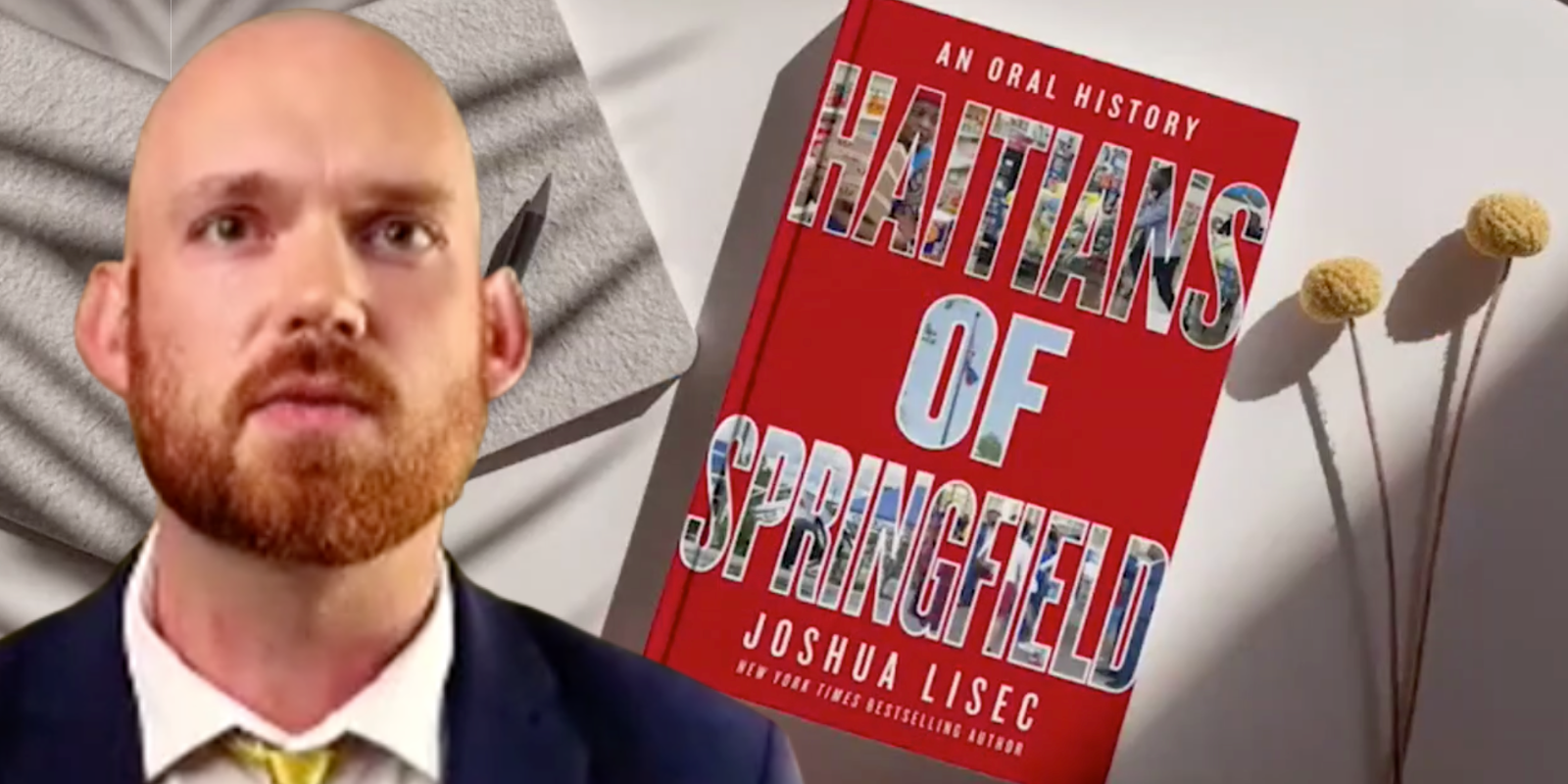
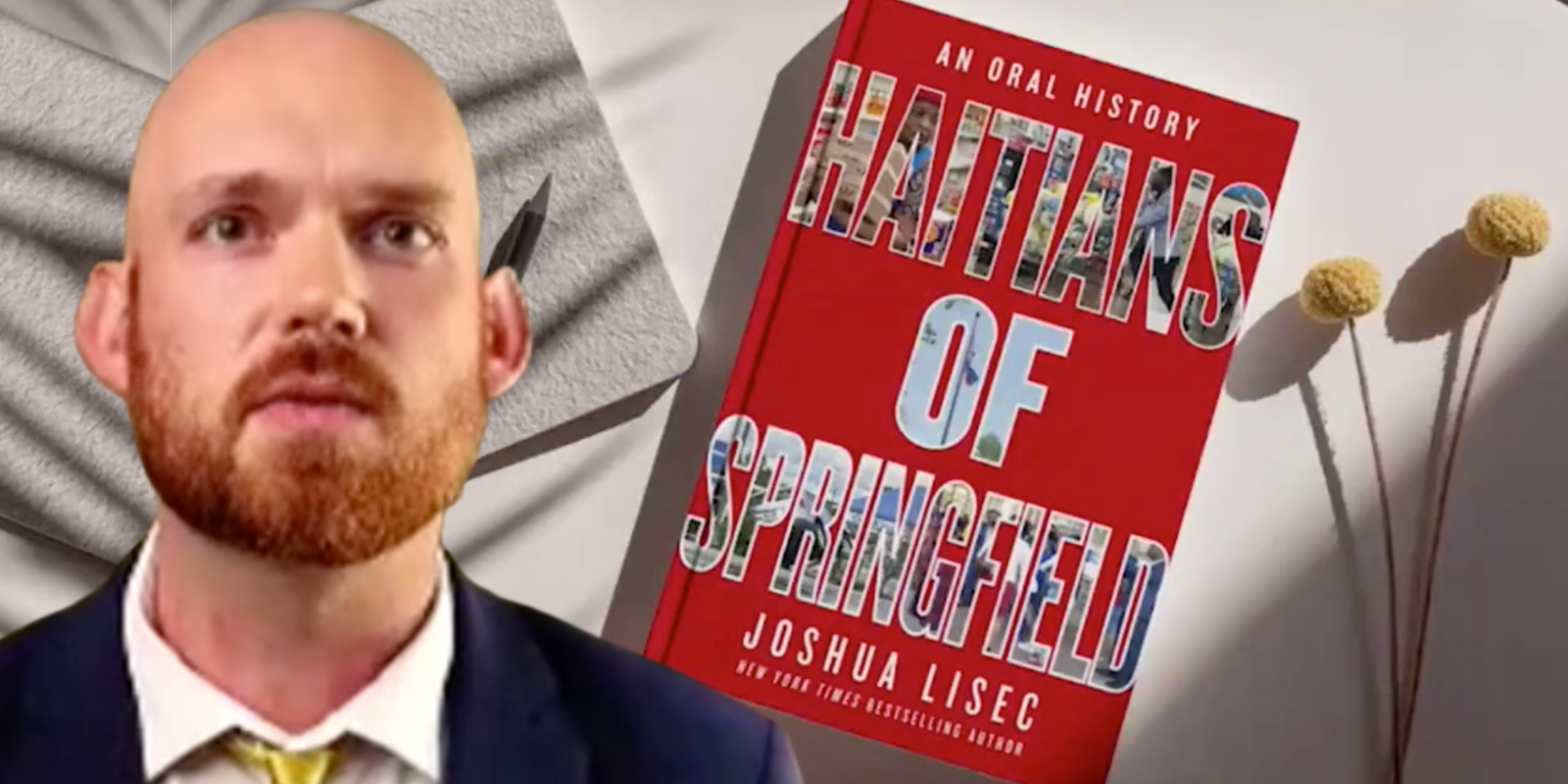
Author Joshua Lisec said his upcoming book Haitians of Springfield: An Oral History will be released October 6, describing it as the first book-length treatment of conditions in Springfield, Ohio related to the city’s Haitian migrant population. Lisec discussed the project Monday during an appearance on Human Events Daily with Jack Posobiec, where he outlined the scope of his reporting, including interviews, polling data, and extended field research in Clark County.
Lisec said the book spans more than 110,000 words and is based on what he described as ten weeks of on-the-ground reporting in Springfield. He said the work includes interviews with residents, elected officials, former officials, and members of both migrant and long-established communities in the area.
“Haitians of Springfield. It is the first book that is written on the matter. It is, without irony and not as a joke, subtitled ‘An Oral History.’”
Lisec described the book as a response to what he characterized as disputes over the accuracy of reporting on Springfield in recent years. He said his work addresses claims that certain accounts of conditions in the city have been misrepresented or dismissed.
“This is an interesting experience the people of Springfield are having because what I gathered from this is the hoax that the media has talked about, the assertion that there are hoaxes around Springfield concerning the Haitian influx. That itself is a hoax.”
He said the project includes interviews conducted in Springfield and surrounding areas and incorporates perspectives from multiple groups.
“I spent ten weeks basically living in Springfield, the past ten weeks, and I was shocked, but not really shocked, how easy it was to confirm so many quote-unquote hoaxes and so-called urban legends about the Haitians and about the Haitian experience.”
Lisec said his reporting included Haitian migrants as well as Hispanic residents, alongside long-term local residents and officials. “So this is not simply a book that’s written from a, let’s say, a heritage citizen’s perspective in Springfield, Ohio, but rather from both the newer comers, the Haitians, and also the Hispanic populations.”
He said he also commissioned what he described as a professional polling survey of residents in Clark County, including questions on population changes, migration impacts, and community experiences.
“I also commissioned the first professional and academic poll survey via big data poll of the people of Springfield, registered heritage citizens of Clark County and Springfield area, on what their experiences with the Haitian migrants have been. Depending on who you ask, there’s now between eight and fifteen thousand Haitians in Springfield, what they would like done with them, what their experiences are, and also how many people have left Springfield as a direct result of the Haitian influx impact.”
Lisec said one of the themes emerging from his reporting is that Springfield is a sign of the broader US immigration policy. “One of the people I’ve spoken to, and I’ve interviewed dozens of people on the matter of the Haitians of Springfield, and one of them suggested, you know, the kind of the pitch for the book should frankly be that this one city is the story of immigration policy in America. This is what happens when mass immigration becomes an invasion.”
He added he also interviewed Haitian migrants and emphasized that the book includes multiple viewpoints.
“The fact of the matter is that Haitians, in their culture, they have a very different experience of the world than do American citizens. There is an immense cultural incompatibility. Of course, I spoke with the Haitians as well.”
He added that he spoke with Latino residents and local officials and said the final product draws from a wide range of sources: “I have all the good stuff in this book. I am very proud of this work.”
editor's pick
latest video

news via inbox
Nulla turp dis cursus. Integer liberos euismod pretium faucibua