They’re Running the 2024 Anti-Trump Playbook on Nigel Farage. It’s Failing.
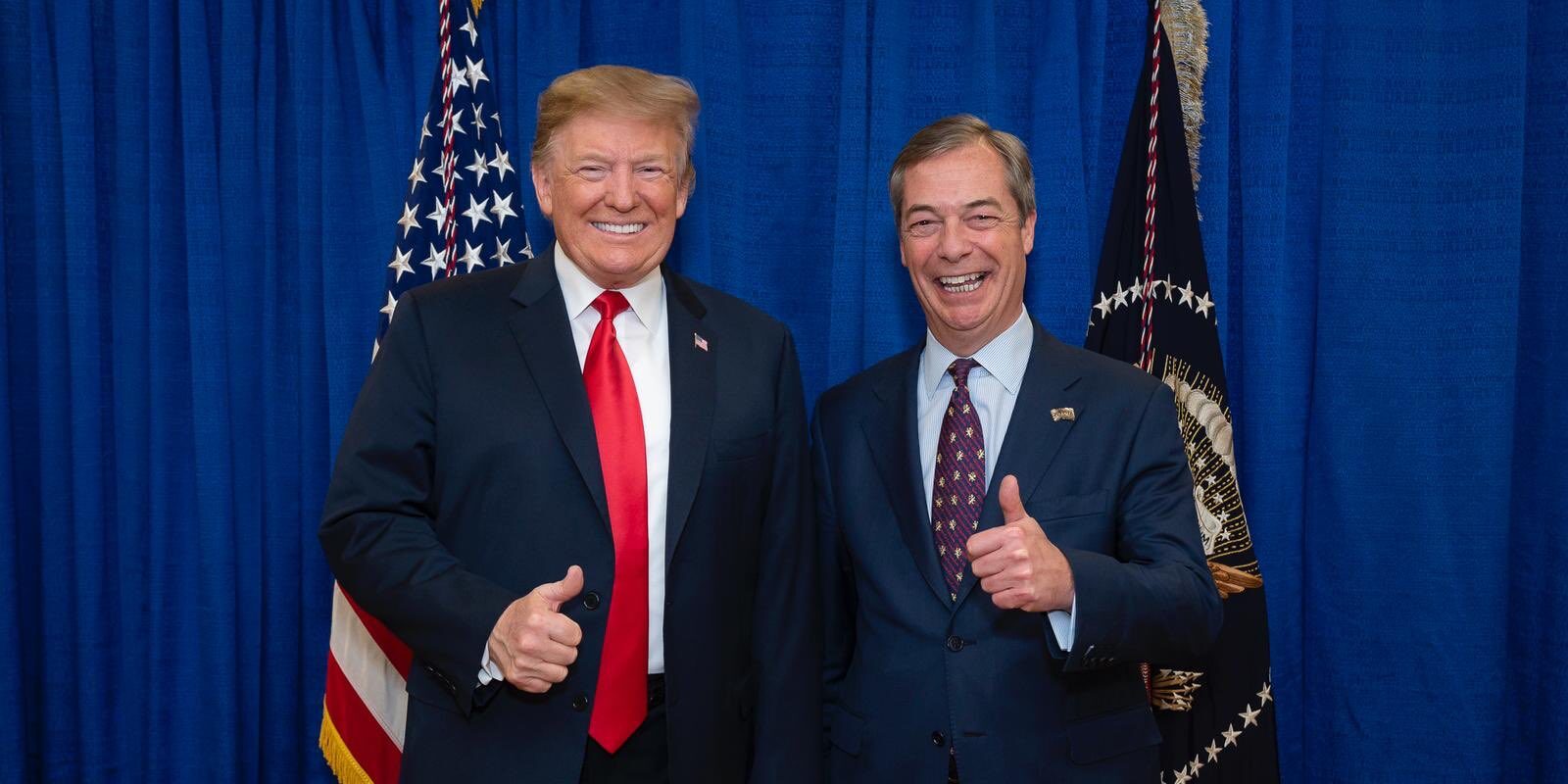
Nigel Farage is living through an experience that will feel remarkably familiar to American conservatives—especially President Donald Trump.
Britain’s political establishment long comforted itself with the belief that Farage could be contained, marginalized, or simply waited out. Instead, he has become the dominant force in British politics. As Reform UK continues to lead national polling, the tactics deployed against him have begun to resemble those used against Trump during the run-up to the 2024 election.
The first parallel is media hostility.
Much like Trump, Farage faces a press corps that often appears less interested in covering his rise than explaining why it should not be happening. Britain’s state broadcaster, the BBC, alongside much of the national press, treats Reform’s popularity as a problem to be solved rather than a political phenomenon to be understood. Every gaffe, controversy, or disagreement receives saturation coverage, while policy successes or growing voter support are frequently downplayed.
This approach mirrors the American media environment that surrounded Trump for years. Constant negative coverage was intended to weaken his standing. Instead, many voters interpreted it as evidence that entrenched institutions feared the disruption both men represented.
The second parallel is the increasing use of legal and regulatory institutions against political opponents.
Trump’s supporters watched prosecutors, judges, and bureaucratic agencies become major actors in the political arena. Whether one agreed with every case or not, the cumulative effect was clear: legal battles became inseparable from electoral politics.
Farage has encountered a British version of the same phenomenon. From the debanking scandal that saw NatWest subsidiary Coutts effectively attempt to remove him from the financial system because of his political views, to ongoing efforts by regulators, activists, and establishment figures to constrain Reform’s momentum, many voters increasingly view Britain’s institutions as participants in political warfare rather than neutral referees.
Trump benefited politically when millions of Americans concluded that the system itself was being deployed against him. Farage is beginning to generate a similar reaction among British voters.
The third parallel is the emergence of billionaire-backed alternatives designed to stop the insurgent candidate from consolidating support.
In the United States, many donors, consultants, and influential figures rallied behind Ron DeSantis as a vehicle for moving beyond Trump. Elon Musk was among those who initially encouraged DeSantis’s presidential ambitions. The effort ultimately collapsed because Republican voters remained loyal to Trump.
Britain now appears to be witnessing a similar experiment through Restore Britain and other projects seeking to create a supposedly more respectable, establishment-friendly alternative to Farage’s movement. The theory is familiar: keep the populist message while replacing the populist messenger.
History suggests that strategy NEVER succeeds. Voters generally recognize when a political movement is organic and when it is being engineered.
Most importantly, the attacks are not producing the intended result.
Despite years of relentless criticism, legal controversies, institutional opposition, and efforts to divide his support, Farage remains at the top of British politics. Reform UK has led or shared the lead in well over 300 consecutive national polls, an extraordinary achievement for a party that only recently emerged as a genuine challenger to Britain’s century-old political duopoly.
This may be the most important lesson for American observers.
The more the establishment attempted to destroy Trump, the stronger he became among voters who believed the attacks confirmed his outsider status. Farage appears to be benefiting from the same dynamic. Every attempt to isolate him reinforces his argument that Britain’s governing class is disconnected from the electorate.
The Atlantic Ocean may separate our two countries. The political script, however, is increasingly familiar.
Join Pulse+ to comment below, and receive exclusive e-mail analyses.
editor's pick
latest video

news via inbox
Nulla turp dis cursus. Integer liberos euismod pretium faucibua