Possibility Of Operation To Retrieve Iran’s Enriched Uranium Appears To Rise As Negotiations Sputter
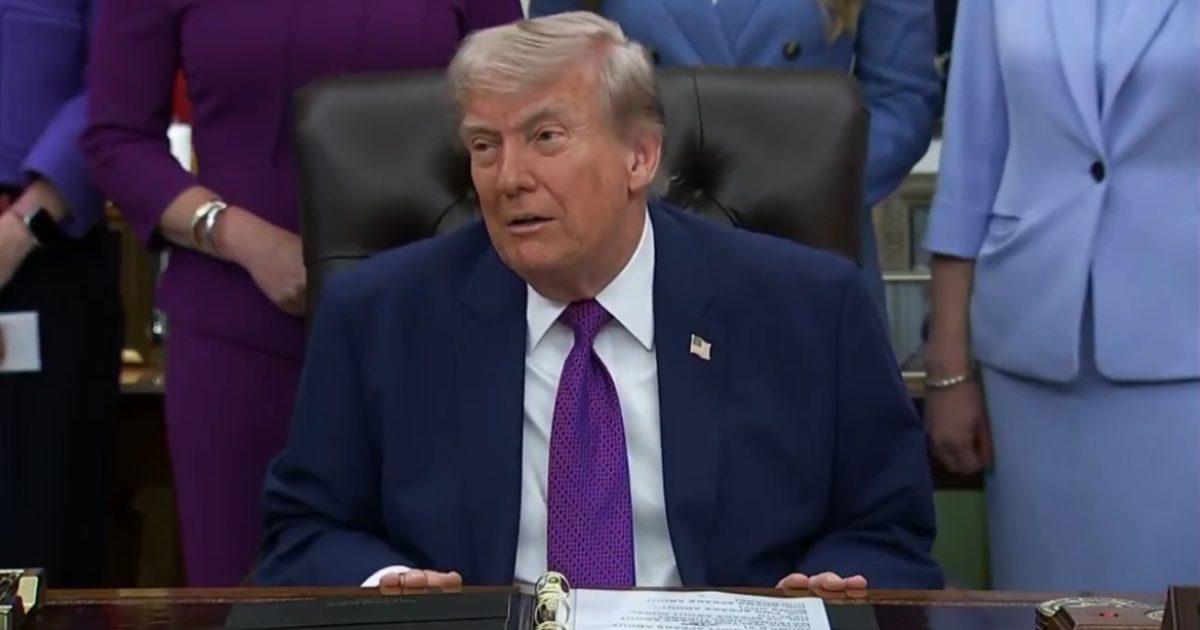
President Donald Trump on Monday alluded to the U.S. sending troops into Iran to retrieve its highly enriched uranium (HEU). His comments follow similar words on the same topic from Israeli Prime Minister Benjamin Netanyahu made to 60 Minutes on Sunday. Taken in aggregate, the statements suggest that there is coordinated messaging on the issue between Washington and Jerusalem and, after stalled talks with Iran, the possibility of such an operation may have been elevated.
As we stated shortly after the war kicked off, a mission into Iran to rid the country of its highly enriched nuclear material, once and for all, would be extremely risky and very complex. You can read more about these realities here. The main issue is that, by the Trump Administration’s own stated objectives, the current conflict doesn’t really end until the enriched uranium, most of which is likely buried in the rubble of the underground Isfahan nuclear complex, is removed from the country. Estimates state that this stockpile, stored in scuba tank-like cylinders, is likely enough material to construct around a dozen nuclear warheads, that is if a program to fully weaponize it and construct and validate a device were to move forward.
Speaking to reporters on Monday, Trump said Iran initially offered to accompany the U.S. into its facilities storing HEU that were severely damaged during last year’s Operation Midnight Hammer attacks.
However, Tehran changed its stance, Trump claimed.
“They said ‘you’re going to have to take it,’” the American president said of Iran’s initial response to the issue of recovering the uranium.
“We were going to go with them, but they changed their mind because they didn’t put it in the paper,” the president added, referring to a peace plan delivered by Iran over the weekend. “So they agree with us, and then they take it back…But I have a great plan, but the plan is they cannot have a nuclear weapon. And they didn’t say that in their letter.”
Trump also played-off the issue this weekend saying U.S. forces are watching the site closely and will kill anyone or anything that gets close to it.
Speaking to 60 Minutes, Netanyahu seemed more direct about a potential ground incursion into Iran, yet evasive about the details. Asked how he envisions the highly enriched uranium will be removed from Iran, Netanyahu stated: “You go in, and you take it out.”
“With what? Special forces from Israel, special forces from the United States?” the Israeli leader was quizzed.
“Well, I’m not gonna talk about military means, but what President Trump has said to me, ‘I want to go in there.” And I think it can be done physically. That’s not the problem. If you have an agreement, and you go in, and you take it out, why not? That’s the best way.”
Netanyahu was purposefully elusive when asked if it would require force to remove the uranium should no agreement be reached.
“Well, you’re gonna ask me these questions. I’m gonna dodge them. Because I’m not gonna talk about our military – possibilities, plans, or anything of the kind,” he proffered. “I’m not gonna give a timetable to it, but I’m gonna say that’s a terrifically important mission.”
Netanyahu says there’s still “work to be done” before Iran war ends | 60 Minutes
The Israeli government “wants Trump to order a special forces operation to secure Iran’s enriched uranium stockpile,” Axios reported on Monday. “Israeli officials say Trump is hesitant to order such an operation because it is highly risky.”
As we have previously reported, Trump is mulling over his options to retrieve the HEU through a special operations mission. Former U.S. Central Command commander, retired Gen. Joseph Votel, also told us at the time that such an endeavor is highly risky and may not achieve its goal. You can read more about his analysis in our interview with him here.
Meanwhile, ending the hostilities remains in question as the U.S. and Iran remain far apart in ceasefire negotiations. Trump on Monday called the aforementioned recent Iranian peace offer a “piece of garbage” that he didn’t finish reading and added that the ceasefire is on “massive life support.”
Trump is “leaning toward taking some form of military action against Iran to increase pressure on the regime and force concessions on its nuclear program,” Axios reported, citing two U.S. officials.
“He will tune them up a bit,” one U.S. official told the outlet. “I think we all know where this is going,” a second U.S. official said.
Regardless, two U.S. officials told Axios they don’t think Trump would order military action against Iran before he returns from China.
Trump is considering Project Freedom, the effort to guide commercial shipping through the Strait of Hormuz that he paused after about 36 hours last week, Axios added. He is also weighing whether to “resume the bombing campaign and strike the 25% of targets the U.S. military identified but hasn’t hit yet.”
Trump told Fox News that he is thinking about reconstituting Project Freedom.
“President Trump just spoke to our John Roberts a moment ago,” the network noted. “He says he is now considering renewing Project Freedom, but he says this time around the US guiding ships through the Strait of Hormuz would be just one small piece of a larger military operation.”
“He would not divulge at this time what the other pieces would be,” Roberts explained.
As we previously explained, Trump initially claimed he paused Project Freedom to give Iranian negotiators more time to respond to his peace deal. However, NBC News later reported that Trump ended the effort because Saudi officials, surprised by the operation, withdrew access to its bases and airspace.
Iran on Monday revealed what it claimed to be its terms, which made no mention of the uranium. They include the U.S. paying war damages to Iran, recognition of Iran’s sovereignty over the Strait of Hormuz, the end of U.S. sanctions and the release of Iran’s blocked assets by the U.S., according to a post on X by Iran’s official IRIB state broadcaster.
Speaking at a press conference on Monday, Iranian Foreign Ministry spokesman Esmail Baghaei described his government’s offer as reasonable.
“Is it excessive to demand an end to maritime piracy against Iranian ships?” he asked rhetorically. “To demand the release of Iranian assets unjustly held in foreign banks for years under American pressure? Our proposal for safe passage through the Strait of Hormuz, is that excessive? Establishing security and peace across the entire region, including Lebanon, is that excessive?” “Unfortunately, the American side still insists on positions largely built and shaped by the Zionist regime, and continues to hold its one-sided stance and unreasonable demands,” Baghaei added.
In his comments, the Iranian official was referring to the U.S. firing on and seizing Iranian-linked ships. Baghaei was also reacting to a statement made by Trump on Sunday dismissing Tehran’s latest offer. Trump has repeatedly stated his main objectives are that Iran will never get a nuclear weapon and that the Strait of Hormuz will be reopened. The future of Iran’s ballistic missile arsenal and support for proxies like the Houthis and Hezbollah are other sticking points.
“I have just read the response from Iran’s so-called ‘Representatives,’” Trump announced on his Truth Social platform. “I don’t like it — TOTALLY UNACCEPTABLE!”
Given the wide diplomatic gap between the U.S. and Iran and statements by Trump and Netanyahu, how much longer the ceasefire can hold remains an open question.
UPDATES
The U.S. blockade on Iranian ports remains ongoing, there was another report of ships attacked by drones in the Persian Gulf and the UAE said Iran is continuing to launch attacks against its territory.
U.S. Central Command on Monday claimed it has turned away 62 ships and disabled four attempting to run the blockade in total since the blockade began on April 13.
The Ambrey maritime security firm said two ships were struck on Sunday in the Persian Gulf.
“A Panama-flagged deck cargo vessel was impacted by an unmanned aerial vehicle (UAV) while anchored approximately 23.6 NM east-northeast of the port of Doha, Qatar,” according to an Ambrey alert. “The impact resulted in a small fire, which was subsequently extinguished by the vessel’s crew. The vessel reported damage to its conveyor system at approximately 07:15 UTC. One coast guard vessel was observed alongside, rendering assistance. No crew casualties were reported in connection with the incident. This incident occurred approximately 2.8 NM south of an additional vessel that was impacted by a projectile on the morning of 10 May. Ambrey will provide updates as new information becomes available.”
The Ambrey alert did not specify who launched the drones.
On Sunday, UAE said it was attacked by two drones launched by Iran, the latest in a string of strikes dating back to the beginning of the war on Feb. 28 and continuing even after the April 7 ceasefire between the U.S. and Iran.
The issue of Iran will loom large over Trump’s meeting with Chinese President Xi Jinping in Beijing later this week. As we have previously reported, China relies heavily on Iranian oil and is also suspected of aiding its war efforts.
Trump is expected to call on Beijing to persuade Iran to reopen the Strait of Hormuz. However, the topic is fraught with tensions over recent U.S. actions against China.
Last week, the U.S. imposed sanctions on several China-based companies, alleging that they provided “satellite imagery to enable Iran’s military strikes against US forces in the Middle East” and enabled “efforts by Iran’s military to secure weapons, as well as raw materials with applications in Iran’s ballistic missile and unmanned aerial vehicle (UAV) programs,” according to the Guardian.
On Monday, China lashed out at those sanctions, describing them as illegal and unilateral, Reuters reported.
“We have always required Chinese enterprises to conduct business in accordance with laws and regulations, and will firmly safeguard the legitimate rights and interests of Chinese enterprises,” spokesperson Guo Jiakun said at a regular press briefing.
Iraqi lawmakers are calling for investigation into a clandestine military outpost Israel reportedly set up in the Iraqi desert to support its air campaign against Iran. The Wall Street Journal on Saturday reported that Israel built the installation, which housed special forces and served as a logistical hub for the Israeli air force, with the knowledge of the U.S. just before the start of the war. It also included search-and-rescue teams positioned to assist any downed Israeli pilots, according to the Journal. Israeli forces fired on Iraqi troops after it was discovered, the newspaper added.
Ahmed Majid, a Kurdish politician, “is among several lawmakers who have harshly reacted to the report of the existence of an Israeli base in the Arab country,” Iran’s official IRNA news agency reported on Monday. Majid warned “that Iraq’s sovereignty is being violated by both the United States and the Israeli regime.”
Member of Parliament Abu Turab al-Tamimi called the presence of the Israeli military base and American forces “a dangerous security scandal” and raised questions “about how enemy forces entered deep into Iraqi territory without the knowledge of border guards, the Interior Ministry, and the Joint Operations Command.”
al-Tamimi insisted that “an immediate investigation should be opened and committees should be formed to hold the perpetrators accountable,” IRNA noted.
Video emerged online purporting to show the Israeli outpost, in the Najaf desert, from a distance. The video was reportedly taken by an Iraqi soldier, though we cannot independently verify these claims.
However, the likelihood of an outpost like this is something we have suggested was all but assumed going back to last year’s 12 Day War.
Hezbollah released video footage on Sunday claiming to show its first-person view (FPV) drones attacking an Israeli Iron Dome air defense battery in northern Israel. The video shows what appears to be two attacks, one on a launcher and one on another launcher with several Israeli troops observed nearby. In each case, the video cuts out before any damage is seen.
“There was no public comment from the IDF, but unofficially, IDF sources could not dispute the video’s authenticity, and the visuals spoke for themselves,” the Times of Israel noted.
As we were among the first to report, Hezbollah has been ramping up its FPV drone attacks on Israeli forces, creating havoc and leaving Israel scrambling for countermeasures.
The British Royal Navy is deploying its Type 45 destroyer HMS Dragon to the Middle East to take part in a potential European post-ceasefire effort to secure the Strait of Hormuz. The vital body of water has been closed to nearly all shipping by Iran since the war broke out on Feb. 28.
The deployment comes as the U.K. and France will host the first meeting of the Strait of Hormuz coalition of defense ministers on Tuesday to map out a way forward amid the global economic impact of the Strait closure. It is also taking place as the latest round of negotiations between the U.S. and Iran remains deadlocked while a shaky ceasefire holds.
“The Type 45 destroyer will forward deploy to ensure the UK can contribute to a future multinational mission to secure the critical waterway and safeguard freedom of navigation, following a sustainable ceasefire,” the Royal Navy said in a statement on Monday. “HMS Dragon can use her Sea Viper missile system to help safeguard UK assets and interests – assisted by Wildcats from 815 Naval Air Squadron equipped with Martlet missiles able to deal with the aerial drone threat.”
The Wildcats are helicopters with drone-busting capabilities that operate off Royal Navy destroyers and frigates.
The idea is that the Dragon would help set up an air defense bubble over the Strait in case a more comprehensive ceasefire breaks down. That would protect ships like the German minesweeper Fulda, which is also heading toward the region, as well as commercial vessels transiting the Strait.
As we previously reported, the Royal Navy’s Type 45 destroyer HMS Diamond used the Sea Viper system, along with guns, to take down more than a half-dozen drones launched by the Houthis in one engagement during the Iranian-backed rebel group’s campaign against Red Sea shipping in 2024.
You can see an image from that engagement below.
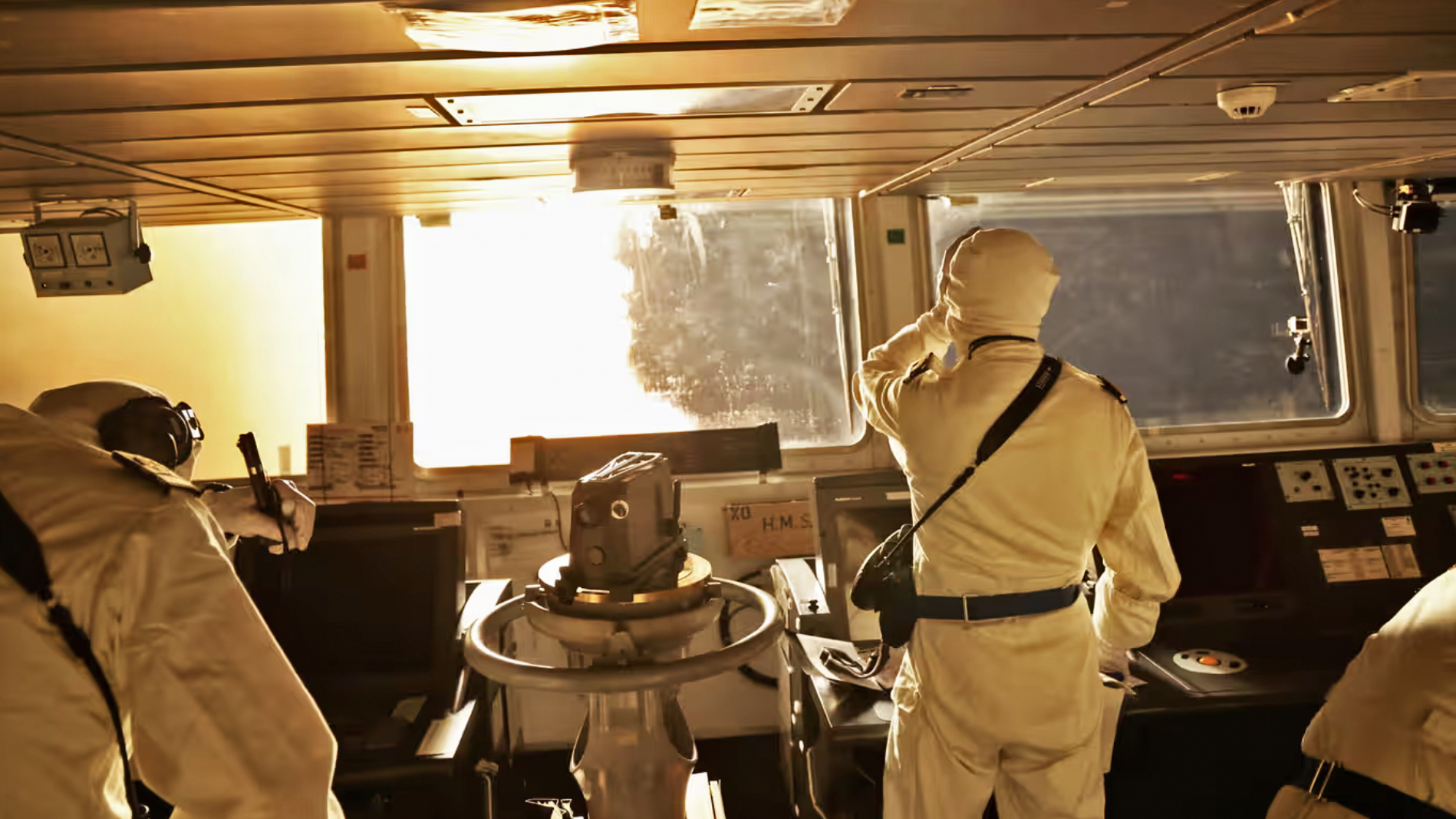
The Portsmouth-based Dragon left the UK in March and has been “helping to safeguard the island of Cyprus in the Eastern Mediterranean,” according to the Royal Navy. In our earlier reporting, we noted that the French aircraft carrier Charles de Gaulle entered the Red Sea last week.
News about the deployment of French and U.K. vessels to the Middle East sparked a sharp warning from Iran.
“Any deployment and stationing of extra-regional destroyers around the Strait of Hormuz, under the pretext of ‘protecting shipping,’ is nothing but an escalation of the crisis, the militarization of a vital waterway, and an attempt to cover up the true root of insecurity in the region,” Iran’s Deputy Foreign Minister Kazem Gharibabadi stated on X. “Accordingly, it is emphasized that the presence of French and British warships, or those of any other country potentially accompanying the illegal and internationally unlawful actions of the United States in the Strait of Hormuz, will be met with a decisive and immediate response from the armed forces of the Islamic Republic of Iran. Therefore, they are strongly advised not to complicate the situation further.”
Gharibabadi did not elaborate on what that response might be.
Tomorrow U.K. Defense Secretary John Healey MP will co-chair a meeting of over 40 nations, alongside his French counterpart, Minister Catherine Vautrin, for the multinational mission’s first Defense Ministers’ meeting.
“The plan is strictly defensive and, once conditions allow, will focus on restoring confidence for commercial shipping along the critical trade route,” the Royal Navy noted. “HMS Dragon could play a key role in this mission. The ship’s forward presence will help strengthen confidence among commercial shipping firms, support mine-clearance efforts, and protect vessels once hostilities have ceased.”
Contact the author: howard@twz.com
editor's pick
latest video

news via inbox
Nulla turp dis cursus. Integer liberos euismod pretium faucibua