OPEC for Americas? Iran conflict solidifies U.S. focus on Western Hemisphere oil
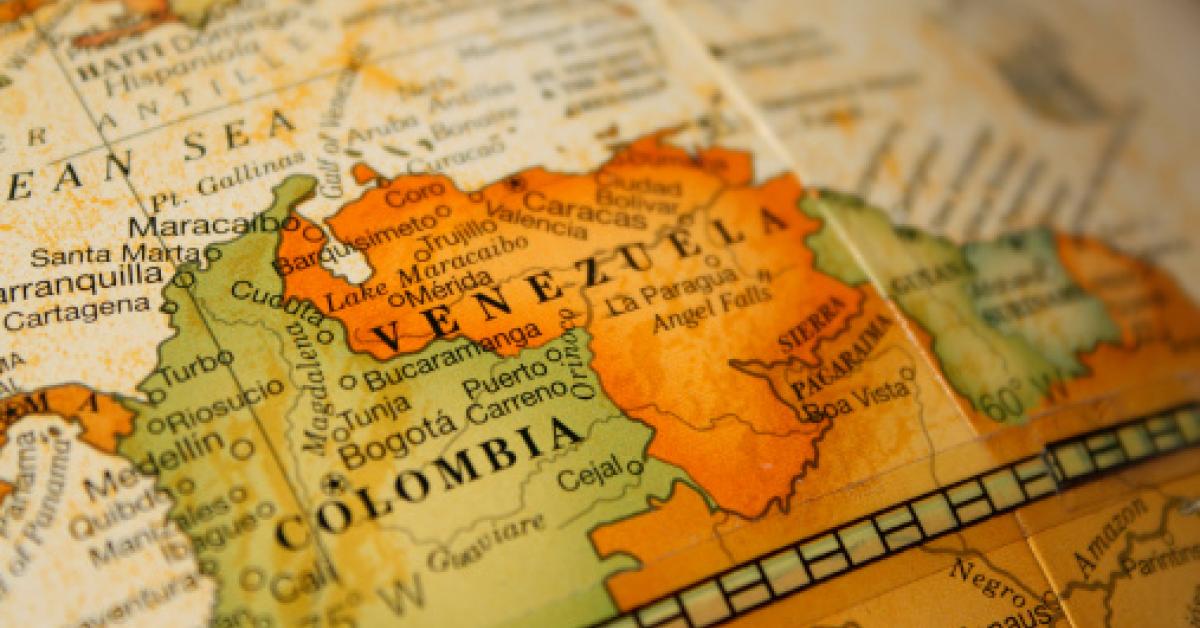
Oil supply disruptions from the conflict with Iran may present the perfect opportunity for the United States to reorder the global energy market by exploiting its own natural resources and investing in the Western Hemisphere.
American companies have already begun ramping up investments in Latin America, closing new deals with a freshly compliant Venezuela and friendly Argentina in recent days that promise new capacity in the hemisphere.
Tim Stewart, President of the trade association the U.S. Oil & Gas Association, told Just the News that the Iran conflict could push the United States to consider securing the energy markets from vulnerabilities abroad by focusing investments closer to home.
“[T]hese events like this have the tendency to completely restructure the geopolitical order for generations and it wouldn’t surprise me after this Iran situation is kind of resolved, people will sit down and say, ‘Okay, let’s now make sure this never happens again,” Stewart told the John Solomon Reports podcast. “North American [and] South American markets, we can control, or we can contain any sort of residual damage from that.”
Stewart also said that the United States could exploit the opportunity to ensure that “we’re the reliable supplier” in case of “disruption events that may take place in the future.”
Oil prices have fallen since beginning of conflict
Since the conflict began, Iran has bet that it can outlast the United States’ military operation by holding the global energy market hostage forever, Just the News previously reported. Regime officials have explicitly threatened high gas prices for consumers in a bid to pressure Trump to end his attacks.
The conflict has led to volatility in global oil pricing. Last week, the U.S. benchmark price of oil surged to $112 per barrel last week prior to Trump announcing a two-week ceasefire with Iran. Once announced, the West Texas Intermediate price fell below $100. It continued to fall Wednesday, settling around $91 per barrel.
There are already signs that the global supertanker fleet is heading for the United States to capitalize on U.S. exports as supplies are restricted elsewhere. The market intelligence firm Kpler, which tracks power markets and maritime logistics, is currently tracking 70 of the supertankers heading to the United States.
The U.S. is expected to export 5 million barrels per day of oil this month, setting a new record. For context, the U.S. exported 4 million barrels per day last year, down from the previous record of 4.6 million in February 2024, The Wall Street Journal reported.
U.S. companies rush to Latin America
At the same time, American companies have moved quickly to secure production rights in Latin America.
Earlier this week, Chevron signed two agreements with the interim Venezuelan government to expand its operations in the country’s Orinoco Belt. It is one of the first big expansion deals in the country since Caracas reformed its oil laws at the behest of the United States earlier this year.
It is among the first of the major deals announced since the U.S. government outlined its $100 billion reconstruction plan Venezuela’s energy sector after President Donald Trump ordered the capture of the country’s former dictator, Nicolás Maduro, in a daring overnight operation on drug trafficking charges.
U.S. Secretary of State Marco Rubio has worked directly with Maduro’s successors to cut ties with China and Russia and expand energy cooperation with the United States to rebuild the country’s struggling economy. The Trump administration is eyeing an eventual political transition away from the remnants of the Maduro regime after economic stabilization.
The pacts will allow Chevron to boost its crude oil output in Venezuela’s main oil region in cooperation with the Venezuelan state oil company, PDVSA, in a joint arrangement.
“Oil imports will both bring revenue to Venezuela, and it’s helping Americans,” Chevron says
Amid the Iran conflict, Chevron has also boosted imports of Venezuelan oil to its refinery in Pascagoula, Mississippi, aiming to ease fuel prices in the United States. Oil imports will both “bring revenue to Venezuela, and it’s helping Americans,” Chevron president of global refining, Andrew Walz, told CBS News.
The same day, fracking giant Halliburton Co. announced that it had secured an exclusive, multibillion-dollar contract from the state-run oil company of Argentina to develop the Vaca Muerta shale patch–one of the world’s largest formations. Halliburton will use its new ZEUS electric fracturing services to help Argentina boost production from the field, which currently produces about 600,000 barrels of oil per day, to a target of 1 million per day by 2030.
Stewart told Just the News that he would “love to see” these arrangements eventually lead to an oil alliance in the Western Hemisphere modeled after the global Organization of the Petroleum Exporting Nations, or OPEC.
“[I]t’d be much, much better for us consumers, given our ability to supply ourselves to be able to be tied to a Western Hemisphere market,” Stewart said.
“I imagine if we had much greater, sort of, collaboration with like-minded countries or like-minded provinces […] I think what you’d see is you’d see a fairly significant insulation from other choke points halfway across the world,” he added.
editor's pick
latest video

news via inbox
Nulla turp dis cursus. Integer liberos euismod pretium faucibua