This post was originally published on this site.
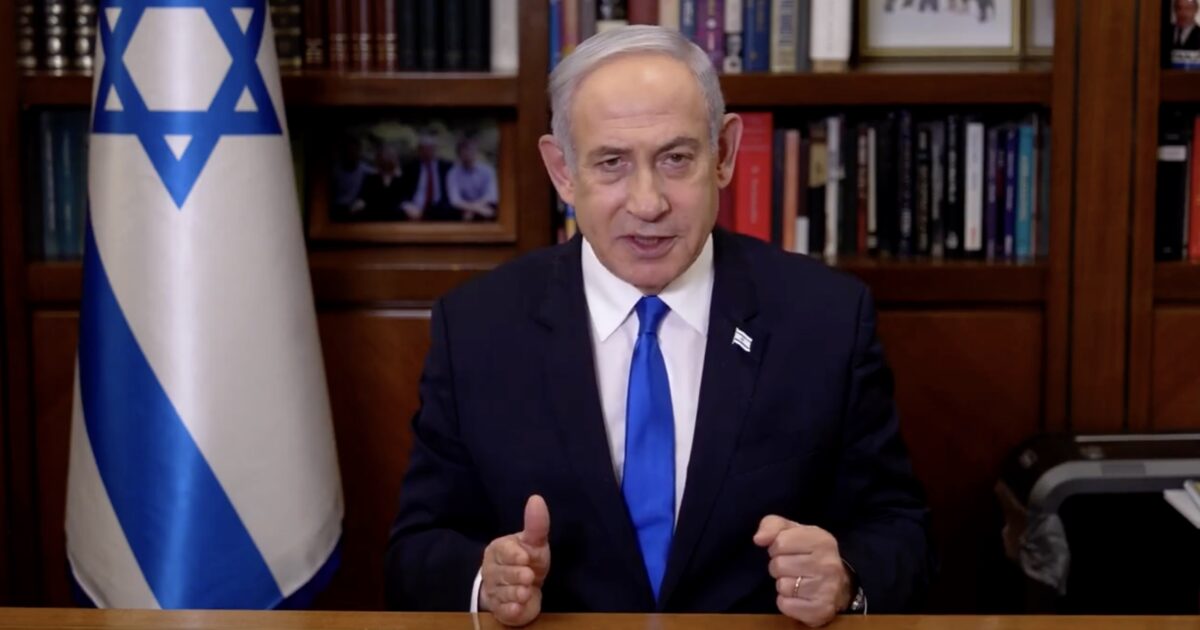
Netanyahu Orders Expanded Military Operations Against Hezbollah in Lebanon
This post was originally published on this site.
A fragile ceasefire in the Middle East is once again under strain after Benjamin Netanyahu ordered intensified military action against Hezbollah in Lebanon, raising fears of a broader escalation that could derail ongoing diplomatic efforts.
The move comes at a particularly sensitive moment. Indirect talks between the United States and Iran are ongoing, with both sides cautiously exploring a possible framework to reduce tensions.
Netanyahu made his position clear in a video statement. “We are at war with Hezbollah… and we will intensify our strikes,” he said.
He added that Israel would not ease its military posture. “We are not taking our foot off the gas—on the contrary, I have instructed them to press the pedal even harder.”
The directive marks a significant escalation in what has already been a volatile situation. Despite a mid-April ceasefire, hostilities between Israel and Hezbollah have continued at a lower but persistent level.
The truce, brokered in part through U.S. mediation, reduced the intensity of fighting but never fully halted it. Both sides have continued to exchange strikes.
Hezbollah has increasingly relied on drone warfare. These low-cost, highly adaptable systems have proven difficult to counter.
In recent weeks, so-called FPV kamikaze drones have been used to target Israeli forces. Some of these systems are guided by fiber-optic cables, allowing them to evade electronic jamming.
The effectiveness of these attacks has raised concerns within Israeli leadership. A recent drone strike killed an Israeli soldier and seriously wounded another.
The incident has fueled calls for a stronger response. Several Israeli ministers have demanded a more aggressive strategy.
Israeli Finance Minister Bezalel Smotrich argued that deterrence must be restored. “For every explosive drone, 10 buildings should fall in Beirut,” he said.
Another senior figure, Minister of National Security Itamar Ben-Gvir, took a similarly hard line. He urged a return to full-scale war if attacks continue.
“It is time for the prime minister to bang on Trump’s table and inform him that we are returning to war,” Ben-Gvir said.
These statements reflect growing internal pressure within Israel. However, they do not necessarily represent official policy.
Reports suggest Netanyahu has so far stopped short of approving a full-scale assault on Beirut. Instead, the focus remains on targeted strikes.
Still, the rhetoric alone has had an impact. Residents in parts of Beirut reportedly began fleeing after Netanyahu’s latest remarks.
The capital’s southern suburbs, long considered a Hezbollah stronghold, are particularly sensitive. They were heavily bombarded earlier in the conflict.
Since the ceasefire, strikes on Beirut itself have been limited. Most operations have focused on southern Lebanon and the Beqaa Valley.
Following Netanyahu’s announcement, Israeli forces launched additional strikes in eastern Lebanon. The move signals a willingness to expand operations geographically.
Hezbollah, for its part, has not backed down. The group has continued drone and rocket attacks on Israeli positions.
Its leadership has also escalated rhetoric. Secretary-General Naim Qassem has suggested that public unrest against the Lebanese government could be justified.
The broader regional picture adds another layer of complexity. The conflict in Lebanon is closely tied to tensions involving Iran.
Tehran has made its position clear. It has demanded that Israeli operations in Lebanon cease as a condition for progress in talks with Washington.
That linkage creates a delicate balance. Escalation on one front could easily disrupt negotiations on another.
A U.S. official acknowledged the risk but defended Israel’s position. Hezbollah, the official said, has “ignored repeated requests to stop firing.”
“Israel will never be expected to passively absorb attacks on its forces and civilians,” the official added.
At the same time, Washington has previously urged restraint. President Donald Trump has called for “surgical” operations rather than broad escalation.
This tension reflects a broader dilemma. The U.S. is attempting to balance support for Israel with a desire to avoid a wider regional war.
The human cost of the conflict continues to mount. Lebanese health authorities report thousands of casualties since fighting intensified earlier this year.
The ongoing exchanges also highlight a shift in modern warfare. Low-cost drone technology is altering the strategic landscape.
Traditional military superiority is being challenged. Non-state actors can now deploy tools that were once the domain of major powers. This dynamic is reshaping conflicts across the region. It also raises questions about future escalation scenarios.
For now, the ceasefire remains in place—at least on paper. But its durability appears to be increasingly uncertain. Each new strike, each new retaliation, chips away at the fragile calm. The situation remains volatile.
The post Netanyahu Orders Expanded Military Operations Against Hezbollah in Lebanon appeared first on The Gateway Pundit.
editor's pick
latest video

news via inbox
Nulla turp dis cursus. Integer liberos euismod pretium faucibua