Israel’s war with Hezbollah in Lebanon may pose stumbling block for lasting US-Iran peace deal
President Donald Trump announced that the U.S. and Iran had agreed to a peace agreement, but Israeli opposition to key terms linked to the fighting in Lebanon has emerged as a potential sticking point that threatens to upend the deal.
Trump on Sunday announced that the U.S. and Iran had agreed to a deal to end the war that would see the U.S. immediately end its naval blockade of the Strait of Hormuz, though he offered few details on the full terms. Vice President JD Vance confirmed that Iran and the U.S. had digitally signed the document on Sunday, but said the U.S. would likely not publish its text until later in the week. President Trump later said it would likely be sometime after Friday before they release the text.
After the initial agreement is officially signed this Friday in Geneva, Switzerland, the U.S. and Iran will begin technical negotiations on Tehran’s nuclear program. President Trump started the war against Iran, in part, to ensure that the regime never developed a nuclear weapon. The president said on Monday that if Iran refused to negotiate on its nuclear program, he would resume attacks on the country.
The terms of the deal, which are not currently public, have attracted considerable speculation, though it appears that the agreement requires an end to fighting on all fronts, including in Lebanon, where Israel and the Iran-backed terror group Hezbollah have been engaged in fierce fighting.
National Security Minister of Israel calls for continued war against Hezbollah
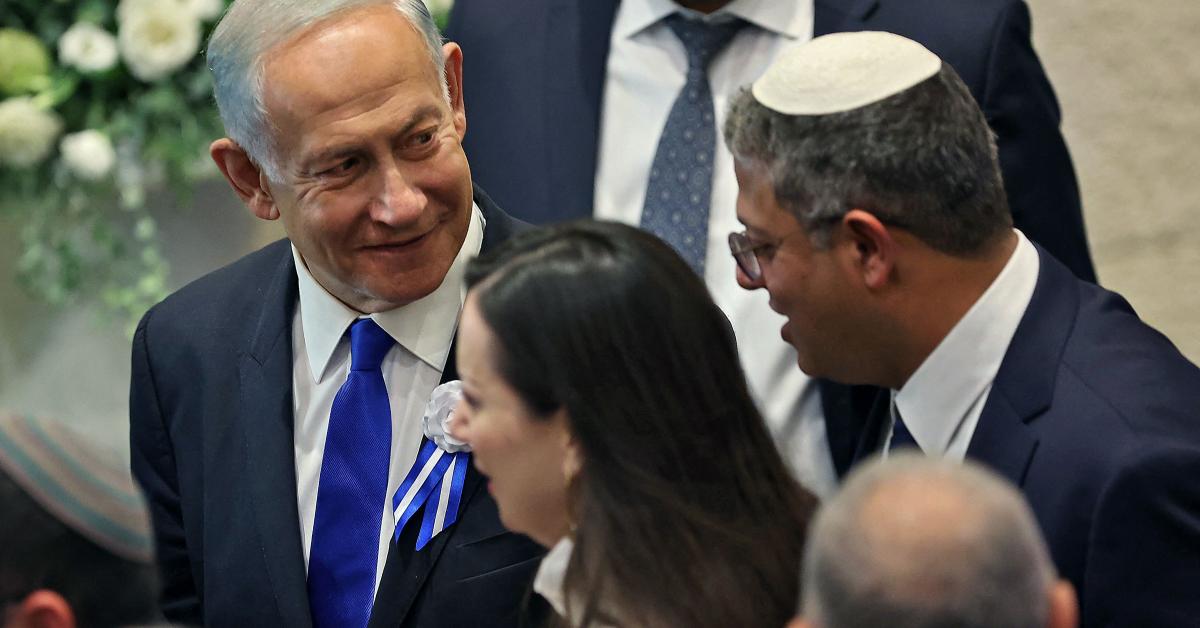
That provision has senior Israeli officials livid, and National Security Minister Itamar Ben-Gvir has openly called for continued fighting against Hezbollah. “A sovereign state is not a subcontractor of any superpower. It is not obligated to agreements that shut down its ability to defend its people,” he said. “We must continue destroying the houses in southern Lebanon. We must continue pushing the residents away from southern Lebanon. We must continue eliminating Hezbollah terrorists in Lebanon.”
At a press conference on Monday evening, Israeli Prime Minister Benjamin Netanyahu said that Israel does not yet know the terms of the U.S.-Iran deal, but vowed that his country would pursue the denuclearization of Iran and would not withdraw from Lebanon as a buffer against Hezbollah, regardless of what terms the U.S. agreed upon with Tehran.
Netanyahu said that he and President Trump do not always “see eye to eye” and that “Israel’s security interests need to be defended wisely […] We will stay in the Lebanon security buffer zone for as long as necessary,” the Israeli leader said. He also warned that “the struggle is not over” to secure Israel from the battle against Iran’s proxy groups on its borders, principally Hezbollah and Hamas.
“Israel will not allow terrorist organizations to camp on our borders,” Netanyahu added.
Israeli militarism on its northern border has repeatedly proven a sticking point amid the negotiations. Earlier this month, for instance, Iran broke off negotiations over continued fighting in Lebanon, which it said was in violation of the original ceasefire agreement.
Iran links the conflicts by demanding a ceasefire in Lebanon as a precondition for a wider deal
Trump later announced a ceasefire in Lebanon and denied that Iran had broken off negotiations.
U.S. Vice President JD Vance said on Sunday that Israel’s conflict with Hezbollah, especially the country’s airstrikes in the Lebanese capital of Beirut this weekend, almost derailed the broader peace agreement. Vance said that the strikes had U.S. negotiators “very worried,” and intelligence had suggested that Iran would launch a massive retaliatory strike against Israel.
Iran “assured us that they were not going to respond to the Israelis, and they were going to sign this agreement and get peace,” Vance said in a Fox News interview. The Vice President said that Trump also got involved to make sure Iran didn’t escalate the situation with a strike against Israel.
David Daoud, a senior fellow at the Foundation for Defense of Democracies whose research focuses on Lebanon and Hezbollah, told Just the News that the April ceasefire between Israel and Hezbollah “created a linkage that didn’t exist before” between the war in Lebanon and the wider war between the U.S.-led coalition and Iran.
As the Trump administration sought to negotiate a final deal to end the war, the Israelis were banking on U.S. indifference to Jerusalem’s ongoing campaign in Lebanon to be able to deal with the threat of Hezbollah, Daoud said. But, Iran was successfully able to link the conflicts by demanding a ceasefire in Lebanon as a precondition for a wider deal.
“Iran has effectively blackmailed the United States” on that front, Daoud said.
Iran has gone to such great lengths to save Hezbollah because the proxy group is the regime’s “most valuable asset,” Daoud told Just the News. Lebanese Hezbollah has been at the forefront of Tehran’s regional strategy, helping organize and supply various proxy groups throughout the Middle East, including in Iraq and Syria, as well as launching strikes against Israel in retaliation for its campaign against Hamas in Gaza in recent years.
There are indications that President Trump recognizes the threat the current situation in Lebanon poses to any potential peace deal with the Islamic Republic of Iran, which has made saving its proxy Hezbollah a top priority in the aftermath of the conflict.
“We do want to see if we can straighten out the Lebanon thing,” Trump said in a meeting with French President Emmanuel Macron at the G7 economic conference on Monday. “It just seems to never end.”
Trump: “Hezbollah, we have to have a little talk with them”
However, the past American-led attempt to encourage the Lebanese government and its official armed forces to disarm the terrorist proxy group fell short. Hezbollah, whose paramilitary organization is widely considered stronger than the Lebanese Armed Forces, uses the threat of civil war in Lebanon to deter the government from carrying out promises to disarm it, Daoud said.
Fighting between Israel’s military and Hezbollah has been ongoing since October 8, 2023, the day after Hamas terrorists poured over the border of the Gaza Strip and massacred and raped Israeli military personnel and civilians in the deadliest terrorist attack in Israeli history.
Israel and Hezbollah were officially in the middle of a tenuous ceasefire when the United States and Israel launched a joint attack against Iran earlier this year. Then, after an Israeli military strike killed Iran’s Supreme Leader Ali Khamenei, the Lebanese terrorist group launched several rockets at Northern Israel.
Hezbollah’s leader, Naim Qassem, said that his group had decided to resume its attacks in order to force the Israeli Defense Forces to withdraw from Lebanese territory it occupied during an earlier phase of the conflict.
“The fighting is not related to any other battle,” Qassem said in a speech broadcast on Hezbollah’s al Manar TV, indicating that the military action was separate from the U.S.-Iran war. “The resistance’s main goal is to stop the Israeli-American aggression and force its withdrawal from the Lebanese territories.”
However, despite Hezbollah’s official statements distancing its battle with Israel from the broader regional war, Iran has sought to tie its willingness to engage the Trump administration with the fate of its proxy group in Lebanon.
Earlier this month, Iran abruptly ended negotiations with the United States after a round of Israeli airstrikes against alleged Hezbollah positions in Lebanon.
“Due to the continuation of the Zionist regime’s actions in Lebanon and given that Lebanon was one of the preconditions of the ceasefire and that this ceasefire has now been violated on all fronts … the Iranian negotiating team will suspend ‘talks and the exchange of texts through mediators,’” Iran’s semi-official news agency Tasnim reported.
Even after negotiations had resumed, Iran continued to insist that a broader ceasefire must include a local ceasefire between Israeli and Hezbollah forces. Israeli attacks on alleged Hezbollah positions in Beirut this weekend reportedly prompted Iran to consider a large-scale missile attack against Israel in retaliation. The airstrikes also incensed President Trump, who warned they could scupper the peace deal the U.S. was close to clinching with Iran.
Trump said the Israeli strike “should not have happened, particularly on a special day when we are so close to a Peace Deal with Iran.” He added, “This could be the beginning of a long and beautiful peace — Let’s not blow it!”
The U.S. pressure on Israel over the strikes on Hezbollah appears to be a departure from President Trump’s original demand that Tehran cease its support for its proxy groups across the region. It was one condition of the president’s 15-point plan to end the Iran war that he unveiled in March.
editor's pick
latest video

news via inbox
Nulla turp dis cursus. Integer liberos euismod pretium faucibua