Germany’s Cobra 600 Is A Jet Powered Interceptor Drone That Slings An IRIS-T Missile
A novel kind of drone-based air defense system has been shown for the first time by German weapon manufacturer Diehl Defense. The Cobra 600, which has not previously been seen in public, combines a jet-powered drone platform with a missile rail armed with one of the company’s IRIS-T missiles, a weapon already used in short-range air defense systems and in air-to-air applications. The new system immediately recalls recent Russian developments, which add short-range air defense missiles to its versions of the Shahed-136 long-range one-way attack drone, known locally as the Geran.
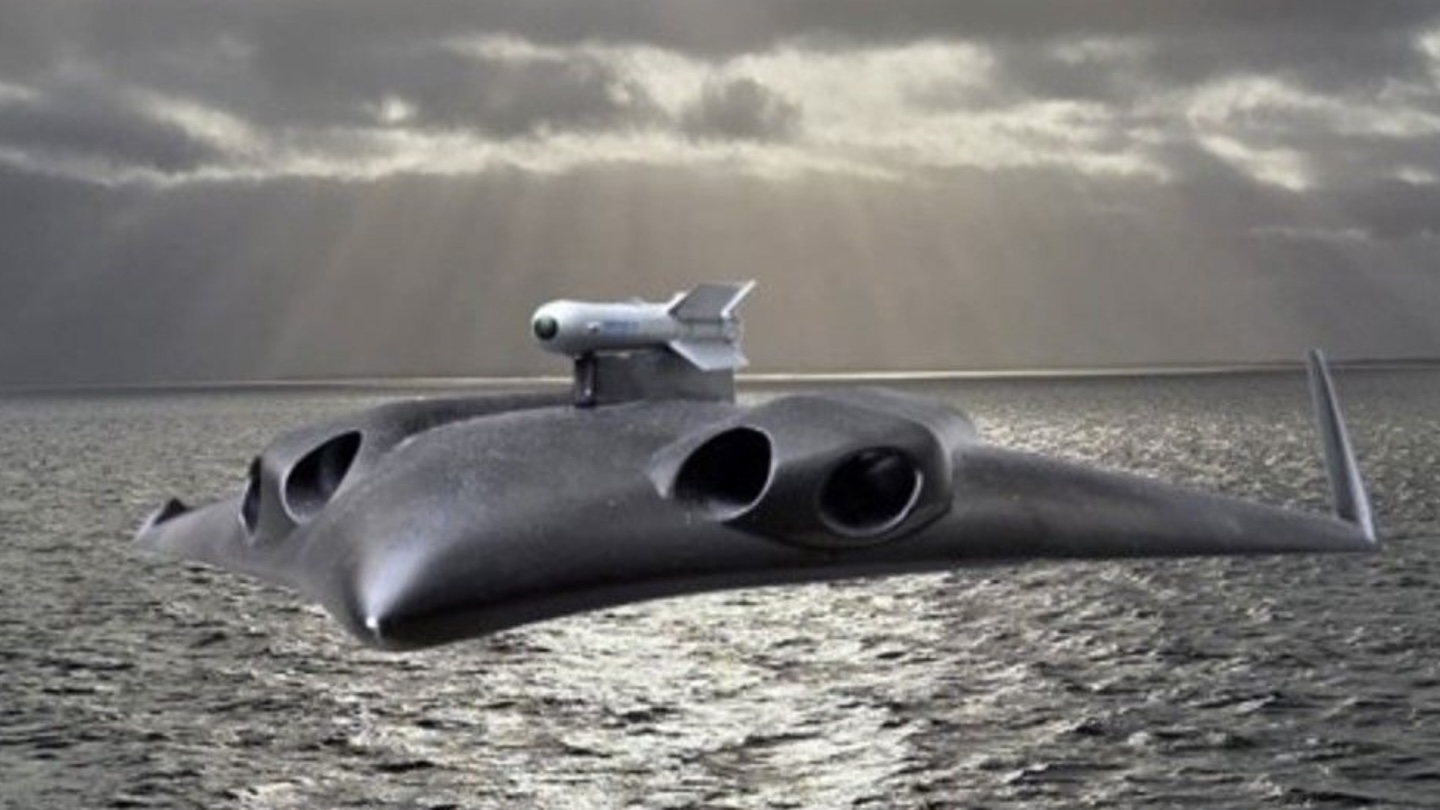
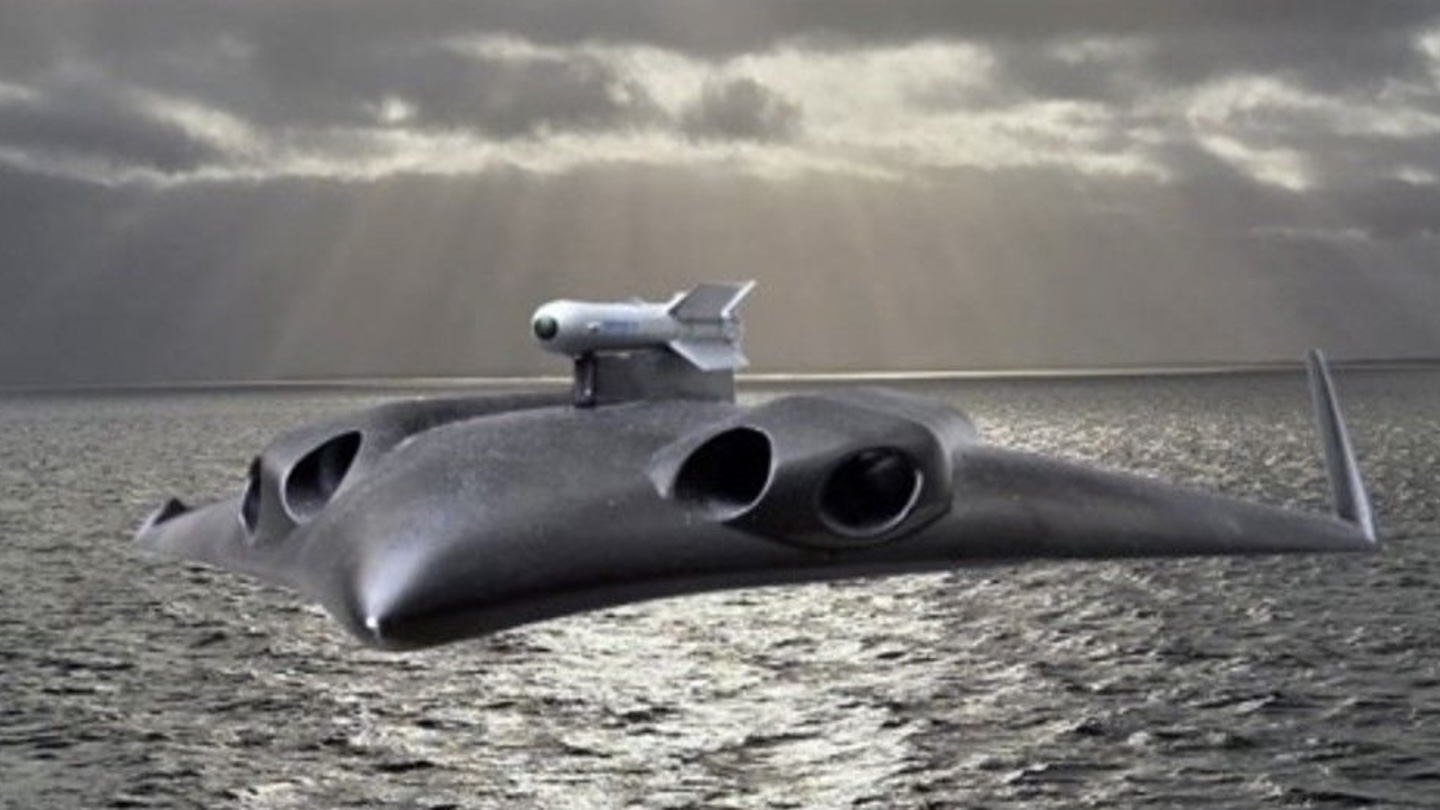
Cobra 600 is being presented at the ILA Berlin airshow, taking place this week in the German capital. The Cobra 600 is also known as the Airborne Launching and Attack System (AirLAS), and the program was launched last year.
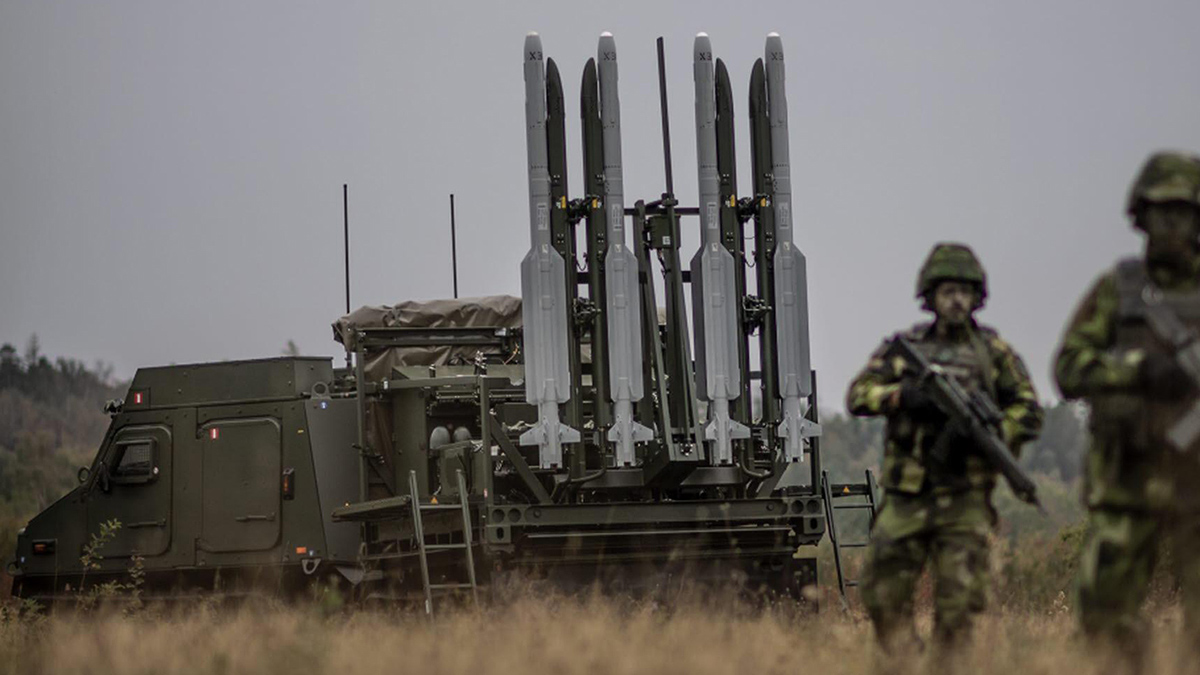
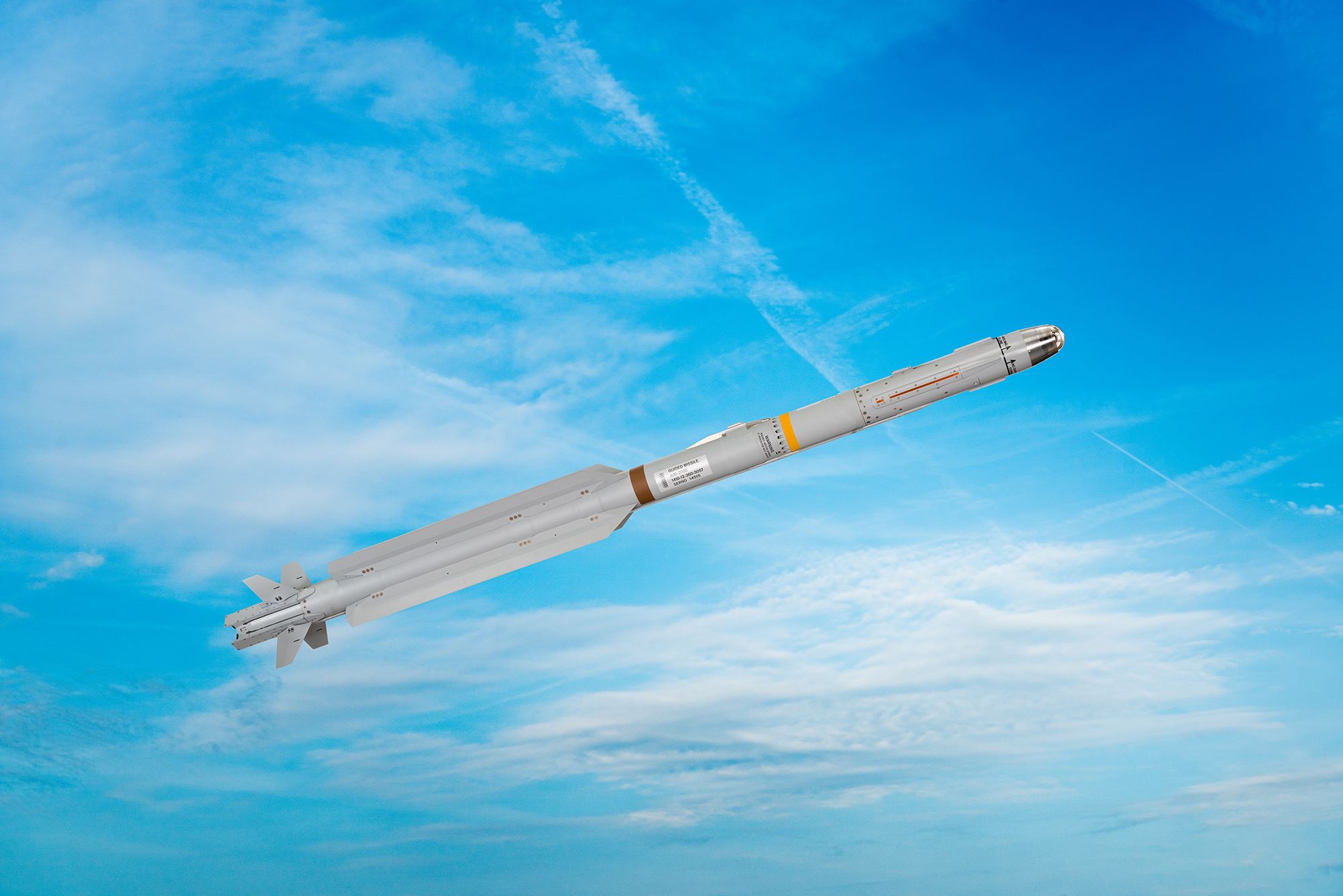
The concept behind the Cobra 600 is that of a ‘missile taxi,’ in which the drone platform carries the IRIS-T missile over a considerable distance. All the while, the drone is meshed with a ground-based air defense system. Typically, this would be one of Diehl’s IRIS-T SLM or IRIS-T SLS systems. Of these, the IRIS-T SLS employs the same missile as the air-to-air variant — and therefore the same missile as the Cobra 600. The physical interface between the drone and the missile is a standard pylon as used on the Eurofighter jet.
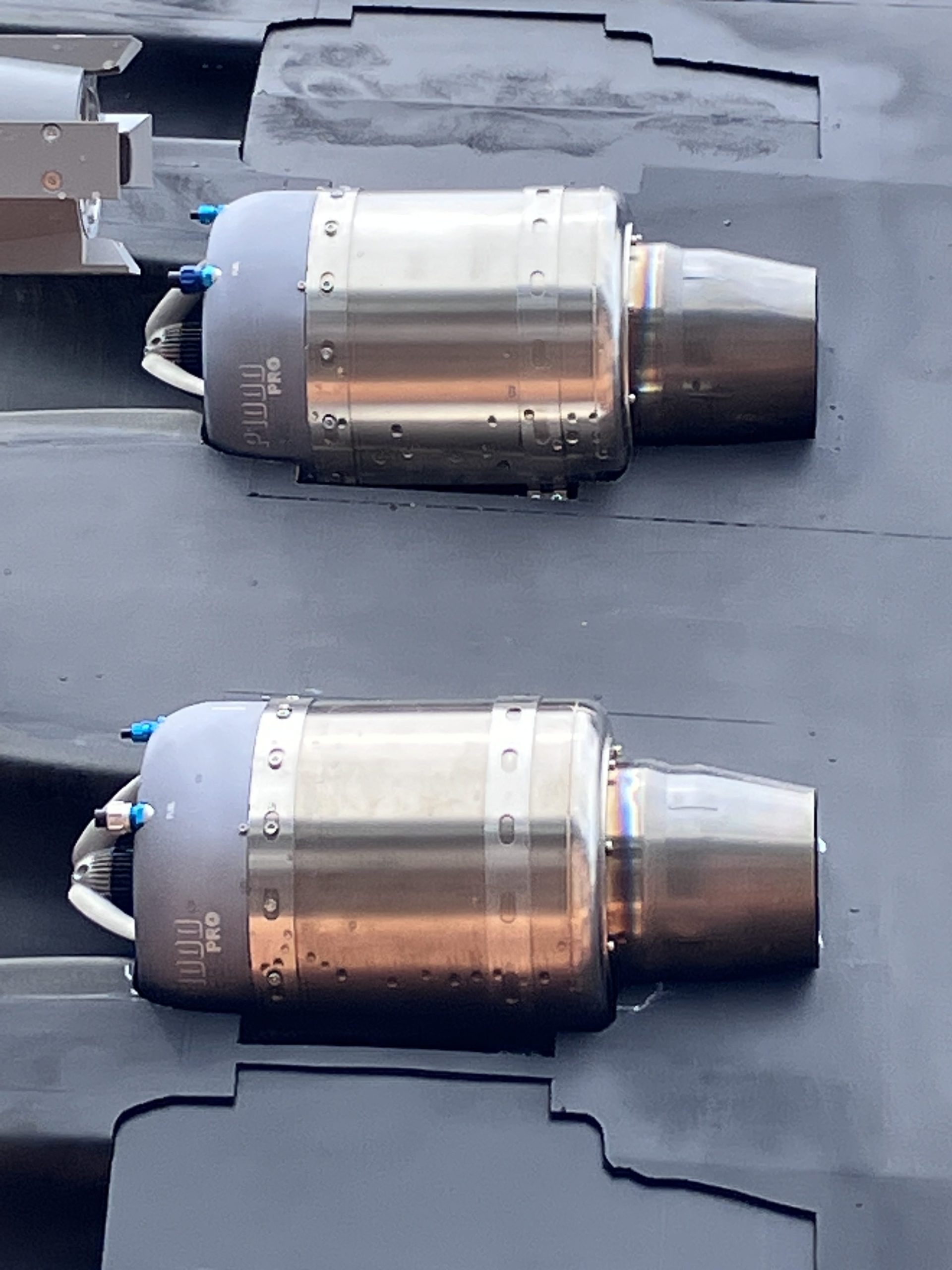
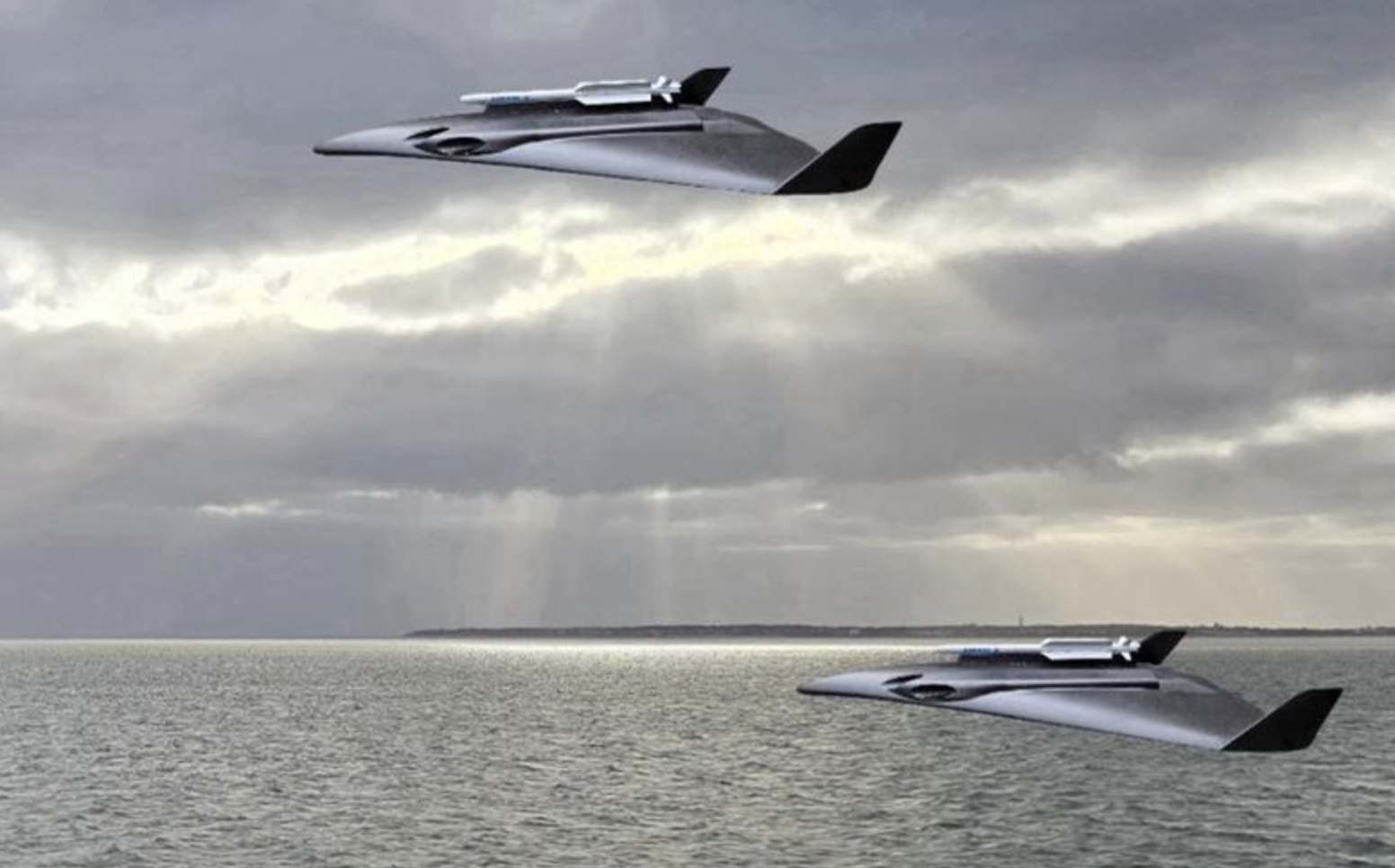
As for the drone platform, this is provided by another German firm, the Polaris Raumflugzeuge aerospace start-up. It has a similar kind of efficient delta planform as the Shahed-136, with a modified flying-wing-like design. On the wingtips are mounted endplate vertical stabilizers. As displayed, the drone is powered by a pair of JetCat-P1000-PRO micro turbojet engines, each of which provides a maximum thrust of 20 pounds. However, the drone has intake ports for another two engines. It’s not clear if these are only intended to be fitted if heavier payloads are being carried, but it’s certainly a possibility. Concept artwork released by Polaris, as seen at the top of this story, shows a four-engine configuration, with the turbojets buried in the airframe and fed by much longer intakes, helping to shield them from detection.
Polaris Raumflugzeuge has already built a variety of drones in the same configuration, and the company eventually aims to scale this up to produce a spaceplane.
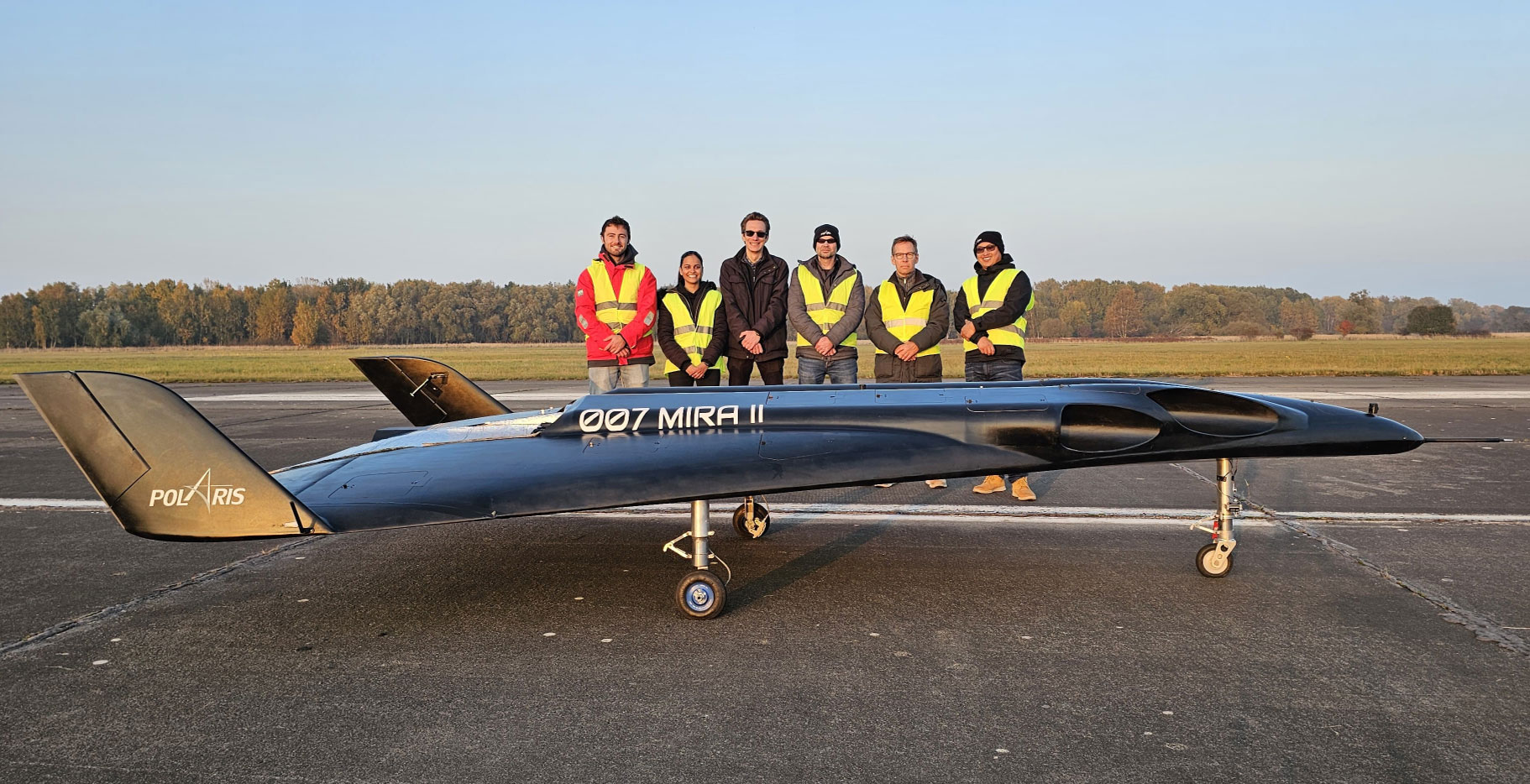
Drawing on its design heritage, the Cobra 600 drone has retractable wheeled tricycle landing gear, meaning that it can be reused in some scenarios. The drone therefore takes off and lands from runways, although it is also able to operate from suitable shorter airstrips, such as stretches of highway. It’s also intended to be cheap enough that commanders will also be willing to risk losing it in combat, or after it runs out of fuel.
The concept of operations has the Cobra 600 serving as an adjunct to a ground-based air defense system, extending its range considerably.
With the missile fitted, the Cobra 600 has a range of around 250 miles. This compares to around 25 miles for the ground-launched missile used in the IRIS-T SLM, or approximately eight miles for the missile used in the IRIS-T SLS.
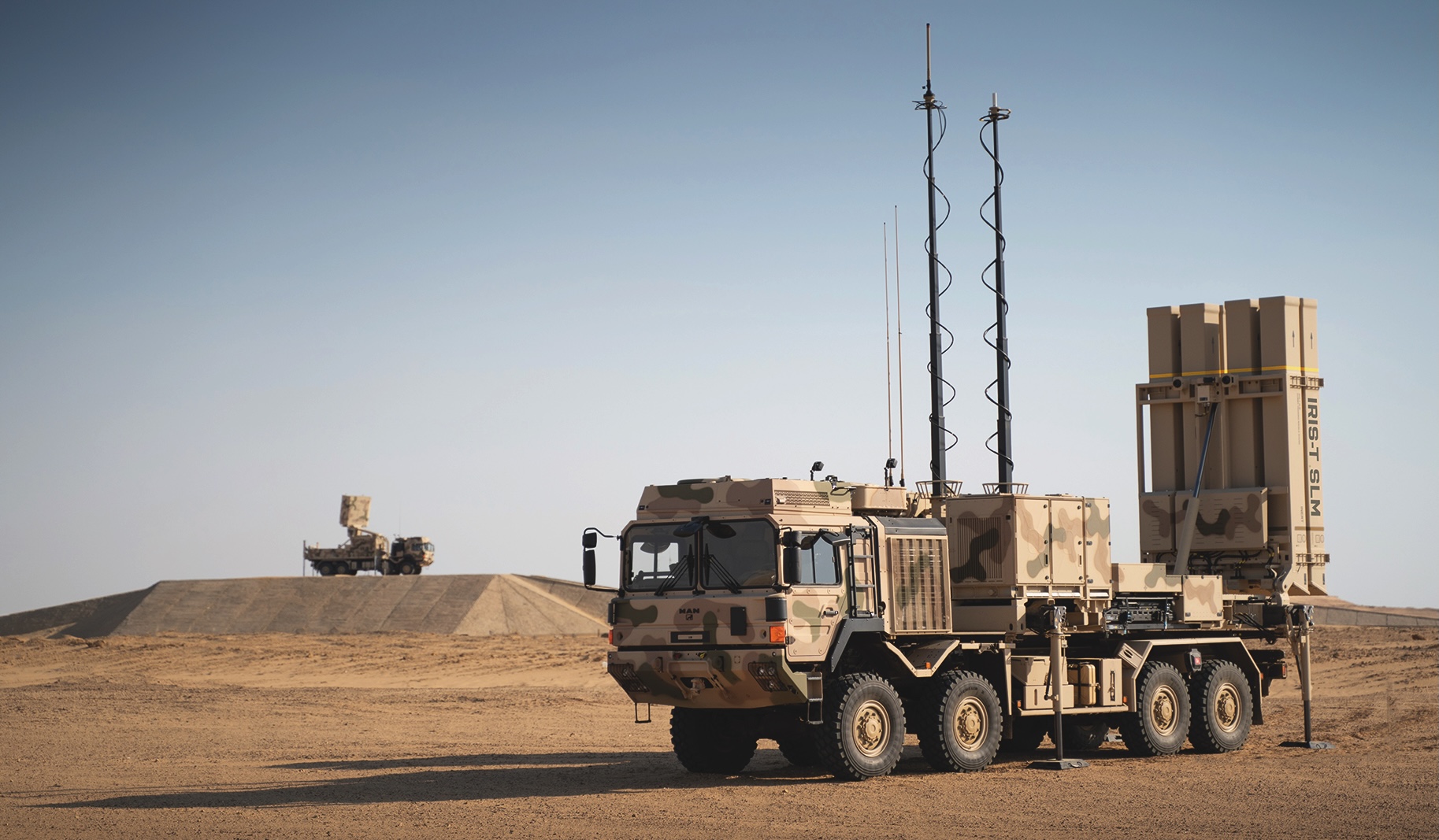
As such, the Cobra 600 has the potential to turn the ground-based IRIS-T into something a little closer to a long-range surface-to-air missile, in terms of the distance it can cover. Of course, this is only true in terms of absolute range, with the speed and maneuverability of the drone being far inferior to a long-range missile. Unless the target is nearby, or the Cobra 600 has been pre-positioned based on known target vectors, the reaction time it offers is strictly limited. The missile itself is also able to tackle a more limited range of potential targets than a dedicated long-range surface-to-air missile, some of which offer an anti-ballistic missile capability, for example.
On the other hand, the Cobra 600 offers the distinct advantage of being able to loiter in a given area, waiting for threats to emerge, or to perform combat air patrols to screen certain sectors. It is best viewed as a forward-positioned additional launcher for the ground-based IRIS-T, and is also entirely reliant upon that system (or a similar one) for its effectiveness. At the same time, leveraging existing ground-based air defense systems as a force multiplier is a clear advantage. Another possible operational scenario would involve setting the Cobra 600s up as interceptors on a runway, sitting ready for launch on a runway to defend against lower-end threats.
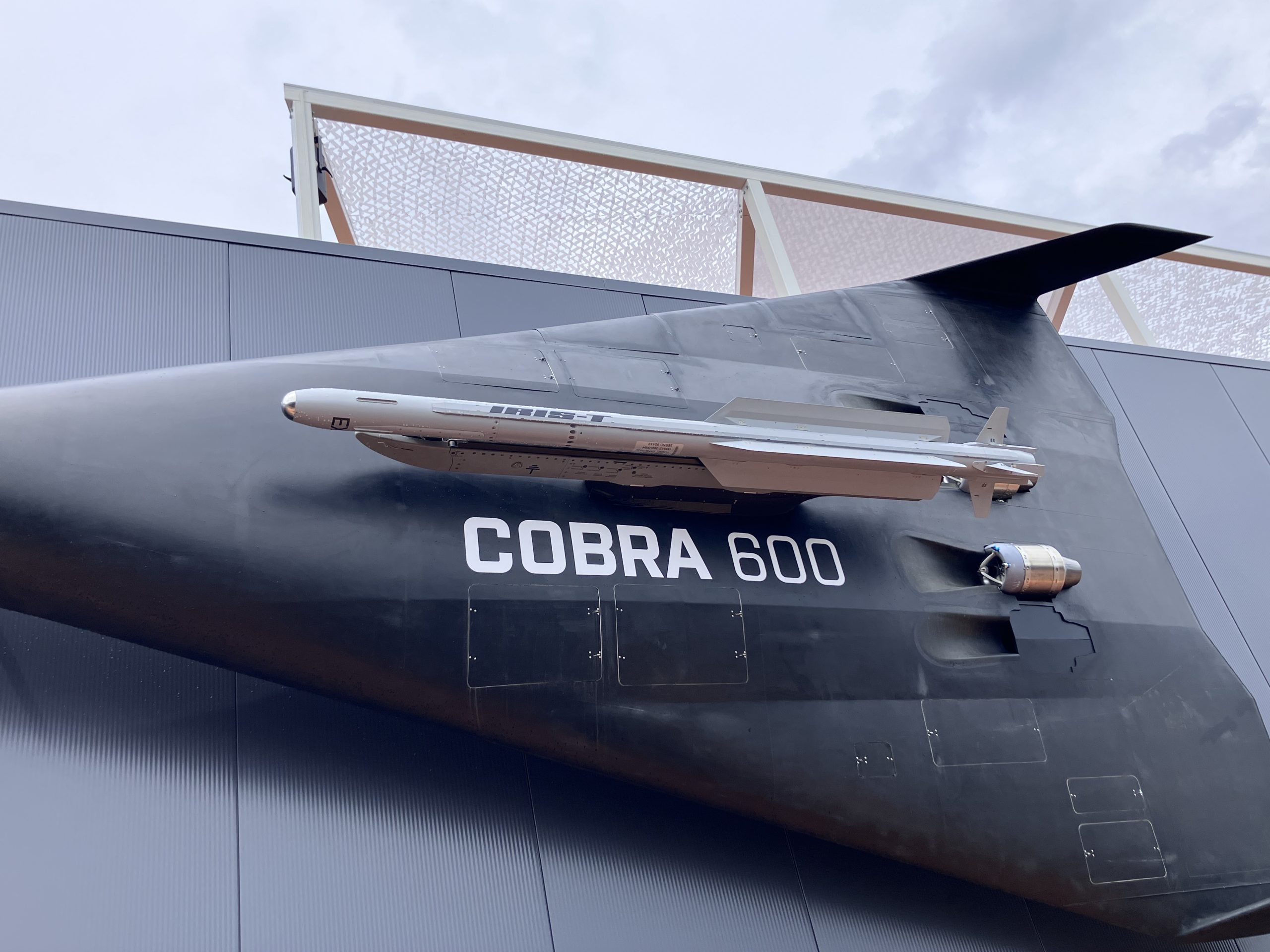
In its current form, the Cobra 600 has no onboard sensors to detect targets other than the imaging infrared seeker head that’s integral to the standard IRIS-T missile.
In an operational scenario, a target for the Cobra 600 would be detected and identified by the ground-based air defense system to which it is ‘tethered.’ Connected via datalink, the ground-based system would vector the drone to the appropriate location. Using its own seeker, the IRIS-T would lock onto the target and would be commanded to launch by the operator of the ground-based system. Of course, this presupposes that the datalink is not compromised by hostile interference or due to line-of-sight limitations, although SATCOM capability, like Starlink, would help keep redundant control over the drone beyond line-of-sight.
At this point, the mode of engagement is not dissimilar to the ground-based IRIS-T SLS, which features a lock-on-after-launch (LOAL) capability. This means it can fire missiles without first establishing the weapon’s lock on the target. After receiving target information in the form of three-dimensional coordinates, the missile uses inertial guidance during the initial stage of flight. Upon reaching the designated engagement altitude, its imaging infrared seeker activates and begins searching the predicted target area.

Diehl Experts | Ulrike Bartel | IRIS-T system | Diehl Defence
Another conceivable option would be to add some kind of sensor, such as an infrared camera, to the Cobra 600 drone platform, meaning that a ‘person in the loop’ could establish that the missile had locked onto the correct target.
A further option could be to ‘uncage’ the missile seeker and let it search across its field of view only when the Cobra 600 is in a designated ‘kill box,’ within which it would have authority to engage any target it acquires, reactively, and autonomously. Issues such as this clearly need to be addressed, based on combat requirements and ethical concerns.
As well as operating the Cobra 600 in conjunction with the IRIS-T SLM/SLS, it could also be integrated with other ground-based air defenses. According to Polaris, it could also be embedded with aircraft or in a maritime environment.
The Cobra 600 has already completed its first flight tests, with a dummy IRIS-T missile fitted. Currently, the development effort is mainly funded by the company, but there has also been investment from at least one interested nation.
With the IRIS-T SLM/SLS combat-proven in Ukraine, experiences from this conflict have almost certainly helped inform the development of the Cobra 600.
The war in Ukraine also provides an interesting parallel to the Cobra 600, in Russia’s missile-armed adaptations of its Shahed/Geran drones.
Russian developments have seen the fielding of these drones carrying either a single R-60 air-to-air missile, a much older and less capable equivalent to the IRIS-T, or man-portable air defense systems (MANPADS).
According to Ukrainian accounts, as well as the rail-mounted missile on the top, these drones are equipped with a camera and a radio-frequency modem.
However, the concept of operations for the missile-armed Russian drones is very different. While it gives the drones a means to engage Ukrainian fixed-wing aircraft and helicopters, it works more as a deterrent than as a genuinely useful tactical application. As we have noted in the past, the difficulty in obtaining a high degree of situational awareness and the limited agility of the drone raises questions about the effectiveness of these solutions. On the other hand, Russia has been working on a man-in-the-loop (MITL) control capability for the Shahed/Geran, which could potentially be used to operate the missile.
Considerably larger than the Shahed-136 design, the Cobra 600 will provide a higher performance delta overall. It is also jet-powered, and, with up to four engines, this would give more impressive response times and maneuverability than the Russian system.
It should be noted that there are other previous precedents for arming drones with air-to-air missiles. In at least one instance from 2002, a U.S. Air Force MQ-1 Predator drone fired a Stinger heat-seeking anti-air missile at an Iraqi MiG-25 Foxbat fighter that was trying to shoot it down, which can be seen in the video below.
Dogfight between MQ-1 Predator drone and Mig-25 Foxbat.mp4
The fast pace of development of the Cobra 600 reflects a growing need for ground-based air defenses more generally, after decades of neglect. There is also a need for less-expensive, less-exquisite solutions in this area, something that the Cobra 600 also addresses, with a price point that is significantly lower than a long-range surface-to-air missile (although with the various disadvantages outlined above). At the same time, the Cobra 600 may well end up being used against even lower-cost drones, for which the IRIS-T is still a very expensive solution.
The Cobra 600 reflects a broader shift in air defense thinking driven by the lessons of recent conflicts, particularly in Ukraine and the Middle East, where persistent drone threats, as well as cruise missiles, have exposed the limitations of traditional ground-based air defense architectures.
By combining the endurance and flexibility of a drone with the proven, off-the-shelf IRIS-T interceptor, the Cobra 600 offers a potentially cost-effective way to extend defensive coverage over greater distances and to put ‘shooters’ into contested areas that crewed systems would not be able to venture. While some questions remain about how the Cobra 600 would be integrated with existing operational doctrine, the concept highlights the growing demand for innovative, layered, and resilient air defenses as militaries seek to counter increasingly varied and numerous aerial threats.
Contact the author: thomas@thewarzone.com
editor's pick
latest video

news via inbox
Nulla turp dis cursus. Integer liberos euismod pretium faucibua