This post was originally published on this site.
Exclusive from Nigeria: Christian Family Burned Alive
This post was originally published on this site.

Driving from Nigeria’s capital city of Abuja toward Jos, one enters the kill zone where thousands of Christians have been slaughtered or abducted already this year. Along the way, we stopped in Miango Community, which is now supporting hundreds of widows and orphans whose families were killed when their villages were attacked by Fulani Muslim extremists.
Gastron, a community leader, explained that over the past nine years, the Fulani have been attacking the Christian community on a regular basis. To date, he said that 1,237 Christians have been killed, while 538 women have lost their husbands.
“But some of them have died after their husbands were killed. Some have remarried. So we have over 400 widows.”
Many of the women were injured in the same attacks that killed their husbands, while most lost other members of their families, including their children.
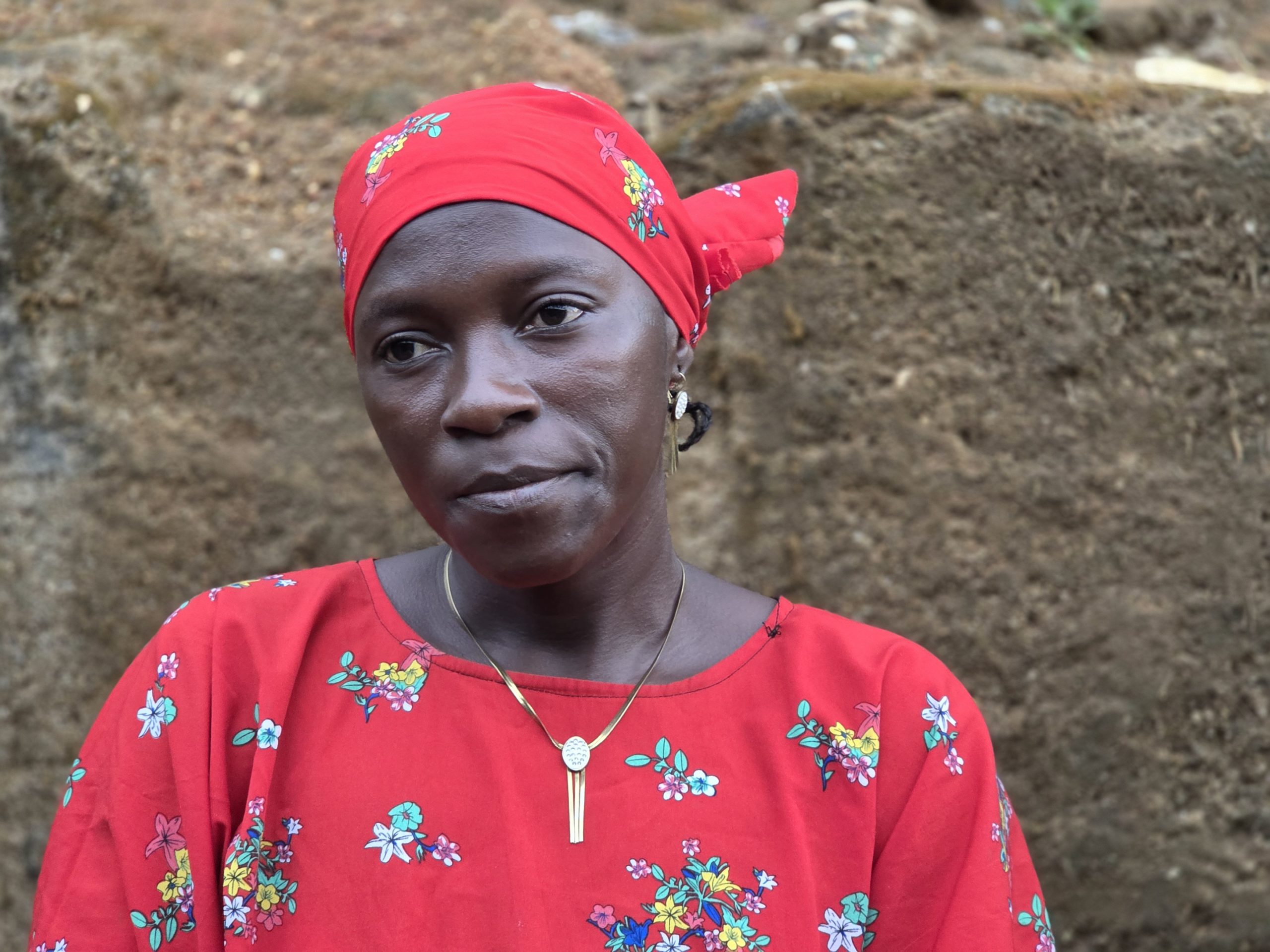
A number of women came forward and shared their horrific stories. All had lost their husbands, and many had seen their children killed by the Fulani.
One woman was hit by small-arms fire, which left her with a disfiguring facial scar and caused her hand to be amputated. Another woman saw her husband and her children trapped in their family’s home, which the Fulani set ablaze. In each of these attacks, Christian casualties ranged from tens to hundreds, and all resulted in the community having to flee.
According to Gastron, over 22,000 residential homes have been burned, and more than 23,000 farmlands have been either grazed or chopped down.
“In fact, just yesterday, we had several of our communities whose farmlands were chopped down.”
To destroy the crops, the Fulani are reported to attack entire fields with machetes. Alternatively, they simply allow their cattle to eat the crops, and if the Christians protest, the Fulani return in large numbers and kill them.
Christian victims of extremist violence are suspicious of how, in a country where private gun ownership is largely illegal, the Fulani are armed with AK-47s and even RPGs, while the Christians have almost nothing.
Some communities have instituted a community watch program, where a limited number of hunters, armed with bows and arrows or muskets and machetes, attempt to keep watch around the clock, but the need to work limits the amount of time they can spend patrolling the perimeter.
What is more, the Fulani come in groups of anywhere from twenty to up to a hundred or more on motorcycles. The village security guards are therefore severely outnumbered and heavily outgunned, even in the best of circumstances.
With no husbands and no land to farm, and some having permanent injuries, the widows need as much help as they can get. Consequently, Gastron’s community organizes a widows’ support day once a month, when Gastron and other leaders meet with the women, pray with them, and give them spiritual support. When possible, they also provide some material assistance, such as sacks of food.
“We also have close to 2,000 children who lost their parents to these attacks. So sometimes we try to assist them with school fees and other needs,” said Gastron.
However, money is in very short supply in Nigeria, where salaries can range from $15 to $20 per month, and unemployment is extremely high. As a result, over 30% of the population lives in poverty. In this part of the country, over 60% of the population lives in poverty.
“I coordinated that, reaching out to close to 200,000 people, just giving out relief materials as they come in,” said Gastron, who is a kind of miracle worker, making small donations stretch to support a tremendous population of displaced people.
Being Christian motivates not only Gastron but the entire community. He explained that in other countries, there are internally displaced persons camps (IDP). However, in Nigeria, real camps in the sense of those he has written about in Burma, Syria, and Iraq, where people live under plastic tarps or tents, are uncommon. The more frequent scenario is that a displaced Christian community is absorbed into another Christian community.
“We have never had a camp. So, communities that have been attacked, we absorb all the others. They live together, they eat together, and once the attacks subside, they go back to their own communities. So we live together as a family.”
He saw clinging to Christian values as a form of defiance in the face of evil.
“Because the Bible says that true religion is taking care of widows and orphans and sojourners. So my heart goes to them.”
Victims of extremism in Nigeria repeatedly referenced the Bible and demonstrated that their faith remained strong despite the ongoing persecution. The charity resulting from that faith is the one thing that is preventing a horrible situation from spiraling completely out of control and adding to the suffering of the displaced.

The post Exclusive from Nigeria: Christian Family Burned Alive appeared first on The Gateway Pundit.
editor's pick
latest video

news via inbox
Nulla turp dis cursus. Integer liberos euismod pretium faucibua
Leave A Comment
You must be logged in to post a comment.