This post was originally published on this site.
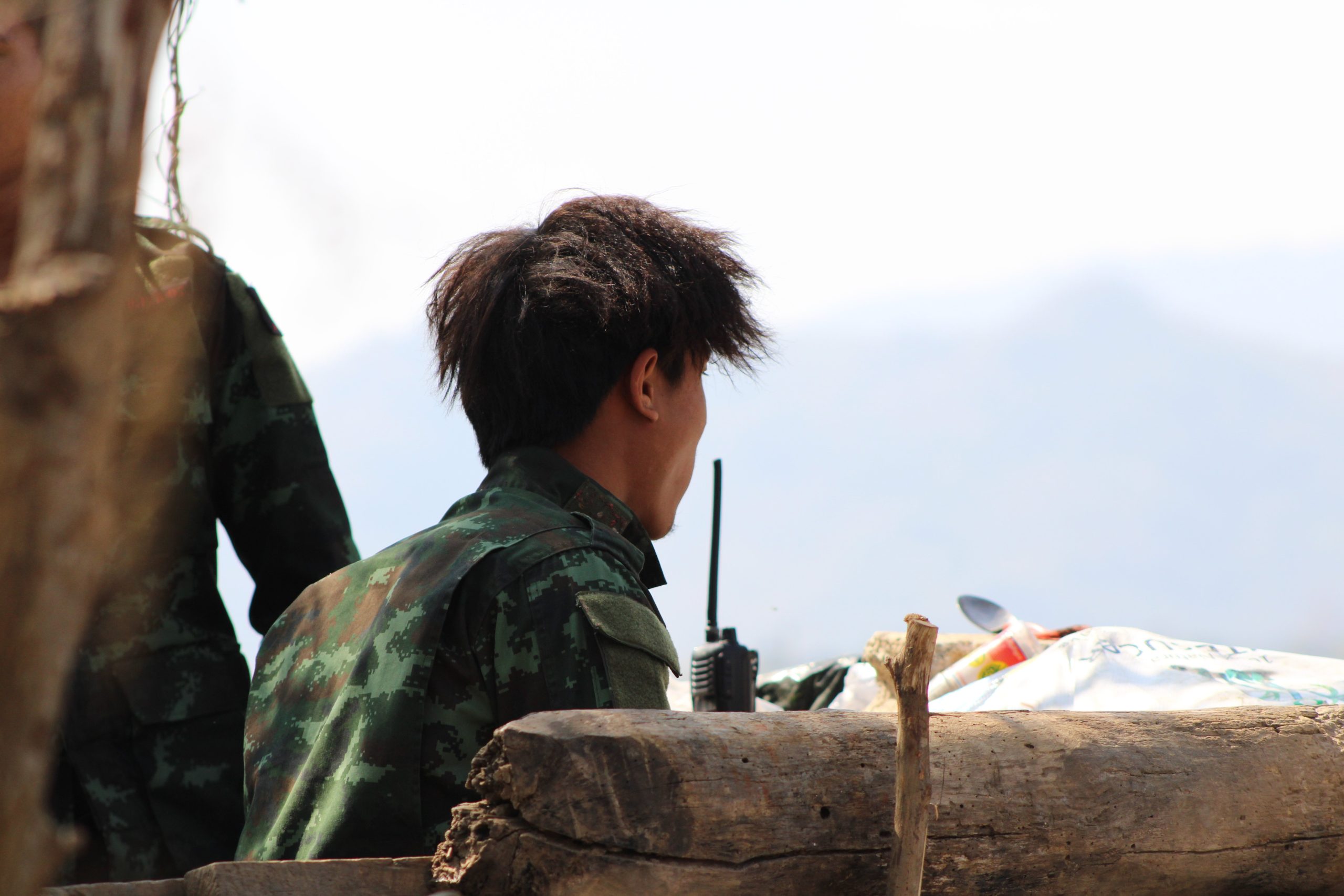
Burma’s Resistance Faces Mounting Pressure as Junta Regains Ground
This post was originally published on this site.

Burma (Myanmar) has been in a state of civil war since the military overthrew the elected government of Aung San Suu Kyi in a February 2021 coup. The takeover triggered a nationwide armed uprising, bringing together a patchwork of forces opposed to the junta. Newly formed People’s Defense Forces (PDF), organized under the parallel National Unity Government, have fought alongside long-established ethnic armed organizations (EAO) such as the Arakan Army, the Kachin Independence Organisation, the Karen National Union, and others that have battled the central government since 1948 over autonomy.
While these groups do not operate under a single command and their interests do not always align, they have, for the most part, remained united against the junta since the coup, together posing the most serious challenge to military rule in Burma’s history.
In the months following the coup, the resistance was poorly armed. PDF fighters initially relied on slingshots, homemade landmines, and antique flintlock Tumee rifles, the same weapons used against British colonial forces in the 1880s, to confront Burma’s military, the second-largest in Southeast Asia.
Over time, ethnic armed organizations that had previously operated independently, and in some cases had a history of friction with one another, began coordinating their efforts. On October 27, 2023, the Arakan Army, the Myanmar National Democratic Alliance Army, and the Ta’ang National Liberation Army, collectively known as the Three Brotherhood Alliance, launched Operation 1027 in northern Shan State alongside allied PDFs. The offensive captured large swaths of territory along the Chinese border and is widely regarded as a turning point in the conflict, demonstrating for the first time since the coup a meaningful degree of unity among the resistance’s diverse factions.
Operation 1027 also marked a shift in resistance tactics, with fighters swarming junta positions using multiple synchronized drones and drone-delivered explosives, inflicting heavy casualties and seizing territory the junta struggled to recapture. For roughly a year, this gave the resistance a battlefield edge, allowing it to push toward Mandalay and hold ground across the north.
That edge began eroding as the junta, backed by China and receiving additional support from Russia, acquired advanced drone systems, including fiber-optic and first-person-view models, adding to its existing air superiority from Chinese- and Russian-supplied jets and helicopters. A conscription drive launched in 2024, combined with this technological shift, allowed the junta to begin retaking territory it had lost.
Burma’s military has regained battlefield momentum over the past year, aided by conscription, improved drone capabilities, and Chinese support. It retook Thabeikkyin in July 2025 and Singu in December, then captured Tagaung, the last resistance-held town in Mandalay Region, on March 10, 2026, after a month-long advance backed by intensive air and artillery strikes.
The Burma army has also retaken a critical road from Mandalay to Myitkyina and is advancing thousands of soldiers toward Kachin, Chin, and Karen states. These gains reverse some of the military’s earlier losses but fall well short of its pre-coup territorial control. The junta’s army continues to struggle against its most capable opponents, the Arakan Army and the Kachin Independence Organisation. The military still controls less than half the country, and resistance forces continue to hold many rural areas.
China’s role has been decisive in supporting the junta. Beijing pressed the Myanmar National Democratic Alliance Army and the Ta’ang National Liberation Army into ceasefires and pushed the United Wa State Army to curtail arms sales to resistance forces, raising black-market weapons prices. As part of these deals, the MNDAA handed the town of Lashio back to the military in April 2025.
Additionally, the TNLA withdrew from Nawnghkio that July, and regime forces retook Kyaukme and Hsipaw in October, restoring partial control of the Mandalay-Muse trade corridor. The resulting stabilization in the north has enabled the military to redeploy forces and push back resistance groups in Karenni State (Kayah State), the central Dry Zone, and parts of the southeast.
Analysts attribute part of the shift to conscription, which has added roughly 100,000 men to the military’s ranks at a rate of 4,000-5,000 per month, allowing it to stabilize front lines and reinforce local counteroffensives. People’s Defense Forces (PDF) battalion commander Ko Kaung says forced conscription, in effect since 2024 and requiring a two-year minimum term, has given the military “limitless manpower” against a resistance with constrained funding that cannot recruit as easily.
The conscripts themselves are often unwilling: the BBC documented four men abducted off streets, a chef, a karaoke-goer, a forestry worker, and a man framed with planted drugs, who deserted to the PDF forces in Karen state after four months of training and frontline deployment without rest.
Since signing a security pact with Russia, the junta now flies aircraft in pairs rather than singly and holds an advantage “both in terms of technology and in terms of quantity” in drones, PDF commanders Da Wa and Ko Kaung say. A PDF-held base near Hpapun, captured two years ago, was retaken within days by overwhelming artillery and airstrikes after rebels briefly held it in April. Platoon commander Kyar Soe, recovering from a landmine injury that destroyed his heel, describes major shortages when it comes to weapons and ammunition. Myanmar remains one of the most heavily mined countries in the world, with 745 people killed or injured by landmines last year, a quarter of them children.
On the political front, Myanmar held elections in three phases from December 2025 to January 2026 that delivered the regime’s desired result: the military-backed Union Solidarity and Development Party won 339 of 420 contested seats, and the National League for Democracy, which had won landslide victories in 2015 and 2020, was dissolved after refusing to register under the post-coup legal framework. Combined with the quarter of parliamentary seats reserved for military appointees under the 2008 constitution, military-friendly lawmakers make up over 86 percent of the new parliament. Turnout was 54 percent of eligible voters according to the authorities, amid widespread armed conflict that prevented voting in large parts of the country.
Most Western governments declined to recognize the elections as credible, avoiding any actions that could confer legitimacy on the process. The European Union issued a statement on Human Rights Day, December 9, dismissing the elections and calling for an end to violence, and later reiterated on the coup’s fifth anniversary that the polls were neither free nor fair. At the United Nations, Myanmar’s seat is still held by the representative appointed under the pre-coup government, as the General Assembly’s Credentials Committee has repeatedly deferred a decision on seating the junta’s nominee.
On April 11, 2026, a new nominally civilian administration took power, with parliament having chosen coup leader Min Aung Hlaing as president on April 3. The constitution required Min Aung Hlaing to retire from the military upon becoming a presidential candidate; on March 30, he stepped down as commander-in-chief, handing the role to General Ye Win Oo, a close ally and former military intelligence chief. The International Crisis Group describes this as military consolidation rather than a political transition, noting that the elections conferred no new legitimacy and did not create conditions to end the civil war.
Min Aung Hlaing’s legal exposure remains a factor in his international standing. He was commander-in-chief during the military’s 2017 operations in Rakhine State, which drove over 700,000 Rohingya into Bangladesh amid allegations of mass killings and sexual violence. In November 2024, the ICC prosecutor requested that judges issue an arrest warrant against him for crimes against humanity, and a final judgment in a related genocide case at the International Court of Justice is expected within months.
The military’s ground force operations against resistant villages continue to rely on “Three Alls” methods: burn all, loot all, kill all, backed by artillery and a rising tempo of airstrikes, deliberately targeting civilians to separate the population from resistance forces.
In Rakhine State, conditions have deteriorated for displaced populations regardless of which side holds territory. The Arakan Army now controls nearly all of Rakhine but continues to intensify measures against Rohingya, including forced displacement, according to Human Rights Watch. The conflict has internally displaced over 400,000 people in Rakhine and southern Chin States and pushed at least 150,000 Rohingya into Bangladesh since late 2023.
The human toll continues to be documented. The Assistance Association for Political Prisoners maintains a running tally of verified arrests and killings of pro-democracy activists and children since the February 2021 coup, current as of late April 2026. Women, girls, men, boys, and members of the LGBTI community have been subjected to sexual and gender-based violence, including crimes committed by security forces.
The resistance continues to fight. However, its hit-and-run guerrilla forces face what they describe as an “iron law of insurgent warfare” when confronting an entrenched, cohesive military: resistance groups must either evolve into coordinated, semi-conventional mobile brigades or risk gradual marginalization through co-option, warlordism, and banditry.
Despite the military’s gains, resistance fighters interviewed say they intend to keep fighting. Kyar Soe, injured by the landmine, said he would return to the fight “one way or another… until the very end.”

The post Burma’s Resistance Faces Mounting Pressure as Junta Regains Ground appeared first on The Gateway Pundit.
editor's pick
latest video

news via inbox
Nulla turp dis cursus. Integer liberos euismod pretium faucibua