
Air Force Wants To Axe Its E-11A BACN Communications Jets
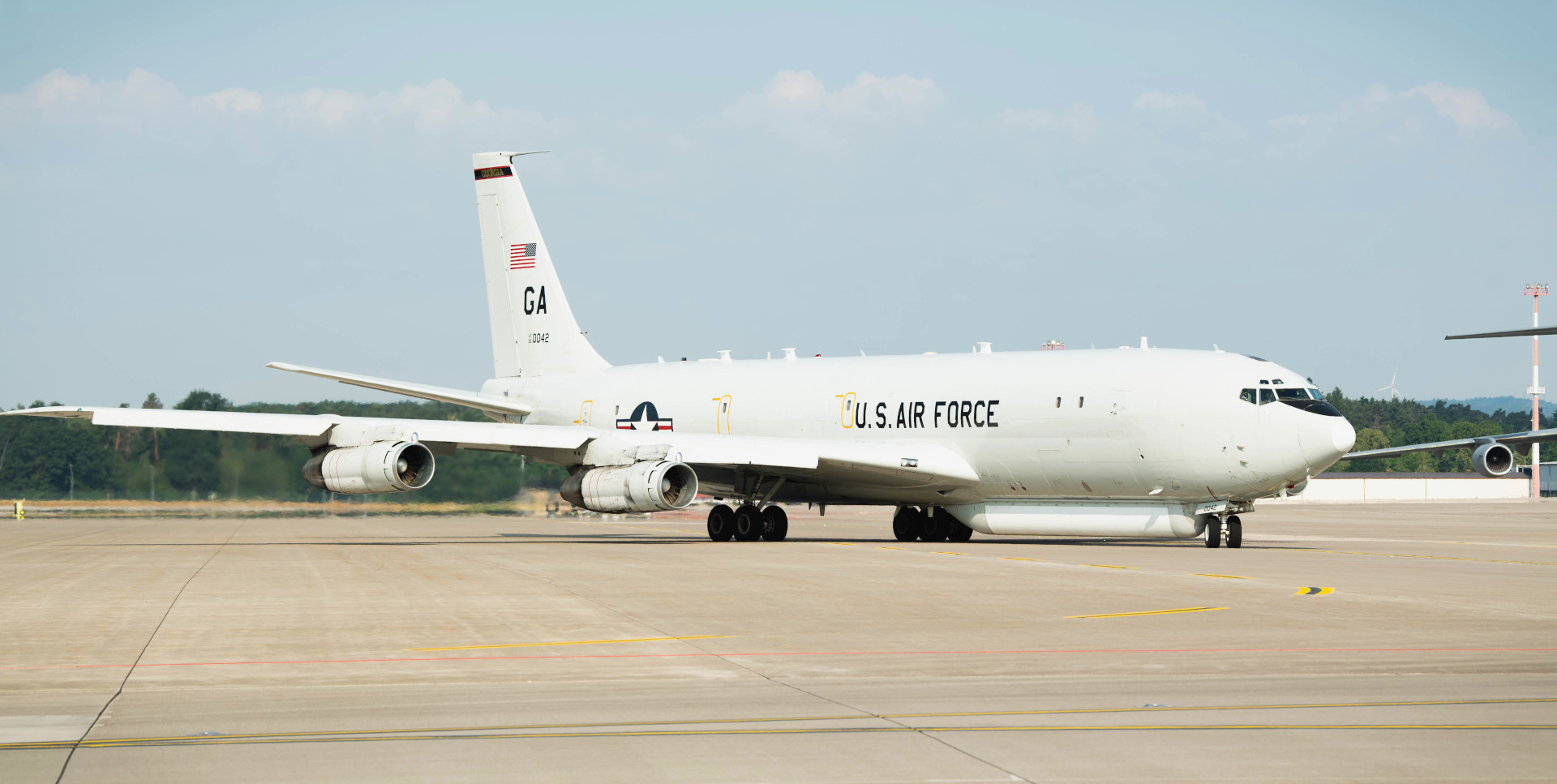
The U.S. Air Force plans to fully retire its fleet of E-11A Battlefield Airborne Communications Node (BACN) aircraft in Fiscal Year 2028. The BACN jets provide highly specialized communications capabilities that allow for the rapid transfer of data between various aerial platforms, as well as forces on land and at sea, which you can read more about here. The Air Force more than doubled its fleet size in recent years, but now wants the mission to be taken over by space-based systems.
In their Posture Statement for Fiscal Year 2027, the Secretary of the Air Force Troy Meink, Air Force Chief of Staff Gen. Kenneth S. Wilsbach, and Space Force Chief of Space Operations Gen. B. Chance Saltzman state that the E-11A “will be fully divested” in FY2028.
In our previous coverage of the E-11A, we described the basic capabilities of the platform as follows:
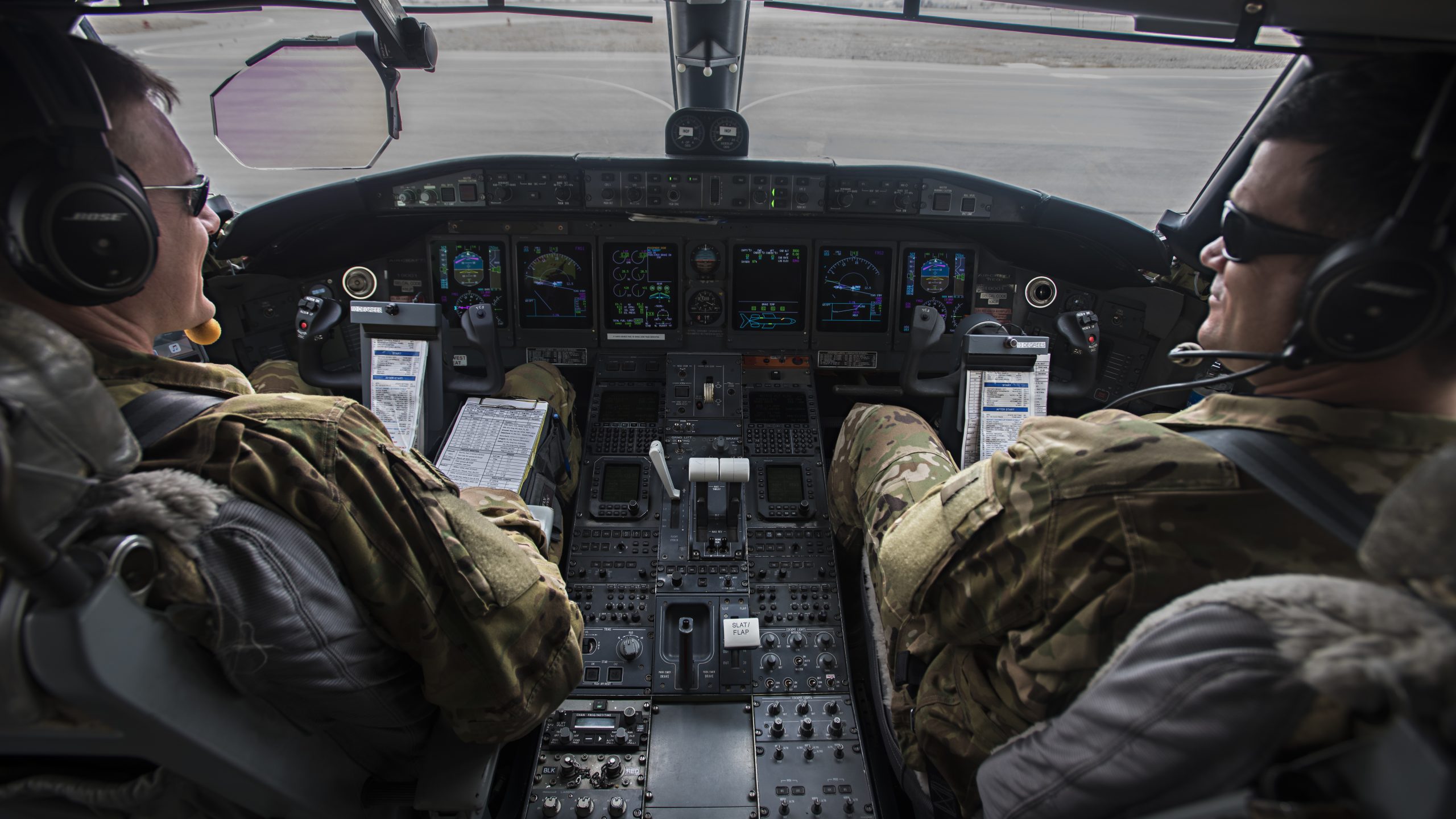
The BACN payload is an extremely robust communications gateway that can rapidly send and receive data transmitted through various waveforms to and from a wide array of aerial platforms, as well as forces on the ground. In addition to being able to “translate” between various communications and data sharing systems, these aircraft have been vital communications relay nodes in Afghanistan, where the country’s mountainous terrain limits the reach of line-of-sight links.

In the short term, the capabilities provided by BACN will be bridged by the Hybrid SATCOM Terminal program. In a 2024 demonstration by Northrop Grumman, this type of satellite communications solution made use of commercial space Internet providers to establish a resilient multi-orbit, multi-constellation network.

The Posture Statement further adds that the Air Force is “executing a deliberate and balanced strategy for Intelligence, Surveillance, and Reconnaissance (ISR), Battle Management Command and Control (BMC2), and Airborne Moving Target Indicator (AMTI) capabilities to meet the intent of the National Defense Strategy.”
This strategy includes “a generational shift away from legacy systems” like the E-11A and “towards next-generation capabilities in both air and space.” This also calls for continued investment in the DAF Battle Network, which is described as “a key capability to fuse sensor data and remain resilient against all adversaries.”
The Air Force has previously described the DAF Battle Network as an “integrated system-of-systems connecting sensor, effector, and logistics systems enabling better situational awareness, faster operational decisions, and decisive direction to the force.”
Another option could be BACN-like solutions provided in podded form to various aircraft. Examples of these include the Smart Node Pod from Northrop Grumman, which is already in production.
Until recently, the Air Force seemed very much committed to its BACN fleet.
Back in 2021, the service confirmed it planned to acquire six more E-11As over the next five years; this would provide a total of nine BACN jets. This reflected the high demand for the fleet, which meant all of the existing operational examples had historically been forward deployed in Afghanistan, where one of them crashed after suffering an engine failure in 2020.
The BACN fleet has also conducted extensive operations in the Persian Gulf region, Central and South America, and elsewhere.
The E-11A has remained active in combat operations up to this day, including being deployed in support of Operation Epic Fury directed against Iran. It was also involved in the operation to capture Venezuelan dictator Nicolas Maduro, an effort known as Absolute Resolve.
Another driver behind the force expansion was the Air Force’s retirement of four EQ-4B Global Hawk drones that were also equipped with the BACN communications package. These were later converted into the RangeHawk configuration to support hypersonic testing.
In 2022, the Air Force confirmed that the first of the additional six E-11As was now operating in the Middle East, having formally joined the 430th Expeditionary Electronic Combat Squadron at Prince Sultan Air Base in Saudi Arabia.

It’s worth noting that the Air Force’s three oldest E-11As are based on older Bombardier BD-700 and Global 6000 business jets, while the newer airframes are based on the Global 6500 bizjet.
The aircraft has also taken on additional functions, such as in 2021, when at least one E-11A was involved in a combined U.S.-UAE exercise focused on employing “multiple platforms… together to execute and refine tactics, techniques and procedures to counter Unmanned Aerial System threats,” according to the Air Force.

In the past, we’ve also noted how the value of the BACN platform extends beyond Afghanistan and the Middle East.
Its capabilities would be equally useful for supporting operations over the vast expanses of the Pacific, where the U.S. military is increasingly focused on preparing for a potential future high-end conflict with China. It would also be suited to working on NATO’s eastern flank, where U.S. allies have been expanding their force posture in recent years to help deter Russian aggression.
More generally, as a fixed-wing bizjet platform, the E-11A lacks the low-observability characteristics to survive in highly contested airspace, so it would need to operate from considerable standoff distances when confronted by the kinds of peer- and near-peer adversaries that they are intended to help defeat. This is undoubtedly part of the reason for the Air Force deciding to discard the BACN fleet. In the same way, it also gave up its E-8C Joint STARS without any direct replacement, driven by the concern that platforms of this kind will simply be too vulnerable in the future.
After all, both China and Russia are developing very long-range anti-air missiles expected to be optimized for high-value targets such as BACN. In addition, airborne ISR platforms will increasingly face sophisticated anti-access/area-denial (A2/AD) networks before they even get to their operating areas.
Furthermore, pushing the E-11A further away from the warfighter is a fundamental problem for its mission, especially when it comes to connecting to forces on the ground. BACN works as a bridge between forces using disparate radios and even the same radios, and is particularly valuable since units on the ground that are trying to communicate with other units or aircraft can be blocked by line of sight, especially in terrain. Regardless, the farther the E-11A flies away from its target area, the less it is capable of providing meaningful connectivity to the forces operating there, just due to the horizon.
Ultimately, the E-11A’s high-demand, low-density status may also have counted against it. Even after the Air Force decided to increase the fleet numbers, it remains a highly niche capability and one that comes at a lot of cost, with an extensive training, maintenance, and logistics burden needed to support it.

The Air Force’s ambition to migrate the BACN’s capabilities to space-based assets parallels, to some degree, its aim for its future airborne early warning and control (AEW&C) architecture. However, the service does at least still see a need for traditional crewed AEW&C aircraft, too. Partly this is due to the fact that the Air Force does not expect new space-based capabilities to be operational before, at best, the early 2030s. The service is seeing a similar shift with its ground moving-target indicator (GMTI) capabilities, which are being transferred from the now-retired E-8C JSTARS to a distributed network of space-based sensors to keep tabs on targets on land and at sea.
At this stage, it’s far from clear whether the terminals required for BACN’s successor have already been installed on aircraft, ships, and issued to ground units, and whether the system will be able to translate Link 16 and other waveforms.
Time will tell if space-based assets can take over the BACN’s role in what is a notably abbreviated timeframe.
Contact the author: thomas@thewarzone.com
editor's pick
latest video

news via inbox
Nulla turp dis cursus. Integer liberos euismod pretium faucibua