Here are the remaining cases to be decided by SCOTUS this term

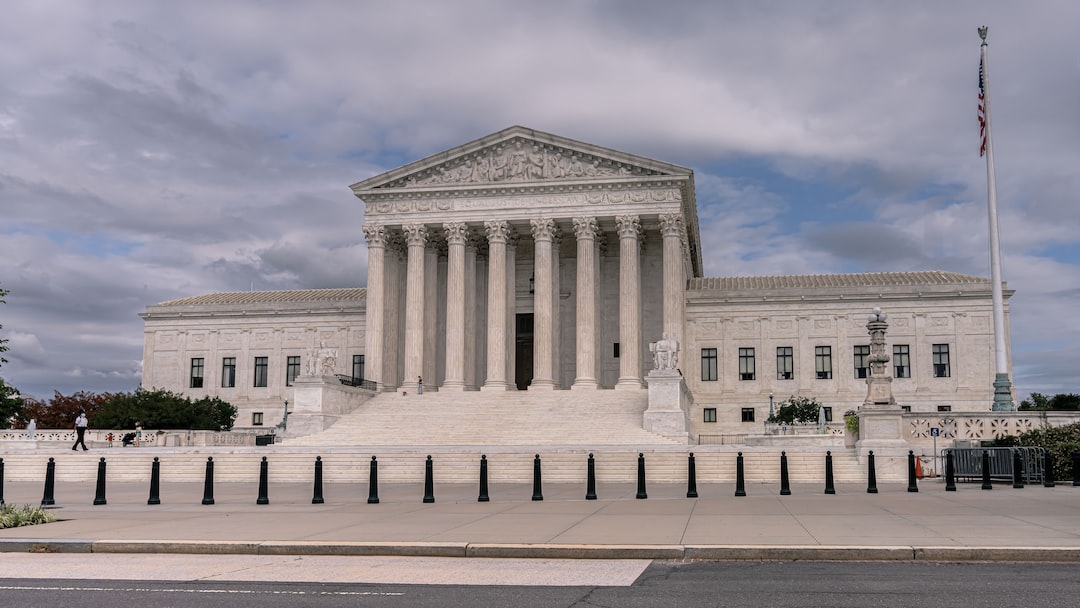
As the Supreme Court enters its final weeks of its term for the year, 23 cases remain undecided as of Thursday. Among those cases are ones surrounding the issues of transgender athletes, gun rights, and birthright citizenship.
Here are some of the most closely-watched cases awaiting decisions:
Birthright Citizenship
The case of Trump v Barbara relates to President Trump’s day-one executive order ending birthright citizenship for the children of illegal immigrant parents. The case was argued before the court on April 1, with justices appearing skeptical of the Trump administration’s case.
Trump has urged the Supreme Court to “do what’s right” and uphold his executive order, saying that birthright citizenship was meant for the children of slaves in the wake of the Civil War, not for “Chinese billionaires who have their children become citizens of our country.”
Temporary Protected Status
In a pair of consolidated cases, the Justices are set to weigh the Trump administration’s ending of Temporary Protected Status for Haitians and Syrians. Oral arguments for the cases were held on April 29. Much of the arguments centered around whether the Department of Homeland Security’s then-secretary Kristi Noem engaged in adequate consultation with the State Department prior to the designation terminations, and whether a court can even review such decisions.
Trans-identified males in women’s sports
The court heard two cases this term relating to the inclusion of trans-identified males in women’s sports: Little v Hecox and West Virginia v BPJ. The case of Little v Hecox came in regards to Idaho’s Fairness in Women’s Sports Act, which bars biological males from competing in women’s sports in public schools from elementary school through the college level. In the case of West Virginia v BPJ, the state’s Save Women’s Sports Act similarly bars biological males from competing in women’s sports in secondary schools and colleges.
Gun Rights
Two cases remaining to be decided deal with gun rights: United States v Hemani and Wolford v Lopez. The first deals with a federal law that makes it a crime for users of illegal drugs to possess guns. Justices during oral arguments questioned how the law would draw the line on drug usage. Also argued before the court was a case that relates to a lower court’s ruling on a gun law in Hawaii, upholding the state’s prohibition on lawfully concealed carrying on private property that is open to the public unless the property owner gives express permission.
Firing of Fed Governor Lisa Cook
The Supreme Court also heard a case regarding the firing of Federal Reserve Governor Lisa Cook by Trump, and whether the court should issue a stay on a lower court’s ruling blocking her firing as the case moves forward. Cook was fired by Trump in August after allegations of mortgage fraud came forward against Cook, with the Department of Justice launching a probe in September.
Mail-in ballots
The Supreme Court heard arguments in March related to Mississippi’s law that allows for mail-in ballots to be counted if received within five days after Election Day and postmarked by Election Day. The decision reached by the court could affect 13 other states, including the District of Columbia, that allow ballots received after Election Day to be counted.
16 other cases remain undecided as of Thursday: Landor v Louisiana Department of Corrections and Public Safety; Trump v Slaughter; National Republican Senatorial Committee v Federal Election Commission; FS Credit Opportunities Corp v Saba Capital Master Fund, Ltd; Exxon Mobil Corp v Corporacion Cimex, SA; Pung v Isabella County, Michigan; Hunter v United States; Mullin v Al Otro Lado; Keathy v Buddy Ayers Construction, Inc; Abouammo v United States; TM v University of Maryland Medical System Corp; Blanche v Lau; Monsanto Company v Durnell; Chatrie v United States; Cisco Systems, Inc v Doe I.
editor's pick
latest video

news via inbox
Nulla turp dis cursus. Integer liberos euismod pretium faucibua