This post was originally published on this site.
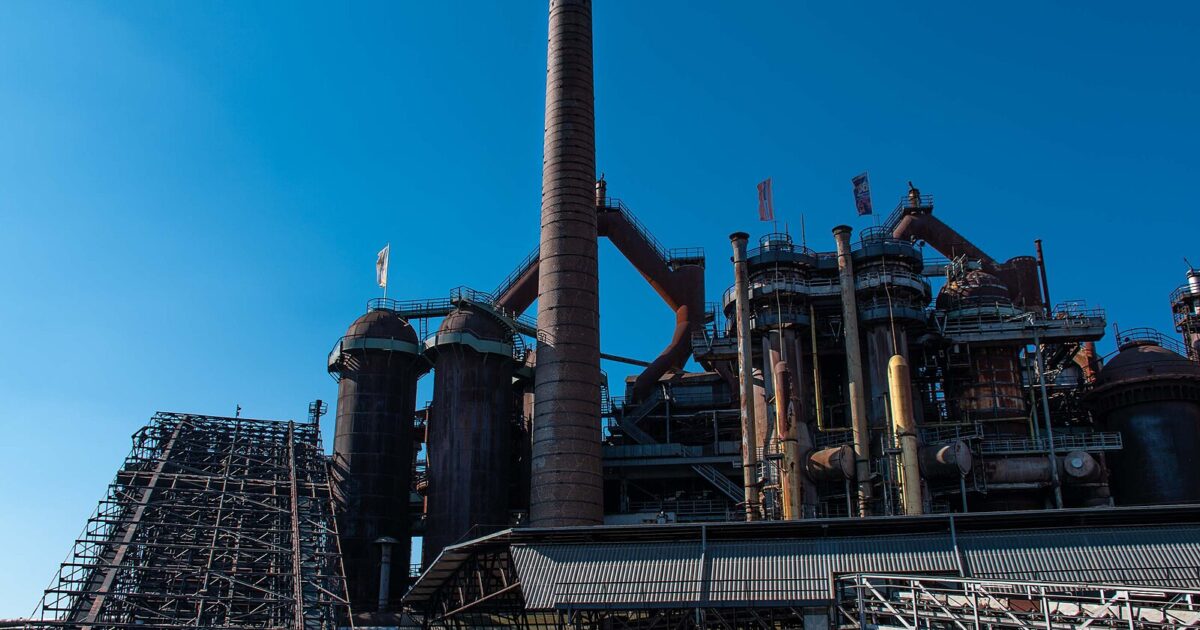
Germany: 65,000 Small Retail Stores Disappear and Over 340,000 Industrial Jobs Lost Since 2019 as Deindustrialization Policies Hit Europe’s Powerhouse
This post was originally published on this site.
Germany’s industrial decline is accelerating, with more than 341,000 manufacturing jobs disappearing since 2019 and industry leaders warning that another 300,000 positions could soon be at risk as Europe’s largest economy struggles with rising costs, shrinking competitiveness, and intensifying global competition.
The latest figures, reported on by Remix News, have renewed concerns that Germany is undergoing something far more serious than a temporary slowdown—and something that increasingly looks to be a permanent development. Employers, economists, and business groups increasingly warn that the country’s industrial model—long regarded as the engine of European prosperity—is facing structural challenges with no easy solution in sight.
Central to these latest developments is, of course, manufacturing, which remains the backbone of the German economy. Unlike many Western countries that rely heavily on finance or services, Germany’s prosperity has long depended on exporting automobiles, machinery, chemicals, electrical equipment, and other industrial goods around the world.
Those industries are now under growing pressure—and have been for quite some time now.
According to industry association Gesamtmetall, employment in Germany’s metal and electrical sectors has fallen to roughly 3.8 million workers after years of steady decline. The group warns that current trends could result in hundreds of thousands more jobs disappearing.
“We are in danger of losing another 300,000,” Gesamtmetall President Udo Dinglreiter warned. Such a decline would push employment in key industrial sectors to some of the lowest levels seen since German reunification.
The warning comes amid mounting criticism of Chancellor Friedrich Merz’s liberal-centrist government, which faces increasing pressure to reverse the country’s economic trajectory, and put a stop to endless waves of mass migration from the third world Germany has endured for over a decade now. Business leaders argue that promised reforms have been slow to materialize while investment and production continue flowing elsewhere.
$43 Billion Per Year Burden: Migration Costs Hammer German Taxpayers
Many industrial executives point to energy costs as one of the most significant obstacles facing German manufacturers.
For decades, Germany’s export success was built partly on access to reliable and competitively priced energy that helped keep factories productive and exports globally competitive. Today, many companies say that the cost environment has fundamentally changed amid geopolitical developments.
Industry representatives warn that energy-intensive sectors such as chemicals, metals, engineering, and manufacturing are particularly vulnerable. Higher production costs make it more difficult for German firms to compete against rivals in Asia and North America.
Business groups have repeatedly urged Berlin to reduce energy prices and improve investment conditions. Without relief, they argue, more production will move abroad and more industrial jobs will disappear.
The consequences are increasingly visible far beyond factory floors.
Germany’s retail sector is also undergoing a profound transformation—and not a good one. New figures show that approximately 65,000 small retail businesses have disappeared since 2010, with independent shops suffering disproportionately compared to larger chains.
Small bookstores, bakeries, clothing stores, and specialty retailers have been among the hardest hit. Industry groups say many local businesses are struggling with inflation, weak consumer spending, rising rents, and growing operating costs.
The result is a growing number of empty storefronts in cities and towns across Germany.
“With the decline of smaller specialist retailers, many city centers are losing their distinctiveness and thus their heart,” said Stefan Genth, chief executive of the German Retail Federation.
Creditreform, which analyzed the retail data, described the sector as one of the fastest-shrinking parts of the German economy. More than 2,400 retailers entered bankruptcy proceedings in 2025 alone.
Meanwhile, international competition is intensifying.
German industry leaders have increasingly focused on China’s growing economic influence. Imports from China rose sharply during the first quarter, while German exports to China declined significantly over the same period.
Manufacturing groups argue that Chinese firms benefit from state support, subsidies, industrial planning, and lower production costs that make competition increasingly difficult for European companies.
“An artificially low currency, excessive subsidies and politically motivated export controls are not trivial offenses,” VDMA (the German Engineering Federation) chief executive Thilo Brodtmann said. “They endanger Europe’s industry.”
The concerns reflect a broader fear that Germany is gradually losing ground in industries it once dominated.
Chinese companies have become increasingly competitive in sectors ranging from electric vehicles and batteries to advanced manufacturing and industrial technology. Executives from Chinese automotive giant BYD recently highlighted the company’s workforce of more than 110,000 engineers as a key source of its success.
At the same time, political pressure on Berlin continues to mount.
Germany’s main opposition party, Alternative for Germany (AfD), has seized on the industrial job losses as evidence that Germany’s economic model requires urgent reform, arguing that the country is falling behind competitors while domestic businesses face rising costs and declining competitiveness.
The debate extends well beyond party politics.
Even politicians from across the political spectrum have expressed concern about manufacturing losses, weakening exports, and Germany’s deteriorating position in global markets.
Many economists say the challenges facing Germany are especially significant because of the country’s unique dependence on industry.
Unlike economies that rely primarily on domestic consumption or financial services, Germany depends heavily on exporting manufactured goods. Maintaining competitive production costs is therefore essential to preserving growth, employment, and public revenues.
That reality has made the energy debate increasingly difficult to ignore.
A growing number of business leaders warn that if Germany cannot provide manufacturers with competitive conditions, companies will continue relocating production, investment, and future growth opportunities elsewhere.
The stakes extend far beyond individual factories.
Industrial employment supports thousands of suppliers, small businesses, logistics firms, and local communities throughout Germany. Every major plant closure creates ripple effects that extend across entire regions.
The post Germany: 65,000 Small Retail Stores Disappear and Over 340,000 Industrial Jobs Lost Since 2019 as Deindustrialization Policies Hit Europe’s Powerhouse appeared first on The Gateway Pundit.
editor's pick
latest video

news via inbox
Nulla turp dis cursus. Integer liberos euismod pretium faucibua