This post was originally published on this site.
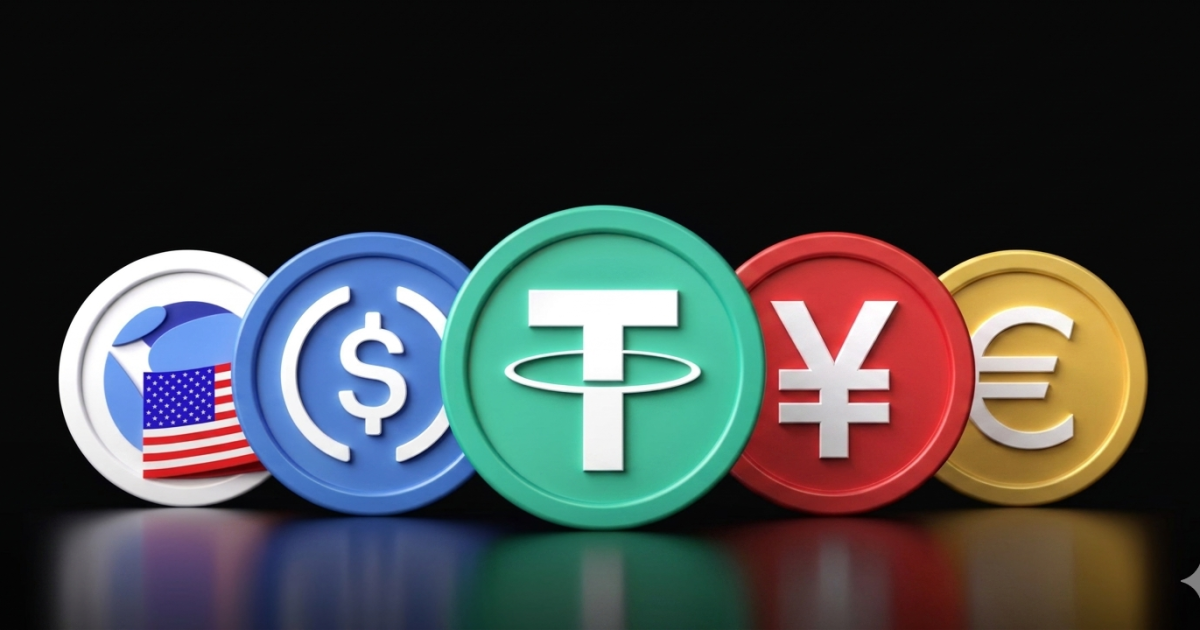
False Framing of the GENIUS Act: Democrats Love Regulation, But Not When It Comes From President Trump
This post was originally published on this site.

In July 2025, President Trump signed the GENIUS Act, the first federal law in U.S. history to regulate stablecoins, which passed with strong bipartisan support: 68–30 in the Senate and 308–122 in the House.
Democrats oppose the GENIUS Act because they claim its lighter regulatory framework could benefit large, well-funded stablecoin issuers, including companies they allege may have ties to President Trump or his associates. Critics argue the bill gives non-bank issuers a potential regulatory advantage and raises concerns about political favoritism and conflicts of interest.
However, the GENIUS Act is necessary because stablecoins have already grown into a massive, systemically important financial market operating largely outside the federal regulatory framework. Without clear U.S. rules, the industry would continue developing under foreign regulations, creating consumer and national-security risks while allowing strategic competitors to shape the future of dollar-backed digital finance.
A stablecoin is a privately issued digital currency pegged to $1.00. Unlike Bitcoin, it doesn’t fluctuate. You can send it anywhere in the world instantly. The biggest issuers are Tether and USD Coin (USDC). Private companies run them, not governments. The business model is simple: a user deposits $1,000, gets 1,000 digital tokens, and the company invests that $1,000 in U.S. Treasury bonds and keeps the interest, say 4–5%, while the user collects nothing. At scale, this is enormously profitable.
Tether alone holds over $100 billion in reserves and earned roughly $6.2 billion in 2023. Before the GENIUS Act, none of this was federally regulated. Companies were not legally required to verify that they held the dollars they claimed to hold, faced no mandatory audits, had no anti-money laundering obligations, had no consumer protections, and had no mechanism for law enforcement to freeze or seize funds.
Tether had for years resisted full independent audits, raising legitimate questions about whether it actually held the dollars backing its tokens. The law changed that, requiring issuers to hold $1 in cash or short-term Treasury bills for each token issued, to publish monthly disclosures of reserve composition, to follow anti-money laundering rules under the Bank Secrecy Act, and to comply with court orders to freeze or destroy tokens.
The necessity of the law is factually grounded. Stablecoin transaction volumes had grown to exceed those of Visa and Mastercard combined by 2024, up 28% year over year. This represented a systemically significant payment infrastructure operating entirely outside the federal regulatory framework governing every other payment system of comparable scale. Dollar-denominated stablecoins also extend the reach of the U.S. dollar globally, including into economies where people distrust their local currency.
Without a domestic framework, that market was being shaped by foreign jurisdictions. The EU had already passed stablecoin regulations, and Hong Kong followed in May 2025. American companies would have faced the choice of operating under foreign rules or remaining in legal limbo domestically.
From a national-interest standpoint, the case is straightforward. A major and growing financial market was unregulated, creating consumer risk, systemic risk, national security vulnerabilities through potential sanctions evasion, and ceding strategic ground to foreign competitors.
Across social media, there are claims that through the GENIUS Act, President Trump is transferring U.S. dollars to offshore oligarchs who then invest in U.S. Treasuries. Critics also claim this constitutes a form of economic imperial domination. These criticisms mirror statements from the Chinese Communist Party (CCP) and China-backed social media accounts. Essentially, China sees the law as a form of extraterritorial U.S. financial power projection and correctly recognizes it as another obstacle to the broader international use of the yuan as a trade settlement and reserve currency.
The claim about offshore oligarchs is, of course, false. The law actually pulls foreign stablecoin issuers into U.S. jurisdiction by prohibiting them from offering payment stablecoins in the United States unless they operate under a comparable regulatory framework, register with the OCC, and hold reserves at U.S. financial institutions sufficient to meet the liquidity demands of U.S. customers.
The claim that requiring reserves to be held in Treasury bonds constitutes ‘imperial domination’ is extremely dishonest. Permitted reserve assets include U.S. coins and currency, deposits at insured banks, short-dated Treasury bills, repurchase agreements backed by Treasury bills, government money-market funds, and central-bank reserves.
The bottom line is that companies are required to hold something of measurable and stable value, which naturally includes U.S. government debt, the reserve asset of choice for much of the world. This does create more demand for U.S. government debt instruments, but that benefits the United States, is entirely legal, and does not directly benefit President Trump or his associates. What it does do is strengthen the U.S. dollar globally and create another barrier to the internationalization of the Chinese yuan, which still accounts for less than 3% of foreign reserve assets held by central banks worldwide.
In September 2021, Beijing banned all cryptocurrency transactions domestically precisely because dollar-denominated stablecoins, which move freely across borders, are harder to monitor, tax, or block than money flowing through state-controlled traditional banking channels. Chinese authorities also see stablecoins as a threat to the digital yuan’s reach. More broadly, they undermine state control over monetary policy and capital flows.
The only two non-Democrats to vote against the bill were Rand Paul and Josh Hawley. Paul, a libertarian, opposed the bill on principle, saying he is not a “big fan of federal regulations, much less starting a whole new scheme for a whole new industry that exists and seems to be doing OK without federal regulations.”
Hawley’s objection came from the opposite direction. He wanted the bill to go further by explicitly banning Big Tech companies from owning or issuing stablecoins, arguing that the legislation, as written, ceded too much financial power to large technology firms. When that prohibition was not included, he voted no.
The debate over the GENIUS Act illustrates yet another example of Democrats opposing much-needed regulation while simultaneously pushing for overregulation elsewhere. At the same time, they are resisting policies that strengthen the United States while advancing narratives and positions that ultimately benefit China rather than America.
The post False Framing of the GENIUS Act: Democrats Love Regulation, But Not When It Comes From President Trump appeared first on The Gateway Pundit.
editor's pick
latest video

news via inbox
Nulla turp dis cursus. Integer liberos euismod pretium faucibua