This post was originally published on this site.
Lebanon’s Christians Caught Between Hezbollah and Israel
This post was originally published on this site.
On June 2, 2026, an Israeli drone struck a car on the road linking Marjayoun with Nabatiyeh in southern Lebanon, killing James Karam, a dentist from the nearby Christian town of Qlayaa, along with his daughter and son. Lebanon’s state-run National News Agency reported the strike. Karam and his children were not combatants. They were Christians living in a village that had nothing to do with Hezbollah or its war with Israel, a war that was started without their consent and waged, in part, from their doorstep.
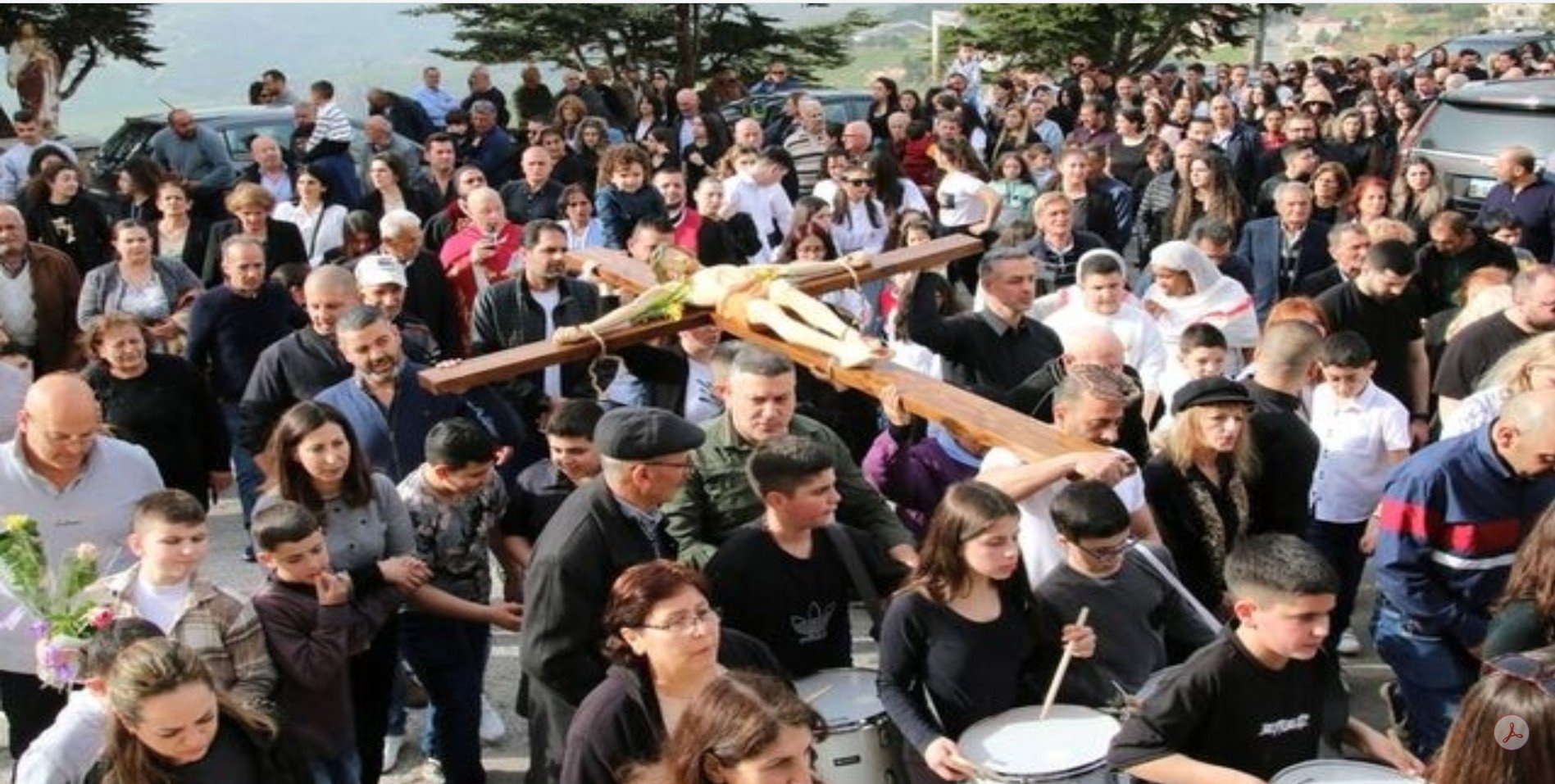
Qlayaa is a Maronite village. Maronites are Eastern Catholics in full communion with Rome and the largest Christian denomination in Lebanon. They trace their origin to the late 4th century, when a group of disciples gathered around the charismatic figure of the monk Saint Maron. As Islamic empires expanded, they retreated into the rugged mountains of Lebanon, carving villages into stone and transforming caves into chapels, where they survived in isolation for centuries. They have maintained a presence in Lebanon for roughly 1,600 years, and their patriarch secured the founding of the Lebanese state under the French Mandate in 1920.
Just three months earlier, in the same location, Father Pierre al-Rahi was killed. On March 9, the fifty-year-old Maronite Catholic priest was struck by Israeli tank fire while running toward the wounded in his village after a home was bombed. He had earlier refused, along with other priests, to obey an Israeli military order to evacuate Qlayaa, a village of some 8,000 inhabitants a few miles from the Israeli border.
A second strike hit immediately after the first, wounding him fatally. He died in the hospital. Three days before his death, Father Pierre had delivered a speech in front of his church welcoming the Lebanese government’s move to ban Hezbollah’s armed activity. “None of us carries weapons,” he told his congregation. Pope Leo XIV expressed “profound sorrow” for the victims of the bombings, citing Father Pierre by name.
Between those two incidents, in April, an Israeli airstrike on an apartment building in the Christian town of Ain Saadeh, east of Beirut, killed Pierre Mouawad, his wife, and a woman visiting them. Mouawad was an official with the Lebanese Forces, the Christian party widely considered Hezbollah’s fiercest political opponent.
The Israeli military said it intended to target a Hezbollah militant in the apartment above. Church bells and gunfire marked the funeral in Yahshoush as hundreds gathered to bury a man who had spent his political career demanding Hezbollah’s disarmament.
“They died because Hezbollah dragged us into a war,” said Lebanese Forces legislator Pierre Bou Assi at the funeral. “Nobody among the Lebanese asked them to start this war.”
To understand how Lebanon’s Christians arrived at this position, dying in a war they did not choose, struck by bombs targeting a militia they oppose, it is necessary to understand what Hezbollah has done to them. Since Hezbollah began launching rocket attacks after October 7, 2023, about 90,000 people, mostly Christians, evacuated southern Lebanon.
“We don’t have a say in this war, not now, not then,” Joseph Hayek, a Christian from Mount Lebanon, told The Media Line. “Hezbollah imposed this war on all Lebanese, despite their religion.”
Hezbollah has not only launched its war from the vicinity of Christian villages, but has also attempted to embed itself inside them. In March 2024, residents of the nearly all-Maronite town of Rmeish confronted Hezbollah militants who were attempting to install a rocket launcher in the town center. The situation escalated to the point where Hezbollah members fired bullets into the air while residents rang a church bell in response. The residents drove them off that day.
Hezbollah moved the launcher to another neighborhood and fired from there toward Israel. A local resident stated the community categorically rejected any attempt to use their village as a launch site. More recently, Hezbollah took control of the Christian village of Qawzah and used it as a base to launch rockets and anti-tank missiles at Israel and IDF troops. Lebanese citizens on social media have denounced the transformation of Christian villages into human shields, noting that Christians are not fighting alongside Shiite Hezbollah.
Part of the reason for the current conflict between Israel and Hezbollah is that Hezbollah is backed by Iran. Iran not only supports Hezbollah’s military wing but also provides significant financial support to the organization.
Hezbollah families, with financial backing from Iran, have reportedly begun purchasing properties in Christian areas, sometimes under the threat of arms, as many Christians choose to leave the country.
The displacement of Shiite populations into historically Christian areas has alarmed Christian legislators, who warn that long-term demographic shifts could erode the Christian share in Lebanon’s sectarian power-sharing system. In January 2024, a group of Muslims vandalized and burglarized at least ten churches in Beirut and Mount Lebanon. According to Open Doors, churches in Muslim areas increasingly avoid displaying religious symbols to prevent provoking hostility.
Lebanon was once the only state in the Middle East where Christianity was the dominant religion, with Christians officially recorded at 53% of the population in the 1932 census, Lebanon’s last official census. Christians are now estimated to constitute somewhere between 20% and 35% of the population.
According to the United Nations, nearly 700,000 people have been displaced from southern Lebanon, southern Beirut, and the Bekaa Valley. Lebanon’s prime minister has warned of a “looming humanitarian disaster,” adding that Lebanon has been dragged into a devastating war it did not choose.
An additional threat has emerged from the north. Since the capture of Damascus by Hayat Tahrir al-Sham in 2024, the Syrian-Lebanese border has become porous. The attack on St. Elijah’s Church in Damascus in June 2025, which killed 30 people, was followed by threats against Christians in both Syria and Lebanon. Recent arrests of Islamic State-affiliated individuals in Tripoli have prompted heightened security measures in Christian neighborhoods of Beirut.
Lebanon’s Christians are not a party to this war. They do not fire rockets. They do not store weapons. The war is Hezbollah’s, waged in Iran’s interest, launched without a Lebanese mandate, and fought from the streets, villages, and doorsteps of a community that wants no part of it but is dying nonetheless.
The post Lebanon’s Christians Caught Between Hezbollah and Israel appeared first on The Gateway Pundit.
editor's pick
latest video

news via inbox
Nulla turp dis cursus. Integer liberos euismod pretium faucibua