This post was originally published on this site.
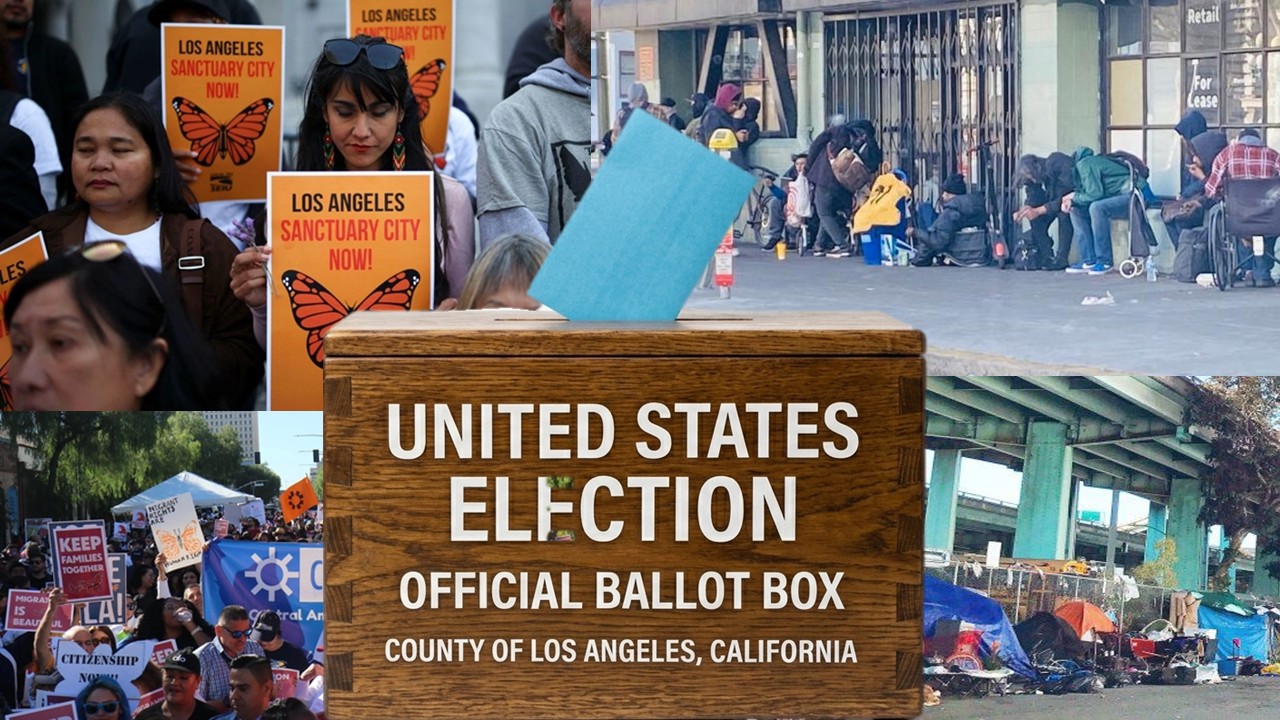
The Facts About the California Primary and Its Lack of Integrity
This post was originally published on this site.
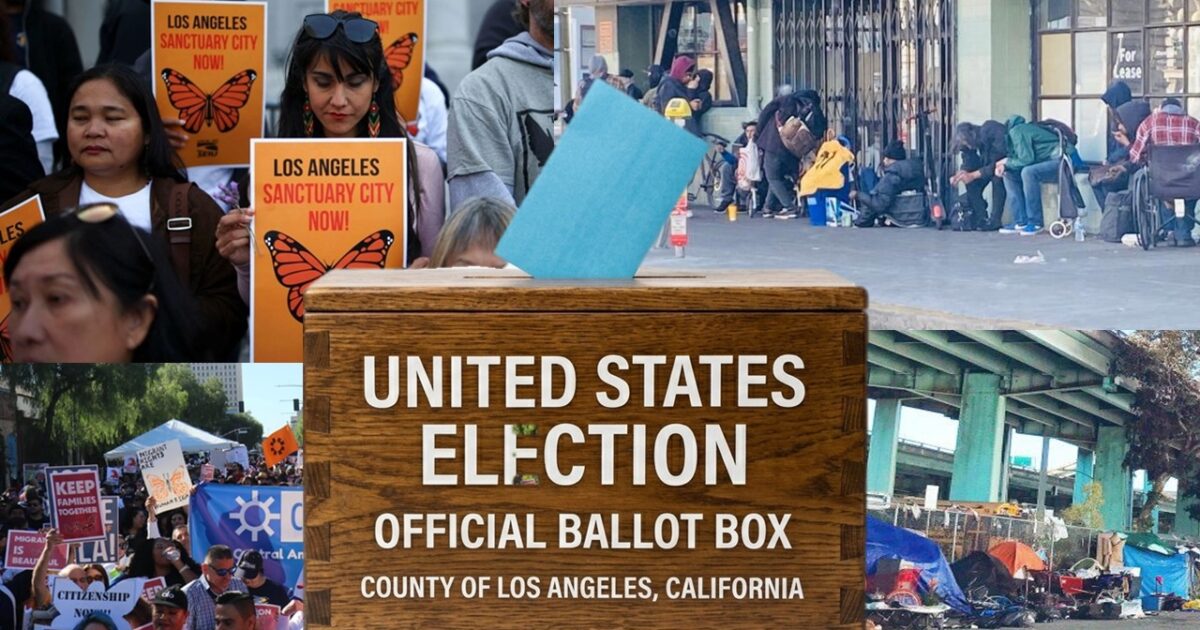
As always, the media says Republicans are spreading conspiracy theories about the California primaries. However, there are many documented reasons to distrust California’s election system.
California held its statewide primary on June 2, 2026. Under the state’s top-two jungle primary system, adopted in 2010 and in use since 2011, the two highest vote-getters in any primary advance to the general election regardless of party, meaning the November ballot can feature two democrat candidates with no republicans.
In the 2026 governor’s race, that scenario remains live. Republican Steve Hilton leads Democrat Tom Steyer by less than half a percentage point for the second spot, with roughly one-third of ballots still uncounted.
California voters could arrive at the polls in November and find two Democrats, Xavier Becerra and Tom Steyer, and no Republican.
The level of support currently shown for a Republican candidate in California is itself unusual and suggests that many Californians are growing weary of Democratic leadership.
Apart from the top-two system, Republicans point to numerous concrete facts to support their claims that California elections are vulnerable to fraud and abuse.
California does not require voters to show identification at the polls in most circumstances, and a 2024 state law signed by Gov. Newsom prohibits local governments from imposing their own ID requirements.
Assembly Bill 1921, signed in 2016, expanded ballot harvesting, third-party ballot collection, from family members and household residents to any person whatsoever, with no limit on the number of ballots collected, provided they are not paid per ballot.
This removes chain-of-custody integrity and enables organized groups to selectively collect ballots from favorable precincts.
Mail ballots with missing or mismatched signatures may be corrected weeks after Election Day. The Motor Voter program automatically registers DMV applicants to vote and produced documented errors at launch in 2018, including the registration of as many as 1,500 noncitizens.
Under Conditional Voter Registration, any eligible Californian who misses the 15-day registration deadline can register and cast a ballot during the 14-day early-voting period or on Election Day itself, a process through which more than 57,000 people voted in 2018, compressing the time available to verify eligibility before a ballot enters the count.
Since 2021, mail ballots are automatically sent to all registered voters; more than 80% of California voters who participated in the 2024 presidential election returned one. This raises two concerns: ballots sent to outdated addresses may be received by unintended parties, and the volume creates a verification environment difficult to administer at scale.
Mail ballots postmarked by Election Day are accepted for up to seven days afterward. As of June 6, 67.8% of expected votes had been counted with an estimated 2.89 million ballots still remaining.
County officials must report final results to the Secretary of State by July 3; full certification is due July 10, more than five weeks after the June 2 vote.
The extended timeline is the product of two distinct factors: California’s own expansion of mail voting, accelerated by a 2021 state law signed by Newsom making mail ballots permanent for all registered voters, and voting rule changes pushed and enacted by Democrats at the state and federal level during the Biden era.
For most of American history, results were announced on election night; in-person voting on a single day was the norm and ballots were counted locally and quickly. This proves that the current California timeline is a deliberate policy choice, not a logistical necessity.
A Republican advancing to the November general election would itself be historically significant. No Republican has held statewide office in California since Arnold Schwarzenegger’s governorship ended in January 2011, nearly 15 years ago.
In other called races, State Sen. Scott Wiener has advanced to the general election in the race for Nancy Pelosi’s former San Francisco congressional seat. In the Secretary of State contest, Shirley Weber and Donald Wagner are advancing. The second-place finisher in the Los Angeles mayor’s race has also not yet been determined.
California’s House races carry national significance. Democrats are targeting the state as central to their effort to retake the House majority, following a redistricting plan designed to net five seats in the general election.
Several incumbents face serious intra-party challengers, and Republican Reps. Ken Calvert and Young Kim are competing against each other for the same seat after redistricting reshuffled district lines.
The questionable elections are part of a larger problem in California as the state continues to enact policies that are driving businesses, high-net-worth individuals, and even middle-class families out of the state.
People and companies are leaving because of high taxes, burdensome regulations, uncontrolled homelessness, deteriorating public safety, failing public schools, unaffordable housing, retail theft, and a political environment that a significant portion of the population views as hostile to their values and incompatible with operating a business.
California lost a net 239,575 citizens and legal residents to domestic outmigration in the year between July 2023 and July 2024 alone. During the same period that citizens were leaving, California’s illegal immigrant population grew by approximately 400,000 between 2021 and 2023, reaching 2.25 million.
The corporate exodus mirrors the population trend. Companies relocating headquarters out of California include Chevron, Tesla, McKesson, Charles Schwab, Hewlett Packard Enterprise, Palantir, SpaceX, and Oracle.
A PPIC analysis found that between 2010 and 2021 California lost 789 headquarters out of 47,000, with departing companies consistently relocating to lower-tax, lower-regulation states.
This exodus has reduced the state’s income-tax and corporate-tax revenue, which will necessitate raising taxes on the dwindling pool of remaining taxpayers and corporations in order for the state to continue funding social programs and support for illegal aliens.
Electing a Republican may go a long way toward reversing this trend, but the current electoral system makes that outcome less likely.
The post The Facts About the California Primary and Its Lack of Integrity appeared first on The Gateway Pundit.
editor's pick
latest video

news via inbox
Nulla turp dis cursus. Integer liberos euismod pretium faucibua