This post was originally published on this site.
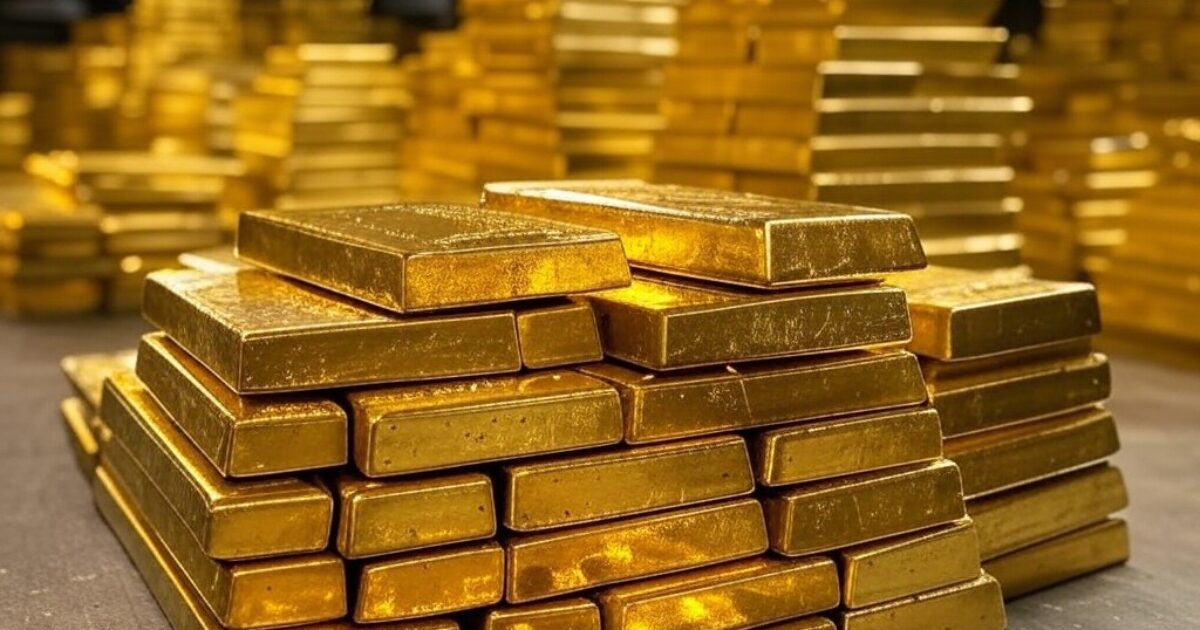
European Central Bank: Gold Has Replaced US Treasuries as the World’s Top Reserve Asset
This post was originally published on this site.
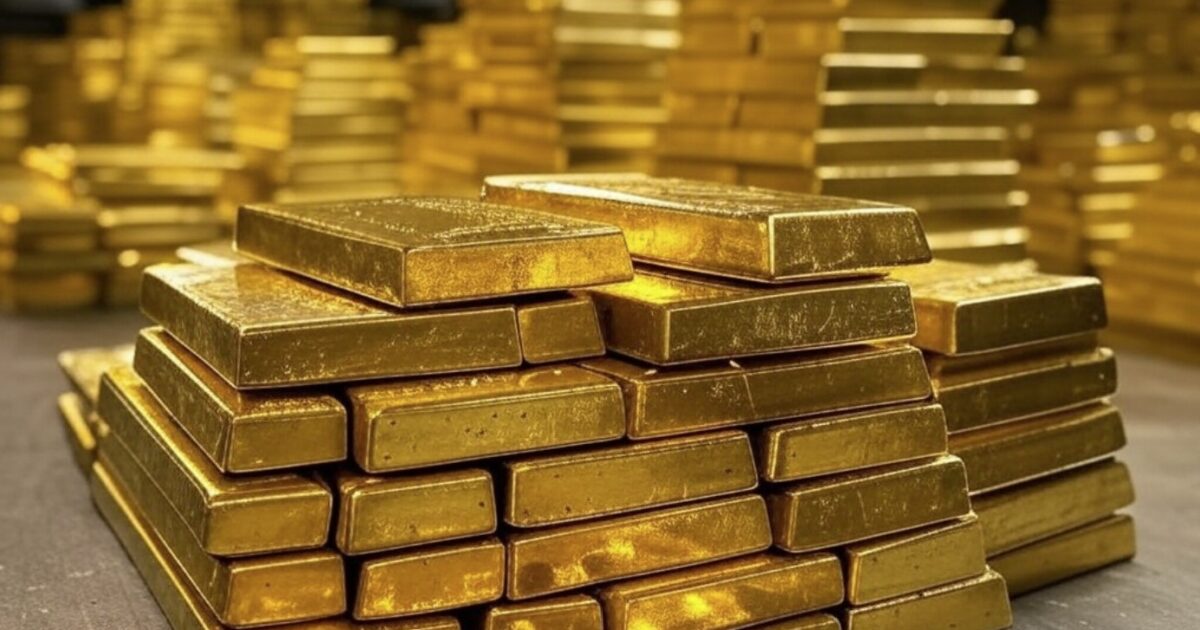
Gold has overtaken US Treasuries as the world’s leading reserve asset, according to a new European Central Bank report, marking a striking shift in the global financial order and a warning signal for the US dollar.
By the end of 2025, gold accounted for 27% of global central bank reserve assets, up sharply from 20% the previous year. U.S. Treasury bonds, long treated as the safest and most important reserve instrument in the world, fell from 25 % to 22%.
The change, while seemingly small, does not mean the dollar has been dethroned overnight or anytime soon, but it does show that central banks are increasingly hedging against a system dominated by American debt, American sanctions power, and Washington’s ability to weaponize access to dollar-based finance.
The United States, for decades, has benefited enormously from the dollar’s role as the world’s reserve currency. That status allows America to borrow more cheaply, run larger deficits, finance military commitments abroad, and export some of the consequences of its monetary policy to the rest of the world.
The ECB’s findings suggest that more countries are quietly asking a question many American policymakers prefer to ignore: what happens if that privilege is no longer guaranteed?
Reserve assets are highly liquid holdings used by central banks to defend currencies, meet international payment obligations, and provide stability during financial crises. In practical terms, they are the emergency reserves of the global monetary system.
For generations, US Treasuries have sat at the center of that system. They were considered deep, liquid, dependable, and backed by the full faith and credit of the United States.
Gold, by contrast, was often treated by most Western financial elites as a relic. Yet central banks are now returning to it in force, driven by geopolitical uncertainty, inflation concerns, sanctions risk, and, among much of the Global South and states in the globe’s eastern hemisphere, growing distrust of the Western-dominated financial architecture.
ECB President Christine Lagarde acknowledged the trend directly in the report. “Geopolitical tensions continue to drive strong central bank demand for gold,” she wrote.
The shift accelerated after 2022, when the United States and its allies froze Russian foreign reserves following the outbreak of the Russia-Ukraine war. To America and the European Union, the move was a tool of pressure against Moscow; to many other governments, it was a reminder that dollar reserves can become vulnerable to political decisions.
That lesson was not lost on countries outside the Western bloc. If a major power’s reserves can be frozen, then holding too much wealth in another country’s currency or debt instruments becomes not only a financial decision, but a sovereignty risk.
This is where gold’s appeal becomes obvious. Gold is no one else’s liability. It cannot be printed by a central bank, sanctioned by a foreign treasury department, or defaulted on by a debtor government.
That is one reason central banks around the globe bought 850 tons of gold last year. Although that was below the roughly 1,000 tons purchased the year before, it remained well above prewar levels.
Private investors also moved aggressively into gold. Private gold investment doubled last year to 2,200 tons, according to the ECB report.
Part of gold’s rising share reflects higher prices rather than only new buying. Still, the direction is unmistakable: governments and investors are seeking protection outside the traditional dollar-debt system.
The euro, meanwhile, failed to benefit meaningfully from the turbulence. Despite hopes in Brussels and Frankfurt that erratic American economic policy might create a “global euro moment,” the common currency European gained little ground.
Across a broad set of indicators, the euro’s global role remains around 20%.. That is slightly above last year’s level but still far below where many European officials hoped it would be more than two decades after the currency’s creation.
Lagarde has always argued, rather unconvincingly, that the euro could become a more credible alternative to the dollar if European leaders finally completed long-delayed financial reforms. But the report made clear that global investors are not yet rushing into the euro as a replacement.
“There is an opening for the euro to enhance its global appeal—provided that European policymakers create the necessary conditions and put words into action,” Lagarde said.
She added that Europe would need to strengthen economic resilience, legal and institutional integrity, and geopolitical credibility. That is a polite way of saying that investors still do not fully trust the eurozone to act as a unified global power.
The euro’s share of foreign exchange reserves actually slipped by 0.5 percentage point to 20.2%. The dollar still held a far larger 57% share of reserves, demonstrating that America’s position remains dominant but no longer unchallenged.
The euro did make gains in international debt issuance. Euro-denominated international debt exceeded $1.1 trillion last year, its highest level since the currency was created.
A major driver was the rise of “Reverse Yankee” bonds, debt issued by American companies in euros and then swapped back into dollars. That issuance rose nearly 50%, helped by lower costs and tight spreads.
But on the central question of reserve power, the euro remains stuck. Investors looking to diversify away from the dollar appear more interested in gold and smaller currencies than in handing Europe the keys to the global monetary system.
The Chinese renminbi has also gained ground, reaching a 9% share in the ECB’s broader analysis. That growth reflects China’s increasing weight in global trade and the desire of some countries to reduce dependence on Western-controlled payment systems.
The BRICS nations have spent years discussing alternatives to the dollar-dominated order. Brazil, Russia, India, China, and South Africa, now joined by additional members and partners, have debated everything from a currency basket to a possible gold-backed settlement unit.
The proposed “Unit,” a potential BRICS-linked instrument, remains uncertain and far from implementation. Still, the fact that such discussions are happening at all shows how much dissatisfaction has built up with the existing system.
A new BRICS currency would face enormous practical challenges. The participating countries have different economies, political systems, strategic interests, and widely varying levels of trust.
India, for example, has been more cautious about any overt move away from the dollar. At the 2025 BRICS summit in Brazil, talk of a new currency was more muted than many of those proponents of de-dollarization had expected.
Nevertheless, the long-term trend remains important. Countries do not need to create a perfect dollar replacement to weaken the dollar’s dominance; they only need to reduce their dependence gradually, asset by asset and transaction by transaction.
Oil markets are one example. While the dollar still dominates global energy trade, one-fifth of oil trades in 2023 were reportedly conducted using non-dollar currencies.
That does not amount to a full-scale collapse of dollar supremacy. But it does represent erosion at the margins, and reserve currency status is often weakened first at the margins before the political class notices the danger.
For the United States, the consequences of losing reserve-currency privilege would be severe. Americans could face higher borrowing costs, a weaker ability to finance deficits, reduced leverage over foreign governments, and less capacity to sustain the global military and financial commitments Washington has accumulated over decades.
The federal government’s debt burden would become much harder to manage if global demand for Treasuries weakened significantly. A country that has grown accustomed to the world buying its debt would discover quickly how painful it is when that demand declines.
Ordinary Americans would not be insulated from the fallout. Higher interest rates could hit mortgages, credit cards, auto loans, business investment, and federal spending priorities.
A weaker dollar could make imports more expensive, feeding inflation and reducing household purchasing power. It could also force the state to make choices it has avoided for years, namely drastically cutting spending, raising taxes, shrinking commitments abroad, or accept lower living standards.
That is why the ECB’s report should matter to American voters, not just central bankers. It is a warning that the global system underpinning Washington’s power is not eternal.
For nationalist conservatives and economic populists, the lesson is straightforward. A nation cannot assume permanent financial dominance while running massive deficits, hollowing out its industrial base, outsourcing production, and relying on debt-fueled consumption.
The dollar’s status was built on American strength: industrial power, political stability, deep capital markets, military dominance, and global confidence. If those foundations weaken, the currency privilege built on top of them eventually weakens too.
The rise of gold as the world’s top reserve asset should therefore be read as more than a market development. It is a geopolitical signal.
Central banks are preparing for a more fragmented world. They are buying assets that sit outside Washington’s direct control and reducing exposure to the vulnerabilities revealed by sanctions, war, inflation, and financial volatility.
Lagarde’s warning was direct. “There is no room for complacency,” she said. “Forces of fragmentation are becoming more pronounced.”
That line should resonate in Washington. The greatest danger for the United States may not be an immediate dollar collapse, but the slow arrogance of assuming that reserve-currency status is a birthright rather than a privilege that must be earned.
Gold’s rise does not at all mean the dollar era is over. But it does mean the world is preparing for the possibility that it may not last forever.
For a country already burdened by debt, deindustrialization, and ever-widening political division, that should be treated as a warning sign. The dollar is still king, no doubt, but the world is clearly buying insurance.
The post European Central Bank: Gold Has Replaced US Treasuries as the World’s Top Reserve Asset appeared first on The Gateway Pundit.
editor's pick
latest video

news via inbox
Nulla turp dis cursus. Integer liberos euismod pretium faucibua