This post was originally published on this site.
US Treasury Sanctions GAESA: The Cuban Military Conglomerate That Controls the Economy and Thrives on Donations
This post was originally published on this site.
Secretary of State Marco Rubio described Grupo de Administración Empresarial S.A. (GAESA) as a “Cuban military-controlled financial conglomerate that steals millions in aid for the Cuban people at the behest of the regime.” The United States sanctioned GAESA on May 7, 2026, under Executive Order 14404, signed by President Trump on May 1. The State Department issued the designations while the Treasury Department’s Office of Foreign Assets Control (OFAC) administered them.
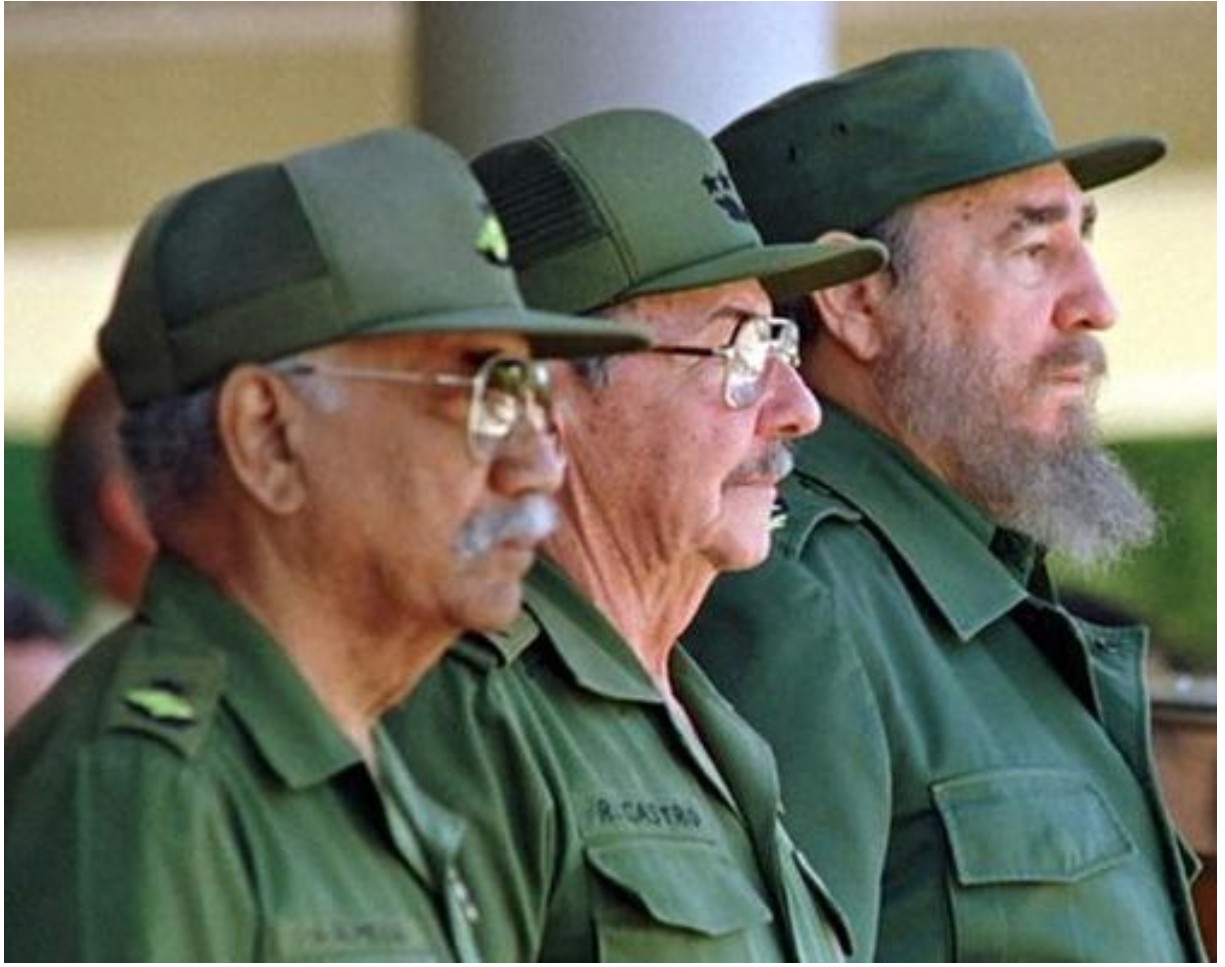
Founded by Raúl Castro, GAESA is the economic arm of Cuba’s Revolutionary Armed Forces (FAR) and one of the country’s most powerful institutions. Despite existing within a nominally socialist state, it operates under an opaque structure resembling a capitalist corporation, with subsidiaries incorporated in Panama, Cyprus, and Liberia to bypass U.S. sanctions restrictions.
It controls an estimated 40 percent or more of the island’s economy, with gross profits representing close to 37 percent of Cuba’s GDP, total revenues 3.2 times greater than the annual Cuban state budget, and exports accounting for roughly 34 percent of the island’s total. The Food Monitor Program, in a formal complaint to the UN special rapporteur on the right to food, described GAESA as “a state within a state,” accusing it of worsening hunger and malnutrition through monopolistic control and financial opacity.
GAESA dominates Cuba’s most strategic and profitable sectors through a web of subsidiaries: tourism through Gaviota, retail and wholesale trade through CIMEX and TRD Caribe, and finance through RAFIN S.A. and Banco Financiero Internacional. It also controls remittances, logistics, port operations, including the Port of Mariel, construction, transportation, and foreign trade.
Its former chief, Gen. Luis Alberto Rodríguez López-Calleja, the former son-in-law of Raúl Castro, was separately sanctioned by the U.S. Treasury, which froze his U.S.-jurisdiction assets and prohibited American persons from dealing with him.
Leaked internal accounting documents reported by the Miami Herald showed GAESA held approximately $18 billion in current assets as of March 2024, of which $14.5 billion sat in undisclosed overseas bank accounts, even as Cuba’s broader economy collapsed. The U.S. State Department stated in its May 2026 sanctions announcement that GAESA controls up to $20 billion in illicit assets funneled into hidden overseas accounts, and that GAESA’s executive president Ania Guillermina Lastres Morera is personally responsible for managing those assets internationally.
Those funds exist entirely outside the Cuban government’s budget. In 2024, Cuba’s State Comptroller was dismissed after 14 years in office. The dismissal came after she publicly admitted that she lacked access to GAESA’s financial accounts. The conglomerate is entirely exempt from government audit. “There’s the Cuban government and they have a budget,” Rubio told reporters, “and then there’s this private company that has more money than the government does.
None of the money in that company goes to build a single road, a single bridge, provide a single grain of rice to a single Cuban other than the people that are part of GAESA.” Separate leaked documents revealed that GAESA’s affiliate Almest redirected public funds and foreign loans into hotel construction even as Cuban hospitals faced a 70 percent shortage of essential medications.
GAESA’s retail arm, TRD Caribe, La Cadena de Tiendas Caribe, is the military’s primary storefront network across the island, operating exclusively in dollars or freely convertible currency (MLC). The average monthly state salary reached 6,649 Cuban pesos in 2025, approximately $18 at the informal exchange rate, against a basic food basket costing more than 37,000 pesos.
Between 80 and 90 percent of Cubans earning pesos are effectively locked out of TRD Caribe and its sister chain CIMEX, which together hold a monopoly over Cuba’s hard-currency retail sector, capturing foreign remittances and tourist money for the military. A Columbia Law School study found that between 2015 and 2022, Cuba’s consumer price index increased 24-fold while real wages fell 96 percent.
The libreta de abastecimiento, the ration book that has existed since 1962, now covers roughly ten days of food per month at best, having shed eggs, oil, meat, sugar, and rice from its quotas by 2024.
GAESA also controls the official remittance pipeline through its subsidiary Fincimex, which offers recipients cards channeling money directly into military-run stores. By 2024, more than 95 percent of remittance flow had shifted to approximately 150 informal networks offering better exchange rates outside state control, with GAESA capturing only 4.13 percent of total remittances through formal channels, down from a much larger share in 2019.
The regime’s response was to criminalize those informal networks, with the Ministry of the Interior dismantling several in 2025 to reroute flows back through GAESA-controlled channels. TRD Caribe has also partnered with foreign capital, including Italian entrepreneur Bartolomeo Savina Tito, whose subsidiary Italsav reached an agreement with Tiendas Caribe to open a network of dollar supermarkets across Cuba.
GAESA’s documented misconduct spans several categories. The U.S. Treasury’s OFAC formally identified subsidiaries Financiera CIMEX S.A. and Kave Coffee S.A. for using Panamanian incorporation to subvert U.S. trade restrictions, with foreign law firms and Swiss intermediaries serving as directors to provide legal cover. The Panama Papers linked family members of high-ranking Cuban military officials and GAESA itself to offshore companies exploiting Panama’s weak beneficial ownership controls.
Cuban economist Emilio Morales characterized GAESA’s remittance operation as money laundering in substance, noting that roughly $50 billion routed through its network since 1993 came predominantly from Cuban emigrants in the United States, with proceeds funneled into military coffers rather than the civilian economy.
The post US Treasury Sanctions GAESA: The Cuban Military Conglomerate That Controls the Economy and Thrives on Donations appeared first on The Gateway Pundit.
editor's pick
latest video

news via inbox
Nulla turp dis cursus. Integer liberos euismod pretium faucibua