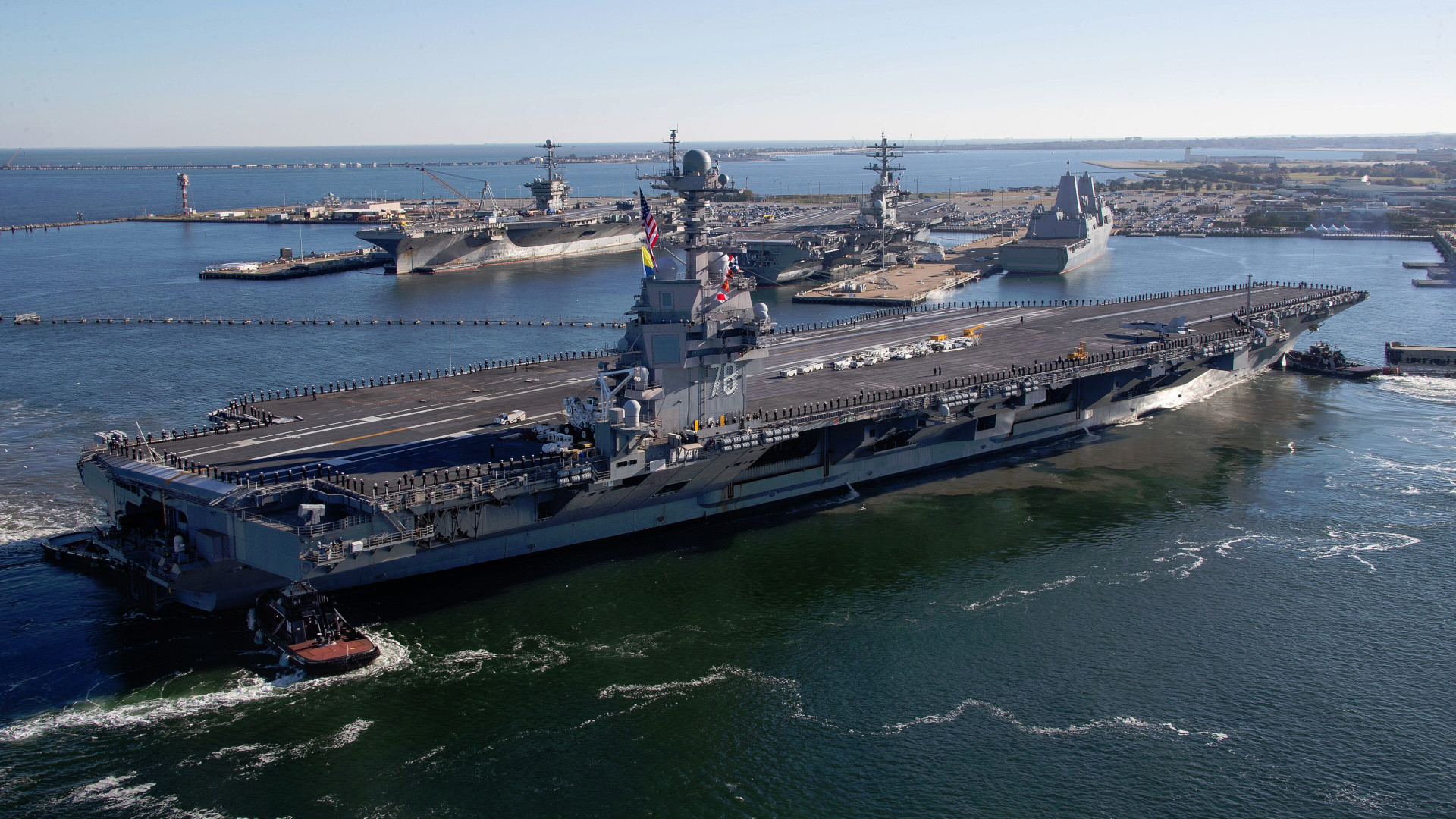
Supercarrier USS Gerald R. Ford To Act As Floating Nuclear Power Plant For Facilities On Land
This summer, the U.S. Navy will demonstrate the ability of the aircraft carrier USS Gerald R. Ford, with its two A1B nuclear reactors, to power a base on land. The test at Naval Station Norfolk in Virginia is part of a larger effort to ensure facilities can remain up and running even if existing power sources are lost due to attacks and other contingencies. Using ships to provide electricity ashore is not new, but being able to use a Ford class aircraft carrier in this way might open up additional operational possibilities, as well as help in future disaster relief scenarios.
Acting Secretary of the Navy Hung Cao briefly mentioned the planned test at a hearing before members of the House Armed Services Committee on May 14.
“This summer, Norfolk Naval Base [sic] is going to be powered from an aircraft carrier,” Cao said on May 14. “We’re going to export the energy from the aircraft carrier to the base.”
“The Department of the Navy is executing a multi-pronged strategy to ensure the delivery of firm, baseload power to our installations for energy resilience and mission assurance,” a Navy spokesperson subsequently told TWZ directly when we reached out for more information. “One line of effort in the strategy is to deliver power from a Ford class nuclear-powered aircraft carrier to a compatible shore installation, to demonstrate the capability to meet emergent, mission critical needs. An initial test of this capability is being planned for later this year at Naval Station Norfolk.”
This statement refers to the Ford class generically, but the USS Gerald R. Ford is currently the only ship of its kind to have been commissioned into service. It is also homeported in Norfolk and just recently returned from a marathon 326-day deployment. That is the longest an American carrier has been at sea since the Vietnam War, and included supporting the mission to capture Venezuela’s dictatorial former President Nicolas Maduro and combat operations against Iran.
USS Ford returns home after 11-month deployment for Iran war and Maduro’s capture
Supercarriers like Ford are already very much floating cities, with typical crew complements ranging from roughly 4,000 to 5,000 individuals, including members of the embarked air wing. They have immense power-generation requirements.
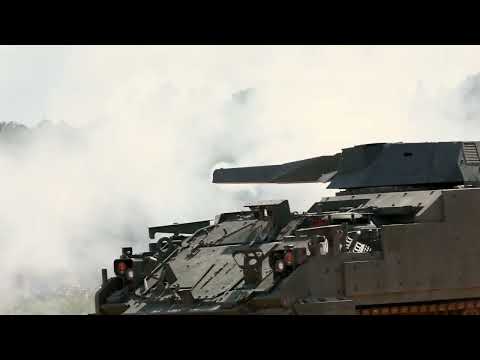
As noted, each Ford class carrier has two A1B nuclear reactors, the exact power output of which is classified. However, they are said to offer a 25 percent increase in “reactor energy” compared to the A4Ws used on Nimitz class aircraft carriers, as well as be simpler to operate. Based on that, the A1B is generally assessed to be rated at some 700 MWt. Two of them would then have a combined rating of 1,400 MWt. This is a fraction of what is offered by typical commercial power-generating reactors in the United States today. At the same time, those reactors are also designed to provide electricity across entire regions rather than just to a single military base.
Being able to use the Ford and other future carriers as floating power plants for major bases like Norfolk could offer a useful backup option for providing electricity if established power sources suddenly become unavailable for any reason. American officials have been increasingly sounding the alarm that many areas previously considered inaccessible sanctuaries, including in the U.S. homeland, could now be at risk during future conflicts. The scale and scope of long-range threats, as well as options for carrying out near-field attacks, only continue to grow. The proliferation of longer-range one-way attack drones, something where the barrier to entry is also low, has had a particularly pronounced impact on this threat ecosystem.
Demonstrating the ability of a Ford class aircraft carrier to provide power ashore might open up other operational possibilities. The U.S. military, as a whole, is increasingly focused on new distributed concepts of operations involving widely dispersed forces, many of which could be forward-deployed at operating locations with limited established infrastructure.
Turning an aircraft carrier into a floating powerplant could be valuable in a wide array of non-combat scenarios abroad and at home, including during disaster relief missions. Getting the power back on is often a critical component of those operations, which in turn can help restore access to medical care and other essential services.
Many critical U.S. military facilities are themselves in areas prone to natural disasters, the impacts of which can be severe and have significant second-order ramifications. Bases provide epicenters for recovery, too, routinely providing essential services after disasters. They could do so after attacks or in other contingencies. Making sure they have uninterrupted power in any of those scenarios would be critical. There are also long-standing concerns about the resiliency of America’s aging power grids, which could also be an indirect threat vector, including from cyberattacks.
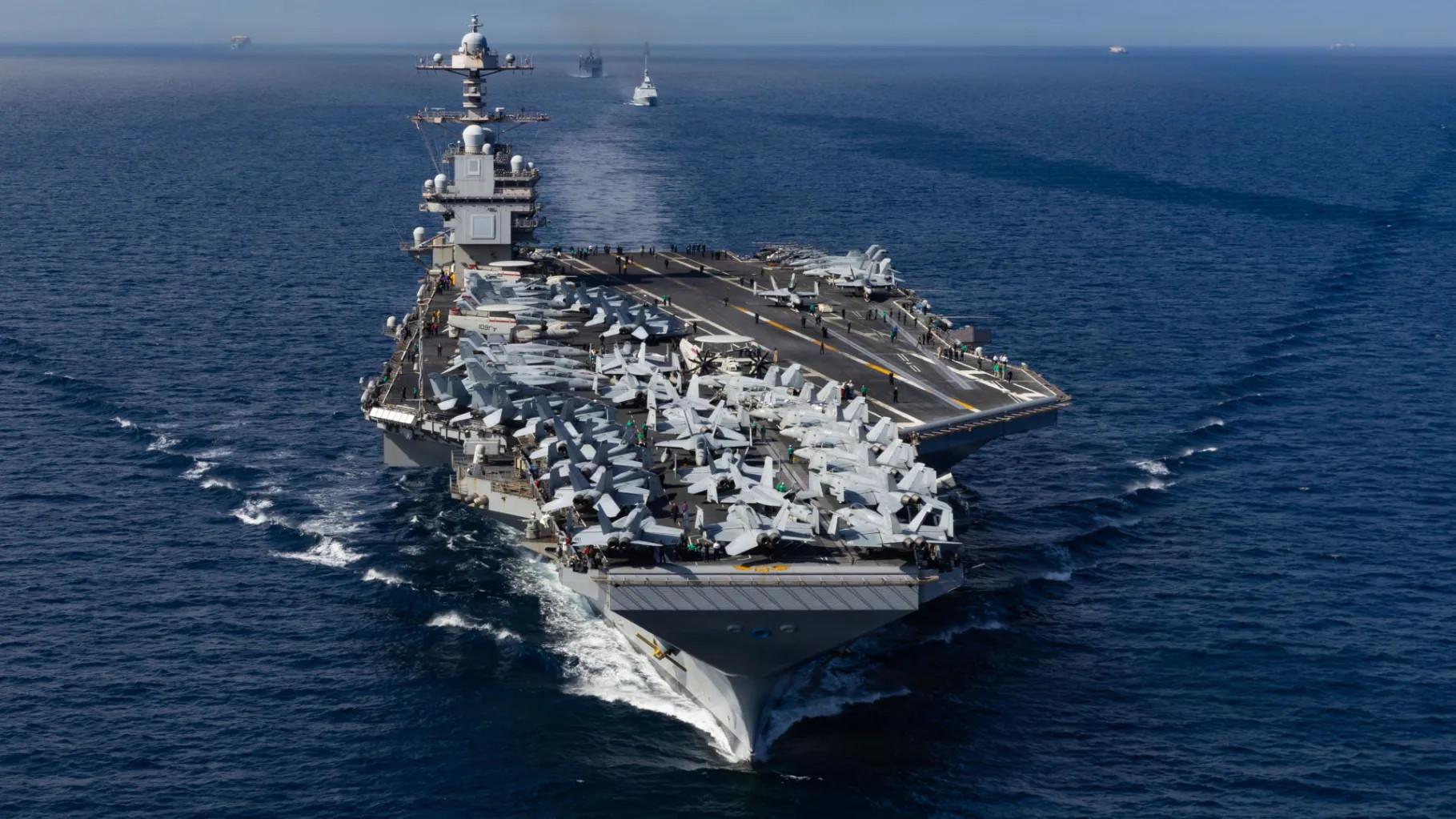
During his testimony, Acting Secretary Cao highlighted how a carrier serving as a powerplant could also provide other support in a non-combat scenario.
“The energy that’s produced from these, we can … use it for a four-stage distiller making water, fresh potable water,” he said. “On a carrier, we’re pumping millions of gallons over the side every day of fresh potable water that tests at pH 7 [neutral pH], right, that we can now export in places like California, where you have a drought.”
As noted, none of this is entirely new. The U.S. military has a long history of using ships, including conventionally-powered aircraft carriers, to provide power ashore. One of America’s very first carriers, the USS Lexington (CV-2), helped provide electricity to Tacoma, Washington, between December 1929 and January 1930. At the time, the city’s grid relied on hydroelectric power sources, the output from which had dropped severely due to a mix of environmental factors. In 1931, Lexington also brought medical personnel and humanitarian aid to Nicaragua following an earthquake, an early example of the general value of carriers in the disaster relief role.
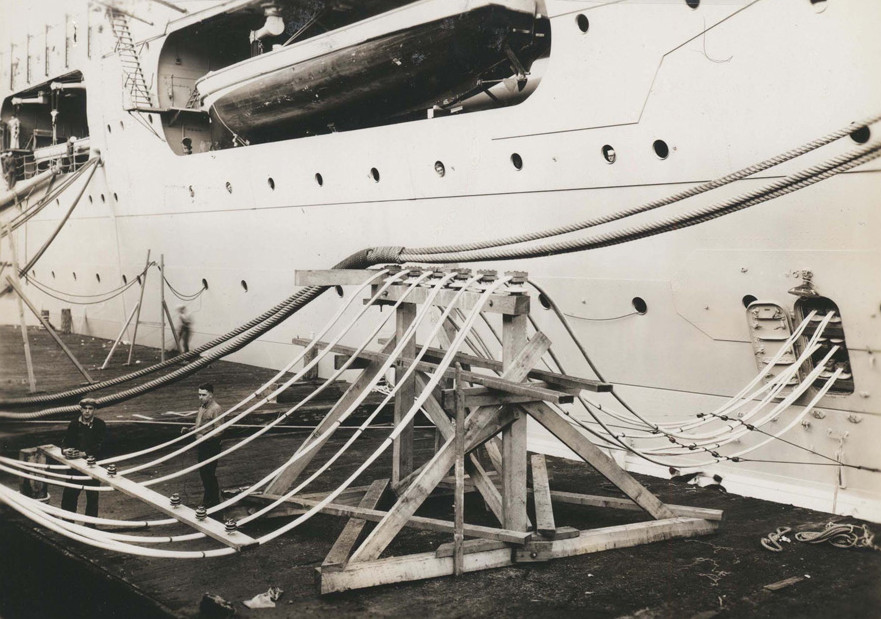
During World War II, the U.S. Navy and the Royal Navy in the United Kingdom collectively utilized at least seven Buckley class destroyer escorts as floating power plants. The Buckley class was well suited for this use given its propulsion system, which consisted of steam turbines powering electric motors. At least one of these ships, the USS Donnell, was converted to this role after suffering severe damage during combat operations in the North Atlantic. It was deemed to be too expensive to repair the ship to return to service in its original role.
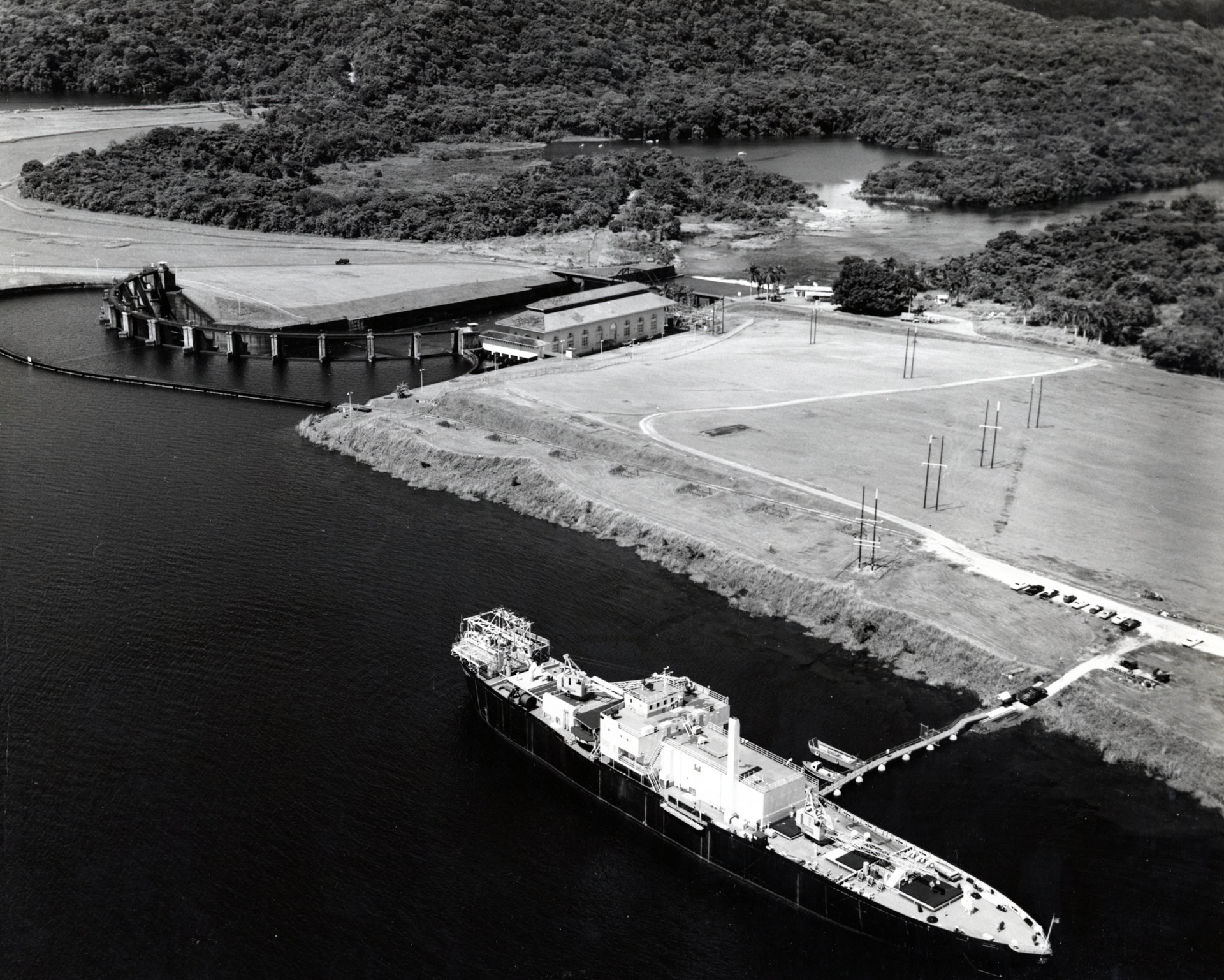
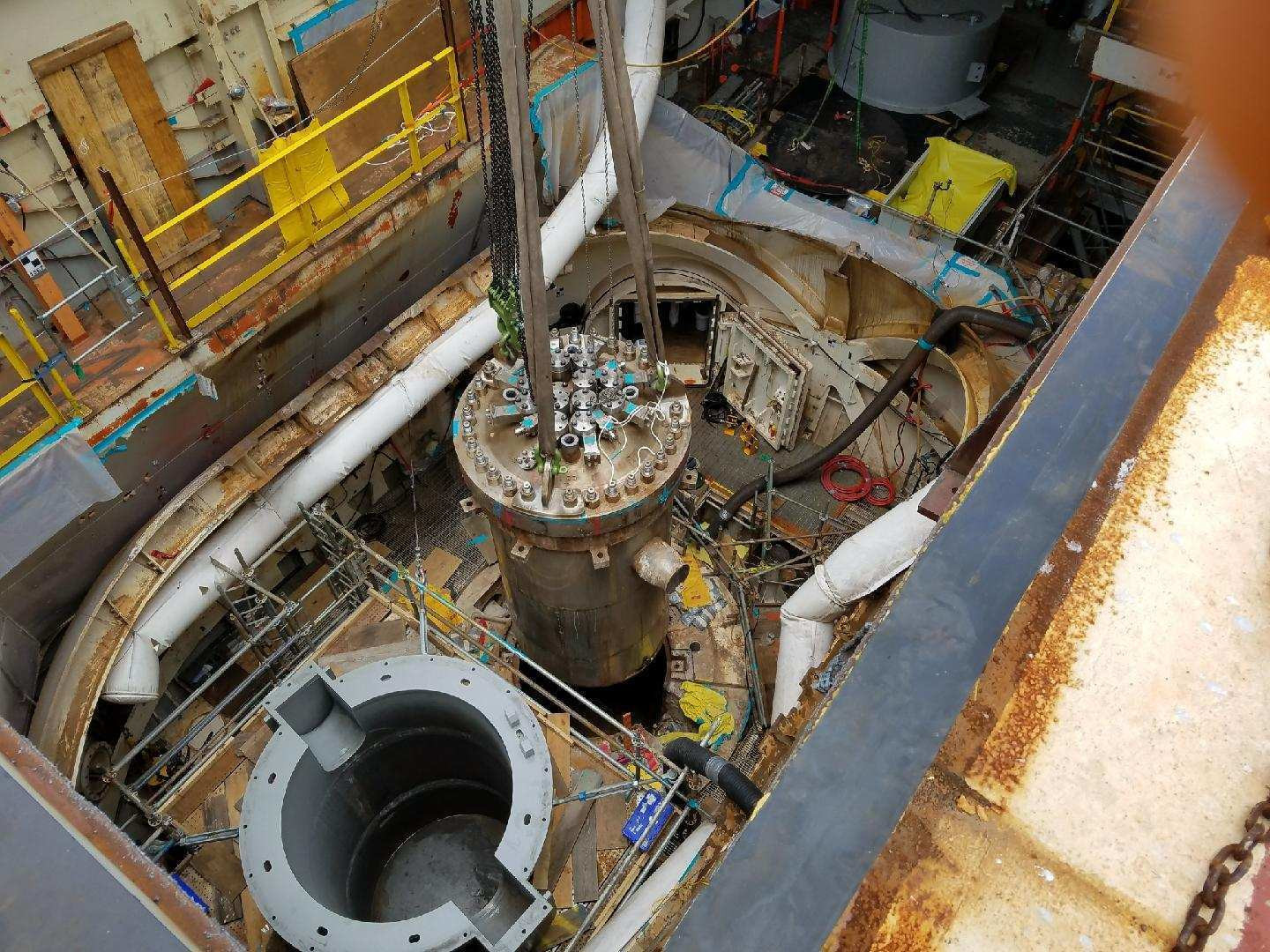
An especially relevant past example is that of the MH-1A. This was a floating nuclear power plant converted from a World War II Liberty ship, originally named the SS Charles H. Cugle and later renamed Sturgis. The U.S. Army Corps of Engineers (USACE) operated MH-1A, which had a power rating of 10 MW, and used it to provide electricity in the Panama Canal Zone between 1968 and 1975. The ship and its reactor were subsequently returned to the contiguous United States. MH-1A was defueled in 1977. It remained in storage for decades before the decision was finally made to decommission it, a lengthy process that was only completed in 2018. Sturgis was subsequently scrapped.
At the time of writing, it is unclear if the Navy has any ships or barges in inventory that are explicitly capable of providing power ashore. Electricity is routinely provided to naval vessels in port from grids ashore, and the ability to send power the other way, at least in an ad hoc manner, has come up in the past. For instance, in 1982, the Navy considered sending the Los Angeles class attack submarine USS Indianapolis to Hawaii to serve as a floating nuclear power station in the wake of Hurricane Iwa. Indianapolis was not ultimately deployed for this purpose in that case.
As an aside, the Navy has also long used decommissioned nuclear-powered submarines as floating schoolhouses for sailors learning how to operate and maintain nuclear reactors.
There are examples of ship-to-shore power generation elsewhere globally. Currently, Russia’s Akademik Lomonosov is the only purpose-built floating nuclear power plant in operation today, and you can read more about it here. However, South Korea’s Samsung Heavy Industries is actively working on a new floating nuclear power station design, and similar developments could be on the horizon elsewhere. There are also non-nuclear floating power plant designs in service, notably with commercial firm Karpowership in Turkey, and in development today.
Floating Nuclear Power Plant (FNPP) “Akademik Lomonosov”

Powership Video
There are still questions about the viability of employing Navy carriers like Ford in this way today. For one, ships sitting in port are inherently more vulnerable than ones at sea. Carriers are high-value assets that would be top targets in any major conflict, to begin with. Using a carrier as a replacement for traditional power sources, especially for a base that may have already have been or still be under attack, could come along with substantial additional force protection requirements. At the same time, carriers are inherently well-protected and relatively hardened platforms, especially against lower-end, smaller-scale threats.
There is also an operational capacity question. The Navy is currently struggling to meet operational demands with the 11 carriers it has available now. Between continued delays in the construction of new Ford class carriers and the schedule for retiring aging Nimitz class ships, there is a possibility that the force could shrink further in the near term. The Navy just extended the service life of the USS Nimitz to bring its impending inactivation in line with the expected delivery date of the second member of the Ford class, the future USS John F. Kennedy.

Around the Yard at NNS: John F. Kennedy (CVN 79) Builder’s Sea Trials
Pulling any of the Navy’s heavily in-demand aircraft carriers, which provide unique power projection capabilities, out of rotation to sit in port generating power could be a tough sell. That being said, carriers that are in between deployments could be used in this way, in some cases with relatively minimal disruption to other aspects of the force generation cycle. The seriousness of the contingency in question would also factor into the Navy’s assessment of its general force requirements and priorities.
It is worth noting here that the U.S. military has already been making investments in other forms of energy resiliency at established bases, as well as the ability to provide significant amounts of power at forward locations, in recent years. Acting Secretary Cao’s comments last week about the upcoming test at Naval Station Norfolk were prompted by a question about ongoing work on new small modular nuclear reactors, or SMRs, to help power U.S. military bases. The U.S. Army is currently the lead service for those efforts, as you can read more about here. The U.S. Air Force has also been heavily involved.
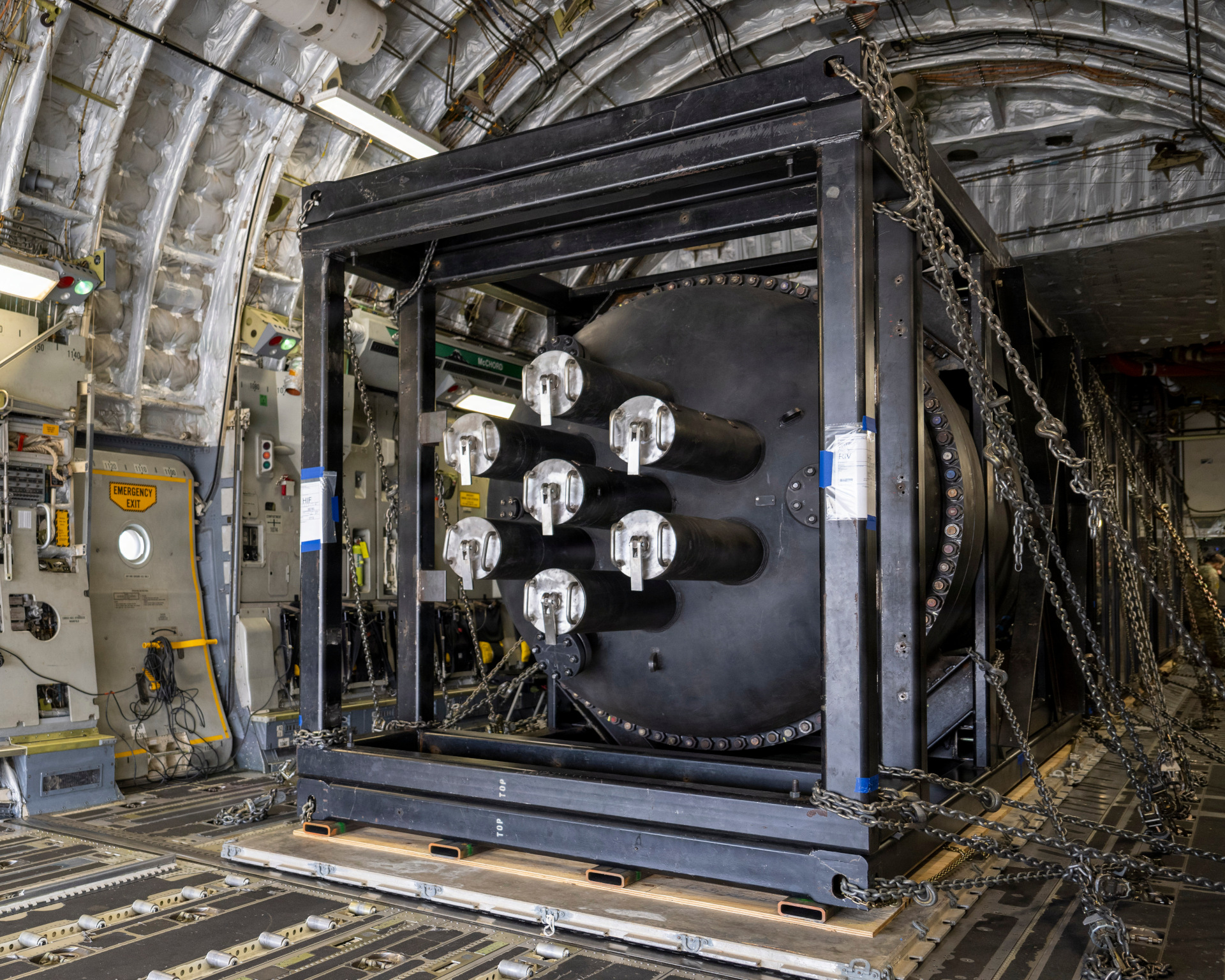
“We’ve got to have an overall programmatic champion for the SMR program,” Chief of Naval Operations (CNO) Adm. Caudle, the service’s top officer, who also testified at the hearing alongside Cao, said. “So I think we’re dithering a bit there, and not really landing on the pilot, and laying out the program of record.”
“While the Army may be tapped to be the overall lead for it [SMR], I see no world in which the Navy is not going to be part of that discussion and bring our expertise through our long-established Naval Reactors [office], deep understanding of reactor physics, and understanding [of] safe operation.”
As an aside, the Navy just recently announced its intention to expand its nuclear-powered fleets by using this method of propulsion on the future Trump class battleships. This, in turn, has raised new questions about the outlook for those ships, which you can read more about here.
When it comes to using Ford class aircraft carriers as floating nuclear power plants, the test this summer will help in determining whether this could be another mission to add to the repertoire of these ships.
Contact the author: joe@twz.com
editor's pick
latest video

news via inbox
Nulla turp dis cursus. Integer liberos euismod pretium faucibua