CENTCOM Commander Dismisses Reports That Iran Retains Most Of Its Missile And Drone Arsenal
Testifying before the Senate Armed Services Committee on Thursday, the admiral in charge of U.S. military operations in the Middle East pushed back against claims that Iran still possesses a large number of missiles and launchers. He spoke as the White House said U.S. President Donald Trump and his Chinese counterpart Xi Jinping discussed the ongoing Iranian closure of the Strait of Hormuz and hours after Iran seized another ship.
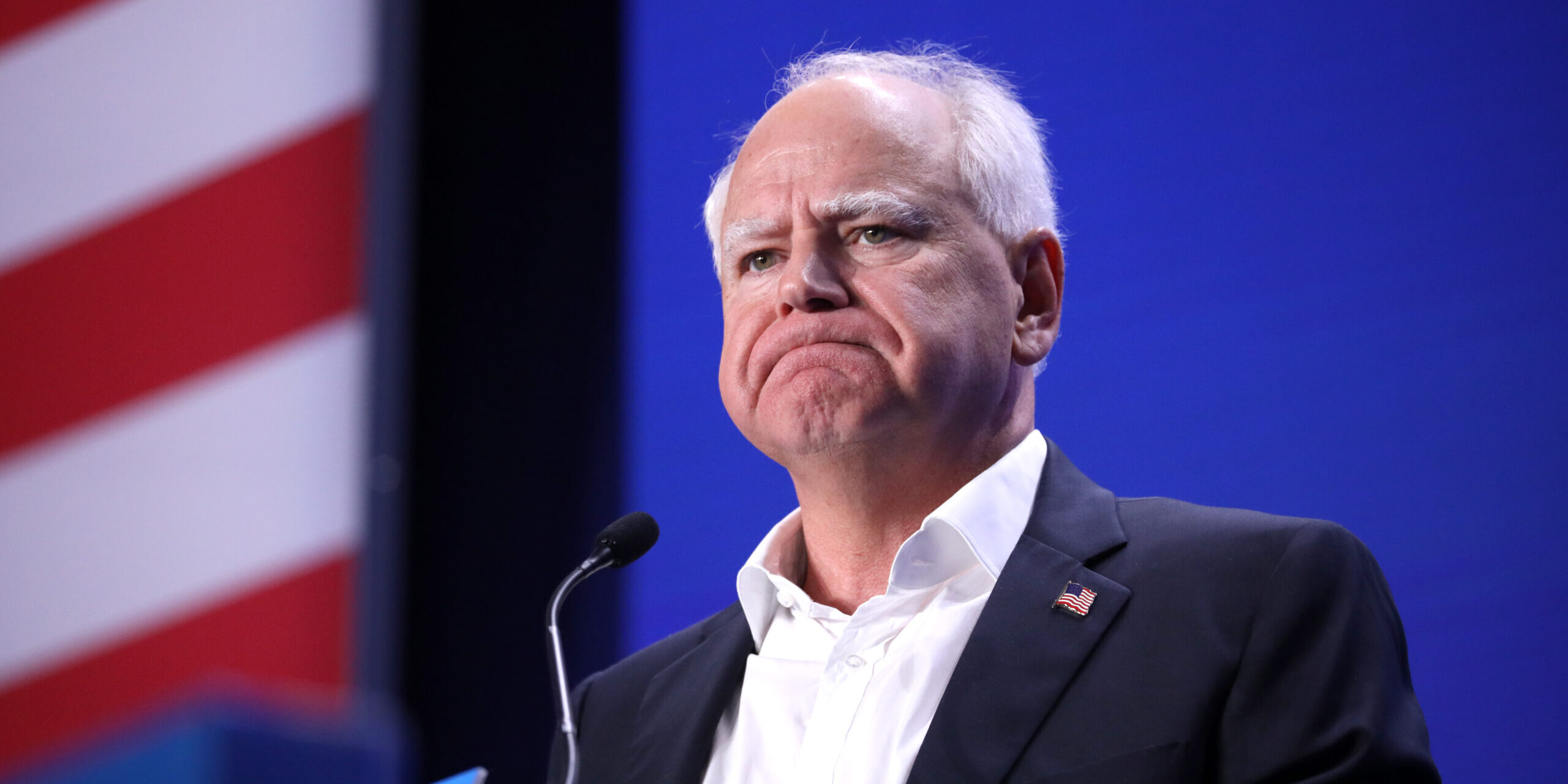
Iran can “no longer threaten regional partners, or the United States, in ways that they were able to do before, across every domain,” the commander of U.S. Central Command, Admiral Brad Cooper, explained.
On Wednesday, The New York Times reported that the “Trump administration’s public portrayal of a shattered Iranian military is sharply at odds with what U.S. intelligence agencies are telling policymakers behind closed doors.”
The newspaper cited “classified assessments from early this month that show Iran has regained access to most of its missile sites, launchers and underground facilities.”
“Most alarming to some senior officials is evidence that Iran has restored operational access to 30 of the 33 missile sites it maintains along the Strait of Hormuz, which could threaten American warships and oil tankers transiting the narrow waterway,” the Times added. “Iran still fields about 70 percent of its mobile launchers across the country and has retained roughly 70 percent of its prewar missile stockpile, according to the assessments. That stockpile encompasses both ballistic missiles, which can target other nations in the region, and a smaller supply of cruise missiles, which can be used against shorter-range targets on land or at sea.”
The Washington Post offered a similar assessment last week.
Cooper took issue with those figures when asked about them.
“I think it’s appropriate in this forum not to discuss specific intelligence assessments,” he responded. “What I would say, from my perspective, is the numbers that I’ve seen in open source are not accurate. I think what also is not taken into consideration, it’s more than just the numbers. It’s the command and control that’s been shattered. It’s a significant degradation and capability, and it’s the lack of any ability to then produce any missiles…on the back end.”
Cooper was further pressed on Iran’s ability to threaten shipping in the Strait of Hormuz because it still has missiles and fast boats and other assets.
“In each of those cases, their capabilities have been significantly degraded,” the admiral posited. “If I just use my own professional experience and 100 transits through the Strait of Hormuz, you would typically see 20 to 40 fast boats, and lately we’ve seen two or three. So the degradation means it’s been significant, but some residual capability does exist with respect to the threat that remains.”
CENTCOM forces recently sank about a half-dozen Iranian fast boats threatening ships in the Strait.
Though Cooper downplayed Iran’s current capabilities, he said Tehran posed significant new threats with its modern drones.
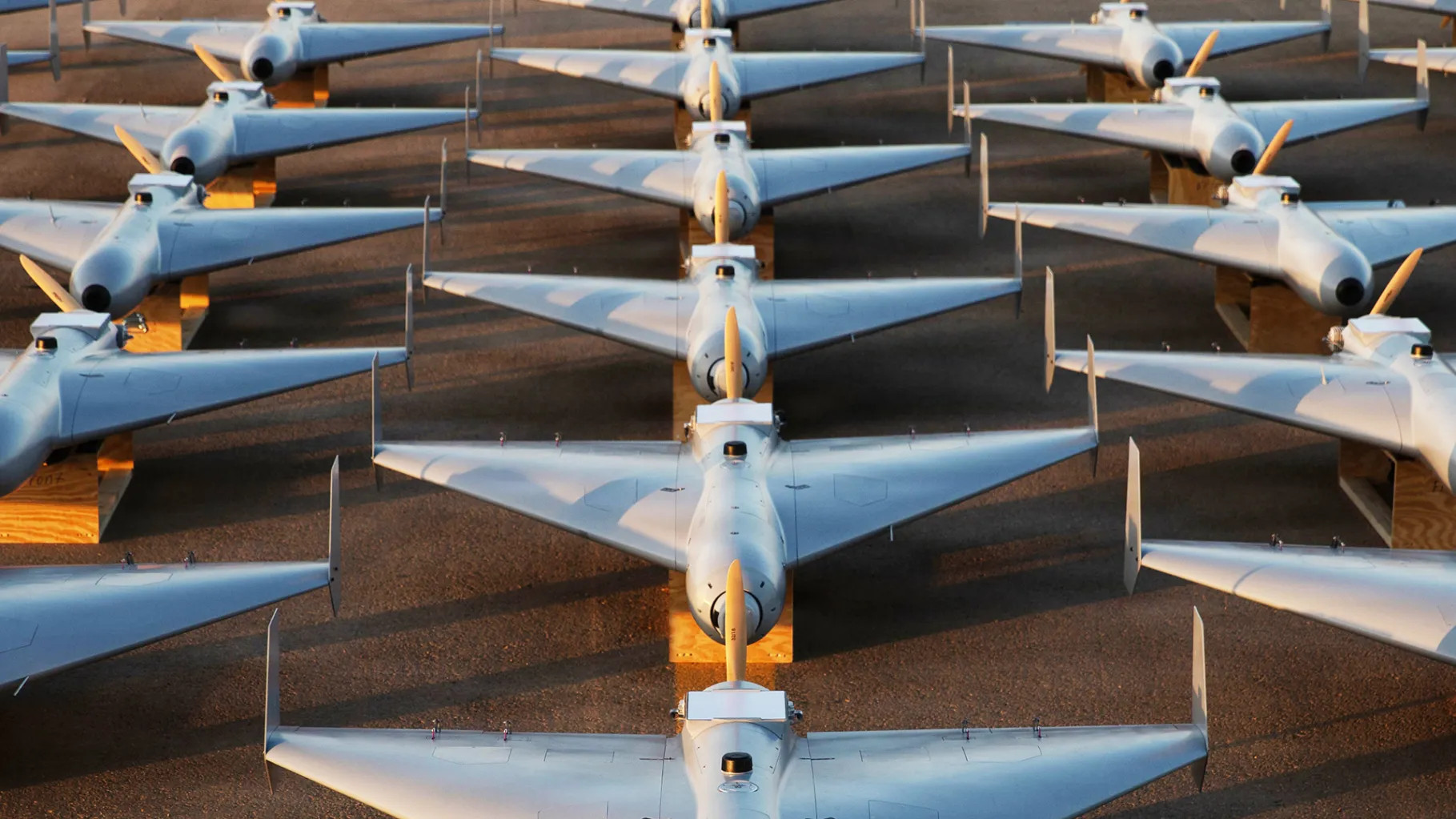
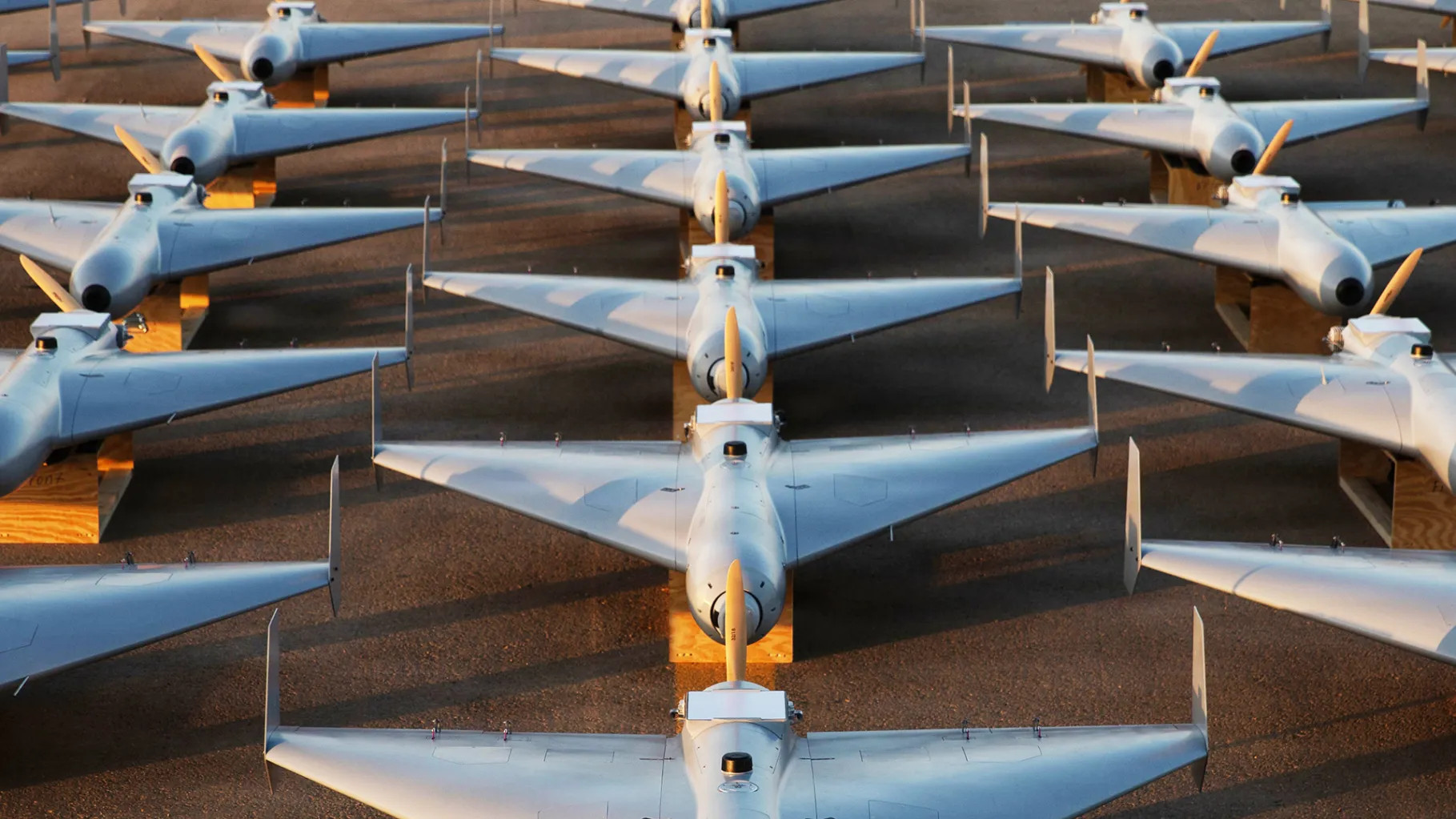
“The days of $35,000 drones that we saw in the last couple of years, particularly in the fight against the Houthis in Yemen, those days are behind us,” Cooper proffered. “Today we face an increased threat from drones that are highly sophisticated. They’re jet-powered. They have high-end sensors. They have electronic warfare…signals intelligence. So those days of using high value defenses to shoot down cheap targets are behind us.”
“Quite the contrary, what we have been doing lately is using our own low-cost one way attack drones, [to attack] Iran, making them use higher and more expensive weapons. So I can confidently tell you, we have flipped the cost curve in many ways. Always work to be done, but I like where we are in this regard.”
Cooper didn’t elaborate, but earlier in his testimony, he talked about the Low-Cost Uncrewed Combat Attack System (LUCAS) kamikaze drones that TWZ has written frequently about. CENTCOM first began using these weapons, reverse-engineered from Iranian Shahed-136 drones, to strike targets in Iran.
The War Zone has advocated for the procurement of this exact class of drone by the American military and today, Cooper once again backed up that assessment.
The LUCAS drones are “an additional capability that we’ve now employed against an adversary very effectively,” Cooper commented. He declined to provide further details.
“Vis a vis Iran, I think I would just like to keep that in the classified setting,” he noted.
Cooper provided additional statistics about Epic Fury to the committee.
- “We destroyed or buried much of Iran’s ballistic missiles. launcher vehicles, and long-range attack drones with more than 450 strikes on ballistic missile storage and systems and roughly 800 strikes on Iran’s drone-launching units and storage. In the air domain, Iran’s air and air defense forces are functionally and operationally irrelevant.”
- “Before OEF, the Iranian Air Force flew between 30 and 100 sorties each day. Today that number is zero. We destroyed or rendered non-mission-capable Iran’s fixed-wing airfields, hangars, fuel storage, and munitions stockpiles, and we knocked out 82 percent of its air defense missile systems along with the radar and command architecture that tied them together.”
- “At sea, we destroyed 161 vessels in total across 16 classes of warships, effectively crippling the regime’s ability to operate.”
- “We eliminated more than 90 percent of Iran’s once-massive inventory of over 8,000 naval mines, with more than 700 airstrikes on Iranian naval mine targets. In sum, Iran’s navy can no longer claim to be a maritime power, and it cannot project into the Gulf of Oman or the Indian Ocean. Iran retains nuisance capability – harassment, low-end drone and rocket attacks, and residual proxy support – but it no longer possesses the means to threaten major regional operations or to deter U.S. freedom of action in the air or maritime domains.”
- “The second-order effects of OEF are significant. More than 2,000 strikes against Iran’s command-and-control structures created leadership vacuums, paralysis, and internal confusion.”
- “We have seen reporting of desertions, personnel shortages, and signs of regime desperation in their attempts to compel discipline through arrest and execution. Most importantly for the region’s future: Iran will be highly challenged to proliferate advanced weapons to Lebanese Hezbollah, the Houthis, Hamas, or the Iraqi militia groups. The supply chain from Tehran to the proxies has been broken.”
While Iran has clearly been battered by attacks from the U.S. and Israel, recent events show it can still inflict damage on its neighbors and shipping. As we previously reported, Tehran has repeatedly struck the United Arab Emirates (UAE) before and after the April 7 ceasefire. In previous coverage, we have pointed out how Iran has also attacked U.S. warships and commercial vessels they were helping guide through the Strait of Hormuz during the short-lived Project Freedom operation.
Hours before Cooper testified, the Islamic Revolutionary Guard Corps (IRGC) Navy seized the Honduras-flagged fishery research vessel Hui Chuan,” a maritime security official told us. “The Company Security Officer (CSO) reported that the vessel was taken by Iranian personnel while at anchor approximately 38nm northeast of Fujairah, UAE, at 05:45 UTC.”
The Hui Chuan was operating as a “floating armory” storing weapons for Chinese security firms who protect ships at sea from attack by pirates, the official told us. The ship is now “bound for Iranian territorial waters”, the UK’s Maritime Trade Operations (UKMTO) organization said.
UPDATES
In a readout of the meeting in Beijing between Trump and Xi, the White House noted that the topic of the Strait of Hormuz came up in discussions between the two leaders.
“The two sides agreed that the Strait of Hormuz must remain open to support the free flow of energy,” the White House posted on X. “President Xi also made clear China’s opposition to militarization of the Strait and any effort to charge a toll for its use, and he expressed interest in purchasing more American oil to reduce China’s reliance on the Strait in the future.”
U.S. Secretary of State Marco Rubio, who was among those accompanying Trump, highlighted Xi’s opposition to allowing Iran to impose tolls on ships transiting the Strait.
“President Trump raised the issue of Iran with China and it was important,” said Rubio. “The Chinese side said they are not in favor of militarizing the Strait of Hormuz and are not in favor of a tolling system, and that’s our position.”
The much-longer Chinese readout of the meeting mentioned improving trade and a warning about the U.S. “must exercise the utmost prudence in handling the Taiwan question.”
However, there was no mention of Iran or the Strait of Hormuz.
While that doesn’t mean these issues weren’t discussed, readouts are messaging and this reflected the emphasis Beijing places on the paused war and its aftermath.
“The two heads of state exchanged views on major international and regional issues, including the situation in the Middle East, the Ukraine crisis, and the Korean Peninsula,” was about as close as the statement from the Chinese Foreign Ministry came to addressing Iran.
Despite the Trump administration’s stance that China opposes allowing Iran to impose tolls on shipping, Beijing is paying for transits, the Guardian claims.
Tehran “says it has reached a deal with China that has already allowed a large number of oil tankers bound for China to go through the strait of Hormuz since Wednesday night, and this has been made possible by China agreeing to limited charging, undercutting US opposition to such moves,” the outlet reported. “The development suggests China has accepted Iran’s assertion that the shipping rules in the strait have changed, with reports suggesting the cost will be in the region of $1 per barrel.”
We cannot independently verify that and have reached out to the White House for details.
Trump pushed back on claims that China is working to arm Iran.
“We discussed it,” he told Fox News host Sean Hannity. “I mean, when you say ‘support,’ they’re not fighting a war with us or anything. He said he’s not gonna give military equipment. That’s a big statement. He said that strongly. But at the same time he said they buy a lot of their oil there, and they’d like to keep doing that.”
Trump’s claim that China told him it won’t give weapons to Iran followed The New York Times report that Beijing was working to ship arms to Tehran.
“Chinese companies have been discussing arms sales with Iran, plotting to send the weapons through other countries to mask the origins of the military aid,” the publication stated, citing U.S. officials.
The United States “has gathered intelligence that Chinese companies and Iranian officials have discussed the arms transfers,” the newspaper added. “It is not clear how many, if any, arms have been shipped or to what degree Chinese officials have approved the sales.”
Officials briefed on the intelligence “have reached different conclusions on whether the arms have already been sent to the third countries,” according to the Times. “But no Chinese weapons appear to have been used on the battlefield against U.S. or Israeli forces since they began their war against Iran in late February.”
The newspaper reported last month that U.S. intelligence agencies had obtained information showing that China may have transferred shoulder-fired man portable air defense systems (MANPADS) to Iran. Intelligence also showed that China was considering other shipments of the weaponry.
The United Arab Emirates (UAE) on Wednesday pushed back on claims that Israeli Prime Minister Benjamin Netanyahu and the heads of Mossad and Shin Bet visited the country during the now-paused war with Iran. The denial is a strong public rebuke amid a growing relationship between the two nations that has seen Israel supply the UAE with Iron Dome air defense batteries to protect against Iranian attacks.
“The United Arab Emirates denies reports circulating regarding an alleged visit by Israeli Prime Minister Benjamin Netanyahu to the UAE or receiving any Israeli military delegations in the country,” the UAE Foreign Affairs Ministry posted on X Wednesday afternoon EDT. “The UAE reaffirms that its relations with Israel are public and conducted within the framework of the well-known and officially declared Abraham Accords, and are not based on non-transparent or unofficial arrangements. Accordingly, any claims regarding unannounced visits or undisclosed arrangements are entirely unfounded unless officially announced by the relevant authorities in the UAE.”
The ministry added that the “UAE calls on media outlets to exercise accuracy and professionalism, and to refrain from circulating unverified information or promoting misleading political narratives.”
Hours before the UAE announcement, Netanyahu’s office claimed the Israeli leader did travel to the Gulf Arab nation, confirming a CBS News report about the visit.
“In the midst of Operation ‘Roar of the Lion,’ Prime Minister Benjamin Netanyahu made a secret visit to the United Arab Emirates and met with the President of the United Arab Emirates, Sheikh Mohammed bin Zayed,” the office posted on X. “This visit led to a historic breakthrough in relations between Israel and the United Arab Emirates.”
Israel’s N12 News chief political correspondent Amit Segal noted a “few striking details regarding the news of Netanyahu’s visit to the UAE.”
“A covert flight reportedly took place while Israeli airspace was fully shut—without leaks or detection,” he noted on X. “Sources suggest a deal was reached on an Iron Dome shipment” and “UAE President Mohammed bin Zayed Al Nahyan has publicly hosted Israeli leaders like Naftali Bennett and Yair Lapid—but not Benjamin Netanyahu. Until now, their contacts stayed behind closed doors.”
Bennet and Lapid visited the UAE in 2021, as Prime Minister and Foreign Minister respectively.
The announcement from Netanyahu’s office followed media reports on Tuesday about the visit to the UAE of two other high-level Israeli officials.
The Wall Street Journal reported that Mossad chief David Barnea visited the UAE at least twice during Operation Roaring Lion to coordinate war efforts. Barnea reportedly flew to the UAE in March and April. In addition, Israeli media reported that Shin Bet chief David Zini also visited the UAE to coordinate security efforts.
The back and forth over the potentially unprecedented wartime visit by three top Israeli officials to the UAE comes a day after U.S. Ambassador to Israel Mike Huckabee publicly confirmed that Israel sent the UAE an unspecified number of Iron Dome air defense batteries and troops to operate them. News of the deployment was first reported by Axios last month. Such an acknowledgement of direct Israeli military aid to an Arab nation is unusual in its own right.
TWZ cannot independently verify any of the travel claims. However, Israel has historically been viewed as an enemy by the Arab world and direct cooperation in the form of a visit by its head of state could be considered controversial to say the least. At the same time, things have changed dramatically in the region over the last decade or so, with Arab countries warming to relations with Israel. This has been spurred by the major economic development the region has seen as well as, at least to a degree, a common foe — Iran.
Perhaps the UAE is trying to appeal to a domestic audience or, as Israel’s I24 News senior Middle East correspondent Ariel Oseran suggested on X, UAE is trying to distance itself from Netanyahu and his coalition, not Israel writ large. Maybe Netanyahu, for his own reasons, is trying to claim a level of relationship that doesn’t exist, however that seems unlikely.
We may never find out for sure.
The Senate on Wednesday blocked the seventh Democratic attempt to prevent Trump from waging war on Iran. However, it was by the slimmest margin yet, indicating a growing unease in the legislature about the now-paused conflict.
The vote failed by a 49-50 margin, with all Democrats but John Fetterman of Pennsylvania supporting the measure. For the first time, Senator Lisa Murkowski of Alaska joined fellow Republican Senators Susan Collins of Maine and Rand Paul of Kentucky in breaking with Trump and voting with Democrats.
This was the first vote on the War Powers Resolution since Trump bypassed the 60-day deadline to seek congressional authorization for Operation Epic Fury last month. You can read more about that effort in our story about it here.
Meanwhile, as we noted yesterday, NBC News reported that the administration is considering changing the name of the operation to Sledgehammer should hostilities resume.
Contact the author: howard@twz.com
editor's pick
latest video

news via inbox
Nulla turp dis cursus. Integer liberos euismod pretium faucibua