This post was originally published on this site.
Iranian Agent in the U.S. Coordinates Arms Pipeline Fueling the Sudan War
This post was originally published on this site.
On the night of April 18, federal agents intercepted Shamim Mafi at Los Angeles International Airport as she attempted to board a flight to Istanbul. The 44-year-old Iranian national and U.S. permanent resident was arrested on charges of trafficking arms on behalf of the Iranian government. First Assistant U.S. Attorney Bill Essayli stated that she is charged with “brokering the sale of drones, bombs, bomb fuses, and millions of rounds of ammunition manufactured by Iran and sold to Sudan.” She has pleaded not guilty. Her trial is scheduled for June 23.
In addition to alleged arms trafficking, the case has uncovered a logistics network that has been moving Iranian weapons through Sudan for more than a decade. The pipeline has survived Israeli airstrikes and the Abraham Accords and is now operating at a scale that dwarfs anything previously prosecuted in a U.S. courtroom.
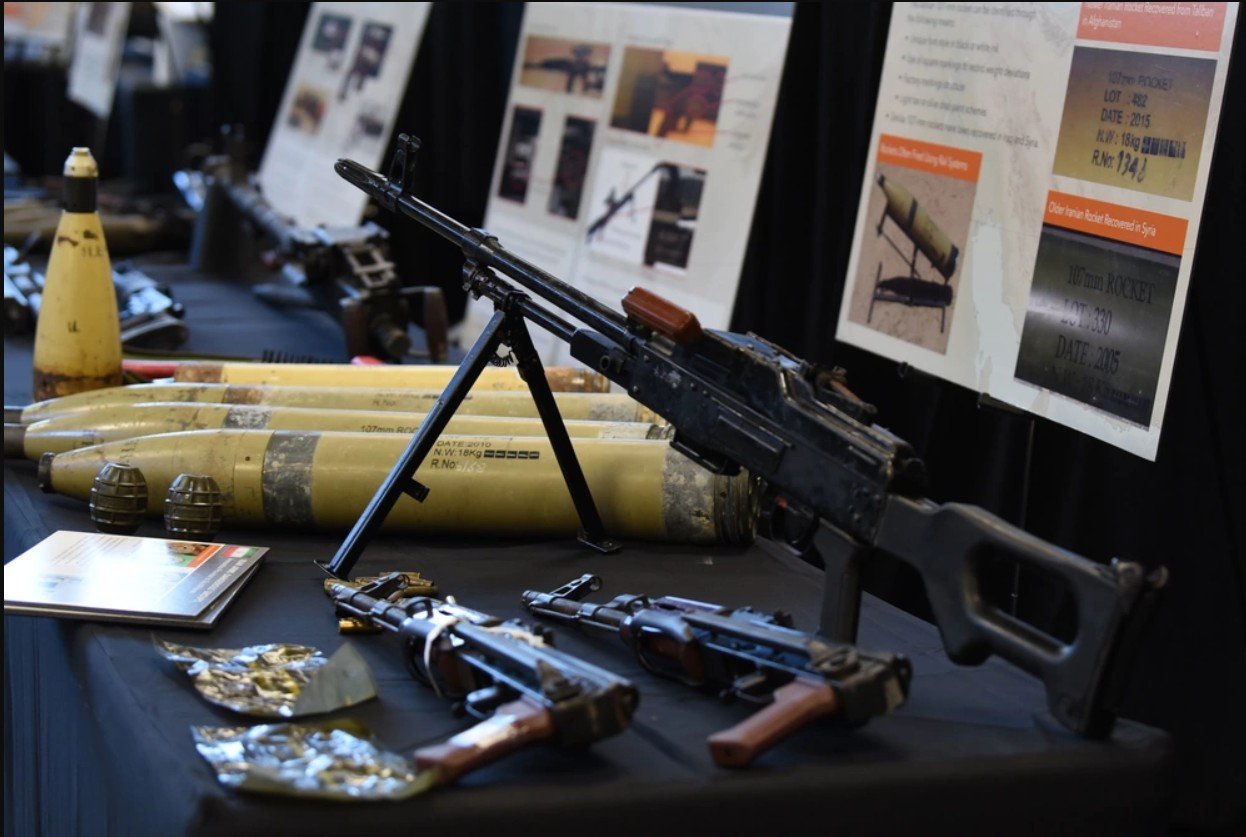
Court records show Mafi brokered a contract worth more than $72.5 million for Mohajer-6 armed drones from Iran’s Ministry of Defense and Armed Forces Logistics, destined for Sudan’s Ministry of Defense. Beyond the drones and 55,000 bomb fuses, the complaint alleges she arranged the sale of 500 non-guided aerial bombs, 70,000 AK-47s, 250 million rounds of AK-47 ammunition, 1,000 rocket-propelled grenade launchers, and 500,000 rockets.
Mafi allegedly operated through an Oman-registered front company, Atlas International Business LLC, which received more than $7 million in payments in 2025 alone. The payments were structured to evade detection. Some funds were transferred through informal hawala money-exchange systems operating across the Middle East and Africa, while other amounts moved through banks in Dubai and Turkey. Additional payments were reportedly delivered in crates of $100 bills.
Search-warrant records show nearly 62 bidirectional contacts between Mafi and an officer from Iran’s Ministry of Intelligence and Security (MOIS) between December 2022 and June 2025. During interviews with FBI agents, Mafi acknowledged the contact.
The operational template matches that of IRGC Unit 190, the clandestine logistics branch of the Quds Force responsible for international arms smuggling. According to the Washington Institute for Near East Policy, Unit 190’s roughly two dozen personnel use an elaborate system of front companies and shipping firms to conceal the IRGC’s fingerprint and bypass international sanctions. The unit has funneled weapons to Hezbollah, Hamas, the Houthis, the Assad regime, and Palestinian militant organizations in Gaza, using land, sea, and air routes that are continuously adapted to evade detection.
Sudan has been part of this network for more than a decade. The explosions that rocked Khartoum in October 2012 were linked to weapons supplied by IRGC Unit 190, which allegedly used Port Sudan as a transshipment point for arms moving overland to Gaza. Eight Israeli F-15s reportedly bombed the stockpile that night.
The weapons are being deployed in the Sudan conflict. Iranian-made Mohajer-6 drones played a decisive role in the Sudanese Armed Forces’ March 2024 offensive to retake Old Omdurman and the National Radio and Television Corporation from the Rapid Support Forces. These are the same drone platforms Iran has supplied to Russia for use in Ukraine.
The proxy force receiving this support has been formally designated by the U.S. government. The U.S. Treasury Department’s Office of Foreign Assets Control (OFAC) sanctioned the Al-Baraa Bin Malik Brigade (BBMB) in September 2025, stating that the group had contributed more than 20,000 fighters using training and weapons provided by the IRGC. OFAC also stated that brigade fighters had been implicated in arbitrary arrests, torture, and summary executions.
The State Department designated the BBMB’s parent organization, the Sudanese Muslim Brotherhood, as a Specially Designated Global Terrorist organization in March 2026. U.S. Senior Adviser Massad Boulos also confirmed that the IRGC had trained and supported fighters tied to the brigade.
Iran has been attempting for years to create a military foothold in Sudan. Flight-tracking data documented at least seven flights by Qeshm Fars Air, a firm under U.S. sanctions affiliated with the IRGC’s external-operations arm, between Tehran and Port Sudan during the first half of 2024.
Iran reportedly pressed for a formal naval base at Port Sudan, offering a warship in exchange for access. Sudan rejected the request due to concerns about backlash from Saudi Arabia, Egypt, and the United States. Iran then modified the proposal to a dual-use commercial and military port. Although the second proposal was also rejected, the flights continued.
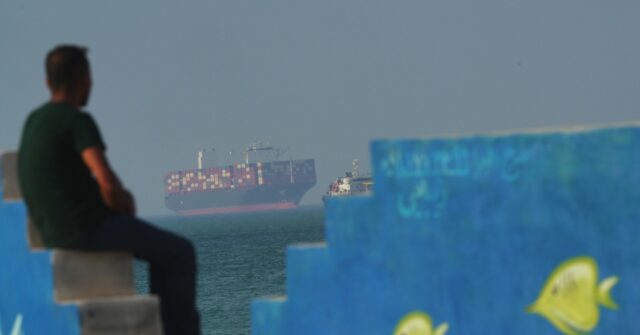
An Iranian presence at Port Sudan, combined with the Houthi movement in Yemen, would give Tehran a node from which it could threaten Red Sea shipping and the main maritime entry point for the annual Hajj pilgrimage. The Strait of Hormuz and the southern approach to the Red Sea would then form two sides of a vise on global trade.
On October 23, 2020, Khartoum declared its intention to normalize relations with Israel after the U.S. agreed to remove Sudan from its list of state sponsors of terrorism. Sudan signed a preliminary agreement with Washington in January 2021, but full normalization with Israel was never completed. By July 2024, Sudan had restored full diplomatic ties with Iran instead.
Acting Attorney General Todd Blanche framed the Mafi case by stating, “This individual came from Iran and gained legal status under the Obama administration. While enjoying a life in the United States, this woman was allegedly breaking the law by brokering lethal weapons deals with Iranian adversaries.”
In addition to the threat posed by this arms network, the fact that an Iranian national with legal status in the United States was allegedly acting as an agent of the IRGC underscores and supports President Trump’s harsh stance on activities by noncitizens that directly oppose U.S. policies and national interests.
The post Iranian Agent in the U.S. Coordinates Arms Pipeline Fueling the Sudan War appeared first on The Gateway Pundit.
editor's pick
latest video

news via inbox
Nulla turp dis cursus. Integer liberos euismod pretium faucibua
Leave A Comment
You must be logged in to post a comment.