Iran Ramps Up Attacks On Ships In The Strait Of Hormuz After Trump Ceasefire Extension
Though President Donald Trump on Tuesday declared an extension to a ceasefire with Iran, the Islamic Republic continues to attack shipping in the Strait of Hormuz. At least two ships were fired on by Iran, according to the United Kingdom Maritime Trade Operations (UKMTO). Iranian officials say the Islamic Revolutionary Guard Corps (IRGC) seized those ships and fired on another.
These incidents came a day after U.S. forces boarded an Iran-linked oil tanker in the Indian Ocean and highlighted that regardless of diplomacy, shipping remains a target for both sides. Meanwhile, Iran made veiled threats against the telecommunications cables running under the Strait. All this is happening as Tehran says it won’t return to the bargaining table until the U.S. ends its blockade of Iranian ports. We’ll discuss that more later in this story.
The first attack in the Strait on Wednesday took place shortly before midnight EDT about 15 nautical miles northeast of Oman, according to UKMTO.
“The Master of a Container Ship reported that the vessel was approached by 1 IRGC gun boat, no VHF challenge that then fired upon the vessel which has caused heavy damage to the bridge. No fires or environmental impact reported. All Crew reported safe.”
Nour News, a website affiliated with Iran’s Supreme National Security Council, said the Islamic Revolutionary Guard Corps (IRGC) opened fire on the Epaminodes, after it had “ignored the warnings of the Iranian armed forces,” the BBC reported.
Epaminodes is a Liberian-flagged container ship, according to MarineTraffic.com.
A second incident took place about three hours later eight nautical miles west of Iran, UKMTO stated.
“A master of an outbound cargo ship reports having been fired upon and is now stopped in the water,” the organization explained in an alert. “Crew are safe and accounted for. There is no reported damage to the vessel. UKMTO is aware of high levels of activity in the SoH area and encourages vessels to report any suspicious activity.”
It is unclear at the moment which ship was attacked in that incident. UKTMO did not name the vessel. However, in addition to claiming they fired on the Epaminodes, Iranian officials say they also struck the Euphoria, which MarineTraffic said is a Panamanian-flagged container ship and the MSC-Francesca, also a Panamanian-flagged container ship, according to MarineTraffic.
The Epaminodes and MSC-Francesca were also seized for “endangering maritime security by operating without the necessary permits and tampering with navigation systems,” the IRGC claimed, stating the vessels have been “directed to the coast of Iran.”
The disposition of the vessels and crews is not currently known. U.S. Central Command could not confirm any of these incidents.
A Sentinel-2 satellite image captured today shows what looks like a swarm of IRGCN fast attack craft sailing north of the strait of Hormuz near Kargan coast, according to open source investigator Mehdi H on X.
The image shows what appears to be at least 33 boats. It is unclear if there is any connection between these craft and the shipping attacks. The IRGC has invested heavily in its fleet of small boats for decades as TWZ has explored in the past. Some of these vessels are armed with short-range anti-ship missiles, as well as artillery rockets and other weapons. They can also be used to lay naval mines. These fleets are extremely hard to find and fix, and do not need large ports to operate from. While CENTCOM says it has destroyed well over 150 Iranian ships, the IRGC still has many remaining small boats.
As we noted earlier in this story, in addition to attacking and capturing ships on the Strait, Iran pointed out the vulnerability of telecommunications cables running under it.
“The Strait of Hormuz is not only a crucial route for oil and gas transportation; this narrow waterway is also one of the most important internet chokepoints in the region and the world,” the IRGC-linked Tasnim news agency noted on Wednesday. “According to submarine network data, at least 7 main communication cables of the Persian Gulf countries pass through this route; while more than 97% of the world’s internet traffic is transferred via these fiber optic cables laid under the sea.”
“Cables such as FALCON, AAE‑1, TGN‑Gulf, and SEA‑ME‑WE connect a significant part of the region’s digital communication to major data centers in the Middle East, Europe, and Asia,” the outlet added. “These infrastructures are the backbone of data transfer, e-commerce, cloud services, and online communications in the Persian Gulf countries.”
“The concentration of many internet cables in a narrow passage makes the Strait of Hormuz a vulnerable point for the region’s digital economy,” Tasnim posited, calling it “a place where cables, after passing through the strait, connect to coastal landing nodes and major regional data centers.”
UPDATES
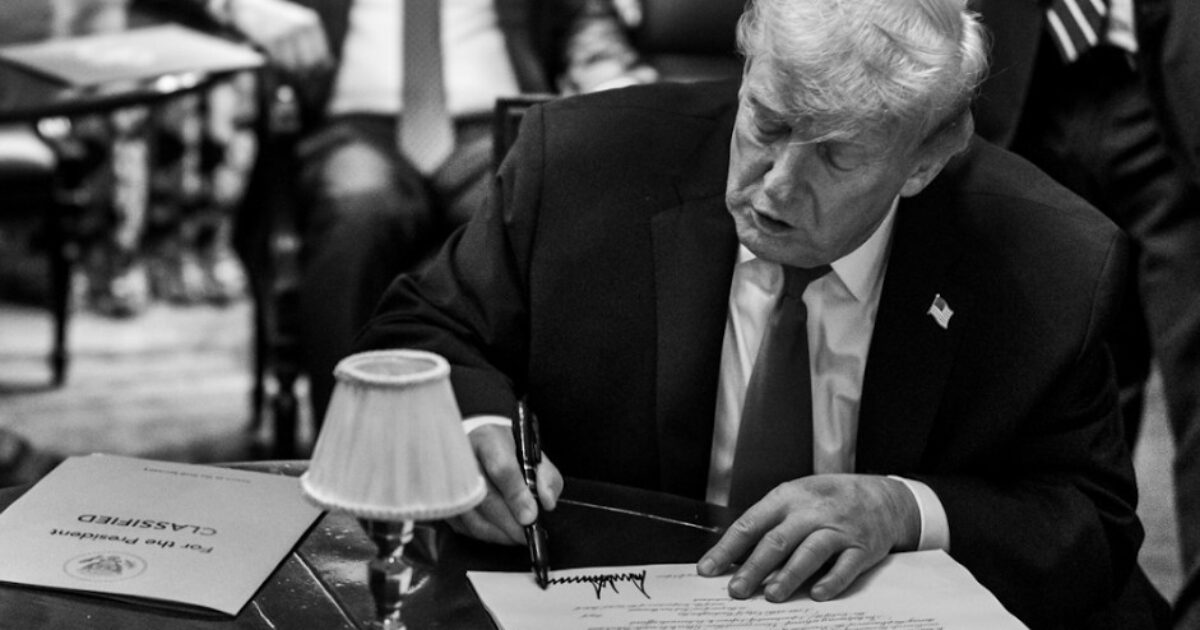
The New York Post said Trump told them that another round of negotiations with Iran may take place later this week. At issue is the future of Iran’s highly enriched uranium, its supply of ballistic missiles, support of proxies like Hezbollah and the Houthis and ultimate disposition of the Strait of Hormuz.
“‘Good news’ about a second round of talks between the US and Iran may be coming as soon as Friday,” the publication said Trump and Pakistani sources told it on Wednesday.
“Sources in Islamabad touted positive mediation efforts with Tehran, renewing the possibility of more peace talks within the next ‘36 to 72 hours,’” the newspaper added. “Asked about this possible breakthrough by The Post, Trump, in a text message, said: ‘It’s possible! President DJT.’”
Trump “plans to give the Iranians a limited timeframe to come up with a unified proposal to get diplomatic negotiations back on track,” CNN reported, citing two sources familiar with the internal discussions. “The administration does not want to indefinitely extend the ceasefire, the sources said, and does not want to give Iran time to drag out talks further.”
“Trump is willing to give another three to five days of ceasefire to allow the Iranians to get their shit together,” one U.S. source briefed on the matter told Axios. “It is not going to be open-ended.”
Trump’s negotiators “believe a deal to end the war and address what’s left of Iran’s nuclear program is still achievable,” the outlet added. “But they also worry they may not have anyone in Tehran empowered to say yes.”
Supreme Leader Mojtaba Khamenei “is barely communicating,” Axios posited. “The IRGC generals now in control of the country and Iran’s civilian negotiators are openly at odds over strategy.”
“We saw that there is an absolute fracture inside Iran between the negotiators and the military — with neither side having access to the supreme leader, who is not responsive,” a U.S. official told the news organization.
Axios added that though Vice President JD Vance was all set to go to Pakistan for the second round of negotiations, he instead found himself waiting for the IRGC generals now in control of Iran to let parliament Speaker Mohammad Bagher Ghalibaf and Foreign Minister Sayed Abbas Araghchi travel to Pakistan to meet him. However, while the Iranians appeared to have given Pakistani mediators the green light for talks, by Tuesday morning, that signal was gone, replaced by a demand that the U.S. lift its naval blockade.
As we have previously noted, Trump extended the ceasefire deadline yesterday, but gave no specific date for when fighting could resume. In a Truth Social post, he said he did so to give time for the fractured Iranian leadership to come up with a response to U.S. demands and that the ongoing blockade of Iranian ports would remain in effect.
His post came after Iranians refused to commit to peace talks tentatively scheduled to be held in Pakistan.
The official Iranian IRIB news outlet denied Tehran has taken any official position on Trump’s ceasefire extension or future negotiations.
The Iranians say the future of negotiations depends on the status of the ongoing blockade of its ports.
Iran’s UN Ambassador Amir Saeid Iravani stated that Tehran is prepared to negotiate immediately after the United States ends its naval blockade, emphasizing that Washington must first halt its “ceasefire violations.”
He added that while Iran is prepared to negotiate, it is also prepared for war.
Citing data from the Vortexa cargo tracking group, Financial Times is reporting that “at least 34 tankers with links to Iran have bypassed the US blockade since it began.”
CENTCOM, which on Tuesday said the US Navy had directed 28 vessels to turn back to Iranian ports since the blockade was enacted, told us the assertion that dozens of ships bypassed the blockade “is not true.”
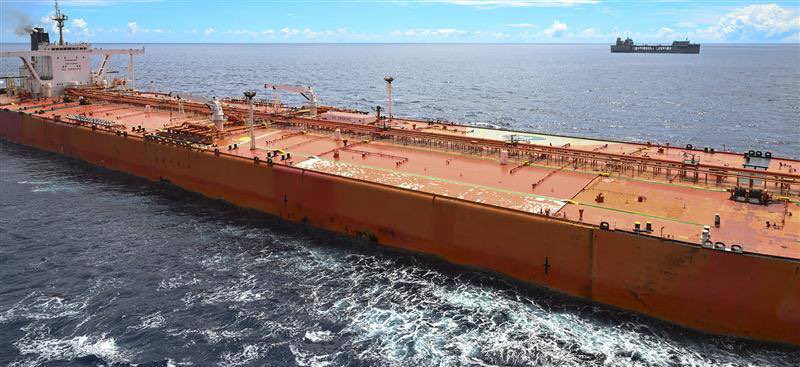
The Pentagon on Wednesday pushed back on the assertion that the Iranian-linked oil tanker Tifani was seized by the U.S., however, it may be a matter of semantics.
As we reported yesterday, the vessel boarded by U.S. forces in the Indian Ocean and the Washington Post later said it was “seized” as the United States determines “next steps for the Tifani and its crew in the next couple of days.”
“Seized wouldn’t be accurate at this time,” a Pentagon official told us. “So the way it works is after interdiction the U.S. has 96 hours to determine next steps. That’s where the rest of the interagency comes in. It varies by ship and situation what the solution would be. At this point DoW’s finished its role with just the interdiction.”
“During that 96-hour period, State would make the determination it’s stateless and work through diplomatic channels on where to take it,” the official added. “DHS and Coast Guard could be the ones to escort it. DoE gets involved for the oil, treasury for the sanction, DoJ for the legal elements and warrant. It really is a large, complex coordination effort across the interagency.”
The exact current disposition of the vessel is unclear. We have reached out to the White House for more details.
With Iran partially reopening its airspace, the U.S. State Department stated that any U.S. citizens still in the country “should leave Iran now, monitor local media for updates, and consult with commercial carriers for additional information on flights out of Iran.”
Americans seeking to depart Iran “may also depart by land to Armenia, Azerbaijan, Türkiye, and Turkmenistan. U.S. citizens should not travel to Afghanistan, Iraq, or the Pakistan-Iran border area,” the warning added. “Be aware that the Iranian government may prevent U.S. citizens from departing or charge an ‘exit fee’ for departures from Iran. U.S.-Iranian dual nationals must exit Iran on Iranian passports.”
During the course of Epic Fury, the U.S. has run through a large amount of advanced munitions, CNN reported.
The list includes about 50% of Terminal High Altitude Area Defense (THAAD) interceptors, 50% of its Patriot interceptors, 45% of its Precision Strike Missiles, 30% of its Tomahawk Land Attack Cruise Missiles (TLAMs), 20% of its Joint Air-to-Surface Standoff (JDAM) munitions and 20% of its Standard Missiles (SM-3 and SM-6).
Given the expenditure of costly defensive munitions used to swat down much cheaper Iranian drones, the U.S. military has introduced Ukrainian counter-drone technology in recent weeks at a key U.S. air base in Saudi Arabia, Reuters reported, citing five people with knowledge of the matter.
These attacks have destroyed aircraft and buildings, and killed at least one service member.
“The deployment of a Ukrainian command-and-control platform called Sky Map at Prince Sultan Air Base, which has not previously been reported,” is another sign of Ukrainian battlefield technological advances after more than four years of full-on war with Russia.
Contact the author: howard@thewarzone.com
editor's pick
latest video

news via inbox
Nulla turp dis cursus. Integer liberos euismod pretium faucibua