SNC Gives Details Of Its Clean-Sheet Freedom Trainer Offering To The U.S. Navy
The U.S. Navy’s Undergraduate Jet Training System (UJTS) competition to replace the T-45 Goshawk is accelerating toward one of the most consequential training decisions in decades. The Navy has now issued its eagerly-anticipated Final Request For Proposals – an inflection point in the long-running effort to field 216 modern jet trainers for the next generation of naval aviators.

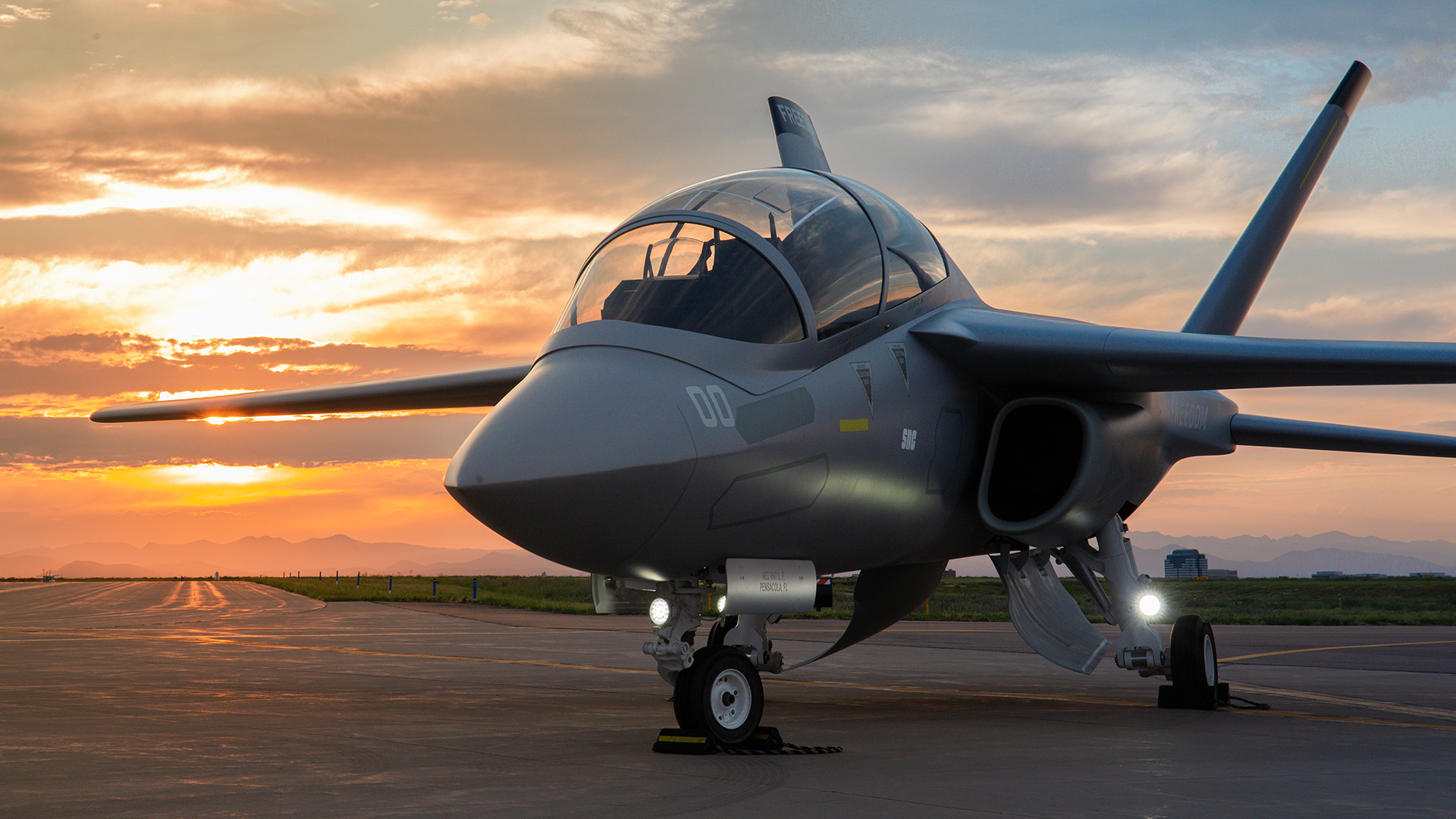
Amid this pivotal moment, SNC is leading a powerhouse team that has developed the only clean-sheet design in the running: the Freedom Trainer. Built specifically to address the Navy’s evolving carrierborne training needs, the Freedom Trainer aims to deliver modern capability at significantly reduced lifecycle cost.
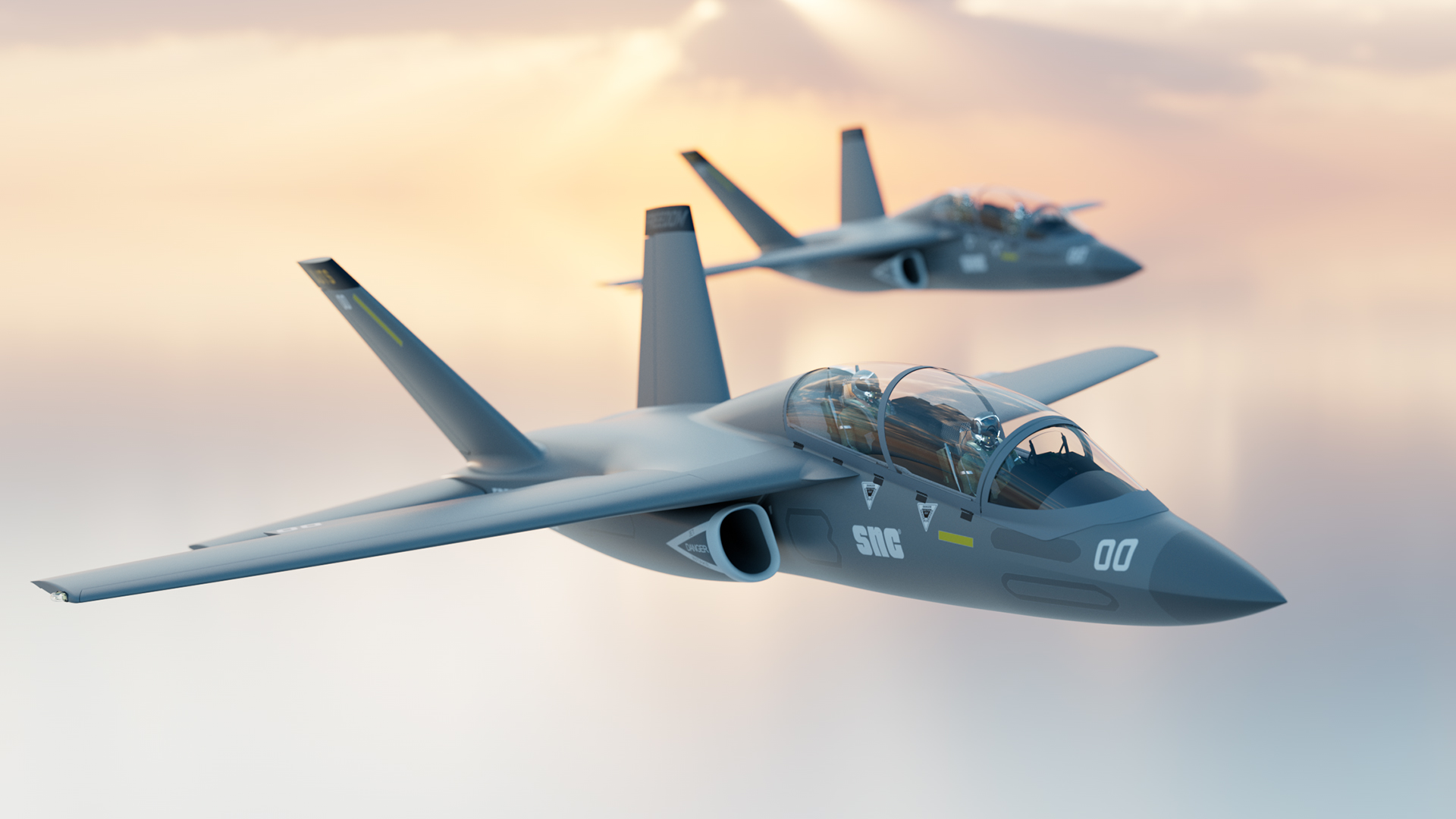
SNC is partnering with Northrop Grumman, General Atomics Aeronautical Systems, Inc., and CAE, leveraging advanced production, manufacturing, and synthetic training expertise to create a comprehensive, integrated family of training systems.
“SNC’s Team Freedom brings the agility of a disruptor and the reliability of our well-established defense partners to bear so that we can deliver what the Navy wants, on the aggressive timeline it set,” says Jon Piatt, executive vice president at SNC.
Why the Navy’s training model is changing
Core requirements for the T-45 replacement have shifted dramatically. Advances in automated carrier landing technologies and increasingly capable simulation environments have altered the Navy’s perspective on how student naval aviators should be trained. The service has already removed carrier qualifications from the T-45 syllabus, one of the most significant training changes in decades, and plans for UJTS could further reshape how training occurs ashore.
A major driver of this debate centers around Field Carrier Landing Practice (FCLP), the land-based surrogate for shipboard carrier landings. Traditionally performed to touchdown, these aggressive, un-flared landings, or “bouncing,” replicate the forces and precision required aboard the carrier. But for UJTS, the Navy has removed the requirement for FCLP-to-touchdown, instead calling only for FCLP-to-wave off.
This change dramatically broadens the aperture for competitors. Trainers designed for land-based operations can meet wave-off profiles without requiring the structural upgrades typical of Navy aircraft. But this also introduces concerns about the long-term impact on aviator proficiency, and whether foundational carrier skills can be taught effectively without actual touchdown repetition.
The FCLP equation and its implications for the fleet
FCLP has long been considered essential for preparing student naval aviators for the demands of carrier aviation. A Navy spokesperson reaffirmed to TWZ in August 2025 that “Field Carrier Landing Practice landings ashore are still required for graduation,” though did not specify whether touchdown was still necessary.
Touchdown landings impose tremendous structural loads on an aircraft, particularly landing gear and associated components. Removing this requirement opens the competition to off-the-shelf trainers such as the T-7 Red Hawk, Korean-built TF-50N, and the Italian M-346N. These jets can perform FCLP-to-wave-off but not repeated unflared touchdowns without extensive structural reinforcement.
SNC argues that this shift elevates readiness and cost risk. “FCLP-to-touchdown is a tried and trusted method to train naval aviators,” says Derek Hess, vice president of strategy at SNC. “Not performing carrier qualification or FCLPs-to-touchdown essentially defers that training to the fleet replacement squadrons with their 4th-, 5th-, and soon, 6th-generation fighters which would be a very expensive use of those precious assets.”
In other words: the Navy can remove the requirement, but the fleet will still pay the bill.
Why a clean-sheet matters
The Navy’s decision not to mandate touchdown capability fundamentally changes the nature of the competition. Legacy trainers can now be offered at lower upfront cost, but at the expense of performance characteristics essential to naval aviation.
SNC is blunt on this point: the Freedom Trainer is the only aircraft in the field that can perform FCLP-to-touchdown without major modification because it is purpose-built to meet Navy training standards. SNC believes this is the defining advantage of a true naval trainer.
Where its competitors adapt land-based jets for a naval training mission, the Freedom Trainer is engineered from inception for the pounding, the control margins, and the durability required for FCLPs-to-touchdown.
Clean-sheet means a whole new approach
The Freedom Trainer offers improvements over the T-45, while delivering dramatically lower lifecycle costs. Hess explains that lifecycle economics are central to SNC’s approach: only about 10 percent of lifecycle cost is tied to research, development, test and evaluation (RDT&E) and 30 percent for procurement, while roughly 60 percent stems from operations and sustainment.
“From a business perspective, you can pay more in the RDT&E phase and still dramatically reduce your lifecycle costs,” Hess says. “We’re employing a more businesslike approach to training that balances training costs holistically across the lifecycle of the aircraft.”
To achieve this, SNC leverages advanced digital engineering to reduce risk and ensure real-world fidelity. “Digital engineering has evolved significantly over the last 10 years,” Hess says, pointing to Northrop Grumman’s work on the B-21 Raider as a benchmark for its modeling environment.
The Freedom Trainer’s mission systems architecture is built using Model Based Systems Engineering (MBSE) and is delivered with full technical and data rights – ensuring the Navy retains long-term control and interoperability.
Designed for the mission: performance and durability
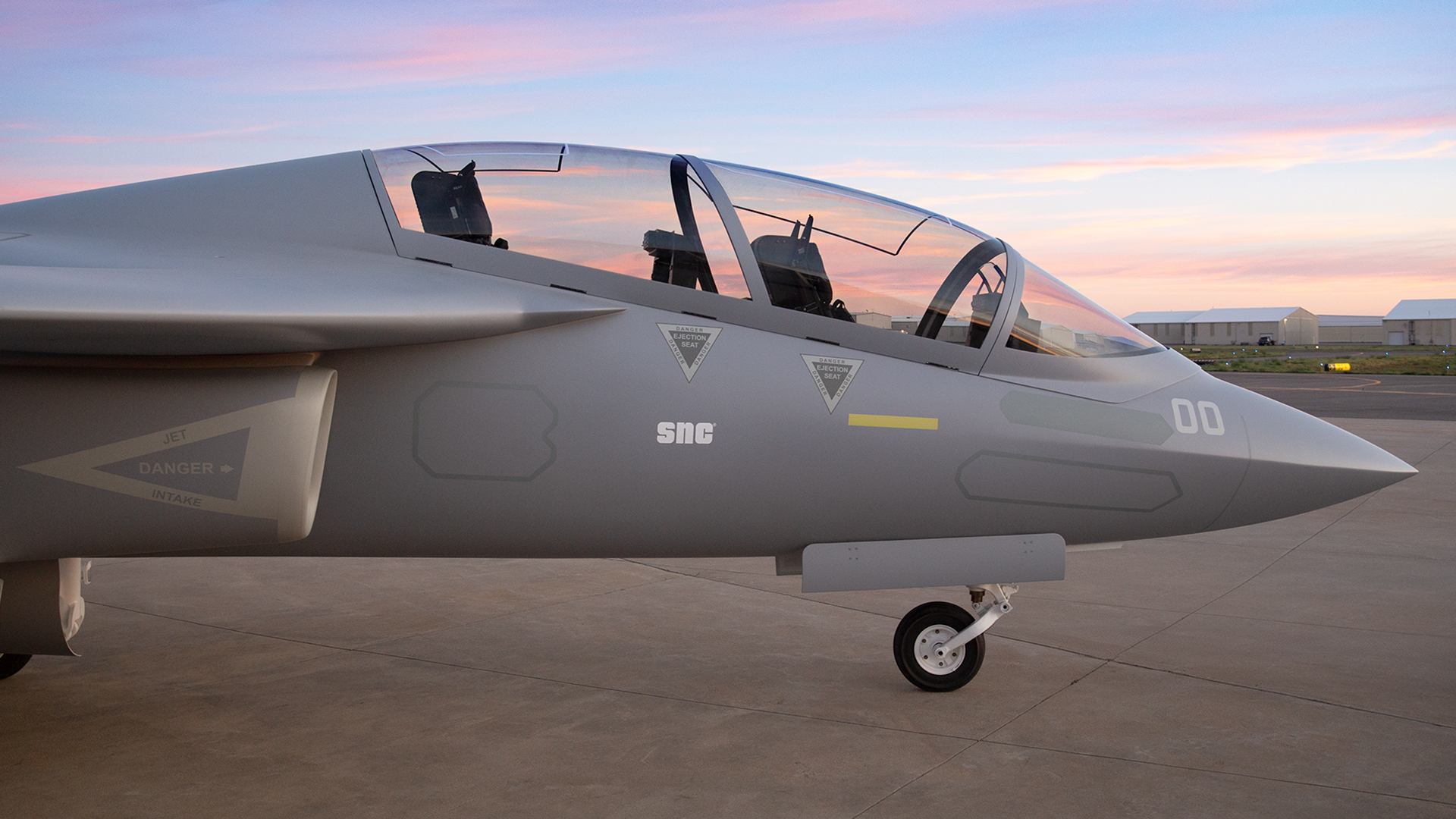
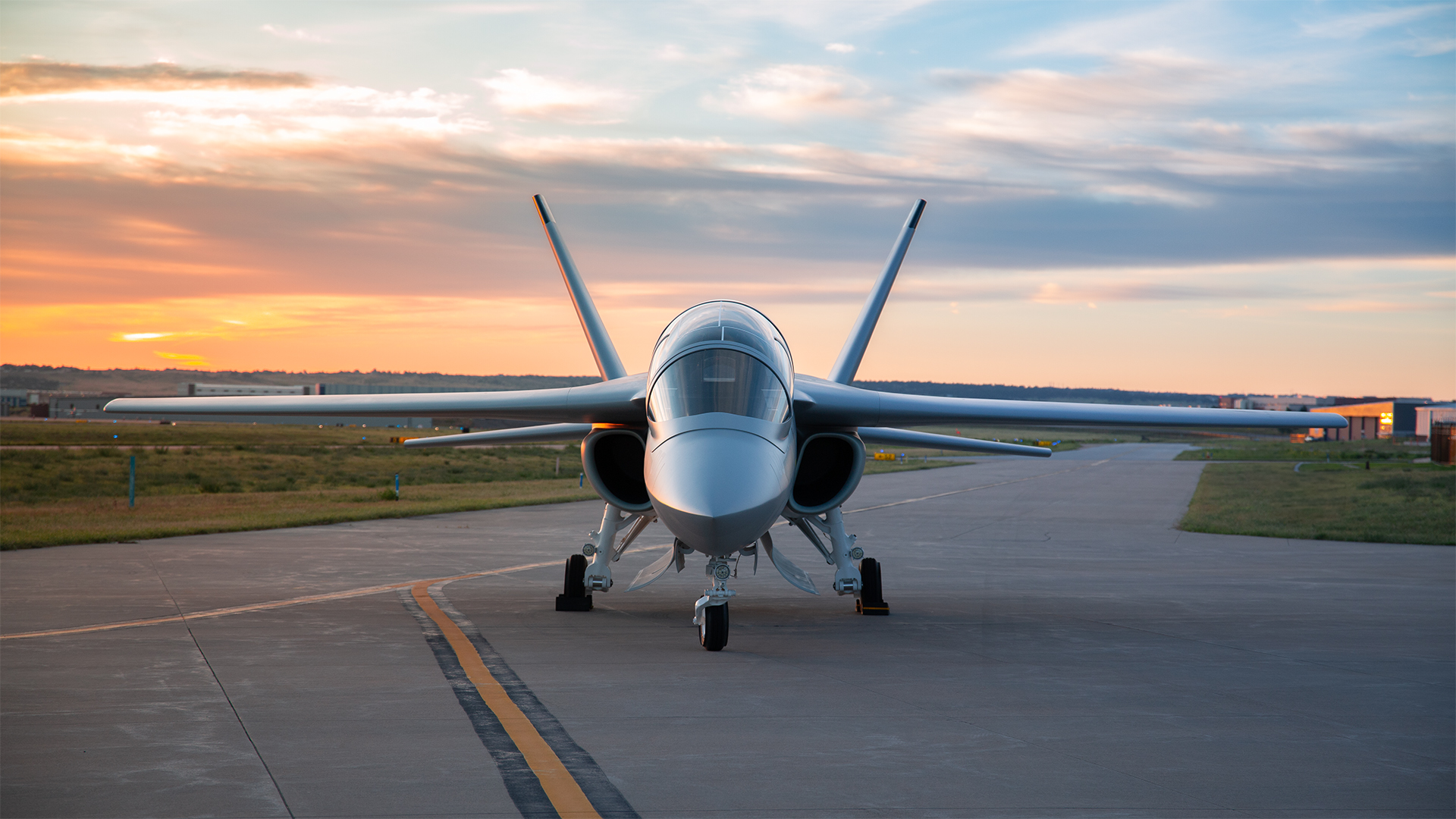
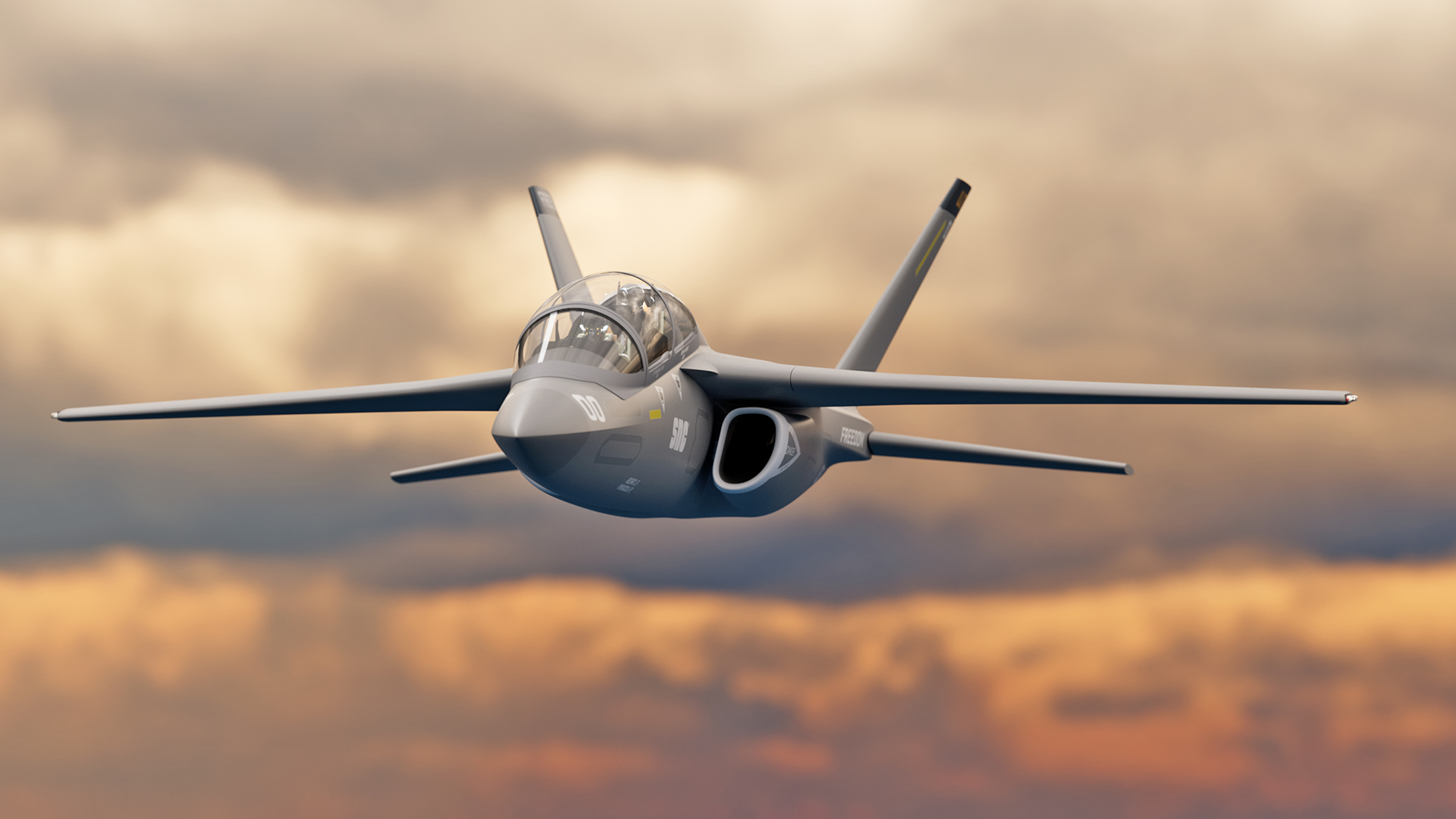
The aircraft’s design reflects a deliberate choice to provide representative fighter performance at dramatically lower cost. The Freedom Trainer’s design reflects a deliberate philosophy: deliver the handling qualities and durability of a fighter‑representative aircraft without imposing fighter‑level sustainment costs. Rather than itemizing features in a list, SNC emphasizes that the jet’s airframe, engines and performance envelope all work together to meet the Navy’s demanding syllabus.
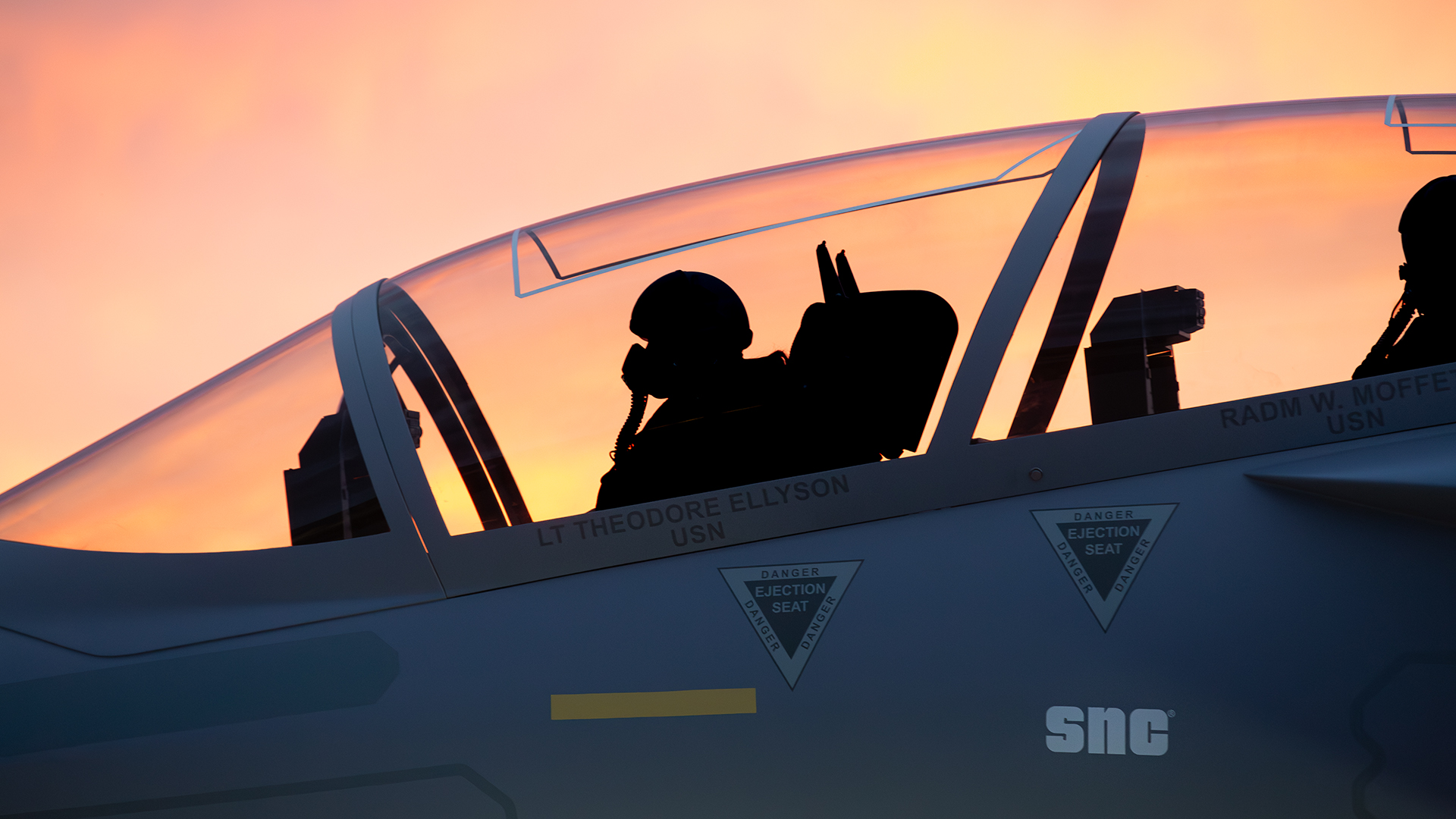
At its core, the Freedom Trainer is built around a 16,000‑hour airframe that’s engineered to withstand up to 35,000 carrier‑style landings. This level of durability is essential for repetitive FCLP operations, especially un-flared touchdowns that impose loads far more intense than standard runway operations. By designing the structure from day one to accept these stresses, SNC ensures the aircraft can train pilots to full carrier‑representative standards while avoiding the costly structural fatigue associated with modifying older, land‑based designs.
Power comes from a pair of Williams FJ44‑4M engines, selected not only for reliability but also for their lower operating cost compared to legacy trainer engines. These efficient turbofans help reduce support burdens by an estimated 40 percent relative to the T‑45, while enabling longer sorties on less fuel than the competition.
Performance‑wise, the Freedom Trainer provides the maneuvering capabilities student naval aviators must master before transitioning to fleet aircraft. With a −3 to +8 G envelope and angles of attack (AoA) reaching up to 27 degrees, the aircraft exposes students to the high‑AoA handling characteristics relevant to modern 4th‑ and 5th‑generation fighters. Yet SNC deliberately designed the jet to avoid the transonic regime, which typically demands larger thrust margins and higher fuel consumption to accomplish the same training maneuvers. By staying sub‑transonic, the aircraft maintains fighter‑representative handling qualities while keeping lifecycle costs far below those of high‑performance jets.
“You don’t need a fighter to learn how to fly a fighter,” Hess notes. “You need a trainer engineered for Navy training missions that create graduates who are ready for FRS training and beyond.”
LVC: The synthetic backbone of modern training
Live, Virtual, and Constructive (LVC) training is now central to the Navy’s future training enterprise. The service intends to offload many carrier operations scenarios into synthetic environments as part of its modernization journey.
The Freedom Trainer’s LVC environment, developed with CAE, includes synthetic radar, targeting pods, and augmented reality tactical scenarios that replicate beyond visual range (BVR) and within visual range (WVR) engagements. Hess notes that many mission training functions can be downloaded from frontline squadrons, producing far more capable pilots at much lower cost.
“Ultimately, flying 4th- and 5th-gen fighters with modern flight control systems isn’t hard these days,” Hess says. “The tough part is employing the aircraft. That’s where we excel with our LVC capabilities.”
Turning clean-sheet into reality: timeline and industrial base
The final RFP envisions Engineering and Manufacturing Development (EMD) beginning with up to two contract awards in 2027, delivering four EMD aircraft followed by seven low-rate production jets beginning in 2032. The goal is initial operating capability in 2035.
Hess is confident SNC can meet the timeline. With a restructured Navy acquisition enterprise and strong industrial partners, the Freedom Team argues it is well positioned to deliver a future-focused foundation for Navy training.
“Our primary focus is to deliver a trainer that meets the demanding needs of naval aviation with zero compromise,” Hess says. “We believe the next-generation navy trainer must enable efficient sortie generation, evolve with technology, and strengthen the nation’s industrial base.”
The bottom line: improving training while reducing cost
SNC positions the Freedom Trainer as a solution that protects naval aviation’s most critical training standards while delivering significant lifecycle savings. The company argues that deferring essential skills like FCLP-to-touchdown to the fleet imposes an unnecessary cost and readiness burden.
“If aviators aren’t learning these key skills while they’re earning their Wings of Gold,” Hess says, “they will have to learn it in a much more complex, more expensive, and more scarce resource – frontline gray jet fleet fighters.”
A compelling candidate for the future fleet
The Navy’s next trainer will shape every aviator who enters the fleet for generations to come. The Freedom Trainer’s clean-sheet approach positions it as a contender capable of improving Naval training capabilities while reducing cost.
For a decision as consequential as UJTS, SNC’s argument is clear: choose a trainer designed for the Navy’s mission – not adapted to it.
editor's pick
latest video

news via inbox
Nulla turp dis cursus. Integer liberos euismod pretium faucibua