Flurry Of Navy Minesweepers Appear To Be Heading Toward The Middle East
A pair of Avenger class mine-hunters homeported in Japan have been tracked sailing westward out of the Pacific Ocean in recent days. This comes as President Trump and other officials say an operation is taking shape to clear Iranian mines from the Strait of Hormuz, which will be essential to fully reopening that critical waterway. The United States has also now announced a blockade of all of Iran’s ports.
Until last year, the Navy had four Avenger class ships forward-deployed in the Middle East for exactly this mission. A trio of Independence class Littoral Combat Ship (LCS) configured for minesweeping duties subsequently took their place. However, those ships were redeployed from Bahrain ahead of the latest conflict with Iran, and two of them then emerged unexpectedly in Southeast Asia last month. While getting them out of the Persian Gulf was a prudent security measure, it remains unclear why the decision was made to send them literally to the other side of the globe amid the obvious threat of Iran mining the highly strategic Strait of Hormuz. One of them, the USS Tulsa, was also recently spotted sailing west after weeks in port in Singapore.
The Avenger class USS Chief and USS Pioneer were spotted arriving in Singapore on April 8, and they were seen leaving heading west on April 10. This represents half of the Avenger class ships still in Navy inventory, all of which are forward-deployed in Sasebo, Japan.
Online ship tracking site MarineTraffic subsequently showed both Avenger class ships heading northwest through the Strait of Malacca. There are unconfirmed reports that Chief and Pioneer arrived at Ao Makham port in Phuket, Thailand, earlier today. Their final destination is unknown, but USNI News had reported over the weekend that they had been “dispatched toward U.S. Central Command.”
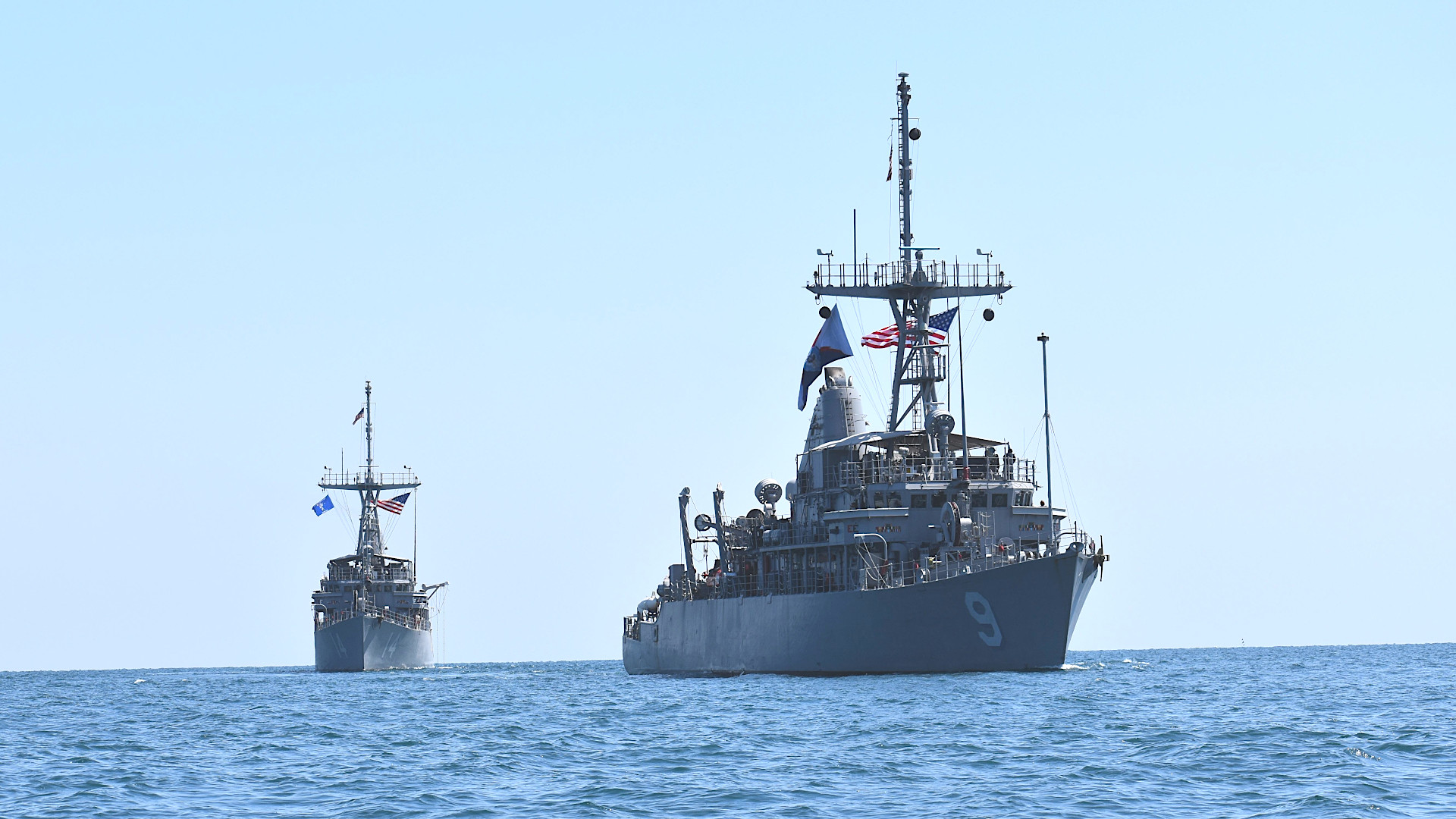
USS Tulsa was also tracked sailing northwest in the Strait of Malacca on April 3, which we will come back to in a moment.
“U.S. Central Command (CENTCOM) forces began setting conditions for clearing mines in the Strait of Hormuz,” the command had said in a press release on April 11. The Arleigh Burke class destroyers “USS Frank E. Peterson (DDG 121) and USS Michael Murphy (DDG 112) transited the Strait of Hormuz and operated in the Arabian Gulf as part of a broader mission to ensure the strait is fully clear of sea mines previously laid by Iran’s Islamic Revolutionary Guards Corps.”
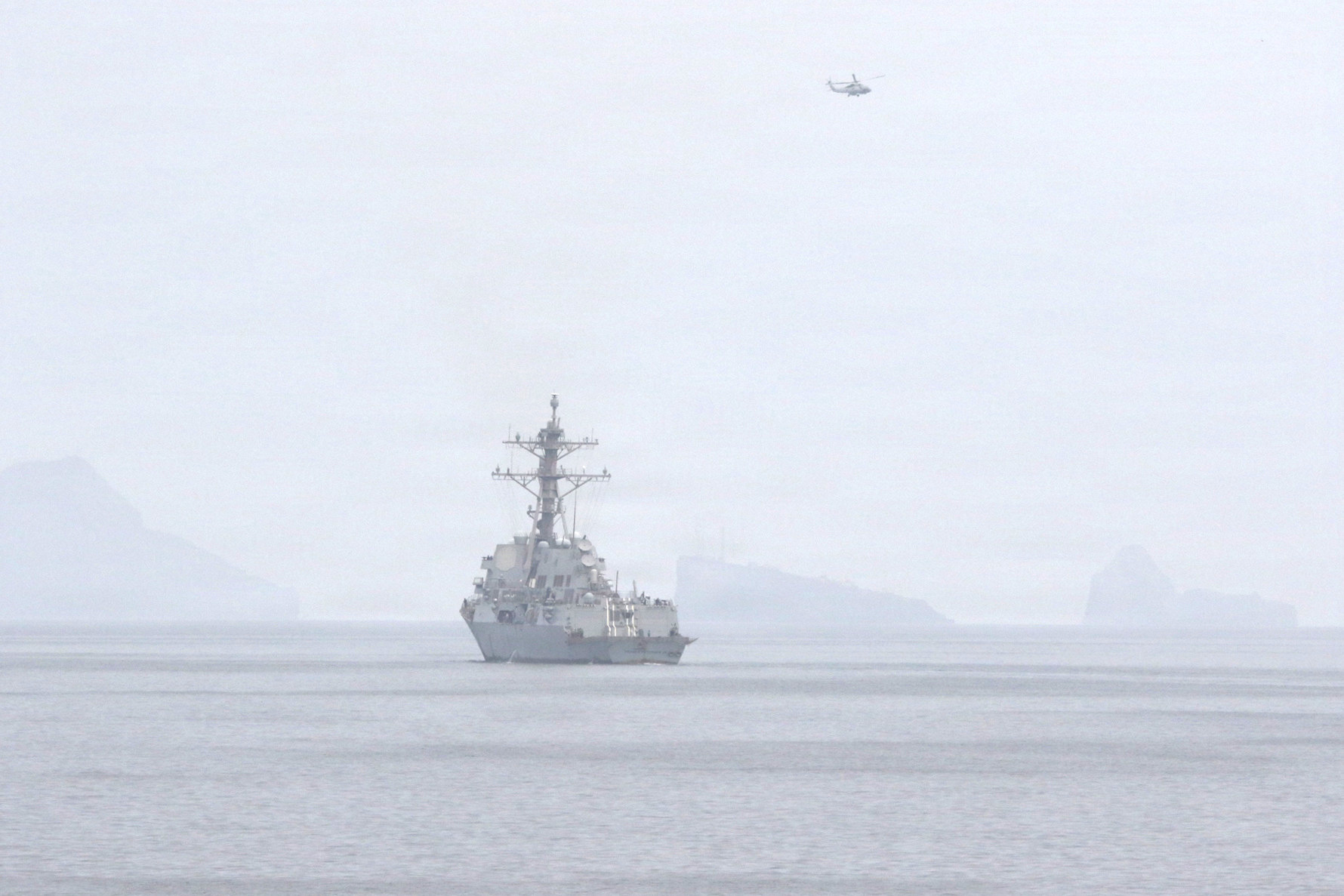
Questions have been raised about the exact purpose of sending USS Frank E. Peterson and USS Michael Murphy through the Strait, and whether either ship actually made a full transit. Michael Murphy was tracked online sailing on the Persian Gulf side, at least briefly. Neither of the destroyers are outfitted for mine clearance missions, though they do have powerful sonars that might be able to help spot mines.
“Additional U.S. forces, including underwater drones, will join the clearance effort in the coming days,” CENTCOM’s release over the weekend added, but did not further elaborate.
“We’re also bringing in more traditional minesweepers” as part of efforts to clear the Strait of Hormuz, President Trump told Fox News yesterday. He also said several times this weekend that mine-clearing operations were already underway in some form.
CENTCOM declined to comment when we reached out today for more details about the planned force package for the mine clearance mission. TWZ has also reached out to the Navy’s main headquarters in the Pacific for more information about the movement of the Avenger class ships.
Before the latest conflict with Iran broke out in February, the Navy had three Independence class LCSs outfitted for mine countermeasures missions – Tulsa and Santa Barbara, along with the USS Canberra – forward-deployed in Bahrain. The arrival of those ships last year was tied to the long-planned decommissioning of four Avenger class vessels that had been homeported in that Middle Eastern country for decades beforehand. It is unclear how many LCSs the Navy otherwise has that are currently configured for minessweeping missions.
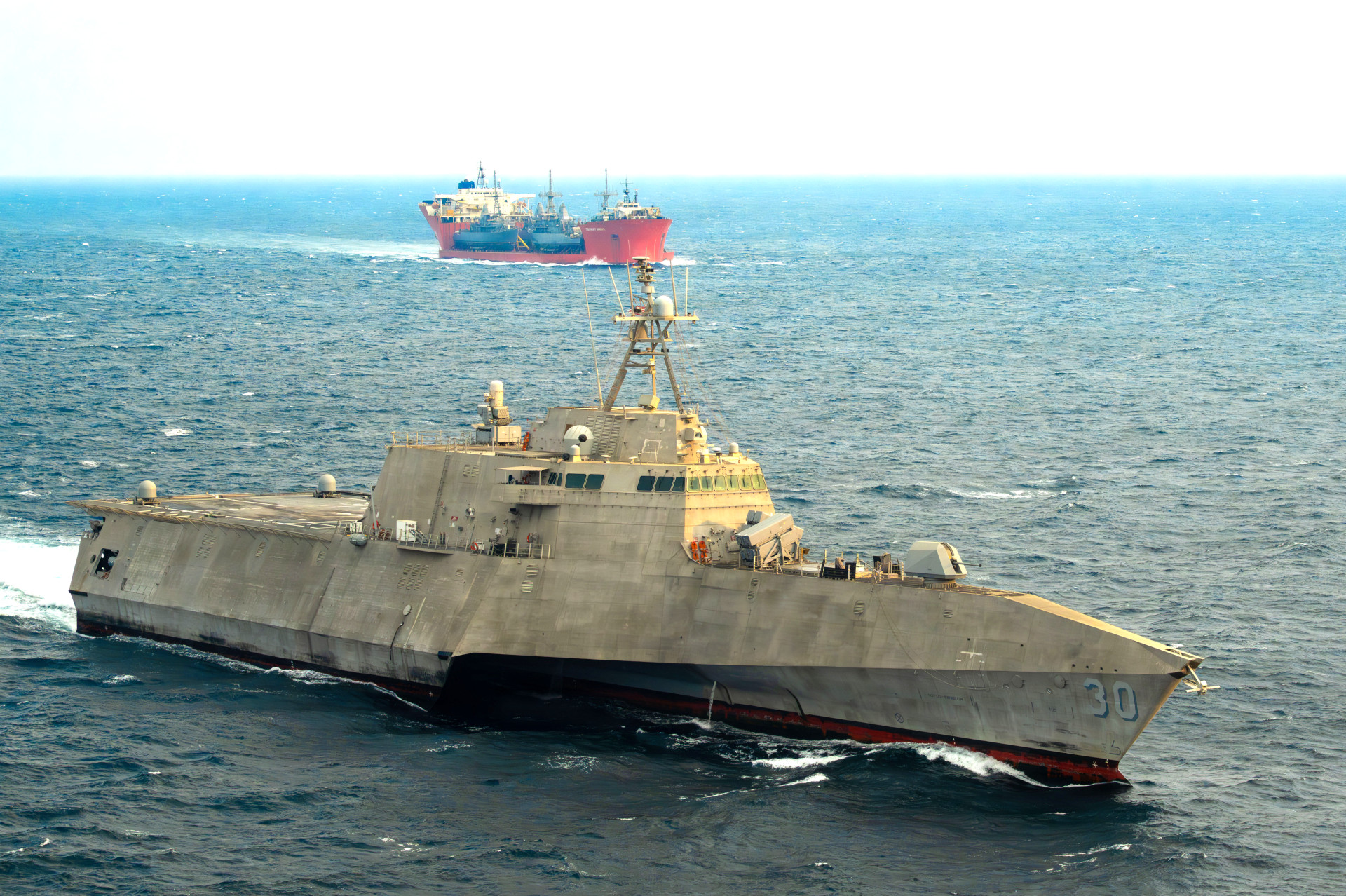
As noted, Tulsa and Santa Barbara subsequently emerged in Southeast Asia, first in Malaysia and then in Singapore, last month. USS Canberra‘s location remains uncertain, but it was reported to be sailing in the Indian Ocean as of March 19.
It should also be stated that the Independence class LCS is a much more modern ship than the Avenger class. When configured for the minesweeping mission, the LCSs also bring new standoff mine countermeasures capabilities, including Common Unmanned Surface Vehicle (CUSV) drone boats and helicopter-borne systems. Still, questions continue to be raised about whether the Independence class vessels are adequate replacements for the older, but purpose-built Avengers. You can read more about this here.
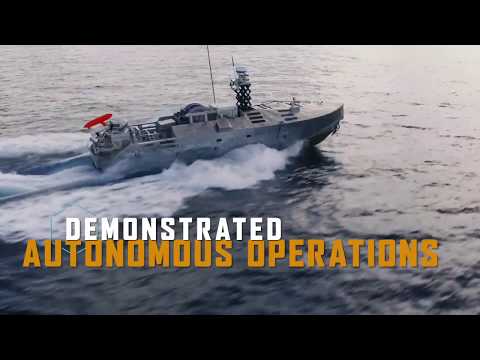
CUSV®
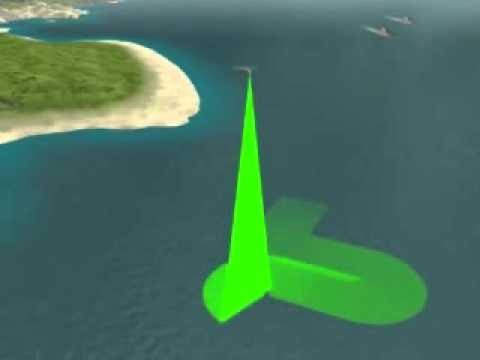
Airborne Laser Mine Detection System (ALMDS) Video
It is possible that the USS Chief and the USS Pioneer are in Southeast Asia now for exercises or other reasons. Japan-based Avenger class ships have traveled to Thailand, specifically, as well as other countries across the Pacific, to train with allied and partner forces in the past.
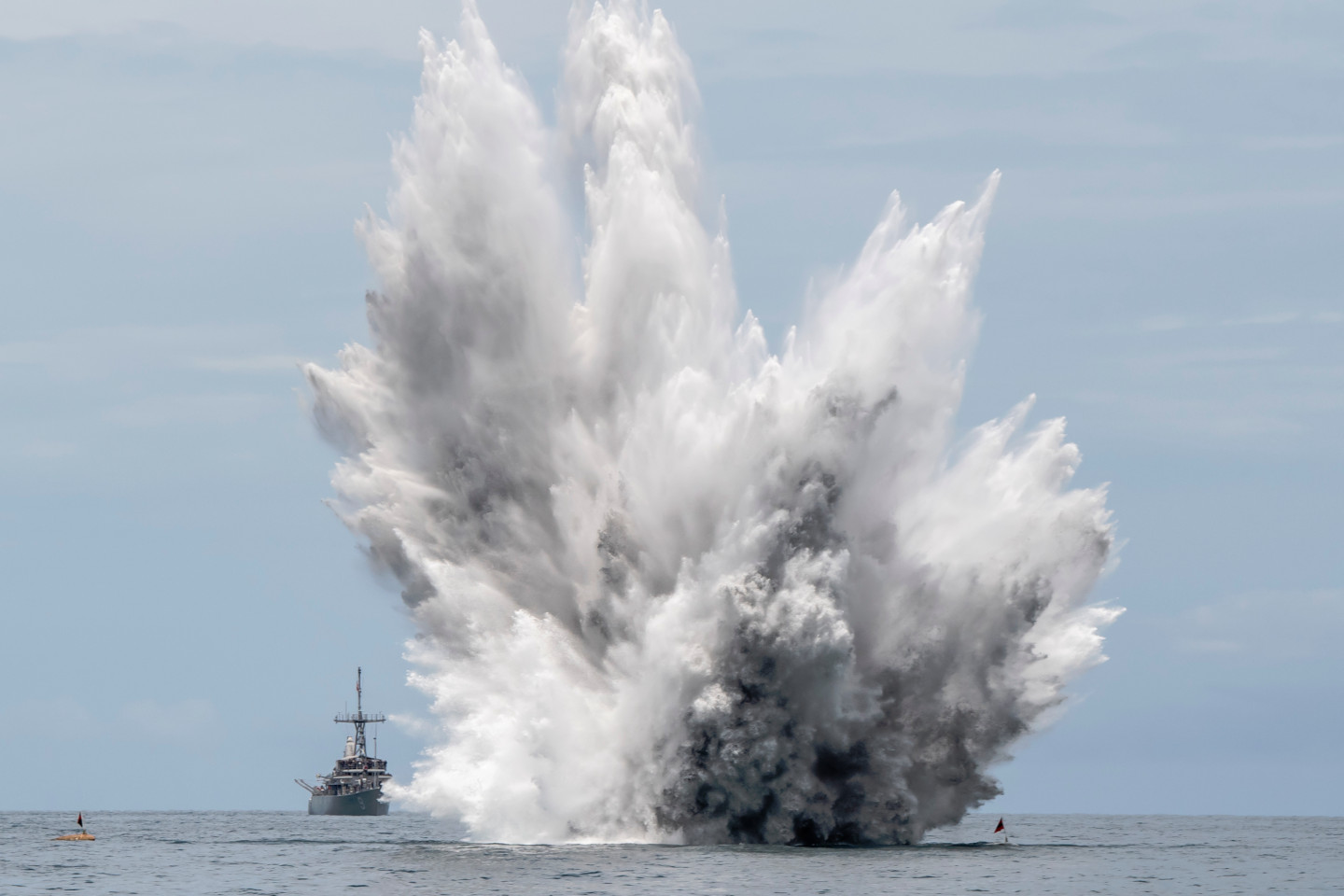
That being said, the movements of Chief and Pioneer in the region, as well as Tusla‘s departure from Singapore, did come right around CENTCOM’s explicit statement that more U.S. forces were heading to the Middle East to help with mine-clearing efforts. Furthermore, as already mentioned, the quartet of Avenger class ships in Japan, as well as LCSs that have been in Singapore recently, represent the bulk of vessels specifically outfitted for minesweeping duties that the Navy has available anywhere globally. Any mine-clearing operation in and around the Strait of Hormuz will include other naval vessels, as well.
As an aside, the Navy’s Lewis. B. Puller class Expeditionary Sea Base (ESB) ship USS John L. Canley, which is homeported in the U.S. Pacific territory of Saipan, was also spotted heading west past Singapore on March 23. That ship was subsequently tracked sailing in the Indian Ocean, raising questions about whether it might be headed to the Middle East, as well. None of the Navy’s three other ESBs has been observed heading toward that region recently.
A crisis scenario in and around the Persian Gulf, especially one involving Iran mining the Strait of Hormuz or otherwise threatening that critical waterway, was central to the Navy’s decision to acquire the ESBs in the first place. From the start, a key mission for the sea base ships has been serving, in part, as launch platforms for MH-53E Sea Dragon mine-hunting helicopters. At the same time, the Navy MH-53E fleet has dwindled in recent years to a single squadron, and the type is set to be completely retired by the end of 2027. Canley was seen with an apparent load of V-22 Osprey tiltrotors and MH-60 Seahawk helicopters on its deck as it passed by Singapore last month.
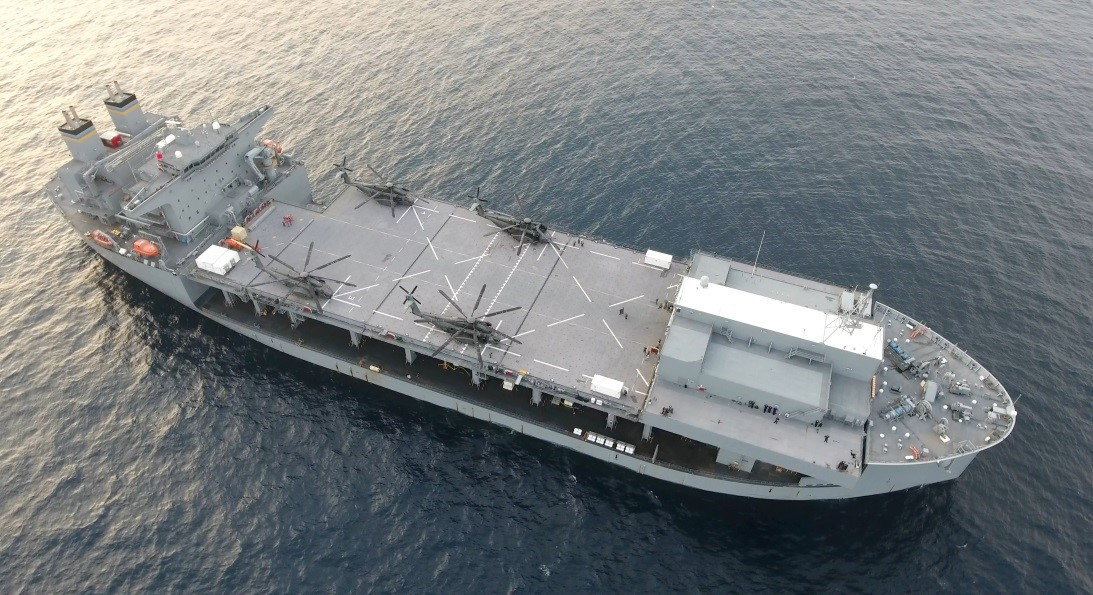
There has been talk in the past about ESBs acting as motherships for Avenger class mine-hunters. Canley be used to launch and recover uncrewed surface vessels (USV) and uncrewed underwater vehicles (UUV) as part of minesweeping and other operations, as well. In the context of the current blockade of Iranian ports, the ship could have a separate role as a valuable platform for staging visit, board, search, and seizure (VBSS) operations and otherwise supporting the current blockade of Iranian ports.
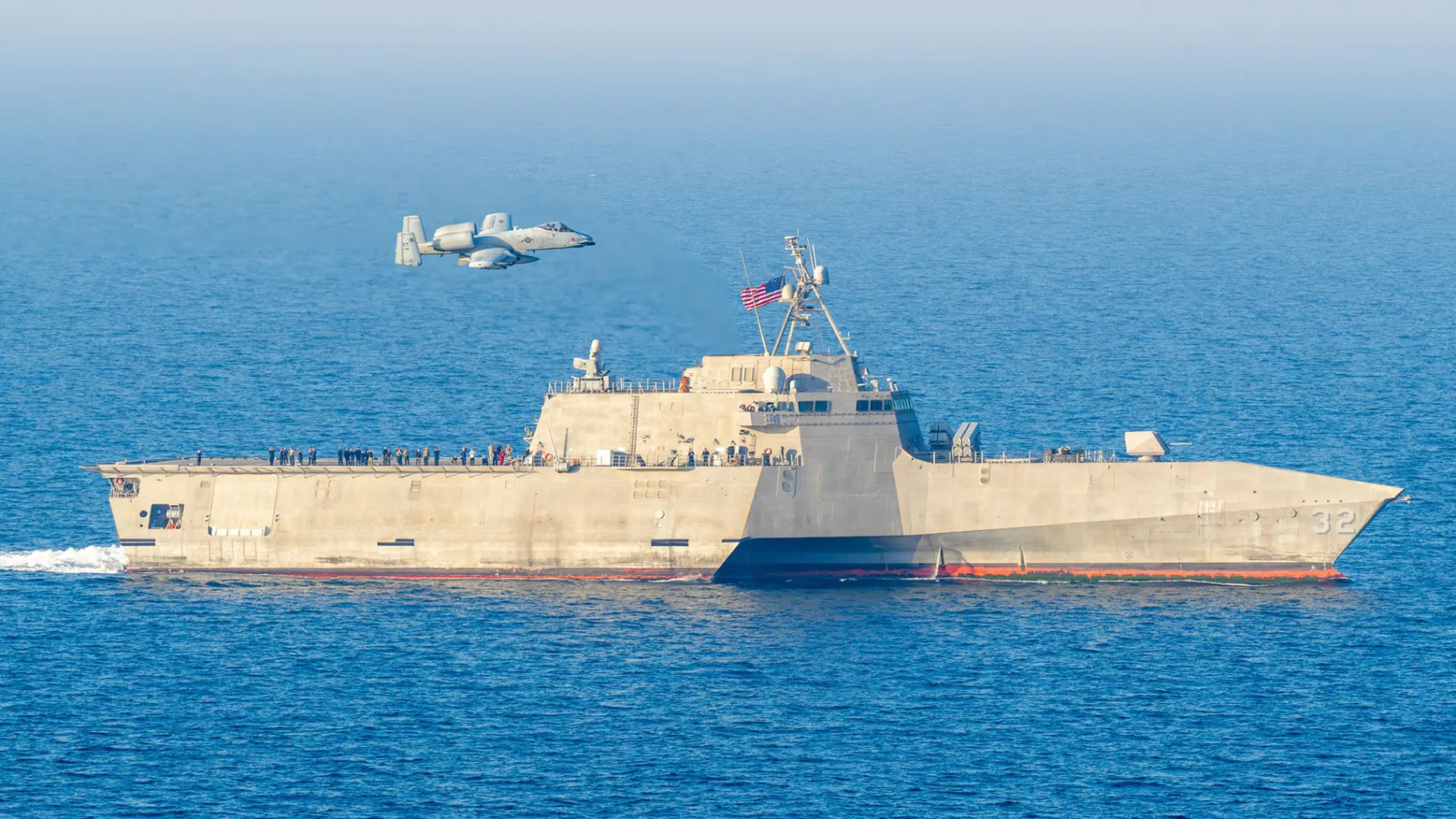
When it comes to the mission to clear Iranian naval mines, additional warships, as well as aircraft, will be needed just to provide critical force protection. This was already underscored by CENTCOM sending the two Arleigh Burke class destroyers through the Strait of Hormuz over the weekend. In February, before the war with Iran erupted, TWZ also called attention to the importance of force protection in these operations after A-10 Warthog ground attack aircraft conducted an exercise with the USS Santa Barbara in the Persian Gulf. A-10s have been prowling the Strait of Hormuz as part of operations against Iran.
How many naval mines Iran has actually laid, and of what types, is murky. In March, CBS News reported Iranian forces had seeded a number of Maham 3 and Maham 7 mines in and around the Strait of Hormuz. The Maham 3 is a so-called “influence mine,” designed to be triggered by the acoustic and/or magnetic signatures of a passing vessel, and that is moored in place. The Maham 7 is also an influence mine, but that sits on the seabed, and is therefore intended to be employed in shallower waters where it can still be set off by a ship sailing above. Naval analyst H. I. Sutton has more details on these and other Iranian naval mines here. Last Friday, The New York Times reported that Iran had lost track of the disposition of at least some of the mines it had laid, and that this was hampering efforts to reopen the Strait, citing unnamed U.S. officials.
Sweeping for naval mines is a slow-going and complex affair, in general, that carries significant risks even in benign environments. The dangers in case of the Strait of Hormuz are magnified now by the U.S. blockade of Iranian ports and the potential for the full resumption of hostilities with the regime in Tehran. U.S. and Iranian officials met this weekend in Pakistan following the announcement of a ceasefire last week. However, those talks ended after a day without any substantive progress toward a diplomatic resolution of the current conflict.
In the meantime, despite extensive U.S. and Israeli strikes over the past six weeks, Iran is still understood to have a significant array of capabilities, including anti-ship ballistic and cruise missiles, kamikaze drones, and uncrewed explosive-laden boats, that it could also use to turn the Strait of Hormuz into a super weapons engagement zone. TWZ previously explored these threats in greater detail in the context of past discussions about U.S. warships escorting commercial ships in and out of the Persian Gulf.
More about the mission to clear Iranian naval mines, including whether Japan-based Avenger class ships will take part and if the LCSs will finally return from the Pacific Theater, should become clearer in the coming days.
Contact the author: joe@twz.com
editor's pick
latest video

news via inbox
Nulla turp dis cursus. Integer liberos euismod pretium faucibua